Best Coffee Beans for Espresso Crema Lovers to Savor
You want thick, velvety crema with every shot-go for blends with 20–30% Robusta like Lavazza Super Crema or Kimbo Espresso Crema Intensa. These deliver rich crema and bold flavor, especially when ground fresh for espresso machines. 100% Arabica beans, like Lavazza Espresso, offer smoother notes but thinner crema. Medium to medium-dark roasts optimize oil and body without burning. Store beans airtight to preserve freshness and CO2 for stable crema. There’s more to contemplate about roast origin and grind precision.
We are supported by our audience. When you purchase through links on our site, we may earn an affiliate commission, at no extra cost for you. Learn more. Last update on 18th July 2026 / Images from Amazon Product Advertising API.
Notable Insights
- Blends with 20–30% Robusta beans, like Lavazza Super Crema, produce rich, velvety crema ideal for espresso lovers.
- Medium to medium-dark roasts enhance crema stability while preserving flavor complexity and aromatic richness.
- Fresh whole beans ground just before brewing preserve CO2 and oils critical for optimal crema formation.
- High-oil Robusta beans from low-altitude regions contribute to thick, long-lasting crema with distinctive tiger’s mantle patterning.
- Airtight, vacuum-sealed packaging maintains freshness and crema potential by protecting beans from air, light, and moisture.
Lavazza Super Crema Whole Bean Coffee (22 oz)
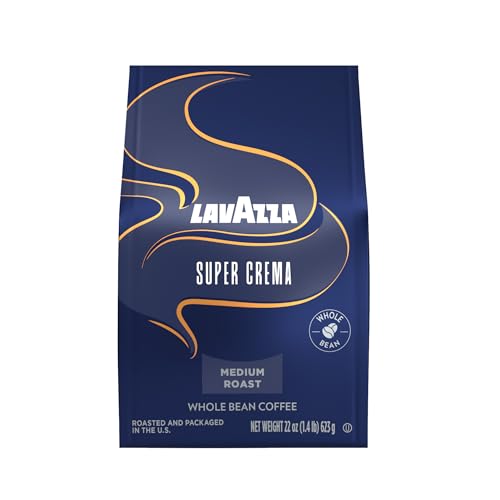
If you’re after a rich, velvety crema without needing a high-end espresso machine, Lavazza Super Crema Whole Bean Coffee is a solid pick. I use 0.28 oz of finely ground beans for a 1 oz espresso shot, and it consistently delivers a creamy, full-bodied result. The blend of Arabica and Robusta from 15 countries balances sweetness and strength, with hints of hazelnut and brown sugar. It’s a medium roast, so it won’t overpower your palate, yet still pulls bold flavor. Since it’s whole bean, you’ll need a grinder-but that also means fresher shots. The 22 oz bag lasts a while, and the packaging keeps beans fresh. I’ve tried other beans for crema, like Illy or Starbucks, but this one stands out for price, availability, and performance. I don’t think you’ll need anything fancier unless you’re chasing competition-level espresso.
Best For: Home espresso enthusiasts seeking a creamy, balanced shot without the need for a commercial-grade machine.
Pros:
- Delivers a rich, velvety crema and full-bodied flavor with notes of hazelnut and brown sugar
- Consistent performance with a medium roast that balances boldness and smoothness
- Great value for the quality, with wide availability and a large 22 oz bag for regular use
Cons:
- Requires a grinder since it’s whole bean, adding extra effort and equipment cost
- May not satisfy purists seeking single-origin or competition-level espresso complexity
- Robusta content, while adding crema, might be less appealing to those preferring 100% Arabica
Lavazza Espresso Barista Gran Crema – 35.2 oz

I reach for Lavazza Espresso Barista Gran Crema when I want a consistently rich crema without needing barista-level gear. This 35.2 oz whole bean blend, roasted medium with a 7/10 intensity, delivers full body and aromatic notes of honey and roasted coffee. It’s made from Arabica beans sourced from Brazil and Honduras, plus African Robusta, slow-roasted to boost depth. I taste dark chocolate and spice, with a velvety mouthfeel that works well in espresso machines or moka pots. It’s also compatible with drip and French press, though crema is best with pressure-based methods. The large bag lasts, but I store it in an airtight container to keep freshness.
Best For: Home coffee enthusiasts seeking a rich, full-bodied espresso with velvety crema without needing professional equipment.
Pros:
- Delivers a consistent, rich crema ideal for espresso lovers using home machines or moka pots
- Balanced blend of Arabica and Robusta beans offers complex notes of dark chocolate, spice, and honey
- Versatile preparation-works well in espresso machines, moka pots, drip brewers, and French press
Cons:
- Crema quality diminishes with non-pressure brewing methods like drip or French press
- Large 35.2 oz bag requires proper airtight storage to maintain freshness
- Medium roast with 7/10 intensity may be too bold for those preferring lighter, more acidic profiles
Lavazza Super Crema Whole Bean Coffee
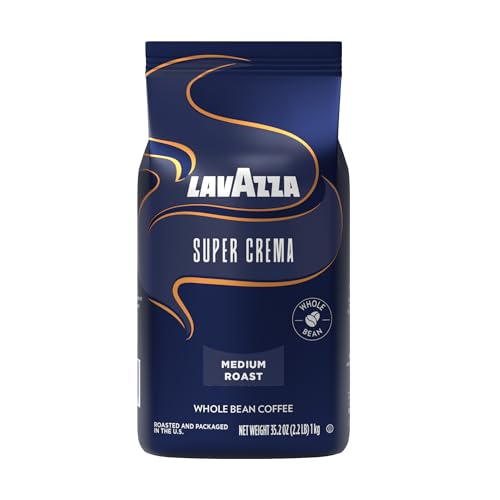
Lavazza Super Crema Whole Bean Coffee is my go-to when I want a creamy, well-balanced espresso without the guesswork. I use 0.28 oz of freshly ground beans for a 1 oz shot, and it consistently delivers a smooth, full-bodied pull with a hazelnut and brown sugar aroma. The medium roast blends Arabica and Robusta beans from 15 countries, giving it stability and richness ideal for milk drinks or straight espresso. Since it’s a pre-proportioned blend, it’s less customizable than single origins, but it’s reliable and easy to dial in. I appreciate that it’s pure coffee-no additives-and packaged in coffee-only facilities.
Best For: Home and commercial baristas seeking a creamy, consistent espresso blend ideal for milk-based drinks and straight shots.
Pros:
- Smooth, balanced flavor with aromatic notes of hazelnut and brown sugar
- Easy to dial in and consistently produces a rich crema
- Made from pure coffee with no additives, processed in dedicated coffee facilities
Cons:
- Limited customization due to pre-blended nature
- Blend includes Robusta, which may not appeal to purist Arabica drinkers
- Packaging may vary, potentially affecting storage and freshness perception
Lavazza Crema E Aroma Whole Bean Coffee
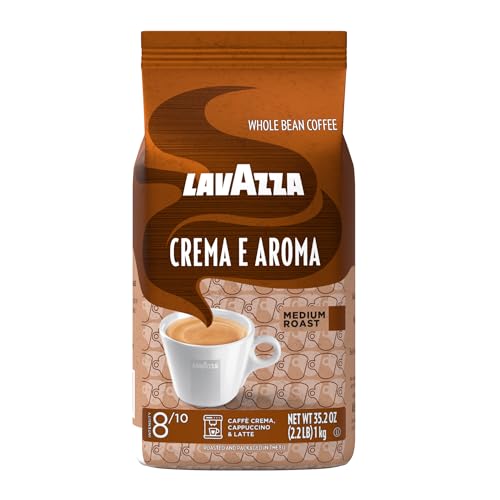
A go-to for espresso lovers who prioritize rich crema and bold flavor without venturing into overly dark or burnt territory, Lavazza Crema e Aroma delivers a balanced yet intense experience. I use it mainly in my espresso machine, where its 8/10 intensity and earthy chocolate notes shine, topped with thick, long-lasting crema. It works well in moka pots too, though drip or French press brings out a slightly milder version of its profile. The blend of Arabica and Robusta beans from South America, Africa, and Asia guarantees depth without harshness. Lavazza’s 125+ years of blending skill show in every cup.
Best For: Espresso enthusiasts seeking a balanced, full-bodied brew with rich crema and earthy chocolate notes without the bitterness of dark roasts.
Pros:
- Delivers a thick, long-lasting crema ideal for espresso and moka pot preparation
- Well-balanced flavor profile with intense earthy notes and a smooth chocolate finish
- Sourced and produced with expertise from a family-owned brand with over 125 years of experience
Cons:
- Robusta content may be off-putting for those preferring 100% Arabica blends
- Medium roast with 8/10 intensity might be too bold for mild coffee drinkers
- Whole beans require grinding immediately before brewing for optimal freshness and flavor
Lavazza Espresso Whole Bean Coffee, Medium Roast, 100% Arabica, 2.2 lb Bag
For espresso lovers who want a smooth, aromatic shot with a touch of sweetness, this medium roast hits the mark without veering into bitterness. I find the 5/10 intensity balanced-ideal if you dislike overly bold or burnt flavors. Made from 100% Arabica beans sourced from South America and Africa, it delivers floral and fruity notes that add complexity without overpowering. I’ve brewed it in espresso machines, moka pots, and even French presses, and it performs well across all. The 2.2 lb bag keeps me stocked for weeks, and since it’s pure coffee with no additives, I trust what I’m drinking.
Best For: Espresso lovers seeking a smooth, aromatic, and balanced medium roast with floral and fruity notes without bitter overtones.
Pros:
- Versatile for multiple brewing methods including espresso, moka pot, French press, and drip machines
- 100% pure Arabica beans with a clean, sweet profile and pleasant aromatic finish
- Large 2.2 lb resealable bag offers good value and long shelf life
Cons:
- Medium roast may lack the bold intensity preferred by dark roast enthusiasts
- Whole beans require a grinder, which may be inconvenient for some users
- Sourcing from multiple regions may lead to slight batch-to-batch flavor variation
Kimbo Espresso Crema Intensa Whole Bean Coffee

Since I want a bold, authentic Italian espresso with a thick, visually striking crema, Kimbo Espresso Crema Intensa stands out as a top choice-especially if I’m using a traditional espresso machine or enjoy milk-based drinks like lattes or macchiatos. Blended and roasted in Italy, it mixes premium Arabica and Robusta beans from South America and Asia. Its medium-dark roast (intensity 11/13) delivers full body, spicy notes of cinnamon and pepper, and subtle licorice. The crema is rich, hazel-colored, with a unique “tiger’s mantle” pattern. At 2.2 lbs, the bag offers long-term freshness and value.
Best For: Coffee lovers seeking a bold, authentic Italian espresso with a rich, complex flavor profile and a thick, visually impressive crema, ideal for use in traditional espresso machines or milk-based drinks.
Pros:
- Intense medium-dark roast (11/13) with full body and bold, spicy notes of cinnamon and pepper, complemented by subtle licorice undertones
- Produces a thick, hazel-colored crema with a distinctive “tiger’s mantle” appearance, enhancing both taste and visual appeal
- Large 2.2 lbs (1 kg) vacuum-sealed bag ensures freshness and offers excellent value for daily espresso drinkers
Cons:
- High intensity level may be too strong for those who prefer milder coffee profiles
- Whole beans require a quality grinder for optimal extraction, which may not suit all users
- Premium pricing compared to standard supermarket coffee brands
Caffè Borbone Whole Bean Coffee (2.2 lb)

When you need a reliable, high-yield coffee that delivers consistent crema without requiring ultra-premium pricing, Caffè Borbone Whole Bean Coffee (2.2 lb) stands out as a practical choice for home baristas who pull multiple shots or host frequent guests. I find it balances boldness and smoothness well, with subtle chocolate and spice notes. It’s a medium roast blend of Arabica and Robusta, ethically sourced, and roasted in Italy since 1998, reflecting Neapolitan tradition. I’ve used it in espresso machines, drip brewers, and French presses-freshness holds thanks to the whole bean format. Just grind fine for espresso and pair with filtered water for best results.
Best For: Home baristas and frequent hosts seeking a high-yield, consistently flavorful Italian coffee at a reasonable price.
Pros:
- Delivers a balanced, rich flavor with notes of chocolate and spice, suitable for various brew methods
- Ethically sourced beans and authentic Neapolitan heritage with a commitment to quality and tradition
- Whole bean format preserves freshness and aroma across multiple uses
Cons:
- Medium roast may not satisfy those seeking a darker, more intense espresso profile
- Requires proper grind size and filtered water to achieve optimal results
- Larger 2.2 lb bag may be excessive for light coffee drinkers
Lavazza Espresso Whole Bean Coffee (2.2 lb)
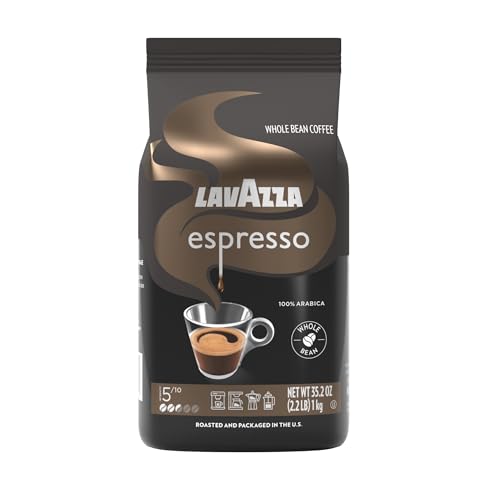
Lavazza Espresso Whole Bean Coffee stands out for those who want a balanced, aromatic espresso with a smooth finish without venturing into dark, ashy roast territory. I find it works best in espresso machines or moka pots, where its medium roast (5/10 intensity) shines. Made from 100% Arabica beans from South America and Africa, it delivers light floral and fruit notes-ideal if you prefer sweetness over bitterness. You can also use it in drip or French press, though crema lovers will get the most control with a proper machine. Lavazza’s been roasting since 1895, so their expertise shows in consistent, clean beans-no additives, just coffee.
Best For: Coffee lovers seeking a smooth, aromatic espresso with a medium roast profile and natural sweetness from 100% Arabica beans.
Pros:
- Balanced medium roast (5/10 intensity) with floral and fruity notes, offering a sweet, aromatic finish
- Versatile for multiple brewing methods including espresso machines, moka pots, drip, and French press
- Sourced from a heritage brand with over a century of expertise and a commitment to sustainable, additive-free production
Cons:
- Lighter roast may lack the bold, smoky depth preferred by fans of dark roasts
- Crema production is less intense compared to traditional espresso blends when used in automatic machines
- Large 2.2 lb bag may not be ideal for those who prefer buying smaller quantities to ensure maximum freshness
Lavazza Crema e Gusto Whole Bean Coffee
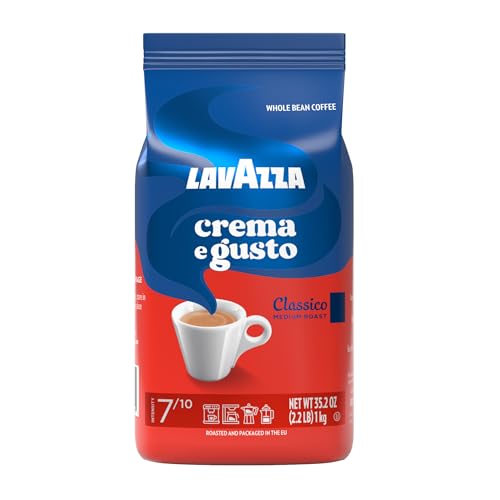
If you’re after a rich, consistent espresso crema without the hassle of blending beans yourself, Lavazza Crema e Gusto delivers straight out of the bag. I’ve found this 2.2 lb medium roast, rated 7/10 in intensity, gives a full body and creamy finish that holds up well in espresso machines. It’s a balanced mix of naturally caffeinated Arabica and Robusta beans from South America and Southeast Asia, with subtle spice notes. You can also use it in moka pots, drip, or French press. Lavazza’s been sourcing quality beans since 1895, and this batch is made in dedicated coffee-only facilities-no additives, just pure coffee.
Best For: Coffee lovers seeking a rich, full-bodied espresso with a creamy finish who appreciate a convenient, pre-blended medium roast made from sustainably sourced beans.
Pros:
- Delivers a consistent, creamy crema ideal for espresso enthusiasts
- Versatile brew compatibility including espresso machines, moka pots, drip, and French press
- Made from 100% pure coffee with no additives, produced in dedicated coffee-only facilities
Cons:
- Medium roast with intensity 7/10 may be too bold for those preferring milder coffee
- Whole bean format requires grinding equipment for optimal freshness
- Limited origin transparency beyond regional sourcing from South America and Southeast Asia
Lavazza Gran Crema Espresso, 2.2-Pound – Pack of 2 (Packaging May Vary)
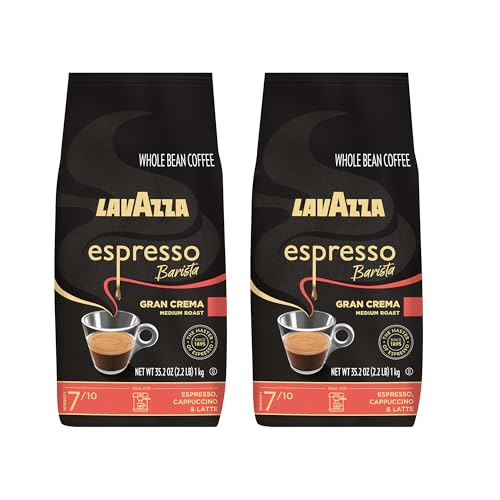
A dark roast that delivers a consistently rich crema makes this Lavazza blend a solid pick for espresso lovers who prioritize body and aroma in every pull. I find it’s made from a mix of Arabica and Robusta beans sourced from South America and Asia, giving it a balanced intensity with subtle chocolate notes. It’s a medium-dark roast, so it’s bold but not bitter, working well in most espresso machines. The 2.2-pound pack (sold as two) offers good value for daily drinkers. Since it’s produced in Italy, the quality control is reliable. Just note that packaging may vary-store in an airtight container to keep it fresh.
Best For: Espresso lovers who want a rich, full-bodied dark roast with a velvety crema and subtle chocolate notes, ideal for daily use in standard espresso machines.
Pros:
- Balanced blend of Arabica and Robusta beans from South America and Asia delivers consistent flavor and aroma
- Medium-dark roast offers bold intensity without excessive bitterness, suitable for most espresso machines
- Large 4.4-pound total quantity (2 x 2.2-pound packs) provides excellent value for regular drinkers
Cons:
- Packaging may vary, which could affect perceived quality or freshness upon arrival
- Requires proper storage in an airtight container to maintain freshness due to roast profile
- Chocolate notes are subtle and may not stand out to those preferring more pronounced flavor accents
Factors to Consider When Choosing Coffee Beans for Espresso Crema
You’ll want to check the blend composition, since beans like Arabica and Robusta affect crema differently-Arabica brings smoothness, while Robusta boosts crema thickness. Roast level matters too; medium to dark roasts typically work better for espresso, balancing oils and flavor without burning your shot. Keep an eye on flavor balance, crema potential, and whether the beans suit your machine’s pressure and grind settings for the best results.
Bean Blend Composition
While crema might look like a simple layer of foam, its quality hinges heavily on the blend of beans you use, especially the balance between Arabica and Robusta. You’ll find Arabica brings sweetness, acidity, and aromatic depth to the crema, but it produces a thinner layer. Robusta, on the other hand, packs more lipids and soluble solids, which boosts crema volume and makes it denser and longer-lasting. For best results, go with blends containing 20–40% Robusta-this range gives you the rich texture without overwhelming bitterness. Beans from varied origins affect crema too, as growing conditions influence sugar and fat levels critical to foam stability. Always choose fresh beans; CO2 release peaks shortly after roasting and directly fuels crema formation. Store them in airtight containers away from light to preserve those gases. Blends like Italian-style dark roasts often nail this balance, but check labels-quality matters just as much as composition.
Roast Level Intensity
Don’t assume darker is always better when aiming for rich espresso crema-optimal roast intensity typically falls between 7/10 and 8/10, where medium to dark roasts fully develop the body and solubility needed for a thick, stable crema. You’ll notice these roasts bring oils to the bean surface, boosting that velvety layer you want. But go too dark-past 9/10-and you risk charring, which burns off aromatics and dries out oils, weakening crema. Roast level also affects how evenly the coffee dissolves during extraction; medium-dark hits a sweet spot between bitterness and sweetness, supporting crema stability. Inconsistent roasting messes with density, leading to uneven pulls and patchy crema. Stick to roasters who batch-test and label roast levels clearly-brands like Slayer or Onyx mark profiles so you know what you’re grinding. Precision here isn’t fussy-it’s essential for reliable results.
Flavor Profile Balance
Though flavor balance might seem subjective, it plays a critical role in producing high-quality espresso crema, where the interplay of sweetness, acidity, and bitterness must be tuned just right. You want a profile where no single element overpowers-think dark chocolate or nutty notes blending smoothly with a hint of citrus brightness. Medium roasts often deliver this best, keeping the bean’s natural sweetness while building enough body and aroma to support crema. Full-bodied beans with a creamy mouthfeel add richness and help flavors linger. Blends mixing Arabica’s fruity, floral tones with Robusta’s intensity and crema-boosting proteins create a more balanced, robust shot. Look for beans labeled “espresso blend” from roasters like Lavazza or Illy, which are designed to hit these marks consistently. Avoid overly dark roasts if you’re chasing balance-they often mute sweetness and amplify harshness.
Crema Quality Potential
If you want a rich, lasting crema, start by choosing beans with the right makeup and roast. Look for blends with Robusta-its higher lipid and protein content boosts foam stability. While 100% Arabica can produce good crema, adding 20–30% Robusta often enhances thickness and persistence. Aim for a medium-dark roast; it brings enough oils to the bean surface without scorching the structure. These oils are key-they emulsify under pressure to form crema. Always use beans roasted within the last 2–4 weeks. After that, crema volume drops as gases escape. Grind fresh and fine-uniform, fine particles increase resistance and surface area, improving extraction and oil emulsification. Don’t skip a quality burr grinder; inconsistency kills crema. Pair fresh beans with precise grinding, and you’ll see a clear boost in crema quality-thicker, darker, and longer-lasting.
Brew Method Compatibility
Since your brewing method directly affects crema formation, choosing the right beans starts with matching them to your equipment. If you’re using an espresso machine, you’re in the best position-its high pressure and fine grind pull rich, stable crema from most quality beans. For Moka pot users, you’ll get a noticeable crema, but it’s usually thinner, so pick beans with strong oil content to boost results. Drip coffee makers won’t produce real crema due to low pressure, so they’re not ideal if crema is your goal. French press lacks pressure entirely, giving body without the creamy layer. Coarse grinds and low-pressure methods fail to emulsify oils properly, reducing crema. To maximize crema, align your bean choice with high-pressure methods and fine grinds-espresso setups simply deliver best.
Origin And Sourcing Impact
Your brewing method sets the stage, but where your coffee beans come from plays a direct role in how thick, rich, and long-lasting your espresso crema turns out. High-altitude Arabica beans, like those from Ethiopia or Colombia, bring bright acidity and aromatic complexity but may produce thinner crema. In contrast, low-altitude Robusta beans from Vietnam or Indonesia boost crema thickness and stability thanks to higher oil and caffeine content. Volcanic soil regions, such as Guatemala or Sumatra, often yield denser beans with more minerals, enhancing crema texture. Varying climate conditions affect moisture and density, altering extraction under pressure. Diverse sourcing blends can balance oil and density for consistent results. Plus, ethically sourced beans from transparent farms usually arrive fresher, improving crema uniformity. For best results, check origin labels and favor single-estate or traceable blends. Know your source-your crema depends on it.
Frequently Asked Questions
Can I Use These Beans in a French Press?
Yes, you can use those beans in a French press, but you’ll get better results with a coarser grind and longer steep time. Espresso beans are usually roasted darker, which can bring bold, smoky notes-great if you like intensity, but sometimes too bitter for French press. For a smoother cup, try a medium roast like Colombian or Ethiopian instead. They bloom better and balance acidity and sweetness more naturally in immersion brewing. Adjust grind size and brew time to suit your taste.
Are These Coffees Suitable for Dairy-Free Lattes?
Yes, these coffees work well for dairy-free lattes. You’ll get rich flavor and good body, which helps balance non-dairy milks like oat or almond. Just note that lighter roasts might taste sharper with plant milks, so stick to medium or dark roasts for smoother results. Make sure your machine pulls a solid shot-crema improves mouthfeel. Oatly Barista or Silk Almond work especially well. Adjust grind size and dose if the blend tastes too thin or bitter.
Do Any of These Brands Offer Decaf Options?
Yes, some of these brands offer decaf options. You’ll find decaf espresso blends from Illy and Lavazza, both using the water process for flavor retention. Decaf beans can still produce good crema if roasted properly. Just check the roast date-freshness matters more with decaf. If crema’s a priority, aim for medium-dark roasts; they typically extract better. Not every brand’s decaf performs the same, so test a few to see what works in your machine.
How Should I Store These Beans for Maximum Freshness?
You should store your beans in an airtight container away from light, heat, and moisture. Keep them at room temperature-don’t refrigerate or freeze, since condensation degrades flavor. Use a container with a one-way valve to let gases escape without letting air in. Grind just before brewing for best results. Exposure to oxygen is the main enemy, so buy smaller batches more often to guarantee freshness.
Are These Beans Compatible With Pod Machines?
No, you can’t use whole bean coffee directly in pod machines-they’re designed for pre-packaged pods or capsules. If your machine uses pods, you’d need to find compatible brands that offer the roast profile you want. Some systems, like Nespresso Original, allow third-party capsules you can fill yourself, but most don’t. For maximum compatibility and freshness, stick to machines built for ground or whole beans, like portafilter espresso makers. Check your model’s specs first.