Best Espresso Machines: Breville Barista Express vs De’Longhi COM532M
You get consistent, high-quality espresso when you choose machines like the Breville Barista Express or Philips 5500, which combine precise grinders, stable temperature control, and 9–15 bar pressure. Fully automatic models save time with preset profiles, while semi-automatics offer more control for learning and refining your shot. Built-in grinders and PID systems improve repeatability, but require cleaning and calibration. Your pick depends on skill level, routine, and how much fine-tuning you want-options cover every need, and the best choice fits both your coffee goals and daily habits.
We are supported by our audience. When you purchase through links on our site, we may earn an affiliate commission, at no extra cost for you. Learn more. Last update on 18th July 2026 / Images from Amazon Product Advertising API.
Notable Insights
- Machines with 15–20 bar pressure ensure optimal extraction and rich crema for consistent espresso quality.
- Built-in conical burr grinders provide uniform grounds, enhancing flavor precision and shot repeatability.
- PID or NTC temperature control maintains stable water heat, critical for balanced, repeatable espresso shots.
- Low-pressure pre-infusion gradually increases pressure, promoting even extraction and flavor consistency.
- Dual boiler or fast-heating systems enable quick recovery and steady performance for back-to-back perfect shots.
Breville Barista Express Espresso Machine BES870XL, Brushed Stainless Steel

The Breville Barista Express BES870XL is a solid pick if you want full control over your espresso without needing a separate grinder. I use its built-in conical burr grinder daily-it delivers fresh grounds straight into the portafilter, cutting waste and saving time. The machine’s PID control keeps water temperature stable, while low-pressure pre-infusion helps pull balanced shots. I dial in grind size and dose manually, which takes practice but improves consistency. It’s bulky and not dishwasher safe, but for home baristas serious about skill-building, it’s a reliable workhorse. I’ve made lattes and ristrettos with ease, and the included tamper and dose-trimming tool actually help.
Best For: Home baristas who want full control over espresso brewing with the convenience of an integrated grinder and manual customization.
Pros:
- Integrated conical burr grinder delivers fresh coffee directly into the portafilter, reducing waste and streamlining the process
- PID temperature control and low-pressure pre-infusion ensure consistent, balanced espresso extraction
- Includes useful tools like a tamper and dose-trimming tool, enhancing precision and ease of use
Cons:
- Bulky design takes up significant counter space
- Not dishwasher safe, requiring manual cleaning
- Manual operation has a learning curve for beginners
De’Longhi COM532M All-in-One Coffee Maker
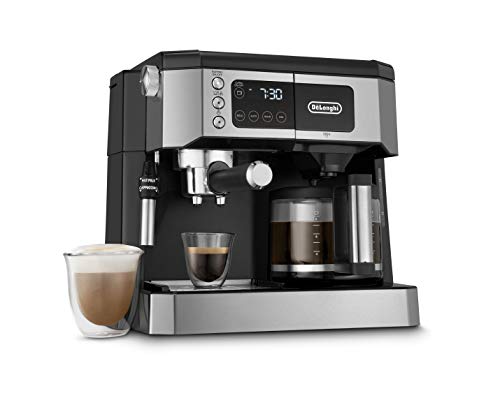
When you need a machine that handles both espresso and drip coffee without taking over your countertop, the De’Longhi COM532M stands out as a practical choice for home users who want versatility without compromising performance. I use its dual heating system to brew espresso and coffee at the same time, which saves me time in the mornings. The 15 BAR pump pulls strong shots, and the steam wand froths milk well for lattes or cappuccinos. I appreciate the digital controls, programmable timer, and bold brew option. It takes pods or ground coffee, has a 10-cup carafe, and fits neatly on my counter.
Best For: Home users who want a compact, versatile coffee maker that brews both espresso and drip coffee with minimal counter space usage.
Pros:
- Dual heating system allows simultaneous espresso and coffee brewing for convenience and time-saving
- Supports both pods and ground coffee with a 2-in-1 portafilter and includes a 10-cup carafe for versatility
- Advanced steam wand and 15 BAR pump deliver café-quality espresso and milk foam for lattes and cappuccinos
Cons:
- Not dishwasher safe, requiring manual cleaning for maintenance
- Limited to a 1-year warranty compared to longer coverage on some competitors
- Front-loading coffee input may feel less intuitive for users accustomed to top-loading designs
Philips 5500 Espresso Machine with LatteGo

Looking for a super-automatic espresso machine that balances speed, simplicity, and quality? I’ve used the Philips 5500 (EP5544/94), and it delivers. With 15-bar pressure and a built-in grinder, it pulls consistent shots fast-ready in 3 seconds thanks to QuickStart. The color display lets me adjust strength, volume, and milk texture, and I can save my settings for up to four users. The LatteGo system froths milk smoothly and cleans in 10 seconds-no tubes, dishwasher-safe parts. It’s 40% quieter than older models, runs on 230V, and the AquaClean filter means no descaling for up to 5,000 cups.
Best For: Busy coffee lovers who want a quiet, easy-to-clean super-automatic espresso machine with customizable drinks and minimal maintenance.
Pros:
- One-touch brewing with QuickStart ready in 3 seconds and 20 preset drink options
- LatteGo milk system cleans in 10 seconds and has dishwasher-safe, tube-free parts
- AquaClean filter allows up to 5,000 cups without descaling and operates 40% quieter than previous models
Cons:
- Not dishwasher safe for the entire unit, requiring manual cleaning of main components
- 230V power requirement may limit compatibility in some regions
- Limited to four user profiles, which may not suffice for larger households or offices
CASABREWS 20 Bar Espresso Machine with Steam Frother

For home baristas who want reliable espresso without the complexity of high-end models, CASABREWS delivers with its 20 bar professional Italian pump and 1350W boiler, ensuring consistent high-pressure extraction for rich crema and full-bodied shots. I use the built-in pressure gauge to fine-tune each pull, and the steam wand makes silky microfoam for lattes or cappuccinos. It’s compact, fits neatly on my counter, and heats up quickly. I do have to tamp manually and use ground coffee only-no pods. When the buttons flash, I run hot water to reset it. It’s simple, effective, and great for daily use.
Best For: Home baristas seeking a compact, reliable espresso machine with manual control for consistent, high-quality espresso and milk-based drinks without the complexity of professional models.
Pros:
- Powerful 20 bar Italian pump and 1350W boiler deliver high-pressure extraction for rich crema and full-bodied espresso
- Integrated steam wand creates silky microfoam ideal for latte art and creamy cappuccinos
- Compact stainless steel design fits well on countertops and includes useful accessories like a tamper and portafilter
Cons:
- Requires manual tamping and ground coffee only-no pod compatibility for quick cleanup or convenience
- Flashing button errors can occur, requiring user intervention like running hot water to reset the system
- Steam function requires cooldown periods to prevent overheating, which may interrupt workflow
Espresso Machine with Milk Frother, 20 Bar

This 20-bar espresso machine with milk frother delivers consistent, café-quality results, making it a solid pick for home baristas who want control without complexity. I rely on its 20-bar pump to maintain 9–10 bar during extraction, pulling rich shots with golden crema from any roast. The NTC heating hits 90–96°C fast, brewing precisely in 30 seconds. Its steam wand produces dry, dense microfoam-perfect for lattes. I use Auto mode for quick shots or Manual for full control up to 102 seconds. Stainless steel builds durability, and the compact size fits small spaces. I clean it by wiping-no dishwasher use.
Best For: Home baristas seeking a compact, durable espresso machine with precise extraction control and excellent milk frothing for café-style drinks.
Pros:
- Consistently pulls rich, flavorful shots with golden crema using 20-bar pressure and precise NTC temperature control
- Powerful steam wand creates dense, glossy microfoam ideal for latte art and smooth espresso blending
- Offers both Auto and Manual extraction modes for convenience or full customization up to 102 seconds
Cons:
- Not dishwasher safe-requires hand cleaning only, which may be less convenient for some users
- Limited to 120V AC power, making it less suitable for international use without adapters
- No built-in grinder, requiring a separate purchase for fresh bean grinding
20 Bar Espresso Machine with Grinder (2025 Upgrade)

If you want café-quality espresso without the hassle of a multi-machine setup, the 20 Bar Espresso Machine with Grinder (2025 Upgrade) makes sense, especially if you value consistency and ease. I use it daily, and the upgraded grind path handles oily beans without clogging, thanks to a wider chute and sturdier auger. The 20-bar pressure pulls rich shots with thick crema, and the steam wand froths milk smoothly for lattes or cappuccinos. It’s compact, ETL certified, and comes with a 2.3L tank and 58mm portafilter. At 18 pounds, it’s stable but movable. Great for home or office, it’s a reliable all-in-one pick-especially if you skip pre-ground.
Best For: Home and office users who want a reliable, all-in-one espresso machine that delivers consistent, café-quality coffee with minimal hassle.
Pros:
- Upgraded grind path prevents clogs, even with oily dark roast beans, ensuring smooth and consistent grinding
- 20-bar pressure and steam wand produce rich espresso with thick crema and barista-quality microfoam
- Comprehensive accessories and 2.3L removable water tank make it convenient for daily use and easy maintenance
Cons:
- Not dishwasher safe, requiring manual cleaning of components
- Only compatible with whole beans, limiting flexibility for users who prefer pre-ground coffee
- At 18.04 pounds, while stable, it may still be somewhat heavy for frequent relocation
Gevi 20 Bar Espresso Maker with Milk Frother

When you want barista-level espresso without spending a fortune, the Gevi 20 Bar Espresso Maker delivers real performance in a compact stainless steel body. I use its 20-bar pump and pre-infusion to pull rich, balanced shots every time. The built-in pressure gauge and NTC control keep things consistent. Its steam wand froths silky microfoam for lattes or cappuccinos, and the removable nozzle makes cleaning easy. I love that it also dispenses hot water for Americanos or tea. The 51mm portafilter comes with filters, a tamper, and spoon. At just over 8 pounds and 12.3 inches deep, it fits neatly on any counter. I clean it by hand-dishwasher use isn’t safe-and I got a 12-month warranty and lifetime support.
Best For: Home espresso enthusiasts seeking professional-quality shots and milk frothing in a compact, durable machine without the high price tag.
Pros:
- 20-bar pump and NTC temperature control ensure consistent, rich espresso extraction
- Powerful steam wand creates silky microfoam, with a removable nozzle for easy cleaning
- Compact stainless steel design with hot water function and included accessories adds versatility and value
Cons:
- Not dishwasher safe, requiring manual cleaning for maintenance
- 51mm portafilter is smaller than the industry-standard 58mm, limiting upgrade options
- Warranty and support only valid when purchased through official or authorized sellers
Ninja Luxe Café 3-in-1 Espresso Machine
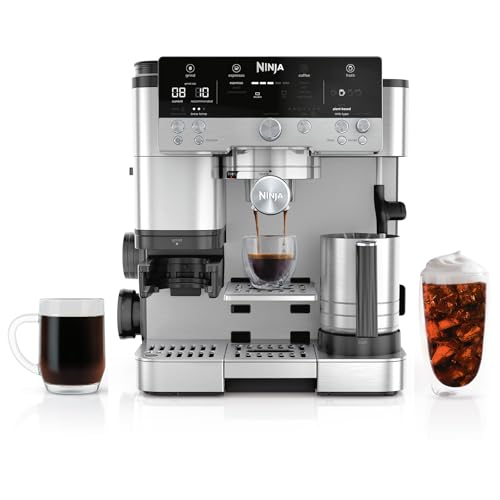
The Ninja Luxe Café 3-in-1 Espresso Machine suits home baristas who want versatility without switching devices, combining espresso, drip coffee, and cold brew in one unit. I use its built-in conical burr grinder and Barista Assist Technology for precise dosing and consistent grinds. It pulls solid double or quad shots, and the assisted tamper helps me get even puck prep every time. I appreciate the dual froth system for steamed milk or cold foam, whether I’m using dairy or oat milk. With programs for rich drip coffee or cold-pressed espresso, I customize strength and size easily. At nearly 32 pounds, it’s heavy, but the stainless steel build feels sturdy, and cleanup’s simple thanks to dishwasher-safe parts.
Best For: Home baristas seeking a versatile, all-in-one coffee machine that handles espresso, drip coffee, and cold brew with precision and ease.
Pros:
- Combines espresso, drip coffee, and cold brew in one machine for maximum versatility
- Barista Assist Technology and built-in grinder ensure consistent, high-quality results with minimal effort
- Dual Froth System supports both hot and cold milk frothing with dairy and plant-based milks
Cons:
- Heavy at nearly 32 pounds, making it difficult to move or reposition
- High upfront cost may not suit budget-conscious buyers
- Large footprint may be cumbersome for smaller kitchens or countertops
Ninja Luxe Café Pro Espresso Machine

You’ll get the most out of the Ninja Luxe Café Pro Espresso Machine if you want a single unit that handles espresso, drip coffee, cold brew, and hot water functions without switching devices. I rely on its 4-in-1 system for everything from ristrettos to cold brew. Barista Assist gives real-time grind tips and adjusts pressure, so I rarely get sour shots. The built-in grinder and scale guarantee consistent, fresh doses. I tamp cleanly with the integrated lever and froth hands-free using the Dual Froth System Pro. It’s bulky, but the 27-pound build feels sturdy. I clean it regularly-no dishwasher parts-and use the included descaling kit to maintain performance.
Best For: Home baristas who want a versatile, all-in-one coffee machine with precision brewing, built-in grinder, and hands-free frothing for espresso, drip, cold brew, and hot beverages.
Pros:
- Combines 4 brewing methods (espresso, drip, cold brew, hot water) with multiple drink-size and style options for maximum versatility
- Barista Assist Technology optimizes flavor with real-time grind recommendations and automatic adjustments to pressure and temperature
- Integrated tamper and Dual Froth System Pro enable mess-free tamping and hands-free milk frothing for both hot and cold microfoam
Cons:
- Bulky footprint and heavy 27.1-pound design may not suit small kitchens or limited counter space
- No dishwasher-safe components, requiring hand cleaning for maintenance
- Complex system with multiple parts and settings may have a steep learning curve for beginners
Breville Bambino Espresso Machine BES450BSS, Brushed Stainless Steel
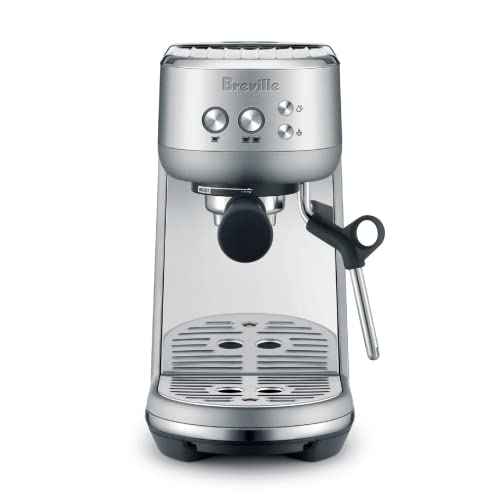
If you’re after espresso quality that punches above its price without sacrificing speed or convenience, the Breville Bambino BES450BSS fits the sweet spot for home users who want barista-level results fast. I love how its Thermojet heating system heats up in just 3 seconds, so I’m pulling shots quickly. The 54mm portafilter and 19-gram basket deliver full extraction, while low-pressure pre-infusion guarantees even flavor. PID control keeps water temp stable. Its auto steam wand makes microfoam easy, though it takes practice. At 13.7 inches deep, it fits small spaces. Lightweight at 11 pounds, it’s sturdy but not bulky-ideal for home or office.
Best For: Home users and office environments seeking fast, barista-quality espresso with minimal wait time and compact design.
Pros:
- Rapid 3-second heat-up time with Thermojet heating system for quick espresso extraction
- Integrated automatic steam wand produces microfoam easily, enabling latte art with practice
- Compact size and lightweight build fit seamlessly in small kitchens or office spaces
Cons:
- Learning curve with steam wand operation to achieve consistent milk texturing
- Limited to semi-automatic brewing, requiring manual grind and tamp for best results
- 1-year warranty is shorter compared to some competitors offering 2+ years
Factors to Consider When Choosing Espresso Machine 2021
You’ll want to evaluate how the brewing method affects ease of use and shot quality-manual, semi-automatic, or super-automatic machines each offer different levels of control. Your grind quality directly impacts flavor, so pairing the machine with a good grinder or choosing one with a built-in option like the Breville Bambino makes a real difference. Don’t overlook milk frothing ability, pressure performance (aim for 9 bars), and temperature control, since these affect crema, consistency, and overall espresso quality.
Brewing Method
When choosing an espresso machine, the brewing method plays a crucial role in how much control you have over the final shot and how much effort you need to put in. If you’re experienced and want precision, go for a semi-automatic-you’ll control the grind, dose, tamp, and timing, which gives better shot customization. Fully automatic models handle everything from grinding to extraction with preset programs, so they’re great if you want consistency with less work. Super-automatic machines take it further, adding built-in grinders and milk systems for one-touch lattes and easy cleanup. For ultimate control and a hands-on experience, manual lever piston machines let you adjust pressure manually, though they take practice. Dual boiler systems are ideal if you multitask-they let you brew and steam at the same time, keeping temperatures stable. Pick based on your skill, time, and how involved you want to be.
Grind Quality
Grind quality directly shapes how your espresso turns out, even if your machine has perfect pressure and temperature control. You need a consistent grind size because uneven particles lead to unbalanced extraction-some bits under-extract, others over-extract. A burr grinder, especially one with conical burrs, gives you far more uniform grounds than a blade grinder, which just chops beans unevenly. For espresso, aim for a grind between 0.2 and 0.8 millimeters, adjusting based on your beans and shot time. Freshness matters too: aromatic compounds start fading within 30 seconds of grinding, so grind right before brewing. Your grinder also affects pressure stability during extraction; inconsistent grinds disrupt the 9–10 bar sweet spot. Built-in grinders save space, but many entry-level models sacrifice consistency. If you’re serious, consider a dedicated setup like the Baratza Vario or 1zPresso for better control and long-term performance.
Milk Frothing
A machine’s milk frothing capability can make or break your morning ritual, especially if you enjoy cappuccinos or lattes. If you want full control, choose a semi-automatic with a manual steam wand-these give dry, focused steam perfect for microfoam and latte art. You’ll need practice, but the results are worth it. For convenience, pick a model with an automatic milk frothing system; these offer preset options for steamed milk, thin froth, thick froth, or cold foam with hands-free operation. They’re consistent and easy, great for beginners or busy mornings. Some machines even combine both options, giving you flexibility. Check if the steam wand heats quickly and recovers fast between uses. Also, consider cleaning-automatic systems often require regular maintenance. Your choice depends on skill level and how much time you’re willing to invest. Manual wands offer precision; automatics deliver consistency. Pick what fits your routine.
Pressure Performance
Espresso quality hinges on pressure performance, and you want machines that deliver around 9 to 10 bars during extraction-the sweet spot for balanced flavor and rich crema. Don’t be fooled by labels boasting 15 or 20 bars; that’s just the pump’s max capacity, not the brewing pressure. You need consistent pressure throughout the shot-fluctuations cause sour or bitter results. Look for machines with reliable vibration or rotary pumps, like those in the Breville Bambino or Rocket Appartamento, which maintain steady output. Pre-infusion at lower pressure helps water evenly soak the puck before full pressure hits, improving extraction and clarity. This feature, common in mid-to-high-end models, makes a noticeable difference in shot quality. Machine build, including pump type and boiler design, directly affects stability. A well-built system keeps pressure steady shot after shot, which matters most if you pull multiple drinks in a row. Choose wisely-consistency here means better espresso every time.
Temperature Control
You’ve got pressure under control-now it’s time to focus on temperature, a key factor that shapes every shot’s flavor. You need consistent water heat between 90–96°C to avoid sour or bitter results. Look for a machine with PID control-it keeps temps stable within ±1°C, far better than basic thermostats. Machines with thermoblock or dual-boiler systems heat up fast and hold temperature well, especially during back-to-back shots. Single boilers can work, but they struggle with consistency and steam recovery. NTC sensors help by adjusting heat in real time, so your water stays on target. Some models pair low-pressure pre-infusion with precise temp control, which helps the coffee puck saturate evenly and extract uniformly. If you’re pulling multiple shots or making milk drinks, stability matters even more. Brands like Breville, Rocket, and Profitec offer strong temperature performance in this range. Don’t overlook this-steady heat means repeatable, balanced espresso every time.
Ease Of Use
How much control do you really need? If you’re after simplicity, fully automatic machines take the guesswork out of brewing by managing shot timing and tamping internally, giving you consistent results with just a button press. But if you like fine-tuning, semi-automatic models put you in charge-just be ready to learn. Machines with built-in grinders save time and improve consistency by letting you preset grind size and dose without extra tools. Digital interfaces with drink presets make repeating your favorite espresso easy, even for beginners. Automatic milk frothers with adjustable textures let you nail lattes or cappuccinos without steaming skills. Plus, pull-out water tanks and drip trays mean cleaning and refilling stay hassle-free. Pick based on how much effort you want to put in daily.
Machine Size
Size matters when it comes to fitting an espresso machine into your kitchen. Measure your counter space-you’ll find machines range from under 10 inches to over 15 inches wide. Check the height, too, especially if you’re placing it under cabinets; models with steam wands or cup warmers can top 15 inches. Don’t forget clearance for removable parts like water tanks, drip trays, and portafilters-they need extra room during use or cleaning. Consider depth as well, so the machine doesn’t crowd your countertop. You’ll also want space nearby for a grinder or milk jug. Larger machines often come with built-in grinders and bigger boilers, improving performance and workflow. But if space is tight, compact models like the Breville Bambino may work better. Balance size with function-your kitchen layout should guide your choice without sacrificing the features you need.
Build Material
Choosing a durable build material affects both performance and longevity. You’ll find most high-quality espresso machines use stainless steel because it resists corrosion, handles heat well, and won’t scratch easily. Models with full stainless steel housings usually weigh over 15 pounds, which helps stabilize the machine while pulling shots. If you want a clean look with less fingerprint smudging, go for a brushed finish-it hides marks and needs little upkeep. Some machines mix in ABS plastic to cut weight, especially units under 10 pounds, but they don’t retain heat as well. Metallic exterior parts, like steel tops or side panels, help warm cups and keep brewing temperatures steady. For best results, pick a machine with more metal than plastic-especially if you’re using it daily. It’ll last longer and perform more consistently.
Frequently Asked Questions
How Often Should I Clean the Espresso Machine?
You should clean your espresso machine daily if you use it regularly. Wipe the portafilter and group head after each shot, and backflush with water-more if you use a commercial machine. Do a deeper clean with detergent every 1–2 weeks, depending on use. Descale monthly or every 3–6 months, based on water hardness. Leaving residue affects taste and performance. Machines like the Breville Barista Express need consistent care, while super-automatics have built-in cleaning cycles.
Can I Use Tap Water in the Machine?
You can use tap water if it’s soft and low in minerals, but hard water causes scale buildup fast and damages your machine. Most manufacturers recommend filtered water to extend lifespan and improve shot quality. Tap water with high chlorine or sediment affects taste and clogs parts. Using a Brita or similar filter strikes a good balance. For best results and fewer issues, skip untreated tap water-especially in hard water areas.
What Grind Size Works Best for Espresso?
You need a fine grind for espresso-think table salt texture. Too coarse, and shots pull too fast, tasting weak; too fine, and water can’t penetrate, causing clogs. Your machine’s pressure and brew time matter: most at 9 bars work best with this grind. Burr grinders like the Baratza Encore or 1ZPresso JX-Pro give you control. Adjust gradually, test shots, and change settings based on taste, bean freshness, and humidity.
Is Pre-Infusion Important for Espresso Quality?
Yes, pre-infusion matters for espresso quality because it wets the coffee puck evenly before full pressure kicks in, reducing channeling and improving extraction. You’ll get smoother, more balanced shots with better crema. Machines like the Breville Dual Boiler or Rocket Appartamento handle this well. But if you’re pulling short, strong shots, you might not notice a big difference. Adjust based on your beans and grind-fresh, medium-dark roasts usually benefit most from pre-infusion.
Do I Need a Tamper for Tamping Grounds?
Yes, you need a tamper to compress the coffee grounds evenly in the portafilter. Uneven tamping leads to inconsistent extraction and poor shots. A quality tamper fits your portafilter basket snugly-many use 58mm tampers for machines like the Breville Barista Express or Lelit Anna. Go for one with a flat base and comfortable handle. Calibrated tampers, like the Pullman Chisel, reduce hand strain and improve consistency.