Best Indonesian Coffee Beans Coffee Lovers Obsess Over
You’ll want 100% wild, ethically sourced Kopi Luwak from Aceh, like Wallacea or Monkey Business, for smooth, low-acid cups with caramel and chocolate notes-avoid caged or blended versions. For everyday depth, try organic Sumatran Arabica, such as Amazon Fresh or Green Mountain, with its full body and earthy spice. If convenience matters, Kopiko’s instant mix delivers consistent flavor fast. Robusta lovers should consider Komodo Koffee’s bold, sustainable beans. Your pick depends on ethics, taste, and brewing method-each choice opens a new path to authenticity.
We are supported by our audience. When you purchase through links on our site, we may earn an affiliate commission, at no extra cost for you. Learn more. Last update on 10th July 2026 / Images from Amazon Product Advertising API.
Notable Insights
- Ethically sourced wild Kopi Luwak from Sumatra’s high-altitude Gayo region offers a smooth, low-acidity cup with caramel and chocolate notes.
- High-altitude Arabica beans from Sumatra deliver complex, aromatic profiles with floral and fruity notes due to slow maturation at elevation.
- Giling Basah processing in Indonesia creates a syrupy body and earthy depth, defining the bold character of Sumatran and Sulawesi coffees.
- Single-origin Robusta beans from Bali provide intense, earthy flavors with high caffeine, appealing to those who prefer full-bodied, sustainable coffee.
- Roast-to-order Indonesian beans ensure peak freshness, enhancing rich, nuanced flavors in specialty-grade coffees loved by discerning drinkers.
Wallacea Certified Wild Kopi Luwak Coffee Ground

If you’re after a rare, smooth cup with less acidity and a story rooted in ethical wild sourcing, Wallacea Certified Wild Kopi Luwak Coffee Ground is your best bet. I get my beans from wild civet droppings in Takengon, Aceh-no cages, no harm, just natural fermentation in the digestive tract that cuts bitterness and lowers caffeine. Grown over 1,400 meters, Gayo Arabica delivers clean, high-aroma flavor. The medium-dark roast brings out smoothness without heartburn, ideal if you’ve got a sensitive stomach. Unlike farmed kopi luwak, this is 100% wild, verified by local farmers and Indonesian authorities. I drink it black-no need to mask flaws.
Best For: Discerning coffee lovers seeking a rare, ethically sourced, low-acidity luxury coffee with smooth flavor and minimal digestive discomfort.
Pros:
- 100% wild-sourced from free-roaming civets with no caging or harm, verified by local farmers and Indonesian authorities
- Lower acidity and caffeine due to natural enzymatic fermentation, making it ideal for sensitive stomachs and daily consumption
- Grown at high altitude in Sumatra’s renowned Gayo region, delivering a high-aroma, smooth, complex cup with minimal bitterness
Cons:
- Extremely limited availability due to reliance on wild civet droppings, making it hard to restock consistently
- High price point reflective of rarity and ethical sourcing, which may not suit all budgets
- Unconventional origin (fermented in civet digestive tract) may deter some consumers regardless of ethical assurances
Amazon Fresh Organic Fair Trade Sumatra Ground Coffee, Dark Roast, 12 Ounce

I reach for Amazon Fresh Organic Fair Trade Sumatra Ground Coffee, Dark Roast, when I want a bold, no-nonsense cup with deep earthy tones and a touch of natural spice-perfect for those who prefer a heavy-bodied brew without the frills. It’s 100% Arabica beans, dark roasted and pre-ground, so it’s convenient but best used quickly to preserve flavor. Grown in Sumatra and certified USDA Organic and Fair Trade, it supports ethical farming. Roasted and packed in the U.S.A., the 12-ounce bag seals in freshness. I use a French press to highlight its rich texture, though it works well in drip machines too. It’s not fancy, but it’s reliable.
Best For: Coffee drinkers who prefer a bold, earthy, and full-bodied dark roast with ethically sourced, organic ingredients.
Pros:
- Made from 100% Arabica beans with a rich, deep flavor and spicy, earthy notes
- Certified USDA Organic and Fair Trade, supporting sustainable and ethical farming practices
- Roasted and packaged in the U.S.A. to preserve freshness in a convenient pre-ground format
Cons:
- Pre-ground coffee may lose aroma and flavor faster if not used promptly
- Bold, heavy body may be too intense for those who prefer lighter or more nuanced roasts
- Limited roast variety as it’s only available as a dark roast
Wallacea Wild Kopi Luwak Coffee Beans (8.8 oz)
Wallacea Wild Kopi Luwak Coffee Beans (8.8 oz) stand out as the best choice for coffee lovers who prioritize ethical sourcing and digestive comfort without sacrificing aroma or smoothness. I get my beans from wild civets in Takengon, Aceh, at over 1,400 meters, where Gayo Arabica thrives. It’s certified wild, never caged, with video proof of animal-safe collection. The beans are 100% pure, naturally fermented, and lower in acidity and caffeine, making them easier on sensitive stomachs. You’ll taste a smooth, aromatic cup without bitterness. I work with 89 farmers for sustainability and traceability, so you know exactly where your coffee comes from. This is real wild luwak coffee, not a blend or factory imitation.
Best For: Coffee enthusiasts seeking a smooth, low-acidity brew with ethical, wild-sourced origins and full traceability.
Pros:
- Made from 100% pure wild civet-processed beans, naturally lower in caffeine and acidity for easier digestion
- Ethically sourced with video-verified wild collection, ensuring no animal harm or caging
- Sustainably produced in collaboration with 89 local farmers, offering full traceability and supporting local communities
Cons:
- High price point due to rare, labor-intensive wild harvesting process
- Limited availability stemming from reliance on natural civet droppings in a specific region
- Ethical concerns may persist among some consumers despite verification and certification
Kopiko Brown Instant Coffee Mix (30 Sachets)

Who wouldn’t want rich, volcanic Indonesian coffee with a smooth finish, ready in seconds? I grab a Kopiko Brown sachet when I need bold flavor without the grind-literally. Sourced from volcanic slopes, the coffee’s deep taste blends premium cream and brown sugar for balance. Just add 150ml of hot water and you’re done. No machine, no mess. Each of the 30 single-serve packets delivers consistent, full-bodied coffee that dissolves fast. It’s ideal for travel, work, or a quick fix at home. While it’s less intense than fresh brews, it’s more convenient than most 3-in-1s. For quality and ease, it’s hard to beat.
Best For: Coffee lovers who want a quick, rich, and smooth Indonesian volcanic coffee experience with the convenience of instant 3-in-1 preparation.
Pros:
- Features authentic Indonesian volcanic coffee with a bold, full-bodied flavor balanced by cream and brown sugar
- Easy preparation with just hot water-no coffee maker or cleanup required
- Portable single-serve sachets make it ideal for travel, office, or on-the-go consumption
Cons:
- Less intense than freshly brewed or ground coffee for those who prefer a stronger kick
- Contains added sugar and creamer, which may not suit low-sugar or dairy-free diets
- Flavor customization is limited due to pre-mixed ingredients
Komodo Koffee Organic Balinese Medium Roast
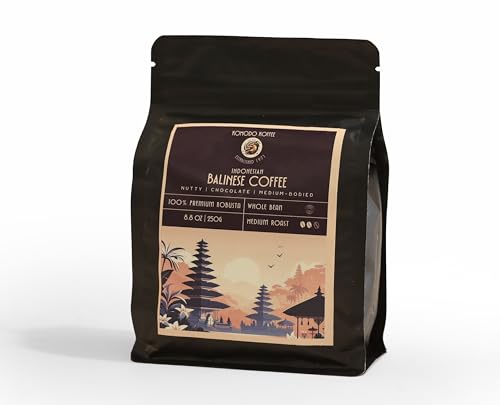
This organic medium roast is ideal for coffee lovers who prioritize sustainability and bold flavor without sacrificing smoothness. Sourced from single-origin Balinese beachfront farms since 1971, Komodo Koffee uses 100% organic Robusta beans grown under sustainable practices. The medium dark roast delivers a rich, medium-bodied cup with notes of dark chocolate and nuts, low acidity, and a clean finish-great for espresso or daily pour-over. Freshly roasted and sealed with a degassing valve, the 8.8oz bag locks in freshness and aroma. While Robusta typically lacks Arabica’s subtlety, this bean’s quality processing makes it a solid, eco-conscious choice for everyday use or gifting.
Best For: Coffee lovers seeking a sustainably sourced, bold-flavored medium dark roast with low acidity and a smooth finish, ideal for espresso or daily brewing.
Pros:
- Made from 100% organic, single-origin Robusta beans sustainably grown on Balinese beachfront farms since 1971
- Rich, medium-bodied flavor with notes of dark chocolate and nuts, offering a smooth, low-acidity cup
- Eco-conscious packaging with a degassing valve preserves freshness and aroma in a 8.8oz resealable bag
Cons:
- Robusta beans may lack the nuanced complexity and aromatic subtlety prized in high-end Arabica varieties
- Medium dark roast might be too bold for those preferring lighter, fruitier coffee profiles
- Limited to a single origin and bean type, which may not appeal to those seeking variety or blend depth
Smokin Beans Indonesia Sulawesi Coffee (2 lb)

Though I prefer a bold, full-bodied cup with rich complexity, I find the Smokin Beans Indonesia Sulawesi Coffee (2 lb) best suits those who value freshness and customization in their specialty coffee experience. Roasted to order and shipped within 3–7 days, it peaks in flavor during the first 2–3 weeks. I appreciate the syrupy body, dark chocolate, and earthy spice notes-great for espresso or dark roast lovers. You can pick from eight roast levels or request custom grinding. The Giling Basah–processed, specialty-grade beans roast on advanced equipment tuned to origin profiles. Whole bean comes standard, but messaging after checkout opens options. It’s a flexible, fresh choice if you know your preferred roast and grind.
Best For: Coffee enthusiasts who prioritize freshness, customization, and specialty-grade beans with a preference for rich, earthy, and chocolate-forward flavor profiles.
Pros:
- Roasted to order and shipped promptly, ensuring peak freshness within 3–7 days
- Offers eight roast levels and custom grind options for personalized brewing
- Specialty-grade, Giling Basah–processed beans with a distinctive syrupy body and deep flavor notes
Cons:
- Flavor peaks within 2–3 weeks, requiring timely consumption for best taste
- Limited origin variety for those seeking diverse regional profiles
- Customization requires post-purchase communication, which may delay processing
Green Mountain Sumatra Reserve Dark Roast 10oz

For those seeking a dark roast with depth and character without the bitterness, Green Mountain Sumatra Reserve Dark Roast stands out as a strong option among Indonesian coffees. I’ve found it balances boldness with smoothness-its sweet notes of tropical fruit, brown sugar, and warm spice come through clearly, even in a full city roast. The body is rich but not heavy, and the aroma is deep without being smoky. As a 100% Arabica, USDA Organic, and Fair Trade Certified blend, it meets strict quality and ethics standards. It works well in drip machines and French presses, though I’d avoid espresso-it’s not oily enough for ideal crema. Kosher certified, pre-ground, and sustainably sourced, it’s a reliable daily choice when you want dark roast depth without sharpness or burn.
Best For: Coffee lovers who want a smooth, bold dark roast with rich flavor and ethical sourcing without the bitterness common in darker roasts.
Pros:
- Balanced sweet and spicy notes with tropical fruit, brown sugar, and warm spice undertones
- USDA Organic, Fair Trade Certified, and 100% Arabica for high quality and ethical standards
- Rich body and deep aroma without smokiness, ideal for drip and French press brewing
Cons:
- Not recommended for espresso due to low oil content and inability to produce good crema
- Pre-ground format may lose freshness faster compared to whole bean
- Flavor complexity may be too subtle for those preferring intense, smoky dark roasts
1870 by Caffè Barbera Premium Coffee Beans
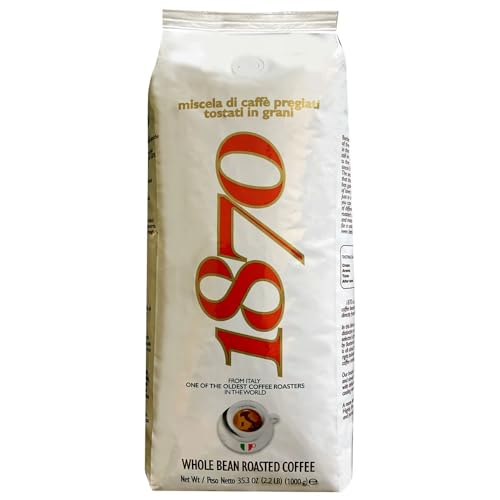
Caffè Barbera’s 1870 Hesperia blend stands out for coffee lovers who want a bold, full-bodied experience rooted in tradition. I’ve tried it, and it delivers an intense, spicy kick with every brew. It’s a four-bean mix from Indonesia and Brazil, roasted in Italy using 1960s machines-old-school but effective. The family’s had this recipe for over 150 years, and only three people know the exact blend. They use natural air cooling and controlled maturation, which helps balance the flavor. If you prefer rich, no-nonsense coffee with heritage, this beats most modern roasts. It’s not flashy, just consistent, deep, and built to last.
Best For: Coffee enthusiasts who appreciate bold, full-bodied flavor and value heritage-driven, tradition-rich blends.
Pros:
- Intense, spicy, and rich flavor profile ideal for those seeking a robust daily coffee
- Crafted using a time-honored family recipe with 150+ years of Italian roasting expertise
- Roasted in vintage 1960s machinery with natural air cooling and controlled maturation for consistent quality
Cons:
- Limited bean origin diversity with only Indonesian and Brazilian components
- Whole beans require a grinder, which may be inconvenient for some users
- Heritage-focused approach may appeal less to those preferring modern or experimental roast profiles
Monkey Business Ethically Sourced Kopi Luwak Beans

If you’re after a truly distinctive coffee experience rooted in rarity and ethical standards, Monkey Business Ethically Sourced Kopi Luwak Beans stand out among the best Indonesian coffee beans-especially for those who value animal welfare alongside flavor. I only recommend this if you’re certain the beans are verified wild-sourced, like these from Monkey Business, because caged civet farming is cruel and common. These beans come from Indonesia, where civets naturally eat ripe cherries and excrete the beans, which are then cleaned and carefully roasted. The result? A smooth, rich cup with no bitterness and clear notes of caramel and chocolate-no fancy gear needed, just brew like any high-quality bean.
Best For: Coffee enthusiasts seeking a rare, luxury brew with ethical sourcing and smooth, complex flavor-ideal for gifting or personal indulgence.
Pros:
- Made from 100% ethically wild-sourced Kopi Luwak beans, ensuring animal welfare and sustainability
- Offers a smooth, non-bitter cup with rich caramel and chocolate notes-no special equipment needed
- Marketed as the “Rolls Royce of coffee” with a fun, trustworthy brand identity based in the UK
Cons:
- Extremely high price point due to rare production process and ethical sourcing standards
- Limited availability compared to conventional premium coffees
- Risk of consumer confusion or skepticism due to widespread issues with fake or unethically sourced Kopi Luwak
Bones Coffee Sumatra Dark Roast 12 oz
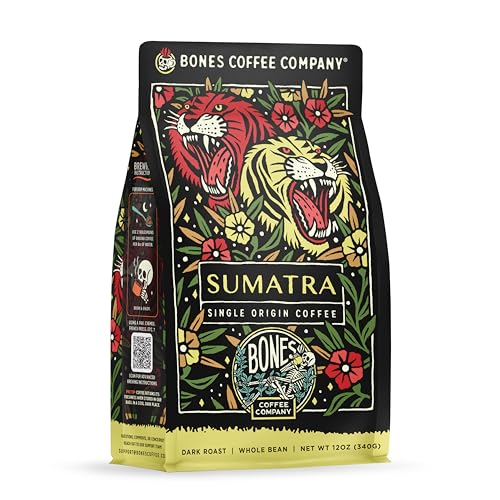
Though I prefer a bold, full-bodied cup with minimal acidity, Bones Coffee Sumatra Dark Roast 12 oz stands out as a solid choice for anyone seeking a low-acid, earthy profile typical of Indonesian beans. I like that it’s made from 100% Arabica beans, dark roasted in small batches in the USA for freshness. The resealable bag keeps the whole beans fresh, and I can grind them fine for pour over or coarse for French press. It’s vegan, keto-friendly, and has no sugar or carbs. I’ve found it smooth with smoky depth and just enough sweetness. It’s not super bright-ideal if you hate acidic coffee.
Best For: Those who prefer a smooth, low-acid coffee with rich, earthy flavors and a smoky depth, especially fans of Indonesian single-origin beans.
Pros:
- Made from 100% Arabica beans, dark roasted in small batches for peak freshness
- Low acidity with a smooth, full-bodied profile featuring complex sweetness and smoky undertones
- Vegan, keto-friendly, and free of sugar, dairy, and carbs-ideal for health-conscious drinkers
Cons:
- Lacks bright, vibrant notes which may disappoint those who enjoy acidic or fruity coffees
- Whole bean format requires grinding for certain brew methods, adding extra steps
- Flavor profile may be too earthy or intense for those preferring mild or balanced roasts
Factors to Consider When Choosing Coffee Indonesia
You’ll want to take into account the origin and region since beans from Sumatra taste different than those from Java, thanks to unique soil and climate. Look at the roast profile and bean type-dark roasted Arabica offers bold richness, while medium-roast Robusta gives a stronger, more intense kick. Don’t skip checking for ethical sourcing and flavor notes, as these tell you about quality, sustainability, and what to expect in your cup.
Origin And Region
While Indonesia’s vast archipelago offers diverse coffee-growing conditions, the region your beans come from directly shapes their flavor, body, and acidity. If you’re after bold, earthy profiles with a syrupy mouthfeel, Sumatra’s volcanic soil and Giling Basah processing deliver exactly that. For brighter, more complex cups, go with high-altitude beans above 1,400 meters-Java and parts of Sulawesi offer this with balanced acidity and depth. You’ll notice Bali’s rich microclimates produce clean, smooth Arabica with low acidity, ideal if you prefer mellow brews. Keep in mind: elevation matters, as higher farms grow denser beans with sharper aroma and tang. And while Arabica dominates premium picks, some regions grow robust Robusta with intensity and lower cost. Choose Sumatra for heavy body, Sulawesi for sweetness, Java for structure. Each origin gives you a different tool for brewing-match it to your preferred method and taste.
Roast Profile
What roast level brings out the best in your Indonesian beans? Go for medium dark to dark roast to highlight their signature earthy, smoky flavors. These profiles lower acidity and boost body, making the coffee feel rich and full in your cup. While lighter roasts can bring out herbal or woody notes, they often miss the mark on the deep, complex character these beans are known for. Medium dark strikes a solid balance-preserving some origin traits while adding subtle sweetness from caramelized sugars. Dark roasts slightly reduce perceived bitterness and acidity, smoothing out the finish. Though roast barely affects caffeine, it does shape taste and mouthfeel. Since single-origin Indonesians reflect unique terroir and processing, look for roasters who tailor profiles to the region-like Sumatra’s wet-hulling or Sulawesi’s high elevation. Aim for roasts that match how you brew.
Bean Type
When choosing Indonesian coffee beans, start by considering the two main types: Arabica and Robusta. Arabica grows at higher elevations and delivers smoother, more acidic cups-think bright, floral notes from Sumatra or Java. Robusta thrives at lower altitudes, packing more caffeine and bold, earthy flavors, common in everyday blends. You’ll also find unique options like Kopi Luwak, where beans pass through civet cats, resulting in lower acidity and less bitterness, though it’s pricier and ethically debated. Most Indonesian beans use Giling Basah (wet-hulling), giving them a signature full body and reduced acidity. Volcanic soil enriches the plants, boosting aroma and depth. For distinct profiles, go single-origin: Sumatra offers syrupy spice, Sulawesi brings balance, Bali gives clean tones. Pick Arabica for complexity, Robusta for strength. Your brew method matters too-drip, espresso, or manual pour-each suits different bean traits.
Ethical Sourcing
If you’re buying Indonesian coffee, especially specialty types like Kopi Luwak, ethical sourcing should be a top priority. You should only choose beans collected from wild animal droppings in their natural habitat, never from caged or force-fed animals. Look for third-party certifications and clear documentation-like video verification-that prove humane, sustainable practices. Ethical producers partner with local farming communities, ensuring fair wages and environmental protection. Avoid synthetic or blended substitutes; stick to 100% pure, traceable beans from verified wild sources. Natural enzymatic fermentation during digestion improves flavor, but only when animals are free and unharmed. Unethical farms cut corners with captivity, harming both animal welfare and coffee quality. Your purchase supports either exploitation or sustainability-choose brands that are transparent, certified, and committed to ethical standards. It’s the only way to enjoy high-quality Indonesian coffee with integrity.
Flavor Notes
Flavor defines the essence of Indonesian coffee, and knowing what to expect helps you choose wisely. You’ll often taste earthy, spicy, and woody notes, with hints of dark chocolate, brown sugar, or tropical fruit depending on the region. The Giling Basah method gives beans a syrupy body and deep, complex flavors you can’t miss. If you prefer richer profiles, look for naturally processed coffees-extended fermentation adds caramel sweetness and nuttiness. High-altitude beans bring subtle floral or herbal tones without losing that bold body Indonesian coffee is known for. Some specialty options even use controlled animal digestion to reduce bitterness and increase aroma, though these are pricier and less common. You should prioritize processing and elevation when selecting-each directly shapes flavor. Match these traits to your brewing method; for example, full-bodied profiles work well in French press or espresso. Know what you like, then pick accordingly.
Acidity Level
Though you might expect bright, tangy notes common in other coffee origins, Indonesian beans typically deliver a smoother profile with low acidity, making them a solid choice if you prefer gentler cups. The wet-hulling process (Giling Basah) common in Sumatra and Sulawesi reduces acidity while boosting body. If you’re sensitive to acid, these beans are a practical pick. High-altitude regions like Gayo or Toraja offer slightly more balanced acidity due to slower bean development, giving you a touch more brightness without sharpness. Extended drying and fermentation in humid climates also lower citric and malic acid levels. And if you’re curious about unique options, consider luwak coffee-enzymatic digestion reduces chlorogenic acid, though quality varies. Earthy, woody flavors further mask acidity, making these coffees feel mellow. Choose wet-hulled or naturally processed beans if low acidity matters most.
Frequently Asked Questions
What Makes Kopi Luwak so Expensive?
You pay more for kopi luwak because it’s processed through civet cats, which chew and ferment the beans before excretion. That unique digestion softens the beans, reducing bitterness. Producers hand-collect, clean, and roast them, making it labor-intensive. Limited supply and high demand drive prices up. Cheaper alternatives like wet-processed Sumatran or Sulawesi beans offer bold flavor without the ethical issues or cost.
Is Kopi Luwak Safe to Consume Daily?
You shouldn’t drink kopi luwak daily. It’s safe in small amounts, but the high price doesn’t guarantee better quality or safety. Many commercial versions are poorly processed, increasing contamination risk. Cheaper, well-roasted coffees like Sumatran Mandheling or Java Arabica offer cleaner, more consistent flavor. If you try kopi luwak, do it occasionally and buy from verified, ethical farms that test for purity. Rotate it with other beans to avoid overexposure.
Are Instant Coffee Mixes Made From Real Beans?
You’re right to wonder-many instant coffee mixes aren’t made from pure coffee beans. Most contain a blend of real coffee extract and fillers like chicory, soy, or artificial flavors, especially cheaper brands. Some use 100% real coffee, like Nescafé Classic or Starbucks Via, but check labels. Freeze-dried tends to be higher quality than granulated. If you want purity and better flavor, opt for single-origin instant coffees made from 100% Arabica beans.
Does Sulawesi Coffee Have Less Acidity Than Sumatra?
Yes, Sulawesi coffee typically has less acidity than Sumatra. You’ll notice it’s smooth, with low brightness and a clean finish, making it easier on sensitive stomachs. Sumatra, especially from regions like Mandheling, leans earthier and more pungent, often with a heavier body but slightly higher perceived acidity. If you prefer mellow cups, go for Sulawesi. For bold, wild complexity, choose Sumatra. Both work well in medium roasts.
Can I Brew Balinese Coffee Using a French Press?
Yes, you can brew Balinese coffee with a French press. You’ll get a full-bodied cup with low acidity and earthy notes, typical of Indonesian beans. Use a coarse grind to avoid sludge and over-extraction. Steep for 4 minutes, then press slowly. Clean the press right after to prevent oil buildup. While a French press highlights its richness, pour-over or drip might better showcase subtle flavors if you prefer clarity over boldness.