Best Coffee Quality Control Tools Experts Rely On
You rely on tools like the Apexstone WDT Tool and Subminimal Flick for precise ground distribution and channeling prevention. Their 304 stainless steel needles (0.3–0.4 mm) guarantee durability and rust resistance, while ergonomic handles reduce fatigue. Models with replaceable pins, like the CREMA 6-Pin, offer long-term use. Some double as tampers or include stands for convenience. For multi-functionality, try the stainless steel scoop-tamper combo. Choose based on portafilter size, ease of cleaning, and build quality-your extraction consistency depends on it. Smart choices keep your workflow clean and repeatable.
We are supported by our audience. When you purchase through links on our site, we may earn an affiliate commission, at no extra cost for you. Learn more. Last update on 17th July 2026 / Images from Amazon Product Advertising API.
Notable Insights
- Stainless steel WDT tools with 0.3–0.4 mm needles ensure precise, rust-resistant coffee bed preparation for consistent extraction.
- Ergonomic designs with lightweight, non-slip grips reduce hand fatigue and improve control during repetitive use.
- Replaceable or retractable needle systems allow easy cleaning and prolong tool life while maintaining hygiene.
- Multi-functional tools combine WDT needles and tampers, enhancing efficiency and portability for espresso professionals.
- Compatibility with 58mm portafilters and modular components ensures adaptability across various espresso setups.
Apexstone WDT Tool Espresso Needle with Stand

If you’re serious about pulling consistent, high-quality espresso shots-whether at home or in a busy café-the Apexstone WDT Tool Espresso Needle with Stand is a practical choice that delivers precision without fuss. I use the 7 interchangeable 304 stainless steel needles-0.3 mm thick-with ease, and the extra 3 replacement pins mean I’m never stuck. The aluminum base stays put and wipes clean fast. My handle fits comfortably in hand, making stirring smooth. It works with any portafilter and espresso machine. At just over 3 ounces, it’s light but solid. With a 1-year warranty, Apexstone backs their build. I trust it daily.
Best For: Home baristas and coffee professionals seeking precise, consistent espresso preparation with a durable, easy-to-use WDT tool.
Pros:
- Features 7 interchangeable 304 stainless steel needles (0.3 mm diameter) with 3 extras for extended use
- Sturdy aluminum alloy base ensures stability and easy cleaning
- Ergonomic handle and lightweight design (3.52 oz) enhance comfort and control
Cons:
- No protective case included for needle storage or transport
- May require careful handling to avoid bending the thin 0.3 mm needles
- Limited to users who already own or plan to use an espresso machine regularly
CREMA WDT Tool Stainless Steel 6-Pin

The CREMA WDT Tool Stainless Steel 6-Pin stands out for espresso enthusiasts who prioritize consistency and precision in their daily grind. I use it to break up clumps and evenly distribute grounds before tamping, which reduces channeling and improves extraction. It’s built from solid stainless steel with a silicone grip for comfort and control. The six 0.4mm pins-three installed, three stored-let me replace worn ones easily. At just 2.89 ounces and 4 inches long, it’s travel-friendly. Made by Crema Coffee Products, it’s durable, simple, and effective for anyone serious about better espresso without fuss.
Best For: Home baristas and espresso enthusiasts seeking consistent, high-quality extraction through precise coffee ground distribution.
Pros:
- Durable stainless steel construction with ergonomic silicone grip for comfort and control
- Includes three spare 0.4mm pins in built-in storage for long-term usability
- Compact and lightweight design makes it ideal for travel and daily use
Cons:
- Only compatible with certain portafilter sizes, limiting universal fit
- Pins may bend if excessive force is applied during use
- Higher price point compared to basic distribution tools
Subminimal Flick WDT Espresso Tool

I rely on tools that balance precision with practicality, and the Subminimal Flick WDT Espresso Tool stands out for anyone serious about consistent espresso extraction-especially if you value safety and ease in your workflow. Its retractable stainless steel needles deploy with one click and stow magnetically, reducing accidental pricks. I like using it because it doubles as a mini tamper, and the aluminum base feels sturdy. It stores flat or mounts magnetically to my machine. At just 80 grams, it’s light but solid. I use the included extra needles and wall mount to keep things organized. Hand washing keeps it clean. Not electric-no cords needed. Made by Subminimal, it’s built for daily home use, and the flick-action design helps distribute grounds evenly without hassle. Compared to fixed-needle tools, it’s safer and just as effective.
Best For: Home baristas who prioritize precision, safety, and sleek design in their espresso preparation routine.
Pros:
- Retractable stainless steel needles enhance safety and convenience with one-click deployment and magnetic retraction
- Doubles as a mini tamper and features a sturdy aluminum base for reliable performance
- Magnetic mounting and compact design allow for flexible storage and easy organization
Cons:
- Limited to manual use with no electric or automated distribution features
- Replacement needles may be needed over time, adding to long-term maintenance
- Hand wash only care requirement may be less convenient for frequent users
Espresso Distribution Tool 2-Piece Set

You’ll get the most consistent espresso shots in your daily routine when you use tools designed for precision, like the Espresso Distribution Tool 2-Piece Set-especially if you’re a home barista or café worker who values both function and durability. I rely on its stainless steel 5-needle head because it evenly spreads grounds without clumping. The natural walnut and rosewood handles feel sturdy and look great on any counter. It’s lightweight, easy to clean, and the base protects the needles when stored. Unlike flat distributors, this set improves extraction through gentle stirring. It works with most portafilters and machines. At just over an ounce, it’s travel-friendly. I’ve seen minor wood color variations, but they don’t affect performance. HINGTAI stands behind it-email support resolves issues fast.
Best For: Home baristas and café professionals seeking a durable, precision espresso distribution tool that enhances extraction quality and streamlines coffee preparation.
Pros:
- Stainless steel 5-needle head evenly distributes coffee grounds and prevents clumping for consistent espresso shots
- Natural walnut and rosewood handles offer an ergonomic, aesthetic, and durable grip
- Compact base provides needle protection, easy storage, and travel-friendly portability
Cons:
- Minor natural wood color variations may not appeal to those seeking uniform aesthetics
- Needle cleaning may require more attention than flat distributor tools
- Limited to portafilter use, not suitable for other brewing methods
Zolunu Espresso Stirrer 5 Needles (Rosewood)

Precision matters most when pulling espresso shots, and the Zolunu Espresso Stirrer with 5 needles is built for baristas who demand consistency. I use it to break up clumps and spread grounds evenly before tamping, which helps extract cleaner shots. Its 0.4mm stainless steel needles are thin and strong, resisting corrosion over time. The rosewood handle feels solid and comfortable in hand, while the compact stand keeps everything organized. It’s easy to clean-just rinse and air dry. At under 0.3 ounces, it’s light but well-balanced, and the design fits most portafilters. With a 4.3-star rating from nearly 1,800 reviews, it’s clearly a favorite.
Best For: Espresso enthusiasts and home baristas seeking a precise, durable tool to ensure even coffee distribution for consistent extraction.
Pros:
- Features five 0.4mm stainless steel needles that effectively eliminate clumping and promote uniform tamping
- Ergonomic rosewood handle and integrated stand offer comfort, balance, and organized storage
- Highly rated (4.3 stars from 1,796 reviews) with a lightweight, compact design that’s easy to clean and portable
Cons:
- Rosewood material may require occasional oiling to prevent drying or cracking over time
- Fixed 5-needle configuration offers no adjustability for different portafilter sizes or preferences
- Minimal stand depth may cause instability on slick or tilted surfaces
Aieve Espresso Distribution Tool with Stand

The Aieve Espresso Distribution Tool with Stand stands out for baristas who prioritize consistency in extraction, especially when working with machines like the Breville that benefit from pre-tamping ground distribution. I use it to break up clumps with its 10 stainless steel needles, ensuring even water flow. The 0.4mm-thick needles are durable and food-safe, and the BPA-free plastic feels sturdy. It comes with a stand and can be mounted via adhesive or placed on the counter. Lightweight and well-designed, it fits right into my workflow at home or in the café.
Best For: Home and professional baristas seeking consistent espresso extraction through precise coffee ground distribution before tamping.
Pros:
- Effectively breaks up clumps and prevents channeling with 10 durable 0.4mm 304 stainless steel needles
- Includes a stand and offers flexible mounting options for seamless integration into any workstation
- Made from BPA-free food-grade materials with a non-slip, matte finish for safety and durability
Cons:
- Requires careful, slow use to avoid disrupting the coffee bed and compromising extraction
- Adhesive mounting may not hold long-term on all surfaces or in high-moisture environments
- Limited functionality beyond distribution, offering no integrated tamping or dose weighing features
Espresso Tamper & WDT Tool Combo
While compact setups appeal to minimalists, this espresso tamper and WDT tool combo really shines for home baristas who want consistent shots without clutter. I use the integrated magnet to store the WDT tool right on the tamper, saving space and keeping things organized. The spring-loaded base delivers 15–30 pounds of pressure, so I get even tamping every time, reducing channeling. The WDT tool mixes grounds before tamping, which improves extraction and cuts bitterness. Made from anodized aluminum and food-grade stainless steel, it’s durable and safe. All parts come apart for easy cleaning. It fits my 53mm portafilter perfectly, though it comes in other sizes too.
Best For: Home baristas seeking a space-saving, efficient solution for consistent espresso extraction with minimal setup clutter.
Pros:
- Combines a tamper and WDT tool with magnetic storage for compact, organized use
- Spring-loaded mechanism ensures uniform tamping pressure, reducing channeling and improving extraction
- Durable, food-grade materials with fully detachable parts for easy cleaning and long-term hygiene
Cons:
- Limited to specific portafilter sizes, with 53mm being the primary fit (others require separate purchase)
- Fixed pressure range may not suit advanced users wanting precise customization beyond 30 lbs
- Anodized aluminum handle, while durable, may show wear over time with heavy daily use
WDT Espresso Distribution Tool 0.35mm
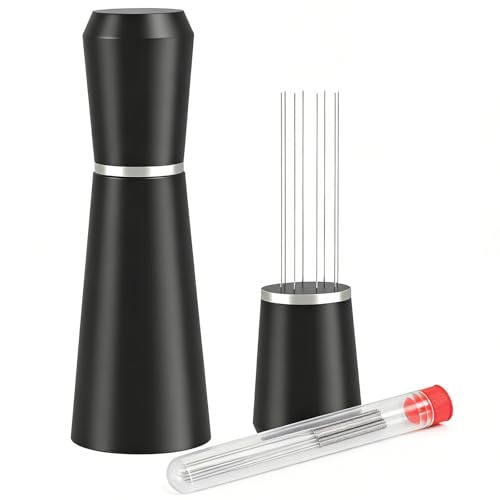
You’ll get the most out of the WDT Espresso Distribution Tool 0.35mm if you pull daily espresso shots and want more consistency without overhauling your setup. I use it with my Breville Barista Express Pro, and it’s made a noticeable difference. The 8-pin 304 stainless steel needles break up clumps effectively, and the anodized aluminum handle feels solid at 220g. It fits my 58mm portafilter perfectly and works with grinders like the Baratza Sette 270 or Niche Zero. Needles are replaceable, rust-resistant, and easy to clean. A small stand keeps it tidy. Made by Jeymei, it’s built to last and improves puck prep without fuss.
Best For: Daily espresso drinkers seeking improved shot consistency and puck preparation without changing their existing setup.
Pros:
- Enhances espresso extraction by evenly distributing grounds and eliminating clumps with 8 precision 0.35mm stainless steel needles
- Durable, anodized aluminum build with replaceable, rust-resistant needles and included storage stand
- Compatible with most 58mm portafilters and popular grinders like Breville and Baratza models
Cons:
- Limited benefit for users who don’t tamp with consistent technique or don’t use fine to medium-fine espresso grinds
- Slight learning curve to use effectively without over-stirring the coffee bed
- May not fit non-standard portafilter designs despite broad compatibility claims
CREMA WDT Tool for Even Coffee Grounds
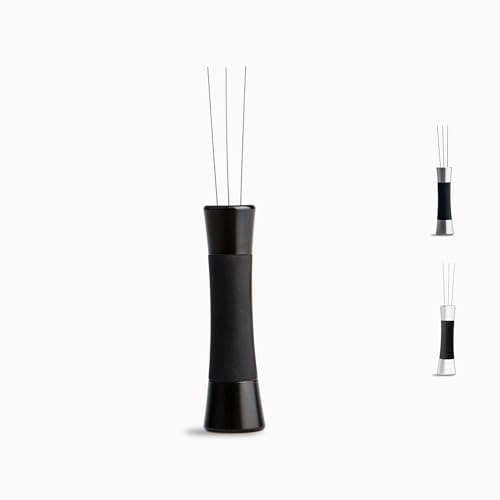
Solid stainless steel meets thoughtful engineering in the CREMA WDT Tool, a go-to for espresso enthusiasts who demand consistency in every shot. I use it daily to evenly distribute grounds and prevent channeling, which improves extraction. The 0.4mm pins-three installed, three stored in the handle-slide smoothly through coffee without bending. Its silicone grip offers control and comfort, and the compact design fits my portafilter perfectly. Built by Crema Coffee Products, it’s durable, simple, and effective. At just over two ounces, it’s portable, and the smart storage means I never lose spare pins. I rely on this tool for better espresso, especially with finicky grinders.
Best For: Espresso enthusiasts and home baristas seeking consistent extraction and improved shot quality through evenly distributed coffee grounds.
Pros:
- Durable stainless steel construction with a comfortable silicone grip for precise control
- Removable 0.4mm pins and built-in storage vault keep spares secure and organized
- Effectively reduces channeling and promotes uniform water flow for better flavor
Cons:
- Limited to use with portafilters, offering no versatility beyond espresso preparation
- Small size may feel less substantial or easy to misplace for some users
- Premium pricing compared to basic distribution tools without added features
Two-in-One Stainless Steel Coffee Scoop and Tamper

The Two-in-One Stainless Steel Coffee Scoop and Tamper from WILLIZTER is ideal for home baristas who want a compact, efficient tool that simplifies espresso prep without sacrificing quality. I use it daily to measure 15 ml of grounds-just the right dose-and tamp with the flat base for even compression. It’s made of food-grade stainless steel, so it won’t alter flavors or rust over time. The long handle reaches into deep canisters, and the standable design keeps my counter clean. While it doesn’t replace a precision scale or calibrated tamper, it’s reliable for casual use. At under $10 and dishwasher safe, it’s a practical pick.
Best For: Home baristas seeking a compact, multi-functional tool for quick espresso preparation without the need for separate scoop and tamper tools.
Pros:
- Combines a 15 ml coffee scoop and tamper in one durable, food-grade stainless steel tool
- Long handle allows easy access into deep canisters and stands upright to keep counters clean
- Dishwasher safe and versatile for use with coffee, cocoa, spices, and other dry ingredients
Cons:
- Not a substitute for a precision scale or professionally calibrated tamper for serious espresso enthusiasts
- Limited capacity fixed at 15 ml, which may not suit all portafilter sizes
- Basic design lacks ergonomic grip enhancements for heavy daily use
Factors to Consider When Choosing Coffee Quality Control Tools
You’ll want to take into account the needle quantity and configuration of your tools, since more needles can speed up extraction but might be overkill for lighter use. Look for sturdy materials like stainless steel that hold up over time, and pick designs with smooth, rounded edges that feel comfortable in your hand. Also, make sure the tool is easy to clean, doesn’t trap coffee residue, and comes with compact storage or portability options if you’re moving it between stations.
Needle Quantity And Configuration
Choose a needle count between 5 and 8 for most 58mm portafilters to guarantee even distribution across the coffee bed. You’ll get full coverage without overcrowding, which helps prevent clumps and channeling. While 2-needle tools work for small portafilters, they don’t disrupt grounds as thoroughly. At the other end, 10-needle models can be overkill and harder to clean. Look for even radial symmetry in the needle layout-it guarantees uniform agitation every time. Some tools offer removable or interchangeable needles, so you can adjust the count and spacing for different basket sizes or grind settings. That’s especially useful if you switch between espresso and smaller brews. Most needles are 0.3 mm to 0.4 mm thick-this size stays rigid enough to stir effectively but stays flexible enough to avoid scratching your basket. Don’t overlook fit and spacing; wrong alignment can miss spots or bend needles.
Material Quality And Durability
Picking a coffee tool that lasts means paying close attention to what it’s made of, starting with the needle material. You’ll want 304 stainless steel-it’s tough, won’t rust, and holds up with needles between 0.3 mm and 0.4 mm for strength without sacrificing precision. If the tool has structural parts, look for anodized aluminum alloy; it’s light but durable and handles heavy daily use. Any plastic components should be food-grade and BPA-free, and finishes must be non-toxic to stay safe over time. Solid wood handles, like walnut or rosewood, add natural resilience and look great, but they need regular care to avoid cracks or warping from moisture. For longer life, choose tools with replaceable stainless steel pins or modular builds-being able to swap out worn parts means you won’t toss the whole tool when just one piece fails. That’s smart, practical durability.
Ergonomic Design Features
Comfort starts with design. You’ll want tools that reduce hand fatigue during repeated use, especially when pulling multiple shots. Look for handles with non-slip textures or silicone overlays-these keep your grip secure during tamping or stirring, preventing slippage. Rounded contours and balanced weight help maintain a natural wrist position, giving you better control and consistency. Lightweight tools, typically under 3 ounces, cut down on strain and improve maneuverability over long sessions. A compact shape fits comfortably in one hand, accommodating different grip styles and hand sizes. You don’t need oversized or bulky tools-precision comes from fit, not force. Avoid slick, flat surfaces that slide under pressure. Instead, choose matte finishes or ergonomically shaped grips that stay steady in damp conditions. These details add up, helping you maintain technique without discomfort.
Ease Of Cleaning And Maintenance
When it comes to keeping your tools in top shape, material and design make all the difference. You’ll want tools made from food-grade stainless steel like 304 or SUS304-they resist corrosion and clean easily with water or mild detergent. Removable or retractable needle systems let you wash under and around the pins, reducing coffee residue that can taint your brew. Go for non-porous materials like anodized aluminum or BPA-free plastics; they won’t absorb oils or moisture, which helps maintain hygiene over time. Some models come with stands or protective vaults, keeping sensitive parts dust-free when idle. But watch out: hand-wash-only tools with fine needles or magnetic parts need thorough drying, especially in humid areas, or you risk rust and water damage. Cleanability isn’t just convenient-it’s critical to consistent flavor and tool longevity. Choose smart, and you’ll save time and avoid headaches down the line.
Storage And Portability Options
For quick access and secure storage, look for quality control tools that feature integrated stands or magnetic bases-these keep your device upright and stable, freeing up counter space and shielding delicate parts like needles from accidental bumps. Choose compact models under 5 inches tall and weighing less than 3 ounces; they fit easily in drawers or travel kits. Lightweight materials like anodized aluminum or food-grade plastic cut bulk without sacrificing durability. Detachable or retractable needle systems boost safety and prevent damage during transport. Built-in storage compartments are a must-they hold spare needles securely, so you’re never left searching. If you move your tool between locations or work in tight spaces, these features aren’t just convenient, they’re essential for keeping your gear ready, organized, and functional day after day.
Compatibility With Equipment
While you’re selecting a quality control tool, don’t overlook how well it works with your existing espresso setup. Make sure the needle configuration and overall size let you insert it fully into your portafilter basket without hitting the sides-this guarantees even ground disruption. Check that the base or stand fits neatly near your grinder or machine, so it doesn’t block your workflow or take up too much counter space. You’ll also want a handle length and needle depth that reach into deeper baskets, especially if you use bottomless or double-spout portafilters. Confirm the materials-like food-safe plastics or stainless steel-won’t react with coffee oils or cleaning chemicals. And consider whether you can mount or store it close to your setup without getting in the way of other tools or daily routines.
Precision And Consistency Performance
Though you might overlook the finer details, the precision of your coffee tool plays a direct role in how evenly your grounds distribute and extract. You’ll want needles between 0.3 mm and 0.4 mm in diameter-they break up clumps without damaging your portafilter basket. Tools with 5 to 10 needles offer better uniformity; more needles mean finer, more consistent disruption. For long-term reliability, choose 304 stainless steel-it resists corrosion and holds up over time. You’ll also benefit from ergonomic designs with non-slip grips and balanced weight, which help you maintain control during WDT and reduce mistakes. If you plan to use the tool daily, pick one with replaceable needles. That way, you can swap out worn parts instead of buying a whole new tool. It’s a small upgrade that keeps your results consistent and your setup cost-effective over time.
Frequently Asked Questions
What Is the Best WDT Tool for Beginners?
The best WDT tool for beginners is the Nanopresso WDT tool. It’s affordable, durable, and simple to use-just twist and stir. Its 0.3mm stainless steel needle works well with most grinders and distributes grounds evenly. Unlike pricier options, it doesn’t require calibration. You’ll avoid clumps and channels in your puck, leading to better extractions. It’s small, easy to clean, and fits in your grinder’s portafilter. If you want consistent, balanced shots without complexity, this tool gets you there fast.
Can I Use WDT Tools With Any Portafilter Size?
You can use WDT tools with most portafilter sizes, but you’ll need to check the needle length and handle design. Some tools are sized for 58mm baskets and might not reach the edges of smaller portafilters. Others, like the Pullman WDT tool, come in multiple sizes for better fit. Cheap pins might bend, so go for stiff, food-grade stainless steel. Always center the tool in the puck to avoid uneven distribution.
How Often Should I Clean My WDT Tool?
You should clean your WDT tool after every use. Coffee oils and grinds build up quickly, causing clumping and uneven distribution. A quick rinse with water and a brush removes residue. For deep cleaning, use warm, soapy water weekly. Stainless steel tools like the Pullman Puck Rake resist corrosion but still need regular care. Let it dry fully before storing. Skipping cleanings risks cross-contamination and poor tamping, hurting your shot quality.
Are Wooden-Handled Espresso Tools Durable Long-Term?
You can rely on wooden-handled espresso tools long-term if you care for them properly. Wood resists heat well and feels nice in hand, but it can crack or absorb moisture over time. Avoid soaking it in water or leaving it in damp areas. Occasional oiling with food-safe mineral oil helps prevent drying. Stainless steel handles last longer with zero maintenance, but wooden ones offer warmth and grip when maintained.
Do WDT Tools Work With Pre-Ground Coffee?
Yes, you can use WDT tools with pre-ground coffee, but it’s not ideal. Since pre-ground beans skip the grinder’s burrs, clumps form more easily, and a WDT tool won’t fix uneven particle size. You’ll still get some aeration and minor distribution benefits, but for best results, grind fresh. WDT works best right after grinding, so with pre-ground, you’re only partially solving extraction issues. Use it only if you must.