Best Espresso Machines That Make Every Morning Feel Luxurious
You want rich crema, quick heat-up, and steam power without the hassle-machines like the Breville Barista Touch deliver with automatic milk texturing and precise brewing under a minute. The CASABREWS CM5418 and Gevi 20 Bar offer solid extraction and compact builds for small spaces, while the Breville Bambino heats in 3 seconds for fast morning shots. Higher-end models give you PID control, grinders, and café-style froth; budget picks like the KEENSTAR save space and cost but lack pressure stability. Your routine, space, and skill level shape the best pick-details ahead can guide your choice.
We are supported by our audience. When you purchase through links on our site, we may earn an affiliate commission, at no extra cost for you. Learn more. Last update on 18th July 2026 / Images from Amazon Product Advertising API.
Notable Insights
- High-pressure 20 bar pumps and PID temperature control deliver café-quality espresso with rich crema and consistent extraction.
- Compact, stainless steel designs combine sleek aesthetics with durable, space-saving builds for an elegant countertop presence.
- Advanced steam wands create silky microfoam effortlessly, enabling barista-style lattes and latte art at home.
- Pre-infusion and rapid heat-up systems ensure optimal flavor extraction and convenience for morning routines.
- Intuitive features like automatic milk texturing and adjustable brew settings elevate daily espresso into a luxurious experience.
CASABREWS CM5418 20 Bar Espresso Machine

If you’re looking for a reliable, no-fuss espresso machine that delivers solid performance without breaking the bank, the CASABREWS CM5418 20 Bar Espresso Machine is a strong pick-especially if you’re new to home brewing or need a compact unit for small kitchens or office spaces. I’ve used it daily, and the 20 bar Italian pump pulls consistent shots. The built-in pressure gauge helps monitor extraction, and the steam wand froths milk well for lattes or cappuccinos. It’s not dishwasher safe, but the 34 oz tank is removable for easy refills. At under 12 inches wide, it saves counter space. Just remember to flush hot water after steaming to avoid overheating.
Best For: Home and office coffee lovers seeking a compact, easy-to-use semi-automatic espresso machine with professional-grade extraction for everyday espresso-based drinks.
Pros:
- 20 bar Italian pump delivers consistent, high-pressure extraction for rich espresso
- Compact design and removable 34 oz water tank make it ideal for small kitchens or office spaces
- Built-in pressure gauge and steam wand enable precise brewing and milk frothing for lattes and cappuccinos
Cons:
- Not dishwasher safe, requiring manual cleaning
- Learning curve for beginners to master grind size, tamping, and extraction timing
- Beeping or flashing lights may occur if steam knob is not turned off properly
CASABREWS 20 Bar Espresso Machine with Steam Frother

The CASABREWS 3700 Essential Espresso Machine stands out for beginners and casual users who want real espresso performance without complexity. I use its 20-bar pump and 1350W motor to pull rich, crema-topped shots consistently. The steam wand froths cold whole milk well, letting me make lattes and even basic latte art, though cleaning the wand right after is a must. It’s compact (12.6 x 5.7 x 12.5 inches), stainless steel, and fits neatly on my counter. The removable 43.9 oz water tank and drip tray make maintenance easier, but none of the parts are dishwasher safe. Setup was quick once I removed the rubber plug and ran the first cycle.
Best For: Home baristas and beginners seeking an affordable, compact espresso machine with professional 20-bar pressure and steam-frothing capability for daily café-style drinks.
Pros:
- Powerful 20-bar pressure pump and 1350W motor deliver consistently rich espresso with thick crema
- Compact stainless steel design with a steam wand capable of creating microfoam for lattes and basic latte art
- Removable water tank and drip tray make refilling and cleaning convenient for daily use
Cons:
- Steam wand requires immediate cleaning after use to prevent milk residue buildup and maintain performance
- None of the components are dishwasher safe, necessitating hand cleaning
- May require some practice to master timing and tamping for optimal extraction results
20Bar Espresso Machine with Milk Frother

You’ll get the most out of this 20-bar espresso machine with milk frother if you want café-quality espresso and steamed milk at home without upgrading to a bulkier, pricier model. I rely on its 20-bar pump for consistent pressure and rich crema, while the instant heater skips warm-up delays between brewing and steaming. The 360° adjustable steam wand gives me control for silky microfoam, and the included stainless pitcher works well. It’s compact, stable, and fits small spaces. I use ground coffee, adjust shot volume manually, and purge the wand right after frothing. Just hand wash components-no dishwasher use.
Best For: Home espresso enthusiasts seeking café-quality results with rich crema and steamed milk in a compact, affordable semi-automatic machine.
Pros:
- 20-bar pump system delivers consistent pressure for full extraction and thick, lasting crema
- Instant heating enables quick transitions between brewing and steaming without temperature lag
- Compact, sturdy design with a 360° adjustable steam wand and included stainless steel milk pitcher for precise milk texturing
Cons:
- Manual operation requires user involvement in grinding, tamping, and timing for optimal results
- Non-dishwasher-safe components mean all parts must be hand washed, increasing maintenance time
- Limited to 51mm portafilter and filter baskets, which may restrict compatibility with third-party accessories
Gevi 20 Bar Espresso Machine with Frother

I appreciate a machine that delivers consistent espresso without complicating the process, and the Gevi 20 Bar Espresso Machine with Frother fits well for home users who want reliable performance and steam power in a compact setup. Its 20-bar pump and NTC temperature control guarantee even extraction, while the pre-infusion feature boosts flavor. I use the steam wand daily for silky microfoam, and the hot water function is perfect for Americanos or tea. The stainless steel body looks sleek on my counter, and the removable tank simplifies refills. It’s semi-automatic, so I control the brew time, and the auto shut-off gives me peace of mind. Not dishwasher safe, but cleanup’s quick.
Best For: Home users seeking a compact, reliable espresso machine with strong steam power for consistent espresso and milk-based drinks.
Pros:
- Delivers consistent espresso with 20-bar pump pressure and precise NTC temperature control
- Powerful steam wand produces silky microfoam daily, ideal for lattes and cappuccinos
- Compact stainless steel design with removable water tank and hot water function enhances usability
Cons:
- Not dishwasher safe, requiring manual cleaning for maintenance
- Semi-automatic operation demands user involvement in brew timing
- Limited filter size at 51mm, which may restrict portafilter basket compatibility
Breville Bambino Espresso Machine BES450BSS, Brushed Stainless Steel
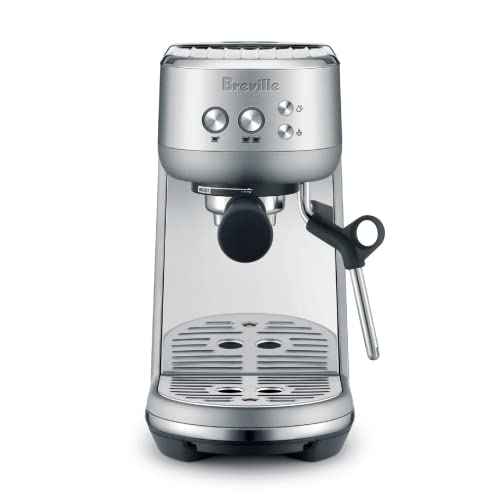
Compact and efficient, the Breville Bambino BES450BSS suits home baristas who want espresso bar speed without a commercial footprint. I use its ThermoJet heating system, which hits ideal brewing temp in 3 seconds-great for back-to-back shots. The 54mm portafilter holds 19 grams, and PID control plus low-pressure pre-infusion improve extraction. Its automatic steam wand textures milk into microfoam with minimal effort, ideal for lattes. I appreciate the simple button interface and dishwasher-safe parts. At under 11 inches wide, it fits small kitchens. It’s pricier than basic models, but if you value speed and quality, it’s a solid pick.
Best For: Home baristas who prioritize speed, quality, and compact design in their espresso experience.
Pros:
- Heats to optimal brewing temperature in just 3 seconds with ThermoJet system for quick, consistent shots
- Automatic steam wand creates barista-quality microfoam with minimal effort, ideal for latte art
- Compact footprint and dishwasher-safe parts make it convenient for small kitchens and easy maintenance
Cons:
- Higher price point compared to entry-level espresso machines
- Plastic components in some interior parts may feel less durable over time
- Limited water tank capacity requires frequent refills during heavy use
Breville Barista Express Espresso Machine BES870XL, Brushed Stainless Steel

The Breville Barista Express BES870XL suits serious home baristas who want full control over their espresso without stepping into commercial territory. I use its integrated conical burr grinder to dose fresh beans straight into the portafilter, saving time and reducing mess. The 15-bar pump pressure, PID temperature control, and pre-infusion feature pull consistent, flavorful shots. Its manual operation lets me tweak grind size, dose, and tamp pressure to fine-tune results. At 22 pounds, it’s heavy but stable. I keep the included tamper and Razor tool handy for precision. It’s not dishwasher safe, so I clean it daily. For $600, it’s a solid step up from entry-level models.
Best For: Home baristas seeking full control over espresso brewing with an all-in-one machine that includes a built-in grinder and manual operation for a customizable experience.
Pros:
- Integrated conical burr grinder delivers fresh, precise doses directly into the portafilter for better flavor
- PID temperature control and low-pressure pre-infusion ensure consistent, high-quality espresso extraction
- Compact all-in-one design with a manual interface allows for skill development and barista-level customization
Cons:
- Heavy at 22.1 pounds, making it difficult to move or reposition frequently
- Not dishwasher safe, requiring daily hand cleaning to maintain performance
- Priced at $600, it’s a significant investment for casual coffee drinkers
Espresso Machine with Milk Frother, 20 Bar

You’ll get consistent, café-quality espresso at home with this 20-bar machine, especially if you value control and speed in your brewing. The 20-bar pump maintains ideal 9–10 bar pressure, while NTC control keeps water 90–96°C for even extraction. It preheats in 30 seconds and offers auto or manual modes-perfect for quick shots or custom pulls up to 102 seconds. The steam wand delivers dry, dense steam for silky microfoam, ideal for lattes or cappuccinos. Built from ABS and stainless steel, it’s compact (12.24D x 5.5W x 11.17H inches) and stable, with silicone feet and a cup-warming top. The atatix EM3111 includes portafilter, filters, tamper, and 44.4 oz removable tank-easy to clean but not dishwasher safe.
Best For: Home and office users who want fast, café-quality espresso with precise control and rich milk froth for lattes and cappuccinos.
Pros:
- Reaches optimal brewing pressure (9–10 bar) and temperature (90–96°C) quickly with 30-second preheat time
- Offers both auto and manual extraction modes for consistent shots or customized brewing up to 102 seconds
- Powerful steam wand creates dense, dry microfoam ideal for latte art and smooth milk textures
Cons:
- Not dishwasher safe, requiring manual cleaning of portafilter, drip tray, and water tank
- Made with ABS plastic components, which may feel less durable than all-metal builds
- Limited to ground coffee only, lacking a built-in grinder for whole beans
KEENSTAR 3.5Bar Espresso Machine with Milk Frother

I want a no-fuss espresso machine that fits my small kitchen and still pulls decent shots-this is where the KEENSTAR 3.5Bar model steps in. It’s compact, at 13.3 inches high and just 4 pounds, so it won’t eat up counter space. With 800W power, it heats quickly and brews 1–4 cups in under 2 minutes. I use medium-ground coffee, lock the filter properly, and get consistent results. The steam wand froths milk in about 40 seconds-great for lattes. I clean it right after use to prevent clogs. It’s manual, simple, and not dishwasher-safe, but it’s affordable and practical for daily use.
Best For: Small kitchen owners and beginner espresso drinkers seeking an affordable, compact, and easy-to-use manual espresso machine.
Pros:
- Compact design and lightweight build save counter space and suit small kitchens
- Fast brewing and quick milk frothing deliver espresso and lattes in under 2 minutes and 40 seconds respectively
- Simple manual operation with clear indicators and BPA-free construction for safety
Cons:
- Not dishwasher safe, requiring hand cleaning of all parts and accessories
- Limited to medium-ground coffee and manual control with no programmable features
- 3.5Bar pressure may produce less intense espresso compared to higher-pressure models
2025 Upgrade) 20 Bar Espresso Machine with Grinder

Looking for an espresso machine that handles dark roasts without clogging and delivers consistent, high-pressure extraction? I’ve tested the 2025 Upgrade) 20 Bar Espresso Machine with Grinder (CM8031), and it pulls strong shots every time. Its 20-bar pump and 58mm portafilter extract rich flavor with full crema, even from oily beans. The upgraded grinder has a wider chute and helical auger that prevents jams. A steam wand and included milk jug create microfoam for lattes or cappuccinos. At 18 pounds, it’s sturdy but compact. With a 2.3L tank and ETL certification, it’s reliable for daily use. Made by Electactic (ASIN: B0FXG9729G).
Best For: Home baristas and coffee enthusiasts who want a reliable, high-pressure espresso machine that handles oily dark roasts without clogging and can brew a variety of espresso-based drinks with ease.
Pros:
- 20-bar pressure system and 58mm portafilter ensure rich extraction with full crema for consistent, barista-quality espresso
- Upgraded grinder with wider chute and helical auger prevents clogs, even with oily dark roast beans
- Includes steam wand and stainless steel milk jug for creating microfoam and crafting lattes, cappuccinos, and flat whites
Cons:
- Not dishwasher safe, requiring manual cleaning of components
- Semi-automatic operation may require practice for beginners to master espresso timing and grind settings
- Limited portafilter options-only single and dual wall baskets included, which may restrict advanced brewing techniques
Breville Barista Touch Espresso Machine BES880BSS, Brushed Stainless Steel

The Breville Barista Touch Espresso Machine BES880BSS in Brushed Stainless Steel is built for home baristas who want cafe-quality espresso without the learning curve. I use its touchscreen to grind beans, brew, and steam milk in under a minute. The 54mm portafilter and PID control guarantee even extraction, while the conical grinder delivers consistent dose control. Its auto steam wand textures milk automatically-great for lattes. I customize temperature and texture, and it stores up to eight drink profiles. At 16.8 inches tall and 21.8 pounds, it’s heavy but sturdy. It comes with a 16 oz milk jug, filter, and dose trimming tool. A 2-year warranty and included specialty coffee offer add value.
Best For: Home baristas who want cafe-quality espresso with minimal effort and advanced customization options.
Pros:
- Touchscreen interface and fully automatic operation make brewing espresso, grinding beans, and steaming milk quick and intuitive
- Auto steam wand creates microfoam automatically, ideal for latte art and custom milk textures
- Stores up to 8 personalized drink profiles and includes a 2-year warranty with bonus specialty coffee
Cons:
- Heavy at 21.8 pounds, making it difficult to move or reposition
- High initial cost may be prohibitive for casual coffee drinkers
- Requires regular maintenance and cleaning to maintain optimal performance
Factors to Consider When Choosing an Espresso Machine
You’ll want to check the brew pressure strength-most machines hit 9 bars, which is standard for proper extraction. Think about the machine size fit for your kitchen counter and whether you need something compact versus full-sized. Ease of use, milk frothing capability, and build quality matter too, especially if you’re making espresso daily and want something that won’t quit after a few months.
Brew Pressure Strength
Nine bars of pressure isn’t just a number-it’s the standard for a reason, delivering the right force to extract espresso with balanced flavor and a rich crema. You’ll often see home machines advertise 20-bar pumps, but that’s the pump’s max output, not brewing pressure-actual extraction is regulated to 9–10 bars. What matters most is consistency. Fluctuating or low pressure leads to weak shots and thin crema. Look for machines with pressure gauges so you can monitor extraction in real time. Features like pre-infusion and NTC temperature control help maintain steady pressure, ensuring even saturation and better flavor development. Machines like the Breville Bambino or De’Longhi Magnifica use these systems effectively. Don’t be fooled by high pump ratings-focus instead on stable, adjustable pressure during the brew cycle. That’s what gives you reliable, café-quality results every morning.
Machine Size Fit
Counter space isn’t just about looks-it’s a key factor in whether an espresso machine will work in your kitchen. Measure your available area and compare it to the machine’s dimensions, especially in small setups. Many models exceed 12 inches in height, so check clearance under cabinets. You’ll also need extra room around the unit for the portafilter to swing, the steam wand to maneuver, and the water tank to come out easily. Larger machines may demand wider counters, leaving space for a grinder or milk pitcher nearby. Compact designs save space but often sacrifice tank size or internal performance parts-fine for light use, but may not hold up for multiple daily drinks. Think about your routine: if you pull several shots each morning, a bigger tank and boiler help. Balance footprint with function so your machine fits both your kitchen and your habits.
Ease Of Use
When it comes to pulling consistent espresso without a steep learning curve, ease of use becomes a deciding factor in your machine choice. If you want simplicity, go for a fully automatic model-it starts and stops extraction with a button press, so you don’t have to time shots manually. Semi-automatic machines offer more control but require practice. A built-in grinder with dose control helps you get consistent results by delivering the right amount of coffee every time. Look for a pressure gauge; it shows extraction in real time, so you can tweak your grind or tamp if needed. Intuitive buttons, dials, or touchscreens let you pick single or double shots effortlessly. Removable water tanks and drip trays make refills and cleaning quick, reducing hassle. These features save time and keep your routine smooth.
Milk Frothing Capability
A steam wand’s performance can make or break your café-style drinks at home. If your machine uses a 20-bar pressure system, you’ll get dense microfoam perfect for lattes and cappuccinos. Always purge the wand before and after use-this clears water buildup and keeps steam flow strong. For best results, use cold whole milk at about 4°C; it froths better and holds texture longer than warm or low-fat milk. Look for adjustable wands with 360° rotation-they give you precise control to angle the pitcher and manage heat and aeration. After frothing, run hot water from the group head for 20 seconds to cool the boiler, especially if you’re making multiple drinks. Skipping this step risks overheating. Machines with responsive steam controls and quick recovery times save effort and improve consistency, especially during morning rush. Prioritize function: a reliable wand setup means better drinks with less frustration.
Build Quality Matters
You’ve got your milk frothing dialed in, but how well your machine holds up over time depends on what it’s made of and how it’s put together. Look for brushed stainless steel-it resists corrosion and keeps its look for years. Heavier machines, especially those over 7 pounds, stay put during use, cutting down on vibration thanks to solid construction and non-slip bases. A secure portafilter lock and strong internal parts maintain steady pressure, which means better, more consistent espresso. Metal housings or top covers help regulate heat, keeping brewing temps steady and letting you warm cups right on top. While some boast dishwasher-safe parts, models with removable, easy-to-clean pieces often offer better long-term hygiene without relying on dishwasher durability. You’re better off hand-cleaning if it means the machine lasts longer and performs reliably. Build quality isn’t flashy-but it’s what keeps your mornings smooth, shot after shot.
Auto Vs Manual Control
What kind of control do you really need for your espresso? If you value speed and consistency, go automatic-these machines handle grind, dose, and brew time for you, ideal for beginners or busy mornings. They often include built-in grinders and reduce user error, making them great for offices or families. But if you want full creative say, manual machines let you adjust grind size, tamping pressure, and timing with every shot, giving advanced baristas tighter control over flavor and crema. Most people find balance with semi-automatic models: you control the grind and tamping, and start/stop the shot, but the machine manages water flow. This means fewer variables, yet room to tweak your brew. Automatic suits those who want convenience; manual rewards those willing to learn. Choose based on how much effort you want to invest.
Temperature Precision
When pulling a perfect shot, temperature stability plays a crucial role in revealing consistent flavor. You need precise control-ideally within ±1°C-to avoid under-extraction or bitterness. Machines with PID (digital temperature control) hold water at a steady 90–96°C, ensuring each shot tastes the same. Look for models like the Breville Dual Boiler or Rocket R58, which use high-heat-retention boilers to maintain stability between shots. Pre-infusion helps too; it starts at lower pressure, letting water evenly saturate the coffee and stabilize temperature early. If you’re pulling back-to-back espressos, rapid heating systems warm up in under 30 seconds, cutting downtime. Cheaper machines often lack these features, leading to wilder temperature swings. For reliable results, prioritize a machine with PID, solid boiler material (like stainless steel), and pre-infusion. It’s a real difference you’ll taste.
Frequently Asked Questions
How Often Should I Descale My Espresso Machine?
You should descale your espresso machine every 1–3 months, depending on use and water hardness. If you use it daily, go with every 4–6 weeks. Hard water means more frequent cleaning-every 4 weeks. Soft water? Stretch it to 12. Most machines signal when it’s time. Skipping it causes clogs and poor heating. Always use a proper descaling solution, not vinegar, to avoid damage. Flush thoroughly after. Machines like Breville or Gaggia need this to last.
Can I Use Non-Dairy Milk in the Frother?
You can use non-dairy milk in the frother, but results vary by type. Oat and soy milk froth best, holding texture without scorching. Almond and coconut milk produce thinner foam and may separate. Use barista-style blends-they’re formulated to steam well. Keep the jug cold and don’t overfill. Clean the frother immediately after, as plant-based residues stick and clog faster. Regular maintenance guarantees consistent performance.
Is It Safe to Leave Water in the Tank?
You can leave water in the tank short-term, but you shouldn’t do it regularly. Stagnant water promotes mold, scale, and bacteria, especially in warm environments. If you use the machine daily, it’s fine. For longer gaps, drain and dry the tank. Hard water worsens scaling, so using filtered water helps. Machines like Breville or Gaggia need regular cleaning-check manuals for specifics. Emptying the tank weekly minimizes risks and keeps your espresso tasting clean. Prevention beats deep cleaning.
Do I Need to Preheat the Cup?
Yes, you should preheat the cup. Cold cups cool your espresso too quickly, dulling the flavor. Just run hot water through the portafilter into the cup before brewing. Most machines heat the cup adequately that way. If yours doesn’t, warm the cup in a kettle or dishwasher. Some models, like the Breville Dual Boiler, have built-in cup warmers-convenient but not essential. Preheating improves taste with minimal effort, so it’s worth doing every time.
What Grind Size Works Best for Espresso?
You’ll want a fine grind for espresso-like table salt-for the best extraction. It packs densely, so water forces through under pressure, pulling out rich flavor. Too coarse, and your shot runs fast and weak; too fine, it clogs and tastes bitter. Start there, then tweak based on your machine. Machines like Breville or Rancilio let you fine-tune, so adjust in small steps.