Best Low Caffeine Coffee That Won’t Keep You Up at Night
You want a coffee with low caffeine that won’t disrupt your sleep-try Maxwell House Half Caff or Lucy Jo’s Organic Half-Caff for about half the caffeine of regular coffee. For near-zero caffeine, Kicking Horse Decaf uses the chemical-free Swiss Water Process and keeps bold flavor. If you’re sensitive to acid, Mommee Coffee reduces chlorogenic acid and delivers just 50mg caffeine per cup. Each option balances smoothness, safety, and sleep-friendly caffeine levels, with roasting and processing tailored to minimize sleep interference. You’ll find one that fits your brewer and nighttime routine.
We are supported by our audience. When you purchase through links on our site, we may earn an affiliate commission, at no extra cost for you. Learn more. Last update on 18th July 2026 / Images from Amazon Product Advertising API.
Notable Insights
- Half-caffeine coffees like Maxwell House Half Caff and Mommee Coffee provide mild caffeine levels ideal for evening use without disrupting sleep.
- Decaf options such as Kicking Horse using Swiss Water Process remove 99.9% of caffeine, minimizing sleep interference while preserving flavor.
- Dark roasts like Botticelli Evening Blend offer lower caffeine and smooth, rich taste, perfect for nighttime relaxation.
- Organic, chemical-free decaffeination methods like Swiss Water or sugarcane process maintain bean quality and reduce caffeine safely.
- Mommee Coffee’s 50mg per cup aligns with pregnancy guidelines, offering a low-caffeine option that won’t overstimulate before bed.
Maxwell House Half Caff Ground Coffee

If you’re looking for a low-caffeine option that still delivers a dependable, rich flavor without the jolt, Maxwell House Half Caff Ground Coffee is a practical choice, especially if you want consistency across brews. I’ve found it smooth and full-bodied, with a strong aroma and balanced taste that holds up from first sip to last. Roasted in the USA since 1892 and certified Kosher, it works well with fresh, cold water and most standard brewers. The 25.6-ounce resealable canister keeps it fresh when stored in a cool, dry place. I use it for morning coffee or afternoon breaks when I need focus without overstimulation-perfect for sticking to a routine.
Best For: Those seeking a lower-caffeine coffee option that maintains rich, consistent flavor and smoothness for daily morning or afternoon breaks.
Pros:
- Smooth, full-bodied taste with a rich aroma that lasts from first sip to last
- Half-caffeine formula ideal for reduced stimulation without sacrificing flavor
- Resealable 25.6-ounce canister helps preserve freshness when stored properly
Cons:
- May lack the bold intensity preferred by dark roast enthusiasts
- Ground format may not suit users who prefer whole bean or custom grinding
- Flavor profile may be too mild for those seeking a more complex or specialty coffee experience
Allegro Coffee Half Caff, French Roast Ground Coffee, 12 oz

Allegro Coffee Half Caff, French Roast Ground Coffee, 12 oz delivers a balanced caffeine reduction without sacrificing the bold character coffee drinkers expect from a dark roast. I blend regular and decaf Latin American beans, cutting caffeine by about half while keeping flavor intact. The decaf beans use the Swiss Water Process in Vancouver, BC-no chemicals, just time and osmosis to remove caffeine gently. Roasted dark, it tastes hearty and smoky, with subtle sweet, fruit-tinged notes underneath. It’s ground fine enough for drip machines or French press. If you want bold flavor with less caffeine and care about clean processing, this is a solid, no-gimmick choice.
Best For: Coffee lovers who want the bold flavor of a French roast with reduced caffeine, ideal for those sensitive to caffeine but unwilling to compromise on taste or clean processing methods.
Pros:
- Combines regular and decaf beans to cut caffeine by about half without sacrificing rich, smoky flavor
- Uses the chemical-free Swiss Water Process for decaffeination, appealing to health- and environmentally-conscious consumers
- Made from specialty-grade Latin American beans with nuanced sweet and fruit-tinged notes beneath the dark roast
Cons:
- May still contain more caffeine than desired for those highly sensitive or on strict low-caffeine diets
- Ground format limits versatility for brewing methods requiring whole beans
- Availability may be restricted compared to mainstream coffee brands
Lucy Jo’s Organic Half-Caff Coffee Ground

Lucy Jo’s Organic Half-Caff Coffee Ground is a smart choice for coffee lovers who want to cut caffeine without sacrificing flavor or stomach comfort. I blend half regular and half decaf beans, both decaffeinated using the Water Process-no chemical solvents, just pure flavor. It’s smooth, creamy, and earthy, with low acidity, so it’s easier on sensitive stomachs. I use 100% organic arabica beans-no fillers-and roast in small batches in Upstate New York to lock in freshness. If you’re cutting back on caffeine for health or sleep, this is a reliable, clean-tasting option that still feels like real coffee.
Best For: Coffee drinkers seeking a lower-caffeine, low-acid option that’s gentle on the stomach while maintaining rich, authentic flavor.
Pros:
- Smooth, creamy, and earthy taste with low acidity, ideal for sensitive stomachs
- Made with 100% organic arabica beans and decaffeinated using a chemical-free Water Process
- Small-batch, hand-roasted in Upstate New York for maximum freshness and quality control
Cons:
- Higher price point compared to conventional coffee blends
- Limited availability outside of regional or online markets
- Half-caff profile may not provide enough caffeine reduction for highly sensitive individuals
Control Freak Coffee Lightly Buzzed (12 Oz)

I reach for Control Freak Coffee Lightly Buzzed when I want focus without the jitters, making it ideal for anyone who needs steady mental performance but reacts poorly to high-caffeine brews. With 25% caffeine, it offers balanced energy-more than decaf, less than regular coffee. It’s smooth, full-bodied, and roasted for depth, so it tastes rich without bitterness. I’ve used it in drip machines, French press, and cold brew, and it performs well every time. The 12 oz ground format stays fresh, and the beans are decaffeinated using a chemical-free process from 75% sugarcane-processed stock. It’s ethical, sustainable, and works all day without disrupting sleep.
Best For: Professionals and wellness-focused individuals seeking balanced, jitter-free mental clarity and sustained energy without the side effects of high-caffeine coffee.
Pros:
- Delivers smooth, full-bodied flavor with 25% caffeine for controlled, all-day energy
- Compatible with all brewing methods and maintains freshness in 12 oz ground format
- Ethically sourced with chemical-free decaffeination and 75% sugarcane-processed beans for sustainability
Cons:
- Lower caffeine content may not satisfy those needing a strong morning stimulant
- Premium pricing compared to conventional coffee might deter budget shoppers
- Limited availability outside niche or online markets
Green Mountain Coffee Roasters Half-Caff, 12 oz. Ground

If you’re looking for a low-caffeine coffee that still delivers rich flavor without the jolt, Green Mountain Coffee Roasters Half-Caff is a solid choice-especially if you rely on a Keurig and value convenience. I use it when I want a mellow, medium roast with half the caffeine, and it delivers every time. The 12 oz. ground comes in K-Cup pods, so it’s hassle-free and stays fresh. It’s got a sweet, buttery hazelnut taste with hints of chocolate and raisin, plus a smooth, nutty finish. It’s 100% Arabica, Orthodox Union Kosher certified, and responsibly sourced. While it’s pricier than bulk ground coffee, the consistency and ease make it worth it for daily use.
Best For: Those seeking a convenient, low-caffeine, great-tasting coffee option with consistent quality using Keurig single-serve brewers.
Pros:
- Offers a smooth, mellow medium roast with rich flavor notes of hazelnut, chocolate, and raisin
- Convenient, pre-measured K-Cup pods ensure freshness and ease of use
- 100% Arabica, Orthodox Union Kosher certified, and responsibly sourced
Cons:
- More expensive than traditional bulk ground coffee
- Limited to Keurig-compatible machines, reducing versatility
- Flavor profile may be too mild for those preferring bold or dark roasts
Green Mountain Half Caff K-Cup Pods (32 Count)

For anyone seeking a smoother morning kick without the jitters, Green Mountain Half Caff K-Cup Pods are an ideal choice-especially if you rely on a Keurig brewer and want consistent, low-caffeine coffee with minimal effort. I use them daily, and they deliver a clean, medium roast with sweet hazelnut notes, a hint of chocolate, and a smooth finish. Each pod contains 100% Arabica beans and half the caffeine of regular coffee. They’re sealed for freshness, compatible with all Keurig machines, and kosher certified. Green Mountain sources its beans responsibly, which matters if sustainability is a priority for you.
Best For: Coffee lovers who want a smoother, lower-caffeine option with rich flavor and convenient single-serve brewing.
Pros:
- Smooth medium roast with pleasant hazelnut, chocolate, and nutty notes
- Half the caffeine of regular coffee, ideal for reducing jitters or afternoon brewing
- Kosher certified, responsibly sourced, and compatible with all Keurig K-Cup machines
Cons:
- Flavor may be too mild for those who prefer bold or dark roasts
- K-Cup pods are less environmentally friendly than reusable options
- Higher cost per cup compared to ground coffee or bulk brewing methods
Botticelli Evening Blend Organic Dark Roast Coffee

Botticelli Evening Blend Organic Dark Roast stands out as a top choice for those seeking a low-caffeine coffee that doesn’t sacrifice flavor, especially if you’re winding down in the evening and want something smooth and satisfying without the jolt. I’ve found it delivers at half-caff levels thanks to a slow roast in Italy that cuts caffeine while deepening flavor. You’ll taste rich, toasted dark chocolate notes-no bitterness, just full body. It’s USDA Organic and works with any brew method, from French press to drip. Unlike some decaf blends, this one feels authentic, not flat. If you value origin and craft, Botticelli’s Italian roasting gives a clear edge over mass-market options. You get quality without the crash.
Best For: Those seeking a flavorful, low-caffeine evening coffee that delivers a rich, authentic dark roast experience without the jittery effects of high caffeine.
Pros:
- USDA Organic Certified with a smooth, full-bodied flavor and rich notes of toasted dark chocolate
- Half-caff dark roast, ideal for evening relaxation without compromising on taste
- Slow-roasted in Italy for authentic, origin-driven quality and compatibility with all brewing methods
Cons:
- Lower caffeine content may not suit those looking for a strong morning energy boost
- Premium pricing compared to conventional or mass-market coffee brands
- Limited availability outside specialty or online retailers
Kicking Horse Decaf Dark Roast Coffee

Kicking Horse Decaf Dark Roast Coffee stands out as a top pick for those who want a bold, full-bodied dark roast without the caffeine kick. I love its deep chocolate aroma and nutty complexity, with notes of roasted hazelnuts and a smooth, lasting finish. It’s decaffeinated using the Swiss Water Process, so it keeps its rich flavor without chemicals. Roasted in the Canadian Rockies, it’s 100% organic, Fairtrade, and Kosher, sourced from high-elevation, shade-grown Arabica beans. I grind it medium-fine-it works great in French Press, drip, pour over, or espresso.
Best For: Coffee lovers who crave a bold, rich dark roast experience without caffeine, especially those who value organic, Fairtrade, and sustainably sourced beans.
Pros:
- Deep, flavorful profile with notes of roasted hazelnuts and dark chocolate, offering a smooth and long-lasting finish
- Decaffeinated using the chemical-free Swiss Water Process, preserving taste and quality
- Sustainably and ethically sourced with certifications including organic, Fairtrade, Kosher, and 100% Arabica
Cons:
- Dark roast decaf may still have trace amounts of caffeine, not suitable for extreme caffeine sensitivity
- Higher price point compared to non-organic or non-Fairtrade decaf coffees
- Medium-fine grind may require adjustment for optimal results across different brewing methods
Folgers Simply Smooth Ground Coffee, Mild Roast, 27 Ounces

One low-caffeine option that stands out for sensitive stomachs is Folgers Simply Smooth Ground Coffee, Mild Roast-a 27-ounce canister that delivers a light, mellow flavor without the usual harshness some people feel with regular coffee.
I find it’s specially roasted to reduce compounds that trigger stomach irritation, making it a solid pick if you’re prone to discomfort. It’s mild but still flavorful, working well in drip machines or a French press. Roasted in New Orleans, each batch emphasizes consistency and quality. While it’s not decaf, its lower caffeine content helps me unwind without cutting out coffee entirely. It’s affordable and widely available-ideal for everyday use when you want something gentle but familiar.
Best For: Individuals with sensitive stomachs who want a mild, flavorful coffee with reduced irritants and lower caffeine content.
Pros:
- Specially roasted to minimize compounds that cause stomach discomfort
- Mild, mellow flavor that’s smooth and balanced for a light roast
- Versatile for use in drip machines, French press, and other brewing methods
Cons:
- Not decaffeinated, so it may still affect caffeine-sensitive individuals
- Flavor may be too mild for those who prefer bold or intense coffee
- Limited availability in some regional markets despite wide distribution
Mommee Coffee Half Caf Ground – 11 oz
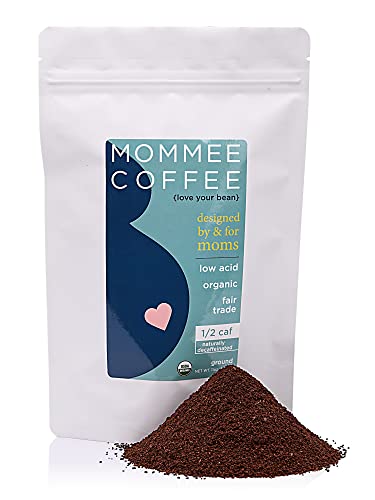
If you’re looking for a low-caffeine coffee that doesn’t compromise on quality or digestive comfort, Mommee Coffee Half Caf Ground is a strong choice-especially if you’re pregnant, sensitive to acid, or simply cutting back on caffeine. I rely on its 50mg per cup caffeine level, which fits within ACOG guidelines. The beans are 100% organic Arabica, decaf’d with water only, and roasted to reduce chlorogenic acid by 100 times versus regular coffee, which really cuts down on heartburn. It’s smooth, with caramel and toffee notes, works in drip machines or for cold brew, and comes in a resealable 11 oz bag that keeps it fresh.
Best For: Pregnant individuals, those sensitive to acid, or anyone seeking a low-caffeine, digestive-friendly coffee without sacrificing flavor.
Pros:
- Contains 50mg caffeine per cup, aligning with ACOG guidelines for moderate caffeine intake during pregnancy
- Made from 100% organic Arabica beans, naturally decaffeinated with water and 100 times lower in chlorogenic acid to reduce heartburn and acid reflux
- Smooth flavor with caramel, toffee, and butterscotch notes; versatile for drip, single-serve, and cold brew methods
Cons:
- Limited caffeine reduction compared to fully decaf options, which may not suit those avoiding caffeine entirely
- Smaller 11 oz packaging compared to standard 12 oz coffee bags
- Higher price point than conventional ground coffees due to organic and specialty processing methods
Factors to Consider When Choosing Low Caffeine Coffee
You’ll want to check the caffeine content levels first-some “low caffeine” coffees still pack over 50mg per cup, while others blend regular beans with decaf to cut it much lower. The decaffeination method matters too, since processes like Swiss Water or CO2 tend to preserve flavor and avoid harsh chemicals, but can cost more. Consider roast type, acidity, bean origin, and how your stomach handles coffee, since darker roasts and certain regions may ease digestion even with less caffeine.
Caffeine Content Levels
While caffeine levels in low caffeine coffee can vary, knowing what to expect helps you make a smarter choice based on your sensitivity and routine. You’ll typically find low caffeine options with 50–75% less than regular coffee-about 50–75 mg per 8-ounce cup for half-caff blends. Decaf must have at least 97% of caffeine removed, leaving just 2–5 mg per cup, so it’s ideal if you’re highly sensitive. Some brands mix decaf and regular beans to hit intermediate levels. Keep in mind that actual caffeine content depends on bean type, roast level, and brewing method-even the same blend can vary. Naturally low-caffeine varietals offer a middle ground with familiar flavor and reduced stimulation. For consistency, check labels or brewing specs. If you’re watching intake closely, go for decaf or clearly labeled low-caffeine versions from trusted roasters.
Decaffeination Method Matters
When choosing low caffeine coffee, the decaffeination method plays a key role in flavor, safety, and quality. You’ll want to look for the Swiss Water Process-it uses only water and activated charcoal to remove caffeine, leaving no chemical traces. This method relies on solubility and osmosis, pulling out 99.9% of caffeine while preserving the bean’s original taste. Since it avoids solvents like methylene chloride or ethyl acetate, it maintains higher bean integrity and supports organic certification. Chemical methods may alter flavor and leave residual traces, which can be a concern for sensitive drinkers. If you care about taste and clean processing, stick to water-based decaf. The Swiss Water Process is widely used by reputable brands, so check labels for this term. It’s not just marketing-it’s a proven standard that protects both flavor and safety in your cup.
Roast Type Influence
Though roast level doesn’t dramatically alter caffeine content, it still plays a role in how much ends up in your cup. Dark roast typically has slightly less caffeine than light roast because longer roasting degrades some caffeine-up to 10%. But the difference is small when using the same amount of coffee by weight or volume. Don’t be fooled by bold flavor; dark roasts taste stronger but aren’t much lower in caffeine. Medium roasts strike a balance, preserving more of the bean’s original traits while reducing chlorogenic acids. Roast affects body and smoothness more than caffeine, with darker roasts yielding fuller, smoother cups. For low-caffeine goals, roast matters less than bean type or brew method. Still, if you’re sensitive, pairing a dark roast with decaf beans can maximize your odds of a calm night. Choose roast based on taste, not caffeine reduction.
Acidity And Digestion
If you’ve ever felt a nagging burn in your stomach after drinking coffee, chlorogenic acid is likely to blame-it’s a natural compound in coffee beans that boosts gastric acid production and can trigger discomfort, especially for those prone to acid reflux or sensitive digestion. You can reduce this irritation by choosing low caffeine coffees processed to lower chlorogenic acid levels. Some brands use specific roasting techniques to break down these compounds, easing digestion without sacrificing taste. While acidity in coffee isn’t just about pH, minimizing key irritants helps. Opt for water-processed decaf methods-like the Swiss Water Process-since they preserve more natural flavor while removing caffeine and potential irritants. These options are often gentler than solvent-based alternatives. If digestion is a concern, prioritize coffees clearly labeled for reduced acidity or those designed for sensitive stomachs, like Puroast or HealthWise. It’s not just caffeine you’re managing-it’s how the whole bean is treated.
Bean Origin Quality
You’ll want to pay attention to bean origin and quality when selecting a low caffeine coffee that still delivers great taste and smoothness. Choose 100% Arabica beans-they’re naturally lower in caffeine and richer in flavor than Robusta. Beans grown at high elevations develop denser structure and more nuanced taste, which helps maintain quality even after decaffeination. Shade-grown beans often taste sweeter and less bitter since they mature slowly under filtered sunlight. Opt for single-origin coffees when possible; they offer traceability and consistent flavor profiles you can rely on. While organic certification matters, focus first on origin and growing conditions-these directly shape taste and smoothness. Colombian and Ethiopian Arabica beans, for example, often deliver balanced acidity and complex notes. Prioritize beans sourced from known farms or regions with strong growing practices. This guarantees better quality control and a cleaner, more enjoyable cup-especially important when caffeine levels are reduced but flavor isn’t.
Organic Certification Benefits
Choosing beans based on origin sets a strong foundation for flavor and quality, and looking at organic certification adds another layer of assurance. You know you’re getting beans grown without synthetic pesticides or fertilizers, which lowers chemical exposure for you and the environment. Organic rules ban GMOs, so you’re supporting natural farming. These methods build healthier soil, boost biodiversity, and promote long-term land sustainability. Third-party audits and strict records back the label, giving you traceability you can trust. While not a flavor guarantee, organic coffee often follows higher ethical standards, like avoiding artificial additives and using sustainable harvesting. It won’t remove caffeine, but it does guarantee cleaner farming. If you value transparency and eco-friendly practices, going certified organic makes a practical difference. Just check for legitimate labels like USDA Organic or EU Organic to be sure.
Brewing Compatibility Options
While flavor matters, matching your low caffeine coffee to your brewing method guarantees the best results. If you use a drip machine, go for medium-ground coffee labeled for automatic brewers-this secures proper extraction and flow. For French press or cold brew, choose coarsely ground beans to prevent over-extraction and sludge. Espresso lovers need fine grinds, so check that your low caffeine pick is finely ground or buy whole beans and grind them fresh. Whole bean coffee gives you full control, letting you tailor the grind size to your device. Pre-ground options save time and stay consistent, especially single-serve pods made for Keurig or Nespresso machines. Just make sure the grind matches your brewer’s needs-wrong particle size can lead to weak or bitter coffee. Choosing the right format means better taste and fewer surprises.
Flavor Profile Preferences
What kind of flavor do you expect from low caffeine coffee-something smooth and nutty, or bold and smoky? You can find both, since low caffeine doesn’t mean low flavor. Beans processed with the Swiss Water Method keep their original taste better, avoiding harsh chemicals that dull the profile. Medium and dark roasts are common in decaf or half-caff blends because they boost body and depth, helping offset any subtle flavor loss. Roast longer or use convection heat, and you’ll often get sweeter, creamier results with fewer irritants. Look for tasting notes like chocolate, caramel, or nuts-these are typical in smoother, less acidic low caffeine coffees. If you prefer richness, go for a dark roast from beans grown in low altitudes. For brighter depth, try a medium roast from Latin America. Pick your roast, origin, and process based on your flavor priorities.
Frequently Asked Questions
Can I Mix Half-Caff and Decaf Beans at Home?
You can mix half-caff and decaf beans at home-just blend equal parts for a brew with roughly 25% the caffeine of regular coffee. Use the same roast level and bean type for even extraction. Grinding them together works best in a burr grinder. This gives you more control than pre-made blends. Just remember, decaf still has a small amount of caffeine, so sensitive drinkers should factor that in when adjusting their mix.
Is Low Caffeine Coffee Safe During Pregnancy?
Yes, low caffeine coffee is generally safe during pregnancy if you stay under 200mg of caffeine daily-the limit most doctors recommend. Decaf and half-caff blends like Swiss Water Process decaf or mixing your own beans help control intake. Just check labels; some decafs still have 5–10mg per cup. Opt for clearly labeled, chemical-free decaf methods to minimize risks while enjoying flavor without sleepless nights.
Does Half-Caff Taste Different From Regular Coffee?
Yes, half-caff tastes slightly different from regular coffee, though the change is subtle. You’re blending one part decaf with one part regular, so you might notice a small drop in brightness or sharpness. Some say decaf lacks depth, so your mix could feel smoother or milder. It depends on the beans-Swiss Water decaf tends to retain flavor well. If you use quality beans, the difference is minimal. Try it side-by-side to decide.
How Is Caffeine Removed in Decaf Coffee Beans?
You remove caffeine from decaf coffee beans using water, solvents, or carbon dioxide under high pressure. The beans soak in water to swell and soften, then pass through a solvent like methylene chloride or ethyl acetate that binds to caffeine and pulls it out. Swiss Water Process skips chemicals, using only water and activated carbon filters to trap caffeine. Both methods preserve flavor well, though some detect subtle taste differences.
Are There Health Benefits to Drinking Half-Caff?
You get some of caffeine’s focus-boosting effects without the jitters or sleep disruption by choosing half-caff. It’s a practical middle ground if you’re sensitive to caffeine but still want mild stimulation. You blend regular and decaf beans-common ratios are 50/50 or 60/40-to cut total intake. Brands like Starbucks and Peet’s offer pre-mixed versions, or you mix your own. It’s not a health product, but moderation helps manage side effects.