Best Decaf Coffee: Kicking Horse, Peet’s & 4 More Tested
You want decaf that doesn’t sacrifice flavor, and options like Kicking Horse, Peet’s, and San Francisco Bay deliver. They use chemical-free Swiss Water Process to preserve rich, balanced taste. Dark roasts bring boldness with chocolate and nutty notes; medium roasts offer brightness with citrus or cocoa. Whole beans stay fresher longer-grind before brewing. Nespresso pods or stick formats like SleePresso add convenience. Each choice fits different gear and routines, so consider your brew method and taste preference-good decaf starts here.
We are supported by our audience. When you purchase through links on our site, we may earn an affiliate commission, at no extra cost for you. Learn more. Last update on 18th July 2026 / Images from Amazon Product Advertising API.
Notable Insights
- Kicking Horse Decaf Dark Roast uses Swiss Water Process for rich, earthy flavor with notes of hazelnut and chocolate, delivering quality without compromise.
- Peet’s Coffee Decaf Dark Roast employs a natural water process to preserve bold, full-bodied taste true to its signature blend.
- Nespresso Vertuo Melozio pods offer balanced, honeyed sweetness and biscuity depth, proving decaf can excel in flavor and convenience.
- San Francisco Bay Decaf Coffee uses chemical-free Swiss Water decaffeination to maintain a smooth, lively taste from 100% Arabica beans.
- Amazon Fresh Decaf Colombia Whole Bean preserves freshness and nuanced notes of citrus and cocoa when ground just before brewing.
Maxwell House Decaf Ground Coffee

If you’re looking for a reliable, widely available decaf that still delivers a rich and consistent flavor, Maxwell House Decaf Ground Coffee is a solid choice-especially if you want something straightforward for daily brewing without special equipment. I use it in my drip brewer, and it’s never let me down. The medium roast is smooth, full-bodied, and 99.7% caffeine free-perfect when I need to cut back but still want real coffee taste. It’s kosher certified and roasted in the U.S. since 1892. I keep the 29.3 oz canister in a cool, dark place to maintain freshness. It’s not flashy, but it’s dependable.
Best For: Those seeking a dependable, widely available decaf coffee with rich flavor and consistent performance for daily use in standard drip brewers.
Pros:
- Smooth, full-bodied medium roast with 99.7% caffeine-free assurance
- Kosher certified and roasted in the USA since 1892
- Large 29.3 oz canister offers good value and long shelf life when stored properly
Cons:
- Flavor profile is solid but not exceptional or distinctive
- Packaging is basic and not resealable, requiring transfer for optimal freshness
- May lack the artisanal quality preferred by specialty coffee enthusiasts
Nespresso Vertuo Melozio Decaf Coffee Pods (30-Count)

You’ll want the Nespresso Vertuo Melozio Decaf Coffee Pods if you’re after a smooth, flavorful decaf that doesn’t sacrifice richness, especially when using the Vertuo system for consistent extraction. I find the medium roast, made from Latin American Arabica beans, delivers honeyed sweetness, cereal, and biscuity notes without bitterness. Its intensity level of 6 gives it body, while the split roasting technique balances smoothness and depth. It brews a full 7.8 oz cup, ideal for longer sipping. I recommend adding milk-it brings out the sweetness and softens the profile. These aluminum pods are recyclable, and Nespresso’s B Corp certification supports ethical sourcing. Just remember: they only work with Vertuo machines, not Original Line.
Best For: Decaf coffee lovers seeking a smooth, aromatic medium roast with honeyed sweetness and biscuity notes, perfect for longer sipping and milk-based drinks using the Nespresso Vertuo system.
Pros:
- Rich flavor profile with balanced honeyed sweetness, cereal, and biscuity notes thanks to split roasting technique
- Environmentally responsible with fully recyclable aluminum capsules and Nespresso’s B Corp certification
- Brews a generous 7.8 oz cup size ideal for a satisfying, longer coffee experience
Cons:
- Compatible only with Nespresso Vertuo machines, not Original Line brewers
- Decaffeinated blend may lack the bold depth some prefer in espresso-style drinks
- Premium pricing compared to standard coffee pods
SleePresso Calming Decaf Coffee (10 Packets)

SleePresso Calming Decaf Coffee (10 Packets) works best for people who want a decaf coffee that supports relaxation and sleep without sacrificing flavor or convenience. It uses a patented SB Concentrate with Tart Cherry and Ecklonia Cava to support deep, restful sleep-no grogginess the next morning. The Super Drop Process removes 99% of caffeine, so you get zero jitters and full aroma. I enjoy the rich, dark roast taste from Colombian and Ethiopian Arabica beans, plus a hint of barley malt for smoothness. It’s sugar-free, low-calorie, and dissolves instantly in hot water or milk. I take it as a nightcap latte-perfect for late cravings without breaking my diet. The 10 single-serve sticks fit in a drawer or bag. I’ve tried other decafs, but this one stands out for sleep support and bold flavor. It’s not just decaf-it’s purpose-built. Use it when you need calm, not caffeine.
Best For: People seeking a flavorful, decaf coffee that promotes relaxation and supports healthy sleep without morning grogginess.
Pros:
- Infused with patented SB Concentrate (Tart Cherry, Ecklonia Cava, and traditional herbs) for natural sleep support
- Uses Super Drop Process to remove 99% of caffeine while preserving rich, dark roast flavor
- Convenient, portable stick packets dissolve instantly in hot or cold liquids-ideal for sleep lattes or iced drinks
Cons:
- Limited to 10 servings per pack, which may require frequent reordering for daily users
- Contains barley malt, which may not be suitable for those with gluten sensitivity
- Higher price point compared to standard decaf coffee due to specialized ingredients and process
Amazon Fresh Decaf Colombia Ground Coffee, Medium Roast, 12 Ounce

Amazon Fresh Decaf Colombia Ground Coffee suits those seeking a reliable, everyday decaf without sacrificing origin-specific quality. I find it delivers a balanced, medium roast profile with a smooth finish-no harsh notes. Grown in Colombia and made from 100% Arabica beans, it has subtle citrus, cocoa, and brown sugar hints that hold up well in a drip brewer or French press. Since it’s decaf and pre-ground, it’s convenient for daily use, though grinding whole beans fresh would offer better flavor. Roasted and packed in the U.S.A., the 12-ounce bag supports repeat orders, keeping your supply steady without premium pricing.
Best For: Those seeking a convenient, flavorful decaf coffee with origin-driven quality for everyday brewing.
Pros:
- Balanced medium roast with smooth finish and hints of citrus, cocoa, and brown sugar
- Made from 100% Arabica beans grown in Colombia for authentic flavor
- Pre-ground convenience and consistent quality at an affordable price
Cons:
- Pre-ground format sacrifices peak freshness compared to whole beans
- Decaffeination process may slightly mute flavor intensity
- Limited roast variety within the Amazon Fresh decaf line
Kicking Horse Decaf Dark Roast 10 Oz

For anyone seeking a decaf coffee that doesn’t trade depth for caffeine-free convenience, Kicking Horse Decaf Dark Roast 10 Oz stands out as a strong option. I’ve found its dark roast delivers a rich, earthy flavor with notes of roasted hazelnut and chocolate, plus a smooth, mellow finish thanks to the Swiss Water Process. It’s made from 100% organic, Fairtrade, and Kosher-certified Arabica beans grown at high elevations. The small-batch roasting in Canada guarantees freshness, with no additives. A medium-fine grind works well for French Press, drip, pour over, or espresso, giving you flexibility without sacrificing flavor.
Best For: Those who want a rich, flavorful decaf dark roast without sacrificing ethical sourcing or quality.
Pros:
- Deep, complex flavor with notes of roasted hazelnut and chocolate, enhanced by small-batch roasting
- Certified Organic, Fairtrade, and Kosher, using sustainably grown, 100% Arabica beans
- Smooth, mellow finish achieved through chemical-free Swiss Water Process decaffeination
Cons:
- Dark roast may be too intense for those who prefer lighter, more acidic coffee profiles
- Medium-fine grind may require adjustment for optimal results in certain espresso machines
- Limited roast customization since it’s pre-ground as medium-fine
Maxwell House Decaf Original Medium Roast Ground Coffee (22 oz Canister)

If you’re looking for a reliable, no-fuss decaf that delivers a classic coffee taste without the caffeine, Maxwell House Decaf Original Medium Roast Ground Coffee fits the bill. I find it works best in standard drip machines, where its balanced flavor comes through clean and consistent. The blend of Arabica and Robusta beans gives it body without bitterness, and it holds up whether you drink it black or with cream. The 22 oz resealable canister keeps it fresh, and the Kosher certification adds broad appeal. It won’t impress specialty coffee fans, but for everyday use, it’s practical, widely available, and affordable.
Best For: Those seeking an affordable, everyday decaf coffee with a classic taste that’s compatible with standard drip brewers and suitable for casual drinkers.
Pros:
- Balanced medium roast flavor from a blend of Arabica and Robusta beans
- Kosher certified and sold in a resealable 22 oz canister for freshness
- Widely available and budget-friendly for daily use
Cons:
- Lacks the complexity and quality expected by specialty coffee enthusiasts
- Decaffeinated blend may have a slightly muted aroma and flavor
- Packaging, while functional, is not eco-friendly or recyclable by design
Amazon Fresh Decaf Colombia Whole Bean Coffee, Medium Roast, 12 Ounce

I’ve found this medium roast works best for anyone needing a reliable decaf that doesn’t sacrifice flavor-especially if you’re sensitive to bitterness but still want depth. The 100% Arabica beans from Colombia offer a smooth finish with subtle citrus, cocoa, and brown sugar notes, giving it a balanced, full-bodied profile. Since it’s a whole bean roast, you’ll need a grinder-but that also means fresher brews. It’s decaffeinated and roasted in the U.S., then sealed fast to lock in quality. At 12 ounces, it’s a compact option for light users or trial runs. Compared to bigger brands like Maxwell House, it’s less mass-produced but fresher tasting. Just grind medium-fine for ideal drip brewer results.
Best For: Those seeking a smooth, flavorful decaf coffee with balanced notes and a full body, ideal for drinkers sensitive to bitterness or looking for a fresh, small-batch option.
Pros:
- Made from 100% Arabica beans with a rich, full-bodied profile and nuanced flavors of cocoa, brown sugar, and citrus
- Whole bean format ensures freshness when ground just before brewing, especially for drip coffee makers
- Expertly decaffeinated and roasted in the U.S., then quickly sealed to preserve quality and taste
Cons:
- Requires a grinder since it’s a whole bean coffee, which may be inconvenient for some users
- Smaller 12-ounce bag may not be cost-effective for heavy coffee drinkers
- Flavor profile may be too subtle for those who prefer bold or intense roasts
Peet’s Coffee Decaf Dark Roast Ground
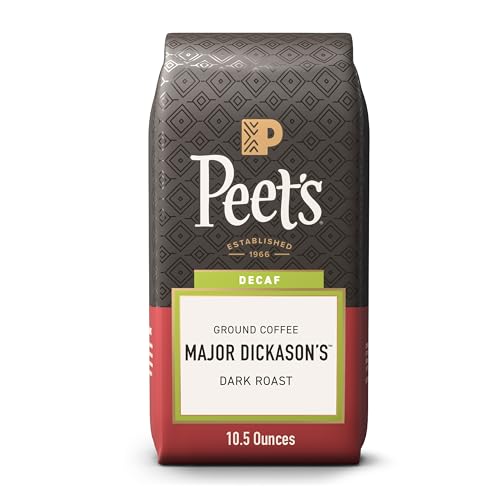
Peet’s Coffee Decaf Dark Roast Ground stands out as the best choice for those who want a truly bold decaf that doesn’t sacrifice flavor. I use it in my drip brewer or Chemex, and it delivers a rich, full-bodied cup every time. The 100% Arabica beans are water-processed to remove caffeine, which means no chemicals and better taste retention. Sourced globally and hand-roasted, the blend stays true to the original Major Dickason’s recipe-deep, robust, and balanced. While the ground version works well for most methods, I switch to whole bean and grind fresh if I’m making French press or espresso. For consistent quality and bold decaf flavor, it’s a reliable go-to.
Best For: Coffee lovers seeking a bold, full-bodied decaf that maintains rich flavor without caffeine.
Pros:
- Uses 100% Arabica beans with a natural water process for chemical-free decaffeination
- Delivers a robust, complex taste true to the original Major Dickason’s Blend
- Versatile for drip brewing and pour over methods with consistent quality
Cons:
- Ground format may not be ideal for espresso or French press without freshness loss
- Dark roast may be too intense for those preferring milder decaf options
- Limited to 10.5 oz per bag, which may require frequent repurchasing
San Francisco Bay Decaf Coffee (2 lb)

San Francisco Bay Decaf Coffee (2 lb) stands out as a top choice for coffee drinkers who prioritize both flavor and clean ingredients, especially those who want a reliable, chemical-free decaf without compromising quality. I use beans decaffeinated through the Swiss Water Process, so no solvents touch them-just pure, smooth taste. Sourced from high-altitude farms in Central and South America, these 100% arabica beans deliver a balanced, medium-dark roast with lively depth. The company’s family-owned, American-made, and committed to sustainability, from eco-farming to eco-friendly packaging. If you value ethical sourcing and taste, this is a smart, no-guesswork pick.
Best For: Coffee lovers seeking a high-quality, chemical-free decaf with rich flavor and ethically sourced, sustainably produced beans.
Pros:
- Uses the Swiss Water Process for solvent-free decaffeination that preserves flavor and bean integrity
- Made from 100% arabica beans grown at high altitudes in Central and South America for a smooth, well-balanced taste
- Sustainably farmed, eco-packaged, and sourced through socially responsible practices by a family-owned, American-made company
Cons:
- Larger 2 lb bag may not be ideal for those who prefer fresher, smaller batches or have low coffee consumption
- Limited roast variety for decaf options, which may not suit fans of light or dark roast extremes
- Availability of Swiss Water Process decaf in bulk may be inconsistent depending on region or retailer
Peet’s Decaf Dark Roast Ground Coffee
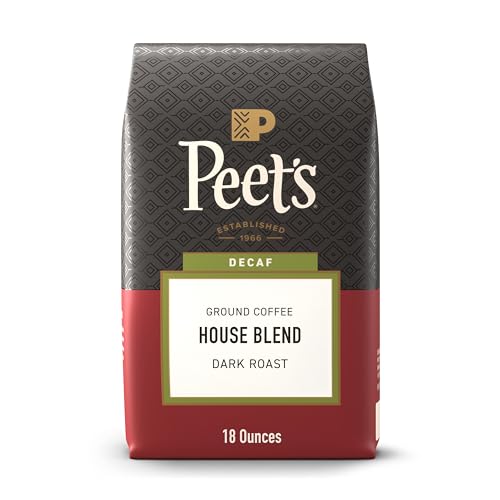
If you’re after a decaf that doesn’t sacrifice richness for caffeine-free peace of mind, Peet’s Decaf House Blend stands out as a reliable choice-especially if you value tradition, consistency, and a bold yet balanced cup. I use it in my drip brewer most often, and it delivers a smooth, medium-bodied coffee with a hint of spice and a clean finish. The beans are 100% Arabica, sourced from Latin America, and decaffeinated using a natural water process that preserves flavor. It’s ground for drip or pour-over, so if you’re using a French press or espresso machine, grab the whole bean version instead.
Best For: Coffee lovers who want a rich, flavorful decaf experience with the convenience of pre-ground beans and a preference for traditional, small-batch roasted coffee.
Pros:
- Made from 100% high-quality Arabica beans with a natural water decaffeination process that preserves flavor
- Offers a smooth, medium-bodied cup with a balanced, complex profile and subtle spiciness
- Ideal for drip and pour-over brewing, delivering consistent, reliable results
Cons:
- Pre-ground format limits freshness and may not be optimal for French press or espresso
- Flavor may be less bold compared to Peet’s regular dark roast offerings
- Single 18-ounce bag size may not suit those seeking larger or more economical packaging
Factors to Consider When Choosing Decaf Coffee
You’ll want to pay attention to where the beans are grown, since origin affects flavor-beans from Latin America often taste brighter, while those from Indonesia tend to be earthier. The roast level matters too, with darker roasts giving a bolder body and lighter roasts preserving more of the bean’s natural acidity. And don’t overlook how the coffee was decaffeinated-methods like Swiss Water Process avoid chemicals and keep flavors balanced, especially when paired with your preferred brew method.
Bean Origin Matters
While the decaffeination process plays a key role in flavor retention, the geographic origin of the beans heavily shapes the final cup. You’ll find that altitude, soil, and climate directly impact acidity, body, and aroma. Beans grown at high elevations tend to be denser and more complex, helping them keep distinctive flavors after decaffeination. If you prefer bright, clean notes, choose Latin American beans-they often bring citrus and cocoa tones. For something slightly floral or fruity, African beans are a solid pick. Opt for single-origin decaf if you want traceable, transparent flavor from a specific region. Most premium decaf uses Arabica beans from high-altitude farms, known for smoother, more nuanced profiles. Blends mix origins to balance flavor, but single-origin lets you taste where the coffee was grown. Knowing the source helps you choose based on taste preferences, not guesswork.
Roast Level Impact
Though roast level doesn’t alter the caffeine removal process, it considerably shapes how your decaf tastes and feels in the cup. Choose dark roast for a fuller body and bold notes of chocolate, nuts, or earthiness-longer roasting develops rich flavors and can mellow bitterness, even in decaf. If you prefer balance, go with medium roast; it keeps some brightness while offering smoothness and hints of caramel, citrus, or cocoa, preserving more of the bean’s natural character. Light roast decaf is less common but delivers the most nuanced, aromatic flavors and highest trace of original bean profile, ideal if you value complexity over boldness. Roast doesn’t greatly change caffeine-decaf stays 97%+ caffeine-free. But it does change mouthfeel and flavor depth. Pick based on your taste: bold and smooth (dark), balanced (medium), or bright and detailed (light). Match roast to your preferred brew method for best results.
Decaf Method Choice
Roast level shapes the body and flavor you experience in your cup, but how the caffeine is removed plays an equal role in quality. You’ll want to check the decaf method-your coffee’s taste and purity depend on it. Opt for Swiss Water Process or CO₂ methods; they remove 99.7% of caffeine without chemicals and preserve flavor well. These processes use only water or pressurized carbon dioxide, making them cleaner and more reliable. If a bag says “naturally decaffeinated,” look closer-it might mean water or CO₂, but not always. Avoid ethyl acetate when possible, even if it’s food-grade, since it can leave traces. Beans are decaffeinated while green, so the process happens before roasting and flavor fully develops. For better taste and peace of mind, stick with Swiss Water or CO₂-brands like Decadent Coffee or Black Insomnia use these methods and deliver quality you can trust.
Flavor Profile Balance
A well-balanced cup starts with the right blend of sweetness, acidity, and body-key traits to look for when choosing decaf coffee. You’ll want flavors like cocoa, brown sugar, or citrus to harmonize, not overpower. Medium roasts usually deliver this best, preserving the bean’s natural complexity with moderate acidity and smooth body, unlike darker roasts that can mute subtler notes. Opt for beans decaffeinated using the Swiss Water Process; it skips harsh chemicals and better retains original flavors. Full-bodied options with a clean, smooth finish help balance any sharpness, often replacing bitterness with mild sweetness or aromatic depth. Proper roasting matters-controlled heat and timing release even flavor while minimizing off-notes. Don’t assume decaf means flat taste; when processed and roasted well, it can be rich, vibrant, and layered. Look for transparency in roast profiles and origin details to make smarter picks.
Brew Compatibility Tips
When matching decaf coffee to your brewing method, grind size makes or breaks the final cup. For French press, use a coarse grind to avoid over-extraction and gritty sediment-medium-fine will clog the filter and muddy the flavor. If you’re using an automatic drip machine, a medium-fine grind works best, but don’t use that same grind for espresso-it’ll underperform. For espresso, you need a fine, consistent grind and high pressure to pull proper crema; use decaf labeled specifically for espresso. Pour over methods like Chemex shine with medium to medium-coarse grinds, bringing out clarity and balanced notes in decaf beans. Always match the grind to your brewer: pre-ground decaf labeled for drip won’t suit French press or espresso. Grinding fresh at home gives you control and better flavor across all methods.
Storage For Freshness
You’ve picked your beans and dialed in the grind for your brewer-now protect that effort by storing your decaf the right way. Keep it in an airtight container to limit oxygen exposure, which dulls flavor over time. Choose an opaque container or keep the bag sealed tightly to block light-UV rays speed up oxidation and degrade aromatic compounds. Store it in a cool, dark spot, away from the stove, oven, or sunlight; heat ruins freshness fast. Don’t refrigerate or freeze your coffee-moisture and temperature swings cause condensation, leading to spoilage and stale beans. Stick to room temperature storage for consistent quality. Use whole beans and grind only what you need, because ground decaf loses intensity quickly. For peak taste, finish your coffee within 1–2 weeks of opening. Simple, dry, airtight, dark-that’s the formula.
Frequently Asked Questions
Is Decaf Coffee Completely Caffeine-Free?
No, decaf coffee isn’t completely caffeine-free. You still get about 2–5 milligrams per cup, compared to 95 in regular coffee. The decaffeination process removes most caffeine but not all. Methods like Swiss Water and CO2 are effective and avoid harsh chemicals. If you’re sensitive, that tiny amount might affect you. Always check labels-some brands disclose caffeine content. For true caffeine avoidance, even decaf requires caution.
How Is Caffeine Removed From Coffee Beans?
You remove caffeine from coffee beans using methods like the Swiss Water Process, which relies on solubility and osmosis to draw out caffeine without chemicals. You soak beans in hot water, transfer them to a solution that absorbs only caffeine, and preserve flavor compounds. Other methods use solvents like methylene chloride or ethyl acetate, which bind to caffeine and wash away. Each method affects taste and safety differently, so check processing details when choosing decaf.
Does Decaf Coffee Cause Digestive Issues?
Decaf coffee doesn’t usually cause digestive issues for most people, but some still get discomfort. You might be sensitive to compounds in coffee beyond caffeine, like acids or oils, which remain after decaffeination. Switching to a darker roast or a low-acid brand like Puroast or Tyler’s can help. If you drink it on an empty stomach, try having it with food. Everyone’s different, so adjust based on how your body reacts.
Can I Brew Decaf Coffee With Any Method?
Yes, you can brew decaf coffee with any method-drip, French press, pour-over, or espresso. Decaf beans behave like regular beans, so your preferred gear works fine. Just mind the grind size and water temperature for best results. Some find Swiss Water Process decaf tastes cleaner, especially in lighter roasts. Try it in a Chemex for clarity or a Moka pot for strength. Adjust brew time if needed, but no special rules apply-treat it like any good coffee.
Is Decaf Coffee Safe to Drink Daily?
Yes, you can safely drink decaf coffee every day. It contains only trace amounts of caffeine, usually less than 5 mg per cup, so it won’t affect sleep or raise heart rate like regular coffee. Most decaf is made using safe methods like the Swiss Water Process or CO₂, which don’t leave harmful residues. Just check the brand’s process if you’re sensitive or pregnant. Moderation still matters, but daily decaf fits most diets without concern.