Top-Rated Espresso Machines Made in Italy for True Coffee Lovers
You get consistent, café-quality espresso with Italian-made machines like the Gaggia Classic Evo Pro, built with a commercial 58mm portafilter and uncoated boiler for stable 9-bar extractions. The De’Longhi La Specialista Opera adds smart tamping and temperature control for precision. If you prefer simplicity, the Caffe Mercanti handles ESE pods cleanly. Durability comes from stainless steel builds and brass boilers, found in models like the Diletta Bello. Each machine balances performance, authenticity, and ease of use-your next choice depends on technique and space. There’s more to explore based on your routine.
We are supported by our audience. When you purchase through links on our site, we may earn an affiliate commission, at no extra cost for you. Learn more. Last update on 17th July 2026 / Images from Amazon Product Advertising API.
Notable Insights
- Gaggia Classic Evo Pro delivers café-quality espresso with a commercial-grade 58mm portafilter and solid steel Italian construction.
- Diletta Bello features a manual E61 group head and heat exchange boiler for professional performance, handmade in Milan.
- Caffe Mercanti ESE specializes in authentic Italian espresso using 44mm ESE pods with precise 15-bar extraction.
- De’Longhi Linea Classic combines Italian engineering with a 15-bar pump and real-time pressure monitoring for precision brewing.
- Gaggia Espresso Evolution offers PID control and automatic pre-infusion in a compact, made-in-Italy design for consistent results.
Gaggia RI9380/49 Classic Evo Pro Espresso Machine, Thunder Black, Small

The Gaggia RI9380/49 Classic Evo Pro Espresso Machine is a solid pick if you want a no-frills, Italian-made espresso machine built with commercial-grade parts and you’re not afraid to learn the basics of tamp pressure and grind size. I use it daily, and it delivers consistent 9-bar extractions thanks to its uncoated aluminum boiler and three-way solenoid valve. The steel housing feels durable, and the 58mm portafilter accepts standard baskets, including the pressurized one for pods or pre-ground coffee. It heats up in under 10 minutes, and the steam wand textures milk well for lattes. Just don’t expect fancy auto-functions-it’s manual, simple, and built to last.
Best For: Home baristas who want a durable, manual espresso machine with commercial-grade components and are willing to learn the craft of espresso extraction.
Pros:
- Delivers consistent 9-bar pressure extractions with a fast heat-up time of under 10 minutes
- Built with a stainless steel 58mm portafilter, commercial steam wand, and solid steel housing for durability
- Compatible with both ground coffee and ESE pods thanks to included pressurized and commercial filter baskets
Cons:
- No auto-brew functions or programmable settings-fully manual operation may intimidate beginners
- No dishwasher-safe parts, requiring hand cleaning for maintenance
- Basic design lacks modern features like a PID controller or pre-infusion for advanced tuning
De’Longhi Espresso Machine with Milk Frother

If you’re after barista-level control without the commercial footprint, De’Longhi’s Linea Classic (EM450M) delivers real extraction precision in a compact, made-in-Italy design. I rely on its 15-bar pump and thermoblock heating for consistent, balanced shots every time. The pressure gauge lets me monitor extraction closely, while the adjustable steam wand handles dairy and plant-based milks with equal ease-great for lattes or cappuccinos. I appreciate the preset options for single or double shots, though cleanup must be done by hand. It fits neatly on my counter, works with ground coffee, and handles espresso, Americano, or even an espresso martini without fuss.
Best For: Home baristas seeking professional espresso quality and milk texturing with a compact, Italian-engineered machine.
Pros:
- 15-bar pump and thermoblock heating ensure consistent, high-quality espresso extraction
- Adjustable steam wand effectively froths both dairy and non-dairy milks for latte art
- Compact stainless steel design with preset options saves counter space and simplifies use
Cons:
- Not dishwasher safe, requiring manual cleaning and maintenance
- Limited to ground coffee use, excluding whole bean convenience
- Requires regular monitoring during extraction for optimal results
Gaggia Espresso Evolution – Lava Red

A solid pick for beginners and compact kitchens, this Italian-made semi-automatic delivers consistent shots without complexity. I use its PID-controlled boiler and automatic pre-infusion to pull balanced espressos every time. The matte lava red finish looks sharp, and at just over 8 pounds, it fits neatly on small counters. I appreciate the one-touch memo function for repeat shots, and it handles both grounds and ESE pods. It’s 120 volts, comes with a tamper, basket, and pod adapter, and has a removable tank and auto shut-off. While compact, it’s capable-perfect for espresso, cappuccino, or latte prep.
Best For: Beginners and those with limited counter space who want a reliable, compact espresso machine with pro features like PID temperature control and one-touch convenience.
Pros:
- PID-controlled boiler and automatic pre-infusion ensure consistent, balanced espresso shots
- Compact design with stylish matte lava red finish fits small kitchens
- Versatile brewing options with support for both ground coffee and ESE pods, plus a one-touch memo function
Cons:
- Limited to 120 volts, making it less suitable for international use
- Pressurized basket may limit extraction quality compared to non-pressurized alternatives
- Lower Amazon ranking suggests it may have less market traction or visibility than competitors
Caffe Mercanti ESE Pod Espresso Machine

You want authentic Italian espresso without the hassle of grinding beans or wrestling with complex settings-this machine is your answer. I use the Caffe Mercanti ESE Pod Espresso Machine daily, and it’s 100% made in Italy, with a sleek white design and compact 10-inch height that fits anywhere. It runs on 400W and hits 15 bars of pressure, pulling a perfect 25–30ml shot in about 25 seconds. The brass press maintains 200°F for consistent extraction. It only takes 44mm ESE pods-like Mercanti’s ORO or ROSSA-so setup’s simple. Two buttons control everything, making it ideal for offices or small kitchens where ease matters.
Best For: Home and office users seeking authentic Italian espresso with minimal effort using convenient ESE pods.
Pros:
- Compact, 100% made in Italy design with elegant white housing ideal for small spaces
- Consistently delivers 25–30ml espresso shots in 25 seconds with 15 bars of pressure and precise 200°F brass heating system
- Simple two-button operation and compatibility with pre-portioned 44mm ESE pods for hassle-free brewing
Cons:
- Limited to 44mm ESE pods, restricting coffee variety compared to bean grinder or capsule machines
- Lower 400W power may result in longer heat-up or extraction times versus higher-wattage models
- Smaller 1 oz output per shot may not satisfy users preferring larger espresso servings
Gaggia RI9380/51 Classic Evo Pro Espresso Machine, Industrial Grey, Small

The Gaggia RI9380/51 Classic Evo Pro Espresso Machine, Industrial Grey, Small, stands out as a workhorse for home baristas who want pro-level durability without the commercial footprint. I rely on its 9-bar pressure and commercial 58mm portafilter for consistent extraction. Made in Italy, it’s built with heavy-duty stainless steel and a solid steel housing, so it lasts. The three-way solenoid valve improves crema and makes cleanup easier. I use the commercial steam wand daily for silky milk texturing. It handles ESE pods, ground coffee, or pre-grounds. My favorite upgrade? The E24’s quieter pump and better boiler resistance to scale. Just don’t put parts in the dishwasher.
Best For: Home baristas seeking a durable, commercial-grade espresso machine with pro-level features in a compact, user-serviceable design.
Pros:
- Delivers consistent extraction with 9-bar pressure and a commercial 58mm portafilter
- Features a powerful steam wand for professional milk frothing and latte art
- Upgraded E24 model offers quieter pump operation and improved boiler resistance to scale
Cons:
- Components are not dishwasher safe, requiring hand cleaning
- Heavier and more compact than some home machines, limiting counter flexibility
- Lacks built-in grinder, requiring a separate purchase for fresh coffee grinding
Gevi 20 Bar Espresso Machine with Grinder

Built like a workhorse for espresso lovers who want both grinding and brewing in one unit, the Gevi 20 Bar Espresso Machine with Grinder suits anyone demanding control without complexity. I use its 30 grind settings to fine-tune flavor, and the 20-bar pump delivers consistent extraction. The built-in conical burr grinder saves space and keeps grounds fresh. I appreciate the PID temperature control-it keeps brewing and steaming temps stable for balanced shots and silky microfoam. The steam wand does double duty, frothing milk or dispensing hot water. At just over 23 pounds, it’s sturdy but fits neatly on most counters. With strong reviews and a current rank in the top 50 semi-automatic machines, it’s a reliable pick for daily use.
Best For: Home baristas seeking a compact, all-in-one espresso machine with precise grind and brew control for consistent, café-quality results.
Pros:
- Built-in conical burr grinder with 30 adjustable settings ensures fresh, customized grounds for optimal flavor extraction
- 20-bar professional pump and PID temperature control deliver consistent espresso shots and stable steaming performance
- Dual-function steam wand efficiently froths milk and dispenses hot water, saving time and space
Cons:
- At 23.9 pounds, it may feel heavy for frequent repositioning or small kitchens
- Limited customer reviews as of launch (only 1,578 as of mid-2025), indicating relatively new market presence
- Silver finish may show water spots or fingerprints without regular wiping
Diletta Bello Espresso Machine (Stainless Steel)

Crafted for home baristas who want pro-level control without the clutter, the Dilletta Bello Espresso Machine stands out with its heat exchange boiler, letting me brew espresso and steam milk at the same time-no waiting between steps. Handmade in Milan, it’s built with all-stainless steel construction, including the boiler, for durability and clean water flow. I like its manual E61 group head-it gives me real control. At 50 pounds, it’s heavy but stable. The 3-liter boiler runs on 120V, ideal for U.S. outlets, and the cup warmer plus eco timer help efficiency. It only accepts ground coffee, so I need a grinder, but that’s standard at this level.
Best For: Home baristas seeking professional-grade espresso control with a durable, stylish machine built for simultaneous brewing and steaming.
Pros:
- Heat exchange boiler allows for brewing espresso and steaming milk simultaneously
- Full stainless steel construction including boiler ensures durability and clean water quality
- Manual E61 group head provides precise control over the brewing process
Cons:
- Requires a separate coffee grinder since it only accepts ground coffee
- Heavy at 50 pounds, making it difficult to move once placed
- Not dishwasher safe, requiring careful hand cleaning for maintenance
De’Longhi La Specialista Opera Espresso Machine

If you’re serious about pulling café-quality espresso at home without the hassle of manual tamping or guesswork, the De’Longhi La Specialista Opera delivers precision and consistency right out of the box. I use its smart tamping lever and 15 grind settings for even, repeatable puck prep, no skill required. The 19-bar pump and 3 temperature profiles let me fine-tune extraction. I pull rich espressos or make cold brew in under 5 minutes using Cold Extraction. The steam wand heats fast and froths milk like a pro-great for lattes. It’s heavy at 28 pounds, but that means stability and durability. I clean it by hand since it’s not dishwasher-safe, and I prefer full control over buttons and dials. I skip the extras and focus on what matters: reliable, high-quality coffee, every time.
Best For: Home baristas seeking café-quality espresso with consistent, hands-free tamping and precise temperature control for both hot and cold specialty coffee drinks.
Pros:
- Smart Tamping Technology and 15 grind settings ensure uniform puck preparation with zero user error
- Cold Extraction Technology enables fast cold brew and iced espresso in under 5 minutes
- Commercial-style steam wand delivers pro-level micro-foam for lattes and latte art
Cons:
- Heavy at 28.1 pounds, making it difficult to move or reposition
- Not dishwasher-safe, requiring manual cleaning for maintenance
- Semi-automatic operation may overwhelm beginners seeking fully automatic simplicity
De’Longhi Stilosa Manual Espresso Machine
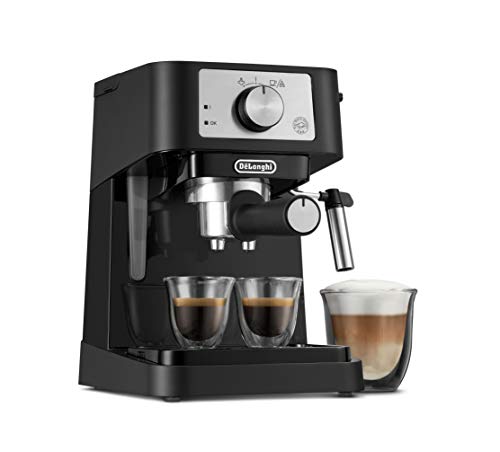
The De’Longhi Stilosa Manual Espresso Machine is a solid pick if you’re after authentic Italian espresso without taking up much kitchen real estate. I’ve found it balances compact design and solid performance, with a 15-bar pump and durable stainless steel boiler. It runs on ground coffee, and the included tamper helps you prep shots consistently. The manual steam wand froths milk well for lattes or cappuccinos. At under 10 pounds and under 14 inches wide, it fits tight spaces. Two cup levels let you use taller mugs. Just note: all parts are hand-wash only, and the 34-ounce tank means refills during heavy use.
Best For: Home espresso enthusiasts seeking a compact, durable machine for authentic Italian-style coffee without taking up much counter space.
Pros:
- Compact design with 15-bar pressure and durable stainless steel boiler delivers consistent, café-quality espresso
- Manual steam wand creates rich milk froth for lattes and cappuccinos
- Two-level cup holder accommodates both short and tall cups for added convenience
Cons:
- Water tank capacity is limited at 34 ounces, requiring frequent refills during heavy use
- All components must be hand-washed, as they are not dishwasher safe
- Requires ground coffee only, which may be less convenient for users preferring pods or whole beans
De’Longhi Dedica Maestro Plus Espresso Machine

You’ll want this machine if you’re serious about pulling balanced espresso shots and creating smooth milk drinks at home without spending years mastering steam wands or temperature tuning. I rely on its 15-bar pump and precise temperature control with three settings to match different beans. The Auto LatteArt wand delivers consistent foam for lattes or cappuccinos, even with almond or oat milk. It heats fast, fits neatly on my counter, and cleans up easy-most parts go in the dishwasher. I use the included tamper and baskets daily. It’s built for simplicity and performance, no guesswork needed.
Best For: Home baristas who want professional-quality espresso and consistent milk frothing with minimal effort and no steep learning curve.
Pros:
- 15-bar pump with precise temperature control and pre-infusion ensures optimal extraction for a balanced shot
- Auto LatteArt steam wand delivers microtextured foam with both dairy and non-dairy milks, simplifying drink prep
- Compact design, fast heat-up, and dishwasher-safe parts make it convenient for daily use and easy maintenance
Cons:
- Higher price point compared to entry-level espresso machines without fully automatic features
- Limited cup clearance under the group head, which may not accommodate larger travel mugs
- Requires regular descaling and maintenance to sustain performance, especially with hard water
Factors to Consider When Choosing an Espresso Machine Made in Italy
You’ll want to evaluate brewing performance first-Italian machines like the Lelit Anna PL41TEM use precise temperature control for consistent shots. Build quality and durability matter too, since espresso machines take daily use, and stainless steel models like those from Rancilio last longer than plastic ones. Think about milk frothing, size, design, and how easy it is to clean-features that make a real difference in your routine.
Brewing Performance Standards
Nearly every Italian-made espresso machine delivers 9 to 15 bars of pressure, meeting the professional benchmark for proper espresso extraction. You’ll get rich crema and full flavor when the pressure stays stable. Most use thermoblock or heat exchange systems, heating up fast and holding temps between 195°F and 205°F for consistent results. If you want more control, look for PID temperature regulation or adjustable infusion settings-these let you tweak brew temp based on your beans. A 58mm commercial-grade portafilter guarantees even water spread and fits standard baskets, making it easier to dial in shots. Many models include a three-way solenoid valve, which dumps pressure from the puck after brewing, so you knock out grounds faster and reduce channeling. You’ll get cleaner, more repeatable shots. These features work together to give you reliable, café-quality espresso at home without guesswork or frustration.
Build Quality And Durability
A well-built Italian espresso machine stands up to years of daily use, and weight is one clue to its strength-models with solid steel or stainless steel housings typically weigh over 15 pounds, signaling a sturdy frame that minimizes vibration and resists wear. You’ll get longer life from machines with commercial-grade parts like 58mm portafilters and three-way solenoid valves, which handle pressure better and improve consistency. Brass boilers and group heads hold heat steadily, reducing thermal stress and wear over time. If you plan to use the machine daily, go for heat exchange or well-insulated boilers of 3 liters or more-they resist scale and corrosion, especially with regular water. Many Italian models are designed for self-maintenance, so you can replace seals or clean key parts without a technician. This hands-on access keeps your machine running for years.
Milk Frothing Capability
Solid construction supports more than just long-term reliability-it also sets the foundation for strong milk frothing performance. You’ll want a machine with a 15-bar pump and thermoblock heating system; they heat up fast and keep milk texturing consistent. A commercial-style steam wand gives you full control over temperature and foam, letting you craft microfoam for latte art. If ease matters, pick a model with automatic milk texturing-just select your foam level and let the system handle the rest. Dual-function wands add versatility, doubling as hot water dispensers for tea or Americanos. Stainless steel boilers hold heat better, so steaming back-to-back drinks won’t drop performance. For beginners, automated features simplify learning, but experienced users often prefer manual wands for precision. Either way, consistent steam power and temperature stability make all the difference in your daily routine.
Design Aesthetic And Size
Size and visual design matter when fitting an Italian espresso machine into your kitchen. You’ll find many models range from 8–11 inches deep and under 10 inches wide, so they fit snugly on small countertops. Some units stand under 12 inches tall, making them ideal if you have low cabinets. They’re built with vertical efficiency in mind. Visually, these machines often feature matte or painted steel finishes that resist fingerprints and add modern flair. You get durability without sacrificing style. Retro touches, minimalist shapes, and polished or powder-coated surfaces give them a standout look. Even with a sleek footprint, they include pro features like 58mm portafilters and steam wands. That means serious function in a compact, attractive design. You don’t have to choose between looks and performance-Italian engineering delivers both.
Ease Of Maintenance
Maintenance shouldn’t eat up your time or demand a technician every few months, so it’s smart to look for Italian espresso machines built with daily upkeep in mind. Look for models with a commercial three-way solenoid valve-it dumps pressure fast and flushes out coffee grounds, so you’re not scraping the portafilter after every shot. Stainless steel boilers fight scale better than aluminum, meaning you’ll descale less often and get longer life from the machine. Pick one with a removable water tank and drip tray; they make daily wipe-downs quick and cut down on mold. Many parts wear down over time, but self-serviceable designs let you swap out seals or gaskets yourself, skipping costly service calls. Avoid machines loaded with tiny, non-dishwasher-safe pieces-they stack up cleaning time. Fewer small parts mean simpler, more consistent maintenance. Choose practical over pretty when it comes to long-term ease.
Origin And Manufacturing Authenticity
When you’re shopping for an espresso machine made in Italy, the country of origin isn’t just a label-it’s a sign of craftsmanship shaped by decades of coffee tradition. You should look for clear “Made in Italy” markings, Italian flag icons, or official certifications on packaging and manuals. Authentic models use high-grade materials like stainless steel and brass, ensuring durability and stable heat performance. Even if some parts come from elsewhere, the design and final assembly should happen in Italy to maintain quality. Check product specs for country of origin codes, model numbers, and UPC/ASIN links tied to Italian manufacturing. Machines from brands like La Marzocco or Rocket Espresso often meet these standards. Avoid models with vague labeling or inconsistent documentation. Confirming authenticity helps you invest in a machine built to deliver true Italian espresso performance, not just a name.
Frequently Asked Questions
Where Can I Buy Genuine Italian-Made Espresso Machines?
You can buy genuine Italian-made espresso machines directly from brand websites like La Marzocco, Rancilio, and Gaggia, which list authorized dealers. Check specialty retailers such as Clive Coffee or Whole Latte Love-they verify origin and offer support. Avoid third-party marketplaces unless the seller is certified. Look for “Made in Italy” on the product specs, not just branding. These machines cost more but deliver consistent performance, better materials, and longer lifespans than most alternatives.
Are Italian Espresso Machines Compatible With U.S. Voltage?
You’ll need to check the specs carefully-many Italian espresso machines run on 220–240V, not U.S. 120V, so they won’t work without a voltage converter. Some brands, like La Marzocco and Rocket, offer U.S.-ready models with 120V compatibility. Never plug a 220V machine into a standard U.S. outlet-you’ll damage it. If buying abroad, confirm voltage and plug type. Dual-voltage models are rare but exist. Always verify before purchasing.
How Often Should I Descale My Italian Espresso Machine?
You should descale your Italian espresso machine every 1-3 months, depending on use and water hardness. If you brew daily with hard water, go for the 1-month mark. Signs like slower brews or odd tastes mean it’s time. Use a brand-approved descaler like Dezcal or Durgol. Skip vinegar-it can damage seals. Always rinse thoroughly. Machines like the Rancilio Silvia or Gaggia Classic need this to stay reliable.
Do Italian-Made Machines Require Special Coffee Beans?
No, Italian-made machines don’t require special beans, but you’ll get the best results using fresh, high-quality espresso roast beans with a fine, consistent grind. Light roasts may under-extract, while stale or oily beans clog the portafilter. Always tamp evenly. Machines like La Pavoni or Gaggia work best with dense, dark-to-medium roasts typical in Italian-style blends. Pre-ground beans lose aroma fast, so grind your beans just before brewing for fuller flavor.
What Is the Warranty on Most Italian Espresso Machines?
You typically get a 1- to 2-year warranty on most Italian espresso machines, though some brands like La Marzocco or Rocket extend to 3 years with registration. The coverage usually includes parts and labor but excludes wear items like seals or filters. Always register your purchase, follow maintenance schedules, and use authorized service centers-otherwise, you’ll void the warranty. Cheaper models often have shorter, non-transferable warranties.