Roast Profiling 101: The Science Behind Developing Perfect Coffee
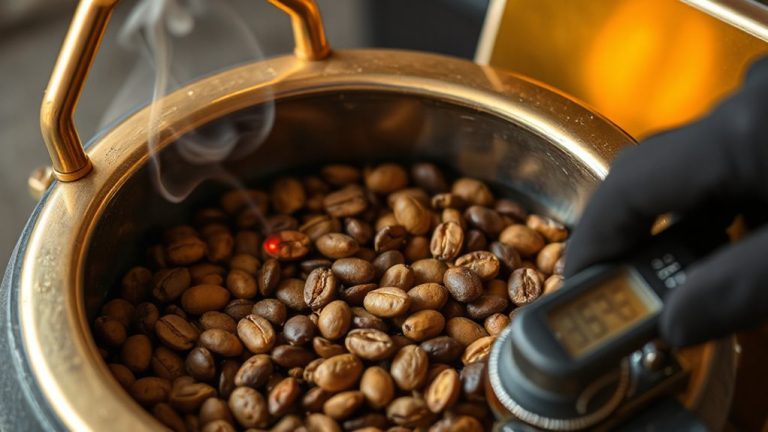
You shape coffee’s flavor by controlling heat over time, since roast profiling turns raw beans into balanced, aromatic cups. Start with a solid charge temperature, then manage heat to guide moisture loss, browning, and development. Track time, temperature, and roast rate-aim for 15–20°F per minute-to avoid baked or scorched notes. Use tools like Artisan or Cropster to log profiles and match beans: try faster roasts for dense Ethiopians, gentler ramps for Sumatrans. There’s more to fine-tuning your approach based on bean density and origin.
Notable Insights
- Roast profiling controls heat application over time to develop flavor, balancing roast rate and bean characteristics.
- Bean density and moisture content influence heat absorption, requiring tailored profiles for optimal development.
- The Maillard reaction and caramelization create flavor complexity during the browning and development stages.
- Monitoring roast rate (15–20°F per minute) ensures even heat transfer and avoids baked or scorched flavors.
- Correcting profile errors like roast lag or underdevelopment improves flavor consistency across different origins.
What Is Roast Profiling and Why It Matters
While roasting coffee might seem like just applying heat, what really shapes the flavor is how you manage that heat over time-this is roast profiling. You’re not just cooking beans; you’re responding to their unique traits. Bean density and moisture content vary by origin, altitude, and processing, so a one-size-fits-all approach won’t work. Dense beans, like those from Ethiopia, hold heat longer and need a slower ramp to avoid baking. Lower moisture content, common in dry-processed beans, means they can scorch easily-watch your charge temperature. A well-designed profile adjusts time and heat input to match these variables. Without this control, you risk underdeveloped acidity or burnt notes. Profiling helps you replicate results batch after batch, whether you’re using a Probat, Loring, or a small Hottop. It’s not about complexity-it’s about precision and consistency, giving you better control over the final cup. Achieving this level of control is easier with modern temperature controllers that integrate seamlessly into home and commercial roasting systems.
How Heat Affects Roast Profile Development
You already know that roast profiling shapes flavor by managing heat over time, but how that heat is applied-its type, intensity, and timing-directly influences how the beans develop. Too much heat too soon can overstimulate the Maillard reaction, leading to bitter or ashy notes, while too little slows development and risks underdevelopment. The Maillard reaction builds complex flavors and color during the mid-roast phase, working best with steady, conductive heat. Later, the caramelization process turns sugars into rich, sweet compounds, but only if heat is carefully increased. Gas roasters offer precise flame control, helping manage this balance, while electric models provide consistent, even heat. You’ll need to adjust airflow and burner settings to avoid scorching or stalling. Proper heat application guarantees both reactions occur fully, delivering balanced sweetness, body, and aroma without tipping into burnt or grassy extremes. Mastering these variables is key to achieving optimal roast profiling results.
The 3 Stages of a Perfect Roast Profile
A great roast profile unfolds in three clear stages: drying, browning, and development-each with a specific job. First, the drying phase removes moisture content, preparing the bean for even heat transfer; this matters most with high-density beans, which retain more water. Next, the browning stage triggers Maillard reactions and caramelization, building flavor complexity. Here, bean density affects how quickly heat moves through the seed, so denser beans may need more time or higher initial heat. Finally, the development stage balances roast depth and clarity, letting sugars and acids stabilize. You’ll want to monitor how moisture content and bean density influence roast time-lower density beans often roast faster and risk overdevelopment. Adjust your heat application early, since later changes have less impact. Each stage sets up the next, so consistency starts with understanding these core physical traits. Get this right, and you’re on track for repeatable, balanced results.
Track Time, Temperature, and Roast Rate
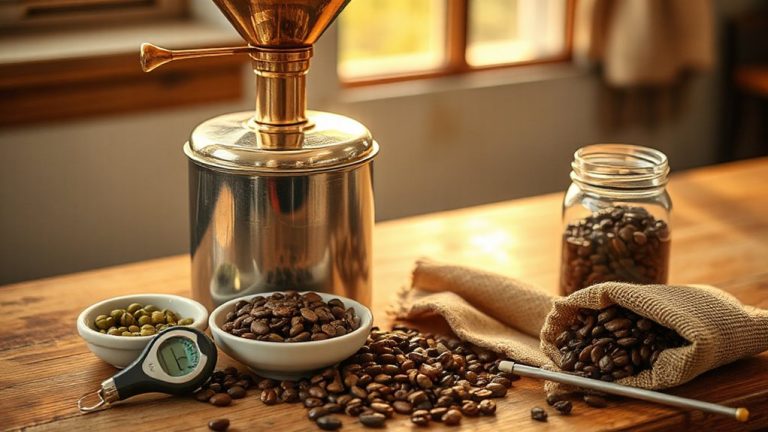
How do you know when your roast is on track? You watch time, temperature, and roast rate closely. Time tells you progression, temperature reveals bean behavior, and roast rate-the speed of heat increase-shows how evenly energy transfers. A steady roast rate around 15–20°F per minute typically supports roast consistency. Too fast, and you risk scorching; too slow, and the coffee bakes, losing brightness. Digital probes and software like Artisan or Cropster help with real-time monitoring and flavor tracking. Logging each roast lets you compare profiles and fine-tune results. Consistent data means repeatable flavor, essential for quality control. Even small shifts in rate or temp can alter sweetness or acidity, so track every batch. With reliable equipment and disciplined recording, you build a profile library that sharpens your roasting precision over time. Pairing precise monitoring tools with the right coffee roasting accessories ensures optimal control and consistency throughout the roasting process.
Fix Common Roast Profile Mistakes
While some roast flaws stem from green bean quality, most arise from predictable profile errors that you can correct with targeted adjustments. If your coffee tastes bumpy or sour, you might have a roast lag-when the bean temperature rises too slowly in early development. This often happens with high bean density beans, like those from high-altitude farms, which store more moisture and heat unevenly. To fix this, increase your charge temperature or apply more heat early in the roast. But don’t overdo it-too much heat too fast risks scorching. If the roast stays sluggish past the first crack, you’re likely underdeveloping; adjust by stretching the middle phase. On the flip side, dumping too late causes bakers’ percentages to drop and flavors to dull. Monitor your time between dried phase end and first crack: gaps beyond 1.5–2 minutes often signal imbalance. Small tweaks to airflow and burner settings make a real difference in final cup clarity.
Match Roast Profiles to Your Bean’s Origin
Why do Ethiopian beans often shine with bright, floral notes when roasted one way, while Sumatran coffees turn muddy if treated the same? It’s because origin shapes bean density and moisture content, and those traits demand different roast approaches. Ethiopian beans are typically high-grown, dense, and drier, so they respond well to faster, hotter roasts that highlight acidity and delicate flavors. Sumatran beans, with lower density and higher moisture content, absorb heat more slowly and need a gentler ramp to avoid baking and bitterness. If you roast them too hot, you risk dull, earthy off-notes. Matching your profile to these physical traits matters more than blindly following a preset curve. Adjust charge temperature, ramp rate, and development time based on what’s in the hopper-not just the roast machine’s settings. Know your beans’ origin, and let that guide your roast.
On a final note
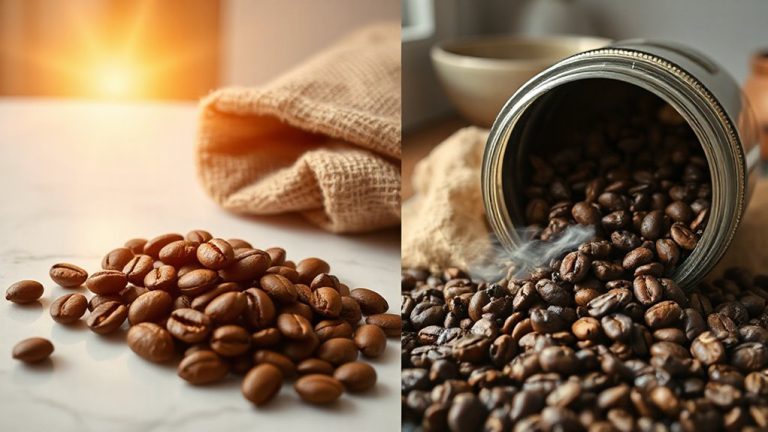
You’ve got the tools to shape better coffee through roast profiling. Watch time, temperature, and roast rate closely-they guide every decision. Light roasts highlight origin traits; dark roasts emphasize body and sweetness. Adjust heat carefully in each stage to avoid tipping into bitterness or underdevelopment. Use a consistent profile, tweak as beans change, and match the roast to the bean’s origin for balanced, repeatable results.