The Impact of Storage Conditions on Coffee Freshness and Aroma
Light, heat, air, and moisture kill coffee’s flavor fast. Keep your beans in a dark, cool pantry, not the fridge-condensation and odors ruin them. Use an airtight stainless steel canister with a rubber gasket to block oxygen and light. Whole beans stay fresh 2–4 weeks, but ground coffee loses aroma in hours. Grind just before brewing for the best taste. You’ll discover smarter ways to keep every cup vibrant and rich.
Notable Insights
- Light and heat degrade coffee’s flavor compounds, causing a stale taste; store in a cool, dark place to preserve freshness.
- Oxygen exposure leads to oxidation, diminishing aroma; use airtight containers to minimize air contact.
- Moisture promotes mold and accelerates staling; avoid humid environments and porous storage materials.
- Refrigeration risks condensation and odor absorption; pantry storage in stable conditions is preferable.
- Whole beans retain freshness longer than ground coffee; grind only before brewing for optimal aroma.
How Light and Heat Ruin Fresh Coffee
While coffee might seem stable at first glance, exposing it to light and heat quickly degrades its quality, and you’re probably doing it without even realizing. Light exposure breaks down delicate flavor compounds, causing your coffee to taste stale or flat much faster. Heat degradation speeds this process, especially near windows, stoves, or in warm cabinets. Even indirect sunlight can trigger chemical changes, so storing beans near a window-no matter how convenient-does real harm. Dark, airtight containers in cool pantries or cupboards work best. Avoid clear jars or plastic bags on countertops. If you use an electric grinder or brewer daily, keep the beans away from the machine’s heat buildup. Stainless steel canisters with tight seals, like those from Fellow or Planetary Design, help block light and stabilize temperature. Your coffee stays fresher longer when you control these two factors simply and consistently. For long-term freshness, consider coffee bean storage solutions that combine airtight seals with opaque materials to maximize protection.
Why Air and Moisture Destroy Coffee Flavor
Because oxygen and moisture kickstart chemical reactions that degrade coffee’s essential oils and volatile compounds, your beans start losing flavor the moment they’re exposed to air. The oxidation process breaks down aromatic compounds, leaving your brew flat and stale over time. This reaction speeds up if you store coffee in a porous container or open it frequently. Humidity exposure is just as damaging-moisture promotes mold and accelerates degradation, especially in ground coffee with its larger surface area. Even a little dampness can ruin otherwise fresh beans. You’ll want an airtight container made of opaque, non-reactive material like stainless steel or tinted glass. Avoid clear jars unless kept in a dark cupboard. Keep the container sealed and minimize how often you open it. These steps slow the oxidation process and block humidity exposure, helping preserve taste and aroma for days, not hours. For long-term freshness, consider investing in a canister with a built-in degassing valve.
Fridge vs. Pantry: Where to Store Coffee?
If you’re tempted to stash your coffee in the fridge to keep it fresh, think again-cold storage often does more harm than good. Every time you take it out, condensation forms as it warms, exposing beans to moisture that degrades flavor. Plus, coffee is prone to odor absorption, picking up smells from dairy, onions, or leftovers, which ruins its aroma. The fridge lacks temperature stability, constantly shifting as the compressor cycles on and off. That fluctuation speeds up staling. Instead, keep coffee in the pantry-away from the stove, sink, or sunlight. A cool, dark, dry place with steady temperature stability preserves freshness longer. Seal it in an airtight container and use it within a few weeks. No fridge needed. Pantry storage is simpler, more effective, and avoids the risks cold brings. Stick to consistency, and your brew will taste better.
Best Storage Containers for Fresh Beans
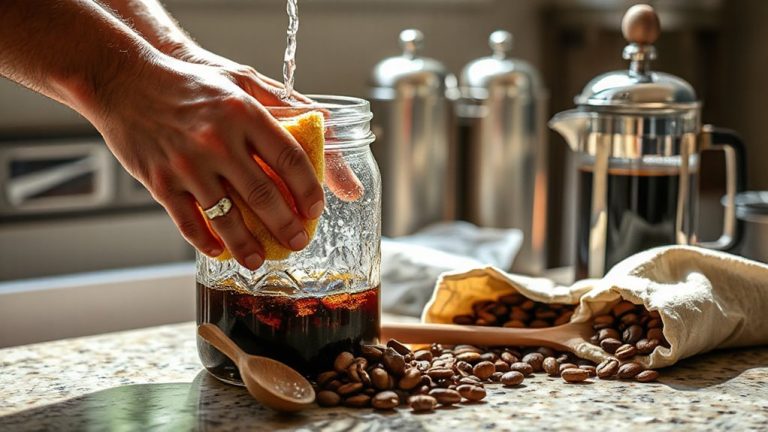
Airtight containers are your best defense against staling when storing fresh coffee beans. You’ll want to choose ones made from opaque materials to block light, which degrades flavor over time. Clear jars might look nice, but they let in rays that speed up oxidation. Stainless steel canisters with rubber gaskets, like those from Airscape or Fellow, lock in freshness well. Vacuum sealing takes protection further by removing oxygen, a key culprit in flavor loss-containers with built-in pumps do this effectively. While not essential, vacuum options are great if you buy beans in bulk or live in a humid climate. Just remember to press out air before sealing. Avoid plastic unless it’s food-grade and thick; thin plastic can absorb odors or let in air. A good container keeps beans dry, dark, and sealed-simple, but critical. Your coffee will taste noticeably fresher. Maintaining clean storage containers is just as important as choosing the right one, since residual oils can degrade bean quality over time, making regular use of coffee cleaning supplies essential for long-term freshness.
Whole Bean vs. Ground: How Long Coffee Stays Fresh
While whole beans keep their flavor longer, grinding exposes more surface area to oxygen, speeding up staling-so you’re better off buying whole beans and grinding just before brewing. Your choice of grind size and brewing method directly impacts freshness and taste. Pre-ground coffee may be convenient, but it starts losing aroma within hours. Grinding at home lets you match the grind size precisely to your brewing method, improving flavor and consistency.
| Form | Freshness Duration | Best For |
|---|---|---|
| Whole Bean | 2–4 weeks | Pour-over, French press |
| Coarse Grind | 12–24 hours | Cold brew, French press |
| Medium Grind | 8–12 hours | Drip coffee makers |
| Fine Grind | 4–8 hours | Espresso |
| Pre-Ground | Up to 1 day* | Convenience-only use |
*Only if sealed airtight.
Simple Daily Habits for Fresher-Tasting Coffee
You’ve already seen how whole beans stay fresh longer and why grinding right before brewing makes a real difference in flavor and aroma. Now, integrate that into your morning routine: set up your grinder and scale the night before so you can measure and grind with ease. Use a consistent brewing technique-like pour-over or French press-and stick to it to reduce variables that affect taste. Preheat your mug and brewer; temperature stability improves extraction. If you use an automatic drip machine, skip the “program” setting and brew fresh each day. Cold, dark storage near your coffee maker helps, but never above the stove or fridge. Clean your equipment weekly-oil buildup taints flavor. Small changes, like using fresh water and the right coffee-to-water ratio (typically 1:16), deliver noticeably better results without extra cost or gear. These steps take seconds but sharpen your daily cup.
Your Coffee Storage Mistakes (And How to Fix Them)
If you’re keeping your coffee in the fridge or freezer, you’re likely doing more harm than good-moisture and temperature swings cause condensation, which speeds up staling and degrades flavor. Instead, store your beans in an opaque, airtight container at room temperature, away from light and heat. Exposure to air and humidity dulls the distinct notes tied to coffee origin, whether it’s fruity Ethiopian or earthy Sumatran. Always check the roast date; beans are freshest within 2–4 weeks post-roast. Buying based on roast date guarantees peak aroma and taste. Avoid clear jars or containers near the stove-they compromise quality fast. If you buy in bulk, split the stash: keep a small amount in a sealed canister for daily use and store the rest in a cool, dark place. This simple fix preserves freshness, honors the roast date, and protects the true character of your coffee origin.
On a final note
You keep coffee fresh by avoiding light, heat, air, and moisture. Store beans in an opaque, airtight container in a cool, dark pantry-skip the fridge. Use whole beans and grind just before brewing for the best aroma. Most coffee peaks within 2–4 weeks of roasting. Small batches, proper gear, and simple habits make a real difference in taste every day.