Evaluating the Impact of Various Container Types on Turkish Coffee Flavor Development During Steeping Times
Your cezve’s material shapes Turkish coffee’s flavor during steeping by affecting heat control and taste. Copper heats evenly and retains warmth, boosting aroma in light roasts, while stainless steel offers a clean, neutral profile and quick heating for daily use. Brass can add metallic notes if unlined. Clay brings earthiness and gentle extraction; ceramic holds heat well for full steeping. Glass lets you watch foam but cools fast. Choose based on your beans and desired results-each material changes the outcome. You’ll find the best match by comparing how each supports your brewing rhythm and flavor goals.
Notable Insights
- Copper cezves provide even heating and heat retention, enhancing flavor complexity and preserving aromatic notes during extended steeping.
- Stainless steel cezves offer neutral taste and quick heating but may cool rapidly, risking under-extraction with longer steep times.
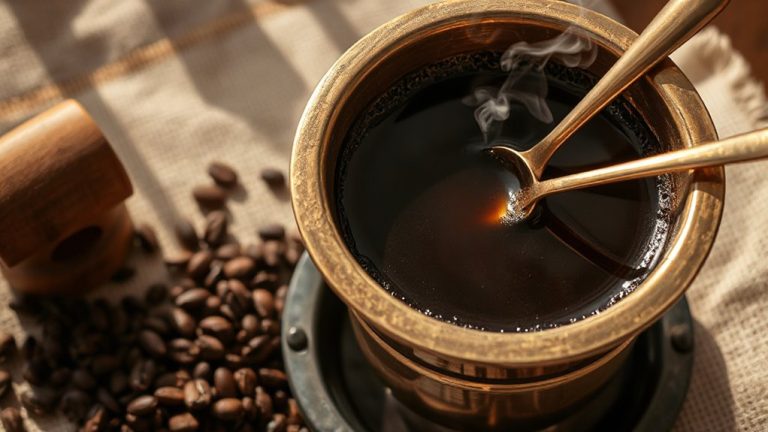
- Brass cezves retain heat well, supporting deeper body and sweetness in longer steeps, though unlined versions may add metallic notes.
- Clay ibriks enable gentle, even extraction and impart earthy nuances, favoring boldness in dark-roast Turkish coffee with prolonged steeping.
- Ceramic vessels maintain steady post-boil temperatures, optimizing aroma and sediment settling with a 4-minute steep for balanced flavor.
Why Vessel Material Changes Turkish Coffee Flavor
While you might not think the pot matters as much as the beans, the material of the cezve-the small pot used to brew Turkish coffee-actually has a direct impact on flavor. Copper cezves conduct heat quickly and evenly, helping preserve delicate floral undertones, especially with light-roast beans from Ethiopian or Yemeni origins. Brass versions are durable but can sometimes impart a slight metallic note if unlined. Stainless steel heats slower but offers consistent results and doesn’t react with the coffee, making it reliable for daily use. Your choice affects how the bean origin’s natural characteristics come through-so if you’re using high-quality, aromatic beans, a copper or lined cezve might better showcase their complexity. For most home users, stainless steel strikes a practical balance between performance and maintenance. Ultimately, the right material lets the coffee’s true profile shine without interference.
How Cezve Material and Steep Time Interact
Since heat retention and conductivity vary by material, your cezve choice directly affects how steep time shapes flavor. Thin stainless steel heats fast but cools quickly, so longer steeping risks flat, over-extracted notes-keep it short for bright, strong results. Thick brass or copper-based cezves (with non-reactive linings) hold heat longer, allowing extended steeping without rapid temperature drop, boosting body and sweetness if managed right. Short steeps in these maintain vibrant acidity; longer ones deepen complexity, but only if heat is removed promptly. Your chosen material influences brew consistency-uneven heating in poor conductors creates flavor gaps. Foam stability suffers with erratic temps or sudden shifts, common in aluminum or lightweight alloys. For repeatable results and lasting foam, match steep time to your cezve’s thermal behavior. Always preheat, control flame size, and pour just after foam peaks.
Copper Cezves: Heat Control and Rich Flavor
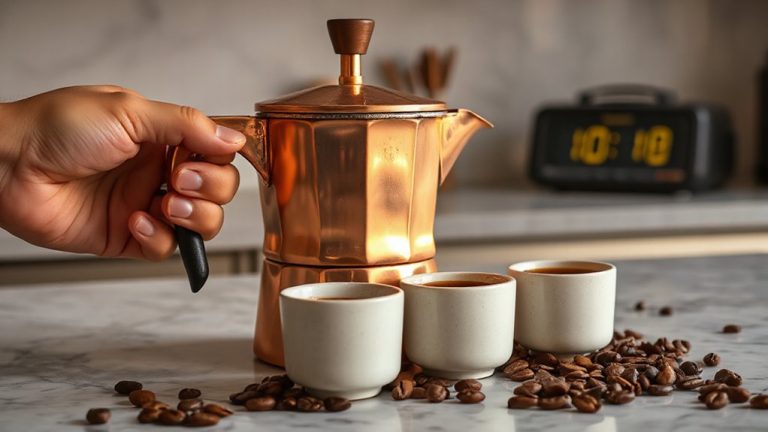
If you’re aiming for precise heat control and a cup with deep, rounded flavor, a copper cezve is hard to beat. Thanks to copper conductivity, heat spreads quickly and evenly along the base and sides, reducing hot spots that can burn grounds. This means you can monitor the brew more reliably, especially during the essential foam formation stage. Most copper cezves are lined with tin to prevent reactivity, preserving flavor integrity. You’ll also find that many are shaped by hand, reflecting traditional craftsmanship that’s been refined over generations. While they require gentle care to avoid dents and tarnishing, their performance often justifies the effort. Unlike lighter metals, copper holds steady heat during steeping, supporting consistent extraction. Just remember-because copper responds fast, you need to watch the flame closely. A well-made copper cezve won’t heat as fast as stainless steel, but it gives you more control once it’s warm.
Stainless Steel: Fast Heating, Clean Taste
Stainless steel cezves heat up fast and won’t react with your coffee, giving you a clean, neutral taste. Their high thermal conductivity guarantees quick, even heating, which helps maintain control during the short brew cycle. You’ll get consistent results without unwanted flavor interference, thanks to their strong taste neutrality. These cezves are durable, easy to clean, and resistant to corrosion, making them practical for daily use. While they don’t retain heat as long as copper or clay, their precision suits modern stovetops, especially induction. If you prefer a pure expression of your coffee’s profile without metallic or earthy undertones, stainless steel is a solid choice. Brands like Mokaflor and Turkish Delight offer affordable, well-constructed options. Just watch the heat closely-fast heating means faster boilovers. For those prioritizing speed, cleanliness, and repeatability, stainless steel delivers where it counts.
Clay Pots: Earthy Notes and Gentle Extraction
When you’re aiming for a brew that highlights subtle, earthy depth, a traditional clay cezve might be your best bet. Clay pots heat slowly and evenly, promoting a gentle brew that preserves delicate flavor compounds often lost in faster methods. As the coffee steeps, the porous surface of the clay subtly interacts with the grounds, introducing a faint clay aroma that enhances the coffee’s natural richness without overpowering it. This earthy note pairs especially well with dark, finely ground beans, rounding out the final cup. While clay requires careful handling and seasoning to prevent cracking, its ability to produce a smooth, balanced extraction makes it a favorite among purists. Unlike metal, it doesn’t conduct heat aggressively, reducing the risk of scorching. For those seeking authenticity and a gentle brew with layered complexity, a well-maintained clay cezve offers unmatched character.
Glass vs. Ceramic: Neutral Flavor and Heat Visibility
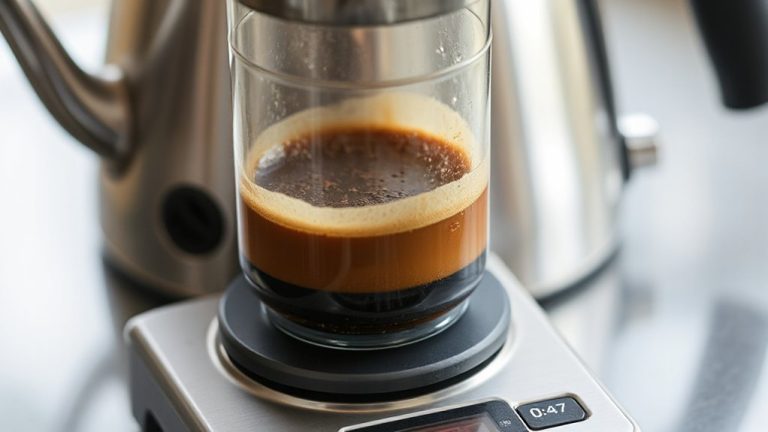
A clear view of your brew means better control, and that’s where glass cezves shine. With glass clarity, you can monitor foam development and sediment settling in real time, helping you avoid over-extraction. Glass doesn’t absorb flavors, so each cup tastes clean and true to bean. But it cools quickly-once removed from heat, the temperature drops fast, which may shorten steeping effectiveness. That’s where ceramic wins. Ceramic insulation holds heat longer, sustaining extraction even after brewing ends. This makes ceramic better for slower, even flavor development. Still, dark glazes in some ceramic vessels can affect neutrality, so choose glazed-white interiors when possible. While glass gives visual precision, ceramic offers thermal stability. Your choice depends on whether you prioritize observation or consistent temperature during steep. Both materials deliver neutral flavor when properly made, so focus on technique and cleanliness for the best results.
Best Vessel and Steep Time Pairings for Taste
How do you get the most balanced flavor from your Turkish coffee? Use a ceramic ibrik with a 4-minute steep. Ceramic holds heat well, boosting aroma preservation, while the ibrik’s narrow spout helps control crema. After boiling, let it rest off-heat-4 minutes gives ideal extraction without over-stirring the sediment. For cleaner mouthfeel, try a brass cezve with a 3-minute steep. It heats quickly but cools fast, reducing bitterness, though aroma preservation is slightly weaker. Glass vessels offer visibility but lose heat too fast, disturbing sediment texture if moved. Avoid long steeps in metal-it can sharpen flavors unpleasantly. The 4-minute ceramic method delivers rich body, steady fragrance, and fine, settled sediment. Pre-warming the cup also helps maintain temperature during serving. Pair your vessel and time smartly: ceramic for depth, metal for speed, and always respect the grounds’ settling. This balance defines a well-made cup.
On a final note
Your choice of cezve affects flavor and control. Copper heats evenly and boosts rich, full notes, especially with 4–5 minute steeps. Stainless steel heats fast but can scorch if you’re not careful-best for shorter, 2–3 minute brews. Clay adds earthiness and smooth extraction, while glass and ceramic stay neutral and let you watch the brew. Match vessel to your steep time: copper or clay for longer steeps, steel for quick ones. Pick based on your taste and heat control.