Why Distilled Water Should Never Be Used for Brewing Coffee
You shouldn’t use distilled water for brewing coffee because it lacks minerals like calcium and magnesium, which are essential for pulling out balanced flavors. Without them, your coffee tastes flat, sour, or thin. Distilled water also extracts bitterness too quickly while missing sweeter notes. Plus, it’s aggressive and can damage your machine by leaching metal from internal parts. Stick to filtered tap or re-mineralized water instead - your coffee, and gear, will perform noticeably better.
Notable Insights
- Distilled water lacks essential minerals, leading to flat and sour-tasting coffee due to poor flavor extraction.
- Without minerals like calcium and magnesium, distilled water fails to extract sweetness and complexity from coffee grounds.
- Using distilled water can cause underextraction, emphasizing bitter compounds while missing desirable aromatic and acidic notes.
- It is chemically aggressive and may leach metals from machine parts, risking corrosion and reducing equipment lifespan.
- Optimal coffee brewing requires 50–150 ppm minerals; distilled water’s near-zero TDS falls far below this ideal range.
What Happens When You Brew Coffee With Distilled Water
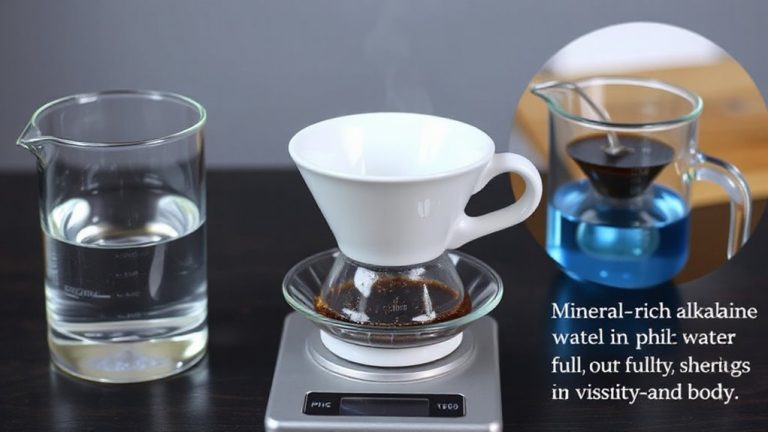
Ever wonder why your coffee tastes flat or sour when you use distilled water? When you brew coffee with distilled water, the lack of minerals disrupts extraction, even if your brewing temperature is spot-on. Water purity matters, but too much purity backfires. Distilled water pulls out bitter compounds too quickly while skipping sweeter, complex notes, leading to unbalanced results. Most drip brewers and pour-overs rely on some dissolved minerals to moderate this process, so using distilled water often produces a thin, sharp cup. It’s not just about taste-running distilled water through machines like Breville or Technivorm can also harm heating elements over time. While it might seem ideal for preventing scale, the trade-offs in flavor and equipment longevity aren’t worth it. Stick to filtered tap or specially formulated water instead-you’ll get better extraction and more consistent results, even with precise brewing temperature control.
Why Minerals in Water Are Essential for Flavor
Because water makes up over 98% of your coffee, the minerals it contains play a critical role in how flavors are extracted from the grounds. You need a proper mineral balance-specifically magnesium and calcium-to pull out sweetness, acidity, and aroma effectively. Without them, extraction suffers, and your coffee loses depth. These minerals support flavor enhancement by interacting with coffee’s compounds during brewing. Too little, like in distilled water, leaves the cup dull; too much can over-extract and make it bitter. For best results, use filtered tap water or add mineral packets like Third Wave Water to achieve balanced hardness. Brewers like pour-over cones and espresso machines rely on this balance for consistent, flavorful results. You’re not just brewing coffee-you’re managing chemistry. Keep it balanced, keep it tasty.
How Distilled Water Makes Coffee Taste Flat or Sour
Flatness or sourness in your coffee often comes down to one overlooked factor: distilled water. Without minerals like magnesium and calcium, distilled water can’t properly extract flavor compounds from coffee grounds. You end up with a weak, thin brew that lacks depth and character. The absence of mineral interaction leads to underextracted bitterness-where harsh, sharp notes emerge not from over-extraction but from imbalance. At the same time, you lose the lively, clean kick of a well-brewed cup, resulting in muted brightness. Your palate detects something missing, even if you can’t name it. This is especially noticeable with light-roast and single-origin beans, which rely on balanced extraction to showcase their complexity. Using distilled water strips away the very elements that create a vibrant, rounded flavor profile. It’s not just about preference-it’s chemistry. Your coffee deserves better than what distilled water delivers.
How to Choose the Best Water for Great Coffee
You’ve seen how distilled water strips coffee of its richness, leaving behind a flat, sour mess no matter how good the beans or brew method. To get the best flavor, choose water with balanced mineral content-ideal water hardness is between 50–150 ppm of dissolved minerals like magnesium and calcium, which help extract flavor compounds. Too soft (low hardness), and coffee tastes dull; too hard, and you risk scale buildup and bitter notes. Use a simple filter like Brita or Aquasana to smooth out impurities while retaining beneficial minerals. Avoid distilled or reverse osmosis unless you re-mineralize. Pair proper water with the right brewing temperature-195°F to 205°F is ideal. That range guarantees efficient extraction without scalding the grounds. Using temperature-stable electric kettles, like those from Fellow or Bonavita, gives consistent results. Your coffee’s taste depends as much on water quality as bean freshness-don’t overlook it.
How Distilled Water Can Damage Coffee Machines
While it might seem like a clean choice, using distilled water in your coffee machine can cause long-term damage due to its lack of minerals. Without these minerals, the water becomes aggressive and can leach metals from internal components, leading to internal corrosion over time. This is especially risky in machines with aluminum or copper heating elements, where the damage can compromise performance and safety. You might not see it right away, but weakened parts and leaks often follow. Ironically, while people sometimes use distilled water to prevent scale buildup, doing so removes all protection minerals offer against corrosion. Instead of avoiding scale at the cost of your machine’s lifespan, use filtered tap water with balanced mineral content-it prevents scale without accelerating wear. Your machine lasts longer and performs better when you give it the right water.
How to Adjust Your Water for Better Coffee Extraction
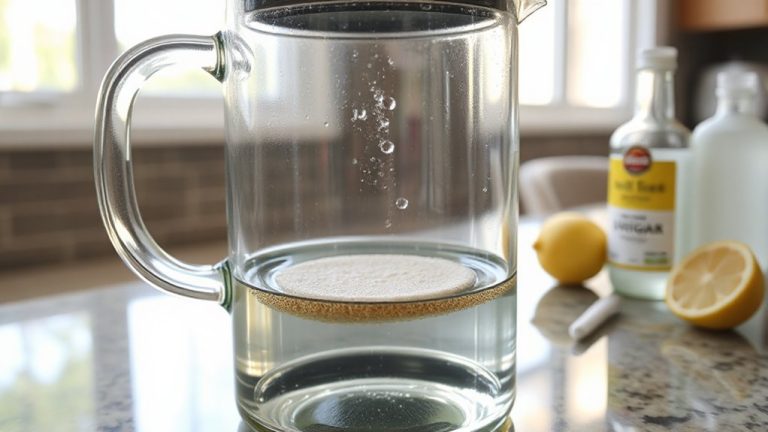
Distilled water strips away more than just impurities-it also removes the minerals that help guide proper extraction during brewing, which is why relying on it can hurt both your machine and your coffee’s taste. You need some water hardness to extract flavor properly, but too much leads to scale and uneven brewing. Aim for a balanced mineral content: around 50–100 ppm calcium and magnesium. That sweet spot guarantees good extraction without harming your gear. You can use third-party additives like Water Aids’ concentrates or make your own mix with baking soda and Epsom salt. Bottled spring water often works well, but check the label-some are too soft or too hard. Reverse osmosis water, re-mineralized, gives you control. The key is consistent mineral balance. Test with a TDS meter if possible. Better water means better espresso and pour-over, shot after shot.
On a final note
You shouldn’t use distilled water for coffee-it lacks minerals needed for proper extraction, leading to flat, sour taste. It can also harm your machine by leaching metals over time. Instead, use filtered tap water or re-mineralized water like Third Wave Water or Barista Hustle’s drops. These balance minerals for better flavor and machine safety. For consistent results, aim for 150 ppm hardness. It’s simple, effective, and protects your gear.