How to Prevent Water Spots on Your Coffee Equipment With Daily Wiping
Wipe your coffee equipment with a microfiber cloth right after each use to stop water spots before they form. Minerals in water leave behind buildup as it evaporates, especially on steam wands, portafilters, and glass carafes. A quick wipe while surfaces are warm removes moisture and prevents etching or scale. Use only mild soap and avoid paper towels or abrasives. Dry all spots completely-consistency keeps your gear in top shape longer. You’ll learn how small habits make a big difference over time.
Notable Insights
- Wipe coffee equipment immediately after each use to prevent hard water evaporation and magnesium deposits can cause etching on stainless steel and chrome.
- Use a damp microfiber cloth followed by a dry one to fully remove moisture and mineral residue from surfaces.
- Focus on high-risk areas like steam wands, portafilter rims, drip trays, and glass carafes where spots form quickly.
- Avoid abrasive scrubbers and harsh cleaners that damage surfaces and increase susceptibility to mineral buildup and corrosion.
- Ensure all crevices are dry after wiping, as trapped moisture attracts minerals and promotes long-term spotting and rust.
How Water Spots Harm Your Coffee Equipment
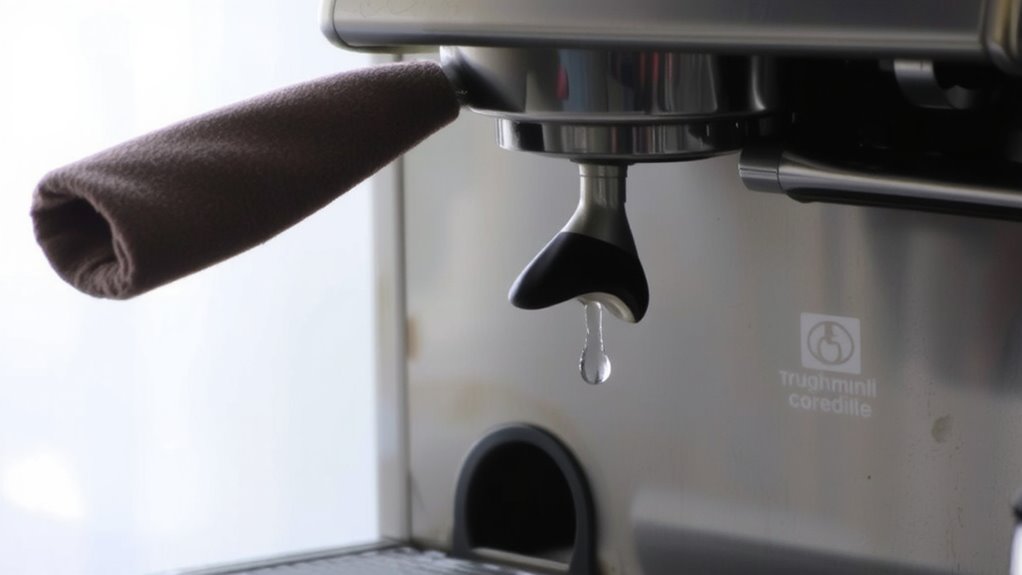
Water spots might look like a minor annoyance, but they’re actually a sign of mineral buildup that can harm your coffee equipment over time. When hard water evaporates, it leaves behind minerals like calcium and magnesium. These deposits don’t just look bad-they create rough spots that encourage surface etching on stainless steel and chrome finishes. Over time, this etching wears down protective layers, making gear more vulnerable to corrosion. Espresso machine boilers and steam wands are especially at risk, since scale reduces heat transfer efficiency and clogs narrow water lines. Even glass carafes can become cloudy and weakened. Left unchecked, mineral buildup shortens your machine’s lifespan and affects brew quality. Daily wiping with a soft, damp cloth helps, but using filtered water is your best long-term defense. Preventing buildup is always cheaper than repairing damage. For Breville machines, using a Breville-approved descaler ensures effective scale removal without damaging internal components.
Where Water Spots Show Up Most
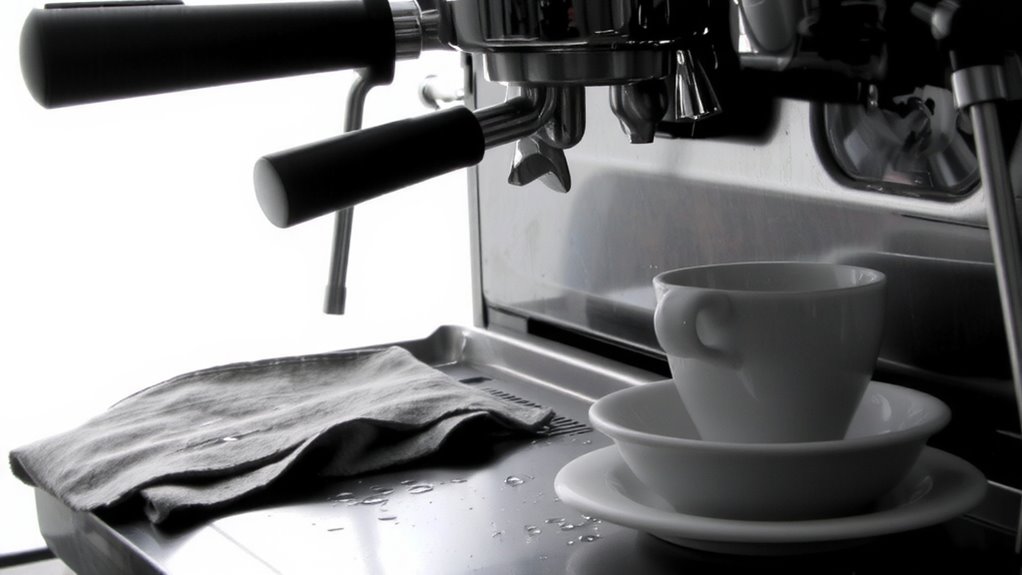
Stainless steel finishes and glass surfaces are magnets for water spots, especially in high-use areas of your coffee setup. You’ll notice them quickly on steam wands, where residual water evaporates and leaves behind mineral deposits after each use. If you’re steaming milk multiple times a day, those spots build up fast and become harder to remove over time. Portafilters are another hotspot-especially the rim and spouts-since they’re rinsed frequently but often left to dry in place. Even a thin film of water can leave a visible ring once it dries. Glass carafes or water reservoirs also show spots clearly, making them look unclean even when they’re not. These areas get touched and seen the most, so visible spotting affects both appearance and hygiene. Wiping them down daily helps, but knowing where to focus makes your routine more effective. Choosing equipment made with stainless steel coffee makers can reduce plastic-related staining and improve long-term spot resistance.
Use the Right Cloth to Prevent Streaks and Scratches
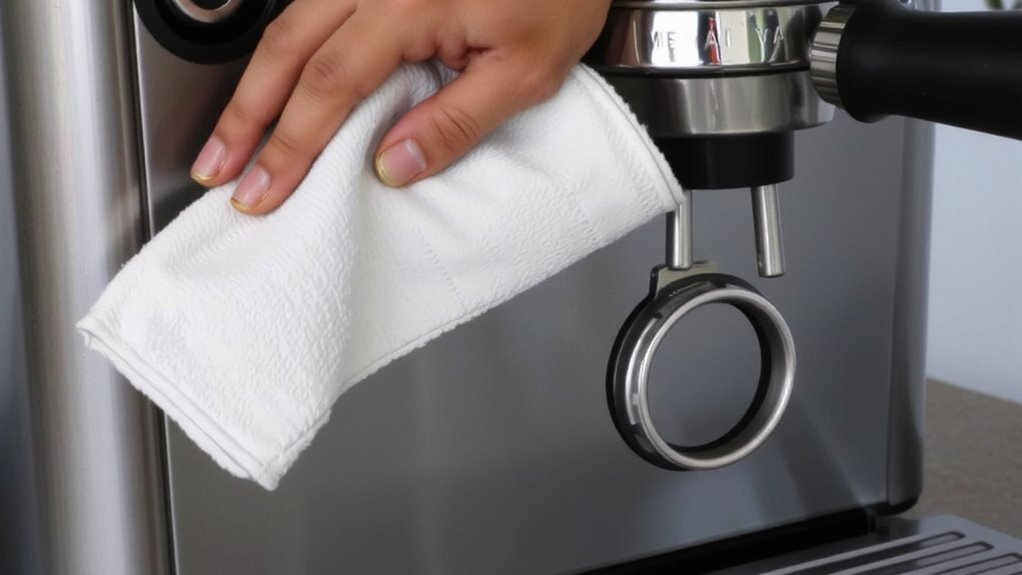
A microfiber cloth is your best bet for keeping coffee equipment spot-free without damaging the finish. The soft cloth texture lifts water and residue without scratching surfaces, even on delicate stainless steel or glass carafes. Unlike paper towels or cotton rags, microfiber traps moisture and particles in its fibers, reducing smear marks and lint. Microfiber benefits include reusability and durability-most can be washed dozens of times and still perform well. Avoid abrasive materials like scouring pads or rough terry cloth, which cause micro-scratches that trap mineral deposits over time. For best results, pick a dense, lint-free microfiber cloth without added textures or embroidery. These finer weaves prevent streaks and work effectively with just water or mild cleaning solution. Using the right cloth makes a noticeable difference in maintaining appearance and extending equipment life, especially on high-gloss or polished surfaces exposed to daily steam and spray.
Wipe Down Equipment Daily (Right After Use)
Getting into the habit of wiping down your coffee equipment right after each use cuts down on buildup and keeps surfaces looking clean longer. This immediate cleaning stops water from evaporating and leaving behind hard water spots, especially on stainless steel or glass. You don’t need harsh chemicals-just a damp cloth followed by a dry one. Make sure all surfaces are dry after wiping; lingering moisture attracts minerals and dust. For best results, do this while the machine is still warm (but not hot) from use, as it helps speed up drying. Daily wiping only takes a minute but prevents long-term residue. Machines like Breville or Rocket benefit especially since they have polished exteriors more prone to spotting. Skip the wait-cleaning right away is faster and more effective than scrubbing dried gunk later. Dry surfaces mean less maintenance over time, and consistency keeps your gear running cleanly.
Avoid These Common Wiping Mistakes
While wiping down your equipment seems straightforward, doing it the wrong way can leave streaks, spread minerals, or even scratch delicate surfaces. Using abrasive cleaners is a common mistake-they might remove spots but can damage stainless steel or plastic over time. Stick to mild, pH-neutral dish soap and a soft microfiber cloth instead. Another issue is excessive moisture; leaving water pooled in crevices encourages mineral buildup and promotes rust on metal parts. Always wring out your cloth well-damp is fine, soaking wet isn’t. Avoid paper towels, as they can leave lint and aren’t as effective at lifting residue. And don’t forget hidden spots, like under drip trays or around steam wand bases, where leftover moisture quickly turns into scale. Wipe methodically, keep your cloth clean, and you’ll maintain both appearance and performance.
How Daily Wipes Prevent Costly Repairs
If you skip daily wipe-downs, mineral deposits and moisture buildup will gradually degrade your coffee equipment, leading to issues that go far beyond surface grime. Hard water leaves behind mineral buildup that clogs steam wands, heating elements, and internal valves over time. This scale reduces efficiency, forces parts to work harder, and shortens their lifespan. Regular wiping after each use removes water before it dries, cutting the chance for minerals to settle. Machines in high-hardness water areas suffer fastest, but even moderate water supplies leave deposits eventually. Letting scale accumulate leads to blocked lines, uneven steaming, and failed boilers-repairs that cost hundreds. A quick wipe with a dry, lint-free cloth takes seconds but prevents long-term damage. You’re not just removing spots-you’re protecting internal mechanisms. Simple consistency here avoids expensive service calls and keeps your machine running smoothly for years.
Why Consistency Keeps Your Gear Looking New
You’ll almost always notice cleaner, more professional-looking equipment when you maintain a consistent wiping routine after each use. Water left to dry on stainless steel or chrome surfaces leads to mineral buildup and water spots, which over time contribute to aesthetic degradation. Spots and film make machines look worn, even if they function well. This dull appearance isn’t just unattractive-it can affect customer perception in commercial settings. More importantly, consistent neglect accelerates wear that ties directly to resale depreciation. Machines with visible grime, etching, or staining fetch lower prices on the used market than well-kept models. Unlike deep cleans done monthly, daily wiping takes seconds and prevents long-term damage. Wipe down steam wands, drip trays, and外壳 surfaces every time. It’s a small habit with real returns: your gear stays presentable, retains value, and remains ready for inspection or sale without costly detailing. Consistency isn’t perfection-it’s prevention.
On a final note
Wiping your coffee equipment daily with a soft, lint-free cloth prevents water spots that can lead to mineral buildup and corrosion over time. Stainless steel and glass surfaces, like those on portafilters or kettles, are especially prone. Skip abrasive materials or harsh cleaners-they scratch. Make it routine: rinse, dry, wipe right after use. This simple step keeps gear looking new, cuts down on deep cleaning, and helps avoid costly repairs from long-term water damage. Consistency matters most.