What Grinding Actually Does to Coffee Beans (Cell-Level Guide)
When you grind coffee beans, you break open cells, releasing oils and sugars while activating enzymes that alter flavor. The increased surface area speeds up oxidation, degrading aroma and taste within minutes. Finer grinds extract more in brewing but stale faster, especially with blade grinders that generate heat. Moisture and air accelerate spoilage, so grind just before brewing. A burr grinder gives even particles and slower breakdown, preserving quality. Freshness drops fast-timing and gear matter more than most realize.
Notable Insights
- Grinding ruptures coffee bean cells, releasing trapped oils and sugars that undergo enzymatic reactions.
- Enzymes activated by cell damage alter flavor compounds, potentially enhancing or degrading taste.
- Increased surface area exposes coffee to oxygen, accelerating oxidation of aromatic compounds.
- Freshly ground coffee loses aroma rapidly, with noticeable scent decline within seconds.
- Grind size and uniformity directly impact extraction, influencing bitterness, sourness, or balance.
How Grinding Coffee Triggers Chemical Changes
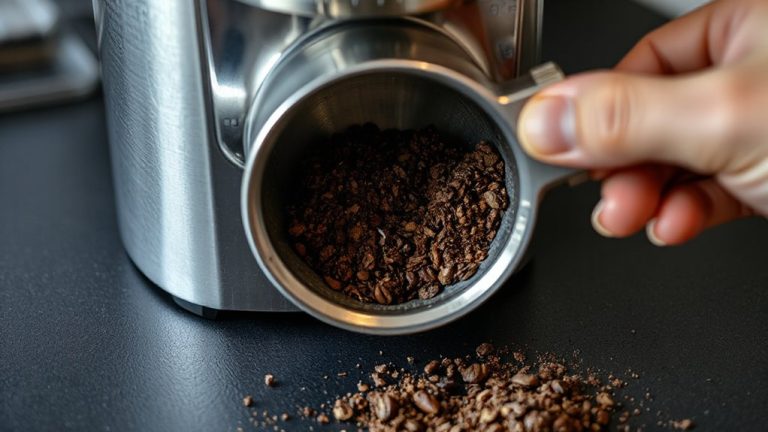
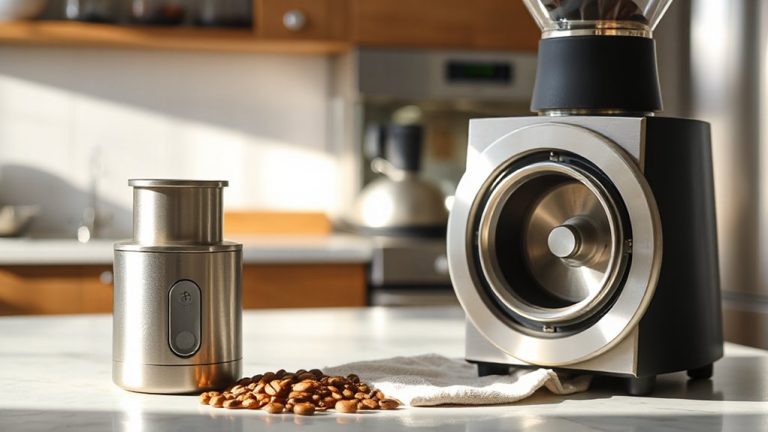
When you grind coffee beans, you’re not just changing their size-you’re kick-starting chemical changes that affect flavor. The process causes cellular disruption, breaking open the bean’s structure and exposing trapped compounds. This damage triggers enzyme activation, where natural enzymes begin reacting with oils and sugars. These reactions can subtly shift flavor, sometimes enhancing brightness or creating off-notes if delayed. Whole beans stay stable because their cells are intact, but once cracked open, chemical activity ramps up fast. That’s why grinding just before brewing matters-it limits uncontrolled reactions. Burr grinders give more consistent particle size than blade grinders, leading to even cellular disruption and predictable enzyme responses. If you use a cheap grinder, uneven shards and dust mean some cells burst early, others late, causing unbalanced extraction. For best results, grind with a conical burr model like the Baratza Encore-consistent, controlled, and repeatable. Fresh grind, fresh brew, controlled chemistry. Upgrading your equipment can make a significant difference, and choosing one of the best coffee grinders ensures optimal flavor preservation and grind consistency.
Why Larger Surface Area Speeds Up Flavor Loss
Though you can’t see it, increasing the surface area of coffee by grinding exposes more of the bean to air, speeding up how fast flavors fade. Once ground, your coffee has far more surface exposure to oxygen, which rapidly degrades volatile compounds responsible for aroma and taste. The finer the grind, the greater the particle dispersion and the faster this staling process becomes. That’s why pre-ground coffee often tastes flat-its increased surface area has already sacrificed freshness. Even in an airtight container, ground coffee degrades faster than whole beans. For best results, grind just before brewing to minimize exposure. Blade grinders create uneven particle dispersion, increasing surface exposure inconsistently, while burr grinders offer more control. If you must prep ahead, coarse grinds lose flavor slower than fine ones. Freshness isn’t just about taste-it’s physics. A key factor in preserving flavor is using a burr grinder, which ensures uniform particles and reduces excessive oxidation.
How Grind Size Affects Extraction and Stability
Grinding your coffee doesn’t just expose more surface to air-it directly shapes how water pulls flavor from the grounds during brewing. If your grind’s too fine, water moves slowly, increasing brew time and risking over-extraction-think bitter, harsh notes. Too coarse, and water zips through, shortening brew time and leaving under-extracted, sour flavors. You’re aiming for a sweet spot where extraction is even and flavor balance is ideal. For drip brewers, a medium grind usually works; espresso needs fine grounds for its quick brew time. French press? Go coarse to avoid sludge and over-extraction. Consistency matters-uneven grounds cause mixed extraction, muddying flavor balance. A burr grinder gives more uniform particles than a blade grinder, helping you control variables. Adjusting grind size is the fastest way to fix most brew problems. It’s not just about strength-it’s about dialing in the right flavor balance every time. Choosing the right tool makes all the difference, and a compact coffee grinder can deliver consistent results without taking up much space.
Why Oxidation Ruins Ground Coffee Fast
Why does ground coffee go stale so fast? Because as soon as you grind, you expose the bean’s inner oils to oxygen, kicking off flavor oxidation. That rich taste you love? It starts fading within minutes. Unlike whole beans, ground coffee has way more surface area, making it vulnerable to chemical degradation. Oxygen reacts with the aromatic compounds and oils, breaking them down and leaving your coffee flat and dull. Even in an airtight container, it won’t stay fresh past a few hours. For the best taste, grind just before brewing. If you must prep ahead, store ground coffee in a cool, dark place-but don’t expect peak flavor. Devices like blade grinders speed oxidation since they generate heat and uneven particles. A burr grinder gives more control, slowing degradation slightly. But no gear beats timing: freshness wins when grinding happens right before brewing.
Why Aromas Fade Seconds After Grinding
As soon as you hit start on the grinder, those volatile aromatic compounds that give coffee its vibrant scent begin escaping into the air. This rapid aromatic dispersion means you lose flavor fast-within seconds. The finer the grind, the greater the surface area, and the quicker those volatile compounds escape. That’s why pre-ground coffee often smells flat. For the best-tasting cup, grind just before brewing.
| Factor | Effect on Aroma |
|---|---|
| Grind size (fine) | Faster aromatic dispersion |
| Grind size (coarse) | Slower compound loss |
| Time after grinding | Noticeable scent drop in 15 sec |
| Exposure to air | Immediate volatile compounds decay |
Burr grinders offer more control than blade types, helping slow aroma loss with consistent particle size. Your nose knows-so brew quickly.
How Moisture Degrades Ground Coffee Quality
Moisture is one of the fastest ways to ruin ground coffee’s flavor. Once beans are ground, their surface area skyrockets, making them highly vulnerable to moisture absorption from the air. This dampness triggers staling reactions that dull aroma and richness. You’ll notice a flat, lackluster taste-partly due to flavor dilution, where water molecules displace the volatile oils responsible for coffee’s complexity. Even humid kitchens or a damp spoon can introduce enough moisture to degrade quality fast. Unlike whole beans, ground coffee offers no defense, so storage matters critically. Keep it in an airtight container like the Fellow Atmos or Planetary Design Seal, but know: even those can’t stop moisture once it’s already in the grounds. The best move? Grind just before brewing. That way, you skip prolonged exposure altogether and get closer to the vibrant taste the beans were meant to deliver.
How Heat Accelerates Ground Coffee Staleness
While oxygen and light play roles in staling, heat speeds up the chemical breakdown of ground coffee faster than most realize. Once you grind, your beans are exposed, and thermal degradation kicks in quickly. Even moderate warmth from your kitchen or a nearby appliance accelerates volatile compound loss, dulling flavor in minutes. At higher temps, enzymatic browning progresses faster, degrading quality like overcooked toast. This isn’t just about brewed taste-it starts the moment heat interacts with the exposed particles. Avoid leaving grounds near stovetops or in warm grinders. Burr grinders generate less heat than blade types, so they’re a smarter pick. For best results, grind just before brewing and keep your workspace cool. Storing grounds in a warm area, even briefly, cuts freshness fast. Control temperature like you do grind size-because it matters just as much.
On a final note
Once you grind your coffee, it starts losing flavor fast. Increased surface area exposes oils and aromas to air, speeding up oxidation. Volatile compounds escape within seconds, so grind just before brewing. Heat from blades or burrs can also cook the beans slightly, altering taste. Moisture and light make it worse. For best results, use a burr grinder and a sealed container. Pre-ground coffee saves time but sacrifices freshness-especially in drip or pour-over setups.