Home vs Commercial Coffee Grinders: Motor, Burr & Watt Specs
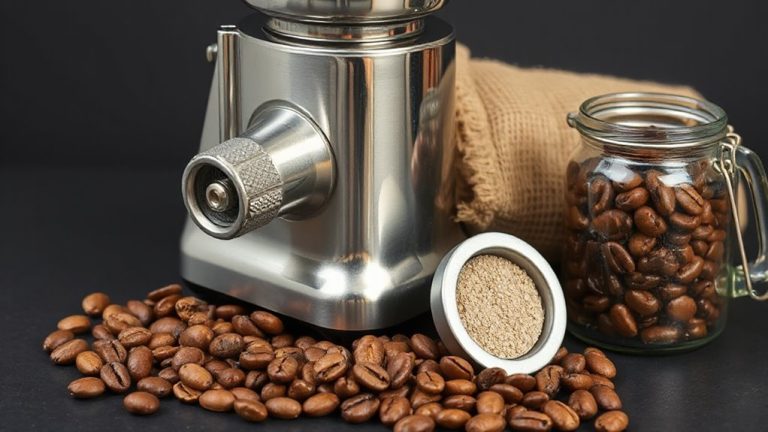
You’ll find home grinders like the Baratza Encore work fine for a few cups a day, with smaller burrs and quieter operation. Commercial models, like the Mahlkönig EK43, handle heavy use thanks to bigger burrs, stronger motors, and better cooling. They’re louder, larger, and built for back-to-back grinding. If you’re making lots of coffee daily, a commercial unit keeps up without burning out. Consider your needs-there’s a grinder that fits.
Notable Insights
- Commercial grinders use stronger motors over 300 watts, while home models typically have 100–200 watt motors prone to overheating.
- Commercial units feature larger 63–83mm burrs for consistent, cool grinding; home grinders use smaller 48–55mm burrs for lower volumes.
- Commercial grinders are built for durability and continuous use, with reinforced housings and superior thermal management.
- Home grinders prioritize compact size and quiet operation (60–75 dB), fitting kitchen countertops with minimal noise.
- Commercial grinders maintain grind consistency under high volume, while home models suit one or two daily batches.
Home vs. Commercial Coffee Grinders: Key Differences
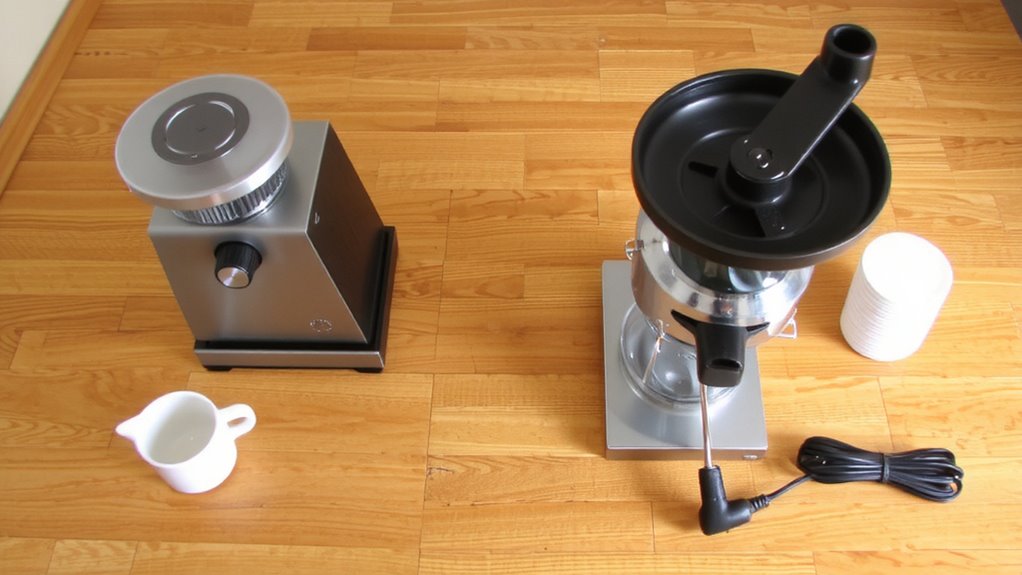
Durability, motor power, and grind consistency set home and commercial coffee grinders apart. You’ll notice commercial models are built for high-volume use, often running for hours without overheating, while home grinders like the Baratza Encore are designed for shorter, daily sessions. Aesthetic design matters more in home units-many prioritize sleek looks to match kitchen decor, whereas commercial grinders focus purely on function. Brand loyalty plays a role, too; users often stick with proven names like Breville or Mahlkönig across settings. Home grinders are quieter and compact, ideal for small spaces, while commercial versions are louder, larger, and require dedicated counter space. You’ll pay more upfront for commercial durability, but they last years under heavy use. Your choice depends on usage: casual home brewing favors convenience and style, while cafes need reliability and speed. Pick based on real needs, not just brand appeal. For pour-over mastery, achieving the ideal extraction relies heavily on coffee grinds for pour-over.
Motor Power and Build Quality: What Home and Commercial Models Deliver
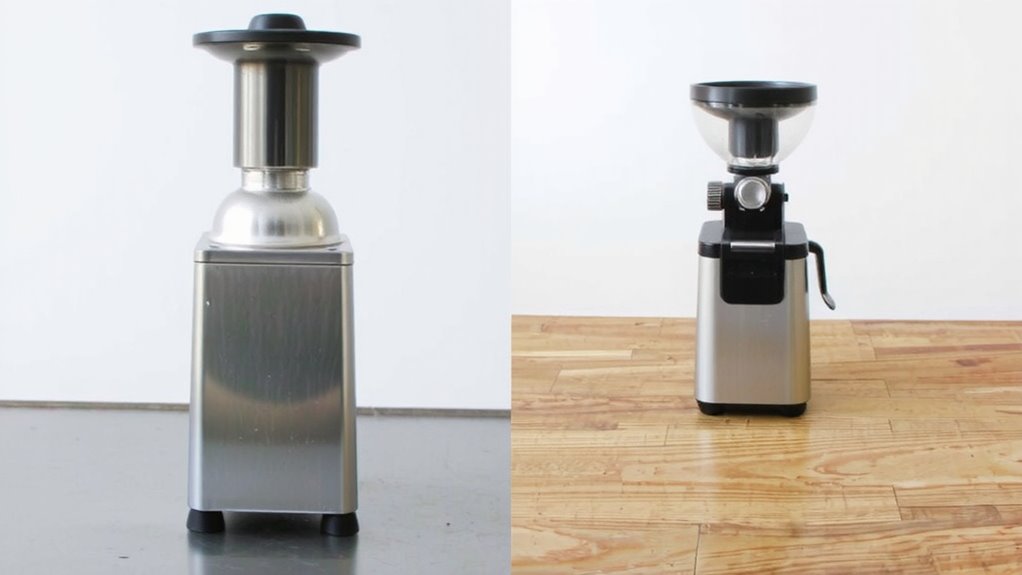
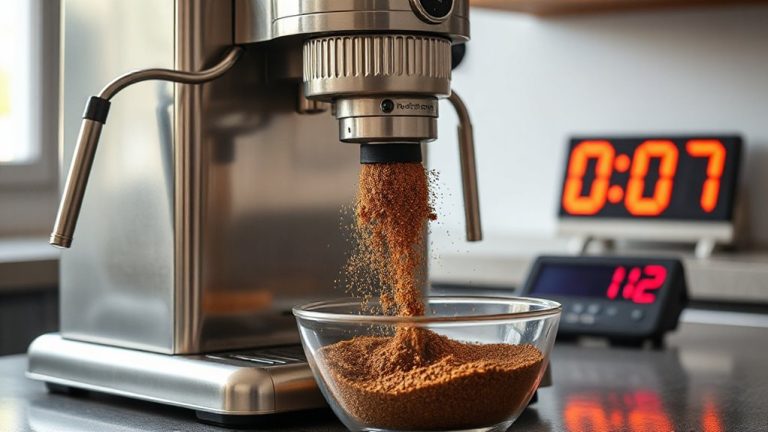
Power matters most when you’re grinding beans daily and need consistency without burnout. Home grinders usually have motors between 100–200 watts-enough for a few shots each morning, but they can overheat with frequent use. Thermal management isn’t always strong here, so extended grinding leads to heat buildup that alters bean flavor. Vibration control is often minimal, making them noisier and less stable on countertops. Commercial models, like the ones in cafes such as Baratza’s Forté or Eureka’s Specialty line, use motors over 300 watts. They’re built with better thermal management to handle back-to-back grinds and feature reinforced housings and vibration control to reduce noise and wear. You’ll notice smoother operation and longer life, especially under heavy demand. If you’re grinding for more than two people daily or want reliability, that extra motor power and solid build make a real difference. Expert baristas often recommend commercial-grade grinders for maintaining shot quality in high-volume environments.
Burr Size and Grind Consistency: How They Impact Flavor in Home and Commercial Use
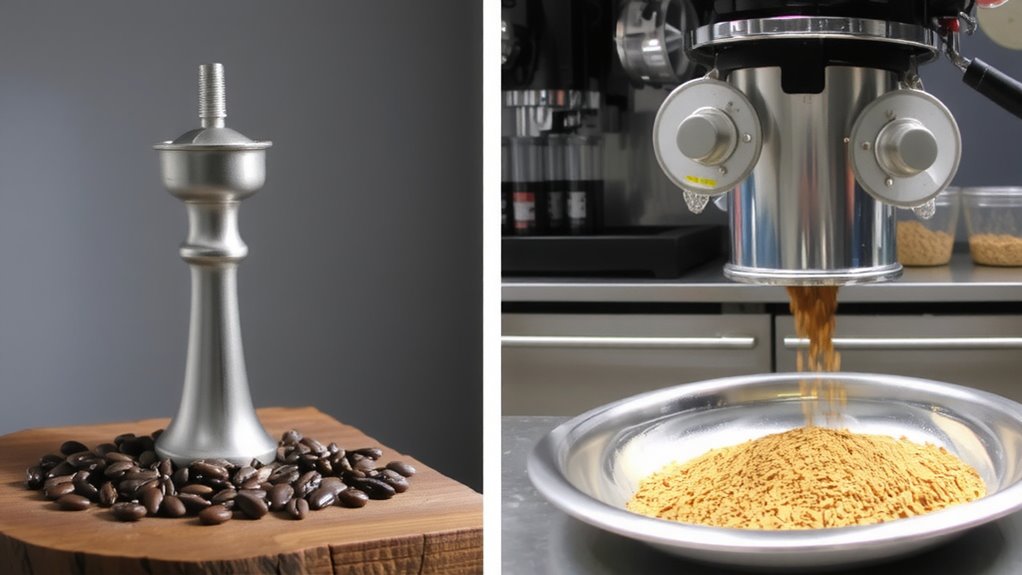
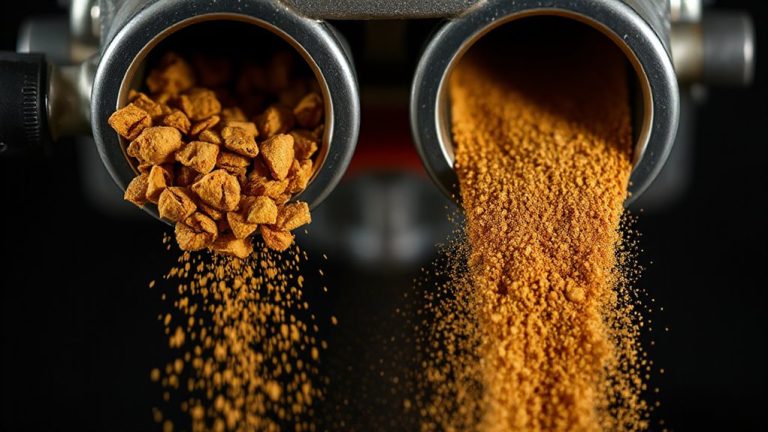
While you might not think twice about burr size when picking a grinder, it plays a key role in how evenly your coffee grounds turn out-and that directly affects flavor. Larger burrs, like the 63–83mm ones in commercial models such as the EK43, grind more uniformly and stay cooler during heavy use, improving consistency. Home grinders often have 48–55mm burrs, which work well for small batches but can produce more fines or boulders if not properly calibrated. Better calibration precision means each grind setting delivers what it promises, shot after shot. Lower grind retention-common in well-designed commercial units-means fewer stale grounds trapped inside, improving flavor purity. While high-end home grinders like the Baratza Vario reduce retention and improve precision, they still can’t match the long-term consistency of pro-grade burrs. Even grind = balanced extraction = better espresso and pour-over. A key factor in choosing the right grinder is understanding your brewing needs, as best coffee grinders vary significantly between home and commercial use.
Daily Grind Volume: Matching Capacity to Home or Commercial Needs
You’re going to need a grinder that can keep up with how much coffee you actually use each day. For most homes, usage frequency is low-maybe one or two batches each morning-so a small-capacity grinder like the Baratza Encore works fine. These models preserve grind freshness without overheating during short bursts. But in a café serving dozens of customers hourly, you’ll need a high-volume grinder like the Mahlkönig EK43. It’s built to handle constant use without slowing down or losing consistency. Commercial grinders also cool better, so beans stay fresh even after hours of grinding. Matching daily grind volume to your needs guarantees better flavor and longer gear life. If you’re a busy home brewer or run a small office, stepping up capacity may help. Just remember: higher usage frequency demands more durable build and faster cooling to maintain grind freshness over time.
Noise and Footprint: Can Your Kitchen or Cafe Handle It?
How much space do you have, and how quiet does your environment need to be? Home and commercial grinders differ markedly in noise levels and space requirements. A compact home model like the Baratza Encore fits easily on a countertop and runs at moderate noise levels, suitable for quiet mornings. In contrast, commercial units like the Mahlkönig EK43 are larger and louder, built for high-volume cafes where space and sound aren’t primary concerns.
| Grinder Type | Noise Level (dB) | Space Requirements |
|---|---|---|
| Home (e.g., Encore) | 70–75 | 8″ x 12″, countertop-friendly |
| Semi-Commercial (e.g., Niche Zero) | 78–82 | 10″ x 14″, needs clearance |
| Commercial (e.g., EK43) | 85–90 | 16″ x 18″, dedicated floor space |
| Compact Home (e.g., Hario Skerton) | 60–65 | 5″ x 5″, storable |
| High-End Home (e.g., OE Lido) | 76–79 | 10″ x 13″, semi-commercial footprint |
Lifespan and Value: Are You Paying for Features You Won’t Use?
Larger and noisier grinders often come with sturdier components built to handle constant use, which directly impacts how long your grinder will last. If you’re grinding multiple times a day, a commercial model like the Eureka Atom 140 or Mahlkönig EK43 will outlast most home grinders by years, offering real long term savings. But ask yourself: do you really need 50 grind settings or a 50 mm commercial burr? Probably not. Overpaying for unused features hurts value. Home grinders like the Baratza Encore last years with proper care and maintain decent resale potential, especially if maintained. Commercial units hold value too, but more due to durability than demand. You’re paying for lifespan and build, not convenience. So choose based on actual use-spending more only makes sense if you’ll actually use it. Otherwise, it’s just wasted money.
On a final note
You’ll want a home grinder if you’re brewing a few cups daily-models like the Baratza Encore offer solid performance quietly and affordably. But if you’re pulling dozens of shots or serving customers, go commercial: the Mahlkönig EK43 delivers speed, durability, and consistency. Match the grinder to your volume, space, and budget. Don’t overspend on durability you won’t use, but don’t underbuy for heavy demand.