The Science Behind Why Coarse Grinds Extract More Slowly in Immersion Brewing
You’re using a coarse grind, so less surface area is exposed to water, slowing down extraction in immersion methods like French press. With fewer contact points, flavors dissolve slower and less evenly. That’s why you need longer steep times-4 to 5 minutes-to pull enough compounds out. If your coffee tastes weak, the grind might be too coarse. Try dialing it slightly finer on your burr grinder. You’ll see how small tweaks can improve your brew’s strength and balance.
Notable Insights
- Coarse grinds have less surface area exposed to water, slowing the extraction of soluble compounds.
- Reduced surface area limits contact points, hindering efficient flavor dissolution during immersion brewing.
- Larger particles increase diffusion distance, delaying the movement of solubles from the coffee’s interior.
- Immersion brewing relies on full saturation, but coarse grinds reduce extraction speed due to lower contact efficiency.
- Longer steep times are needed with coarse grinds to compensate for slower extraction rates in immersion methods.
Why Surface Area Slows Extraction With Coarse Grinds
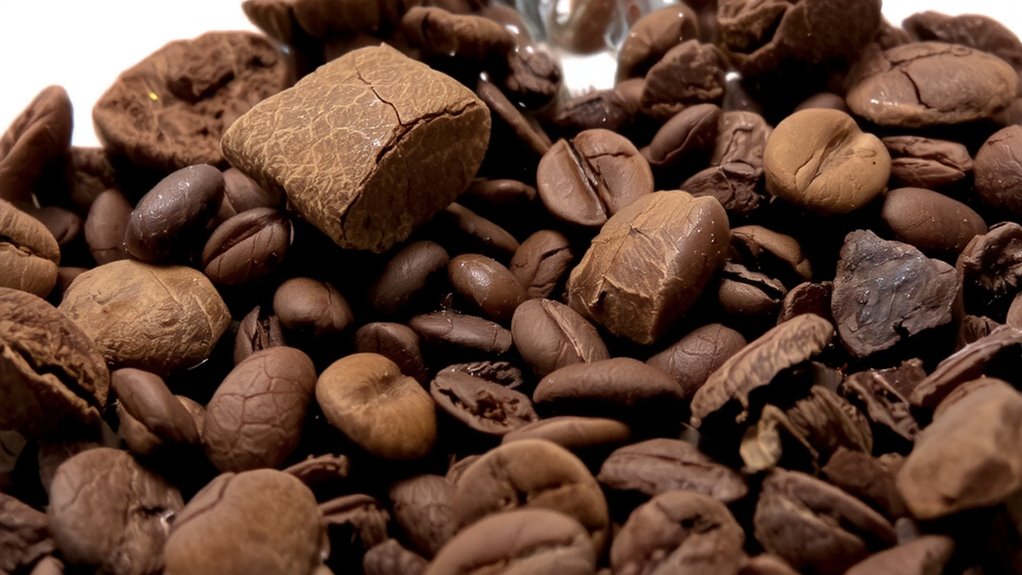
Even though coarse grinds expose less surface area to water, this actually slows down extraction in immersion brewing because the limited contact points make it harder for water to dissolve coffee solubles evenly. With less surface area, the diffusion rate drops since water takes longer to draw out flavors from within the coffee particles. You’ll notice this when brewing with a French press-coarse grinds prevent over-extraction and grit, but they demand longer brew times to compensate. If the grind were finer, more surface area would speed up extraction, but also increase the risk of bitterness. So, by using a coarse grind, you trade speed for control. This works best when you want a smooth, balanced cup without harsh notes. Just remember: coarser isn’t slower because it resists water-it’s slower because diffusion rate depends on how much coffee the water can touch, and coarse means less access. For immersion methods like the French press, using the best coffee grind ensures optimal flavor and clarity in every cup.
How Coarse Grinds Work in Immersion Brewing
Think of your French press as a slow-moving extraction machine, where coarse grinds play a key role in keeping flavors balanced. Because of their larger size, these grinds have lower particle density, meaning water flows around them more freely and extraction happens more evenly over time. This reduces the risk of over-extracting bitter compounds. Coarse particles also trap less water, limiting water retention so sludge stays at the bottom when you press. That means a cleaner cup without fines clouding your brew. You’ll notice this especially with immersion devices like French presses or cupping bowls, where grind size directly affects texture and clarity. If you go too fine, you’ll get clogging and muddled flavor. Stick to a burr grinder set wide-like 18–20 on most models-for best results. It’s not flashy, but it works. For optimal performance, consider choosing one of the best French press picks designed to enhance coarse grind extraction.
Immersion vs. Percolation: Why Extraction Differs
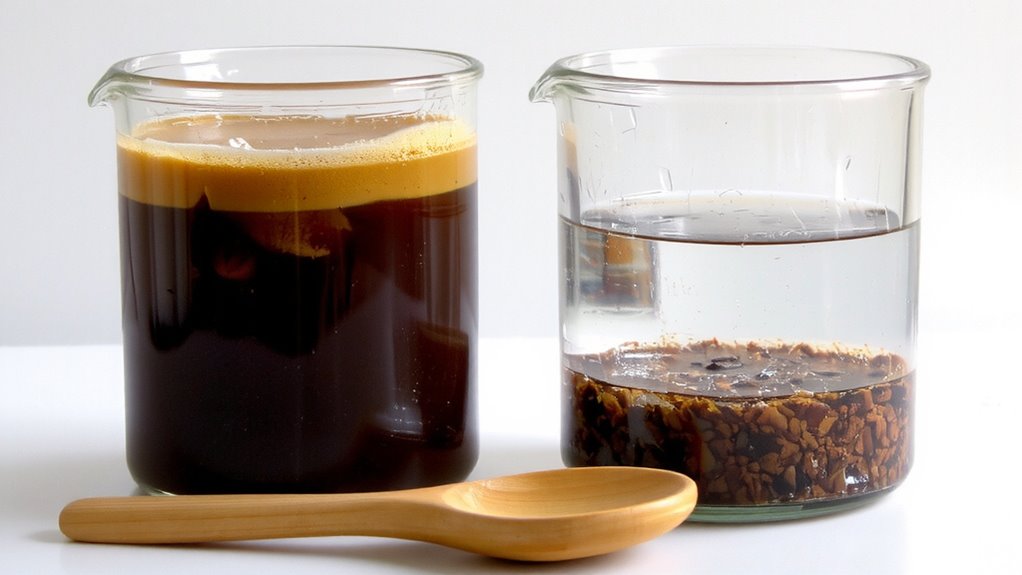
You’ve seen how coarse grinds keep immersion brewing like French press clean and balanced, but that’s only part of the story-how you extract matters just as much as what grind you use. Immersion brewing, such as French press or full-immersion cold brew, soaks grounds entirely in water, creating even but slower extraction due to lower contact efficiency over time. Percolation, like in pour-over or auto-drip, pushes water through a bed of coffee, offering higher contact efficiency and faster, more consistent extraction. The key difference lies in brew dynamics: immersion relies on diffusion over time, while percolation adds flow and channeling effects. That’s why grind size and method must match-coarse works in immersion because fine grinds would over-extract given the prolonged saturation, unlike in percolation where water passes through more quickly and selectively.
How Steep Time and Grind Size Work Together
While steep time and grind size might seem like separate dials to tweak, they’re actually tied together in immersion brewing-one changes, and the other has to follow. If you grind coarser, you need more time for water to reach the coffee’s flavorful compounds, or your steep efficiency drops. Too fine, and you risk over-extraction even with a short steep. Coarse grinds slow down extraction because of reduced surface area and limited grind interaction with water. That means in methods like French press or cold brew, where contact time is long, a coarse grind works well. But if you use that same grind in a shorter-steep system like Aeropress, the coffee comes out weak. You’ve got to match the grind to the steep: finer for short soaks, coarser for long ones. It’s not just preference-it’s how extraction works. Balance them, and you pull out the best flavor without guesswork. Peruvian coffee beans often exhibit bright acidity and complex flavors, making Peru’s Finest Coffee Picks a great choice for immersion methods that highlight their nuanced profiles.
Fixing Weak Coffee From Overly Coarse Grinds
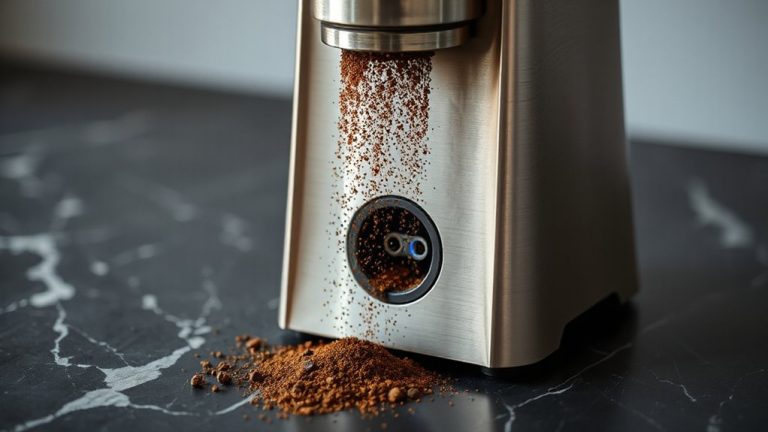
If your coffee tastes thin or lacks intensity, an overly coarse grind might be leaving too much flavor behind, especially in methods with shorter brew times. Immersion brewing relies on even extraction, and when grounds are too coarse, water can’t access enough surface area to pull out key compounds. That hurts brew strength and disrupts flavor balance, often resulting in weak, underwhelming coffee. The fix? Adjust your grinder to a slightly finer setting-think medium-coarse instead of chunky breadcrumbs. Even a small tweak can boost extraction. For French press, aim for something closer to sea salt; for AeroPress, go finer. Use a burr grinder for consistency. Test one change at a time, keeping water temperature and brew time steady. Once you hit the sweet spot, you’ll notice richer body and better flavor balance. Stronger doesn’t mean bitter-just more complete.
On a final note
You’ll get slower extraction with coarse grinds in immersion brewing because less surface area is exposed to water. That means you need longer steep times-like in a French press or AeroPress set for 4+ minutes-to pull enough flavor. If your coffee tastes weak, the grind might be too coarse or the time too short. Try going finer or extending the brew. It’s a simple fix with real results.