How to Adjust Grind When Brewing With Distilled Water to Avoid Hollow Flavor
Use distilled water only if you add back minerals like calcium and magnesium-otherwise, coffee tastes hollow. Since pure water extracts poorly, grind finer than usual, aiming for table salt in pour-over or AeroPress. For espresso, go even finer, adjusting in small steps to avoid channeling. Always use a burr grinder for consistency. A finer grind boosts extraction, but balance is key: too fine brings bitterness, too coarse leaves it weak. Your next adjustment could make all the difference.
Notable Insights
- Distilled water lacks minerals, requiring a finer grind to improve extraction and prevent hollow, under-extracted coffee.
- Use a burr grinder to achieve consistent particle size for even extraction with low-mineral water.
- Aim for a table salt-like grind size in pour-over or AeroPress to optimize contact time and flavor.
- For espresso, grind even finer in small increments to compensate for distilled water’s poor extraction efficiency.
- Adjust grind gradually based on taste-sourness indicates under-extraction, while bitterness suggests over-extraction.
Why Distilled Water Makes Coffee Taste Flat
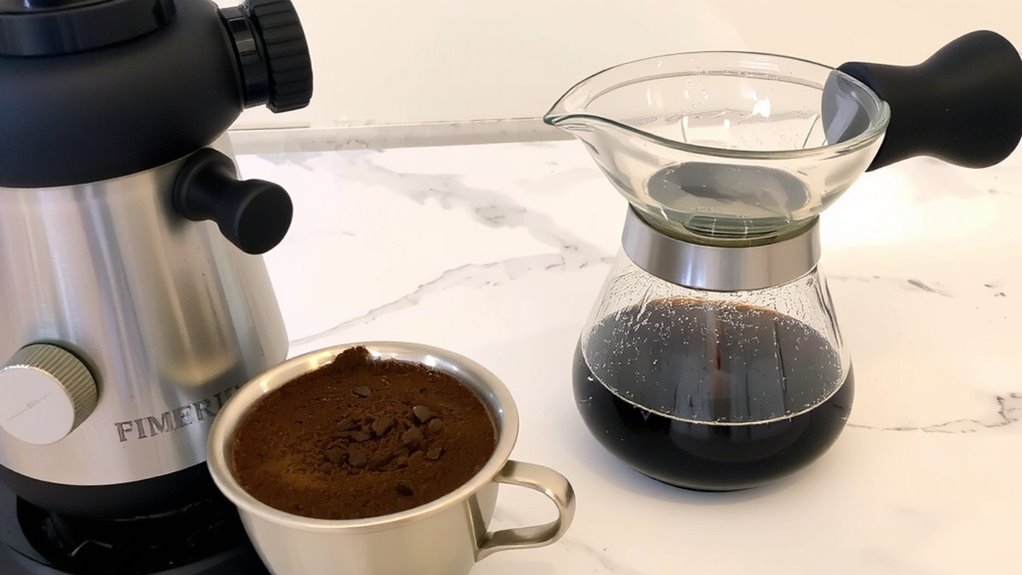
Flat, lifeless coffee usually comes down to one thing: distilled water. You might think high water purity improves flavor, but it actually ruins taste perception. Distilled water lacks minerals like calcium and magnesium, which help extract flavor compounds from coffee grounds. Without them, your brew tastes hollow and thin. Your palate relies on these minerals to interpret sweetness, acidity, and body-key parts of flavor you’re missing. While distilled water reduces scale in machines, its extreme purity backfires by under-extracting coffee. That’s why even a high-end espresso machine can produce dull results. For better taste, consider using reverse osmosis water or adding precise mineral drops like Third Wave Water. You don’t need hard tap water, but a small mineral balance improves extraction and taste perception dramatically. Skip distilled unless you’re adjusting it.
How Minerals Shape Coffee’s Brightness and Body
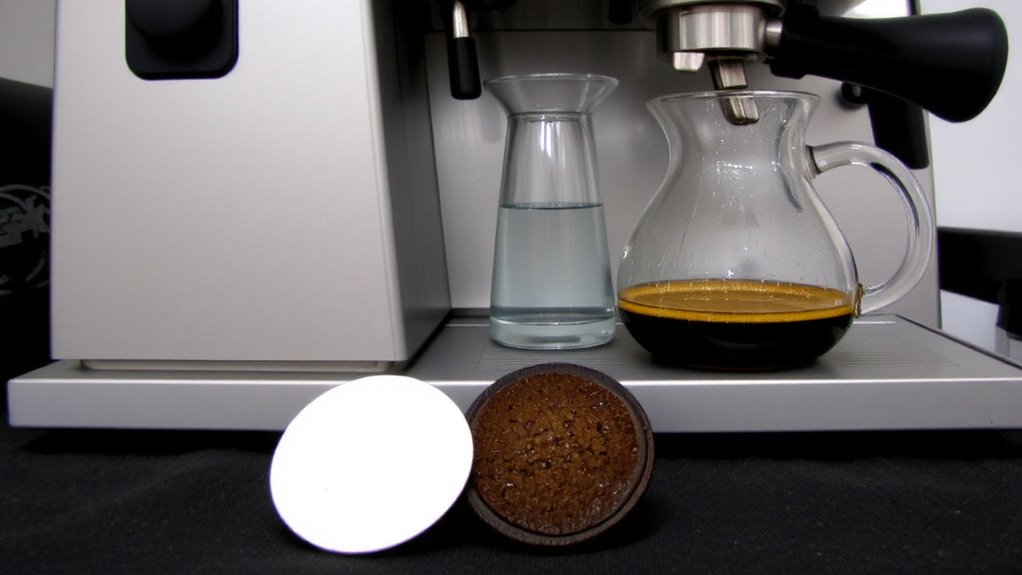
What makes your coffee taste bright or rich? It’s the minerals in your water. Balanced calcium and magnesium help extract acids that give brightness, while sodium and bicarbonates influence body and smoothness. Without enough minerals, you lose ionic balance, leading to weak, hollow brews. Too many, and you risk over-extraction or scale in gear like boilers. Distilled water lacks ions entirely, increasing the risk of flavor degradation because there’s nothing to carry or stabilize delicate compounds. Specialty brewers often use additives-like Third Wave Water or Magnesium sachets-to reintroduce minerals in controlled amounts. That balance sharpens clarity and rounds out mouthfeel. For filter coffee, aim for 50–150 ppm total dissolved solids with a neutral pH. You’ll notice crisper notes and a fuller body compared to flat, lifeless cups from purified or softened water. It’s not just water-it’s part of the recipe.
Why Low Mineral Water Needs a Finer Grind
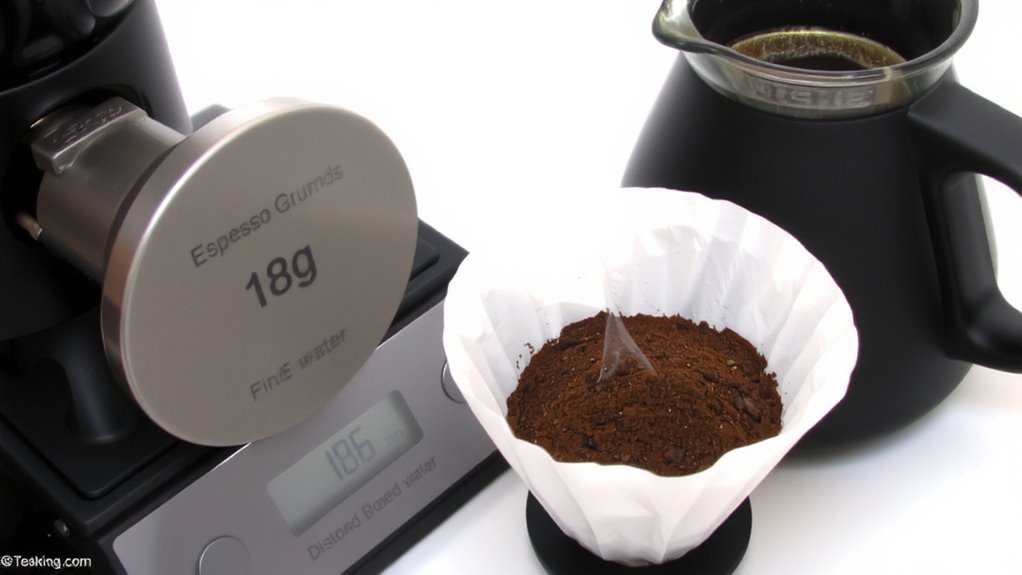
Since distilled or low-mineral water can’t effectively carry flavors from coffee grounds, you’ll need to increase extraction efficiency by going finer with your grind setting. Low-mineral water has lower water density, meaning it dissolves solids less effectively than mineral-rich water. To compensate, a finer grind increases surface area, helping the water pull out more compounds during the same brew time. Without this adjustment, your coffee can taste thin or hollow. Maintaining consistent grind consistency is essential-uneven particles lead to uneven extraction, worsening the problem. A high-quality burr grinder helps guarantee uniformity, improving flavor balance. While some brewers, like the Hario V60, tolerate wider variances, others like espresso machines heavily depend on precision. Even with ideal gear, skip pre-ground coffee-it’s nearly impossible to dial in properly. Adjust gradually and track changes to avoid over-extraction. For optimal results, consider investing in one of the top-rated best coffee grinders recommended for precision and consistency.
How to Adjust Your Grind for Distilled Water
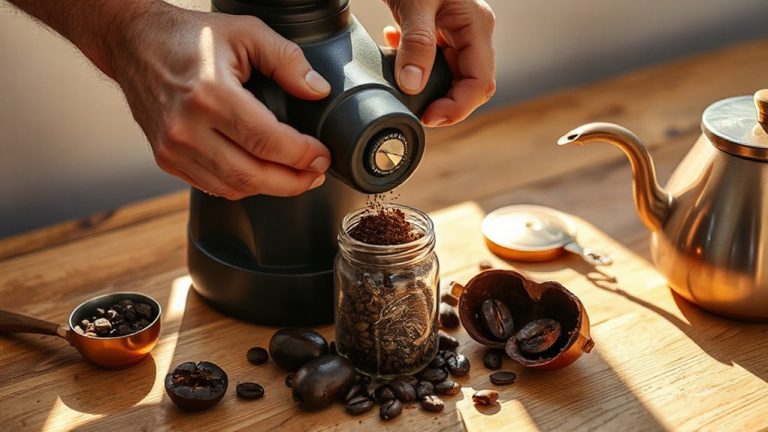
How do you get the most out of your coffee when brewing with distilled游戏代 water? Start by grinding finer than you normally would. Distilled water’s extreme water purity means it lacks minerals that help extract flavor, so a finer grind increases surface area and improves extraction. You’re countering flavor neutrality-not a flaw, but a blank slate that can leave coffee tasting hollow if under-extracted. Aim for a consistency like table salt, especially with pour-over or AeroPress. With an espresso machine, go even finer, adjusting in small increments to avoid choking the shot. Remember, consistency matters: use a burr grinder, not a blade model, for even particles. Too fine, and you’ll over-extract, bringing out bitterness. Too coarse, and the brew stays weak. Test in small batches, tweaking until the cup tastes balanced-not flat, not harsh, just clear and rich. For best results, consider using one of the top-rated best coffee grinders for espresso.
Common Mistakes That Kill Flavor With Distilled Water
Using a finer grind helps compensate for distilled water’s lack of minerals, but even with the right grind size, certain missteps can still leave your coffee tasting flat or unbalanced. Skipping added minerals is a big one-distilled water has zero water hardness, which hampers extraction and leads to a hollow, sour cup. You need some magnesium and calcium to pull flavor properly, so using unmodified distilled water straight from the jug causes mineral imbalance. Over-relying on equipment like fancy grinders or high-end brewers won’t fix this. Even with precise temp control or advanced pour techniques, bad water ruins the base. Another mistake is assuming all bottled or filtered water works; many still lack adequate mineral content. Always check the label. The fix? Use mineral additives like Third Wave Water, or mix small amounts of softened mineral water to restore balance. That way, your grind adjustments actually make a difference.
How to Refine Extraction for Balance and Sweetness
While you’ve dialed in your grind and added the right minerals, getting a balanced, sweet cup means fine-tuning extraction based on taste feedback. Your taste threshold and flavor perception guide these tweaks-subtle changes matter. Brew slightly finer for more sweetness if the coffee tastes flat; go coarser if it’s harsh. Always adjust in small increments and taste between changes. For optimal coffee grinds for pour-over, consistency in particle size is key to achieving even extraction and avoiding under- or over-expressed flavors.
| Variable | Too Coarse | Too Fine |
|---|---|---|
| Sweetness | Low | Moderate to High |
| Bitterness | Low | High |
| Clarity | Hollow | Muddled |
Target even saturation and avoid channeling. Use a gooseneck kettle for control and a consistent brewer like the Hario V60 or Kalita Wave. Extraction balance hinges on your ability to observe and respond-your palate is the best tool.
How to Diagnose Under- or Over-Extraction With Pure Water
A flat, sour taste or a harsh, bitter bite-both are red flags when brewing with distilled water. If your coffee tastes thin and sharp, you’re likely under-extracted, especially since pure water pulls compounds too aggressively. This leads to a flavor imbalance, where acids dominate before sweetness develops. On the other hand, bitter notes creeping in? You’re probably over-extracting-fine grinds or long brew times cause this, even with distilled water’s low mineral content. To diagnose, check your grind size: too fine risks over-extraction; too coarse leaves sourness. Adjust incrementally: if using a V60 or Aeropress, go slightly coarser than you would with tap water. Taste each brew objectively. Distilled water removes variables, so flaws in extraction are clearer. Track your changes. Balance means no extreme sourness or bitter notes-just clean, even flavor.
On a final note
You’ll need a finer grind when using distilled water to help extraction, since the lack of minerals makes it harder to pull flavor. Without adjustment, coffee tastes hollow and thin. Aim for a grind size close to table salt, and pair with a balanced roast to avoid sourness. Consider adding a pinch of magnesium or using Third Wave Water if issues persist. Test small changes, weigh doses, and stick to consistent equipment like a burr grinder and gooseneck kettle for reliable results.