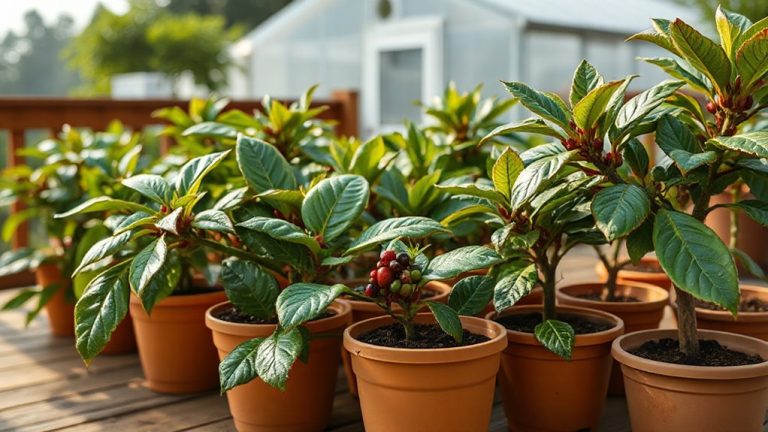
Pre-Colonial African Networks Trading Wild Forest Coffee Varieties
You’re tracing coffee’s roots to Ethiopia’s highland forests, where wild arabica grew for centuries before cultivation. Indigenous communities like the Oromo sustainably gathered beans, trading them via caravan across East Africa and the Sahara. These pre-colonial networks moved coffee without modern packaging, relying on cloth wraps and speed to preserve quality. Trade was barter-based, linking diverse groups through shared respect for the bean’s value. Wild forest varieties still offer genetic diversity essential to specialty coffee-knowing this deep history sharpens your appreciation of origin.
Notable Insights
- Wild forest coffee was traded across East Africa via foot and donkey caravans long before colonial influence.
- Trans-Saharan trade routes connected Ethiopian highlands to North African markets through desert caravan networks.
- Barter-based exchange systems enabled equitable trade of coffee among diverse ethnic and regional groups.
- Coffee was transported in breathable cloth, with freshness dependent on route conditions and travel time.
- Pre-colonial trade integrated with broader networks, including Arabian-linked routes that extended toward Silk Road connections.
The Origins of Africa’s Wild Forest Coffee
Where did coffee really begin? You’ll find its roots in the Sacred forests of Ethiopia, where wild coffee plants grew long before cultivation. These forests weren’t just ecological zones-they were central to cultural and spiritual life, protected by indigenous knowledge passed down for generations. People there didn’t farm coffee like a crop; they gathered it sustainably, understanding its growth patterns, seasons, and best harvest times. That knowledge guided when and how to collect beans, ensuring long-term forest health. Unlike modern plantations, this approach didn’t require irrigation systems or chemical inputs-it relied on natural forest cycles. You can still see this method in parts of Kaffa, where wild arabica grows under shade canopies. While yields are lower than commercial farms, the beans often have complex flavor profiles. If you’re sourcing wild forest coffee today, look for traceable origins and forest-safe certifications-they help preserve both ecosystems and traditional practices.
Africa’s First Coffee Growers and Traders
You’ve seen how wild coffee thrives in Ethiopia’s forests, shaped by generations of sustainable gathering and deep ecological knowledge. Now you’re meeting the first growers and traders who turned that resource into a cultivated crop. In the highlands, communities began early cultivation not on plantations, but in home gardens, integrating coffee with food crops. This method, still used today, preserves soil health and reduces pests-no chemicals needed. Their success relied on indigenous knowledge passed down orally: when to plant, how to shade, when to harvest. They selected the strongest wild seedlings, improving yield without modern science. These farmers weren’t just gatherers-they were the first agronomists, adapting techniques to microclimates. Their trade networks stayed local at first, using clay pots for roasting and wooden mortars for grinding. Simple tools, yes, but effective. You can still see these practices in Yirgacheffe or Sidama-proof that low-tech doesn’t mean low-value.
Coffee on Africa’s Ancient Trade Routes
An ancient web of trade routes once carried coffee from Ethiopia’s highlands to markets across Africa and beyond, long before global supply chains existed. You’d find beans traded by foot and donkey through East Africa, then loaded onto desert caravans that crossed the Sahara, linking to trans-Saharan routes. These caravans supplied North African ports, where coffee sometimes joined the Silk routes via Arabian intermediaries. The beans moved fast when in demand, often wrapped in cloth to preserve freshness. Unlike today’s vacuum-sealed packs, early storage relied on breathable materials, which worked well in dry climates but risked loss in humidity. Travel time affected quality-faster caravans meant better flavor. No modern grinders or brew methods existed, so beans were typically boiled whole. If you’re tracing origins, remember: trade speed, route conditions, and storage shaped early coffee quality just as gear choices do today. Today’s appreciation for origin-specific flavors echoes the value once placed on freshly traded highland beans, with modern enthusiasts seeking out Best Ethiopian Coffee Beans for their nuanced profiles.
Ritual, Medicine, and Community in Coffee Use
Coffee didn’t just move across ancient Africa for trade-it carried meaning. You’d find it used in rituals where elders gathered, its spiritual significance shaping community bonds. When consumed in controlled settings, coffee supported healing practices, often mixed with herbs to treat fatigue or digestive issues. You’d prepare it simply: berries dried, roasted over fire, then ground with stones before steeping in hot water. Some groups, like the Oromo, relied on coffee during rites of passage, believing it connected them to ancestral spirits. Unlike modern brewing with precise grinders and kettles, traditional use prioritized function over form-tools were basic, accessible. While not a daily drink for all, its role in ceremony and medicine made it valuable beyond taste. You’d see it offered to guests as a gesture of trust, not sold casually. This cultural weight guaranteed careful handling, preserving its role in social and therapeutic life without commercial dilution.
Genetic Traces of Africa’s Native Coffee
While much of the world’s coffee trade centers on beans from South America or Asia, the genetic roots of *Coffea arabica* trace back to Africa’s highland forests, where wild populations still grow. You’re looking at the original stock-regions like Ethiopia’s Kafa zone hold unmatched genetic diversity, critical for resilience and future breeding. These wild coffee plants evolved without human intervention, giving them traits commercial crops often lack. Wild cultivation isn’t farming in the usual sense; it’s selective harvesting from native stands, maintaining forest integrity while sourcing beans. This method supports biodiversity and preserves natural adaptation. You’ll find these beans vary widely in flavor and caffeine, making them less predictable but valuable for specialty markets. If you’re sourcing or studying coffee, accounting for this genetic diversity helps guarantee long-term sustainability. Wild cultivation also offers a model for low-impact production, though yields are lower than in full-sun plantations. Knowing the origin matters-not just for taste, but for the coffee’s survival.
Oral Traditions of Coffee Use in Africa
You’re not just tasting a bean when you drink Ethiopian coffee-you’re engaging with stories passed down for generations. These oral traditions preserve how communities used coffee long before global trade. In Ethiopia’s highlands, elders recount rituals where coffee wasn’t consumed casually but through ceremonial brewing, a deliberate process using clay jebenas and green beans roasted over fire. This method guarantees full flavor development while honoring ancestral knowledge. The host, usually a woman, controls heat and timing precisely-too hot, and it turns bitter; too cool, and it lacks depth. Each stage, from roasting to serving, carries meaning and technique refined over centuries. Unlike modern drip brewing, this approach prioritizes social connection and sensory engagement. You don’t need special gear to respect these roots-just attention to fire, vessel, and timing. The tradition teaches consistency, patience, and observation-skills that improve any brewing method, old or new. Exploring these origins enhances appreciation for Best African Coffee Picks as more than just a modern recommendation.
Honoring Africa’s Coffee Roots in the Modern World
How do you keep centuries of tradition alive in a modern kitchen? You start by choosing wild forest coffee varieties sourced through sustainable harvesting, just as African communities did for generations. Look for beans labeled as heirloom or wild-grown from regions like Ethiopia’s Kaffa zone, where farmers still hand-pick coffee cherries to protect biodiversity. These practices support cultural revival by preserving native methods and empowering local economies. When brewing, opt for simple gear-like a manual pour-over or French press-that highlights the coffee’s natural complexity without masking its origins. Avoid over-roasting; light to medium profiles retain the bright, floral notes unique to African landraces. Supporting brands that partner directly with smallholder growers guarantees ethical sourcing. You’re not just making coffee-you’re continuing a legacy rooted in respect for land and tradition.
On a final note
You’re better off grinding wild forest coffee just before brewing to preserve its delicate, floral notes. Use a gooseneck kettle for pour-over methods like the V60 to control water flow and avoid over-extraction. These heirloom varieties often need slightly cooler water-around 195°F-to prevent bitterness. While modern equipment helps, traditional stone grinders still work well for small batches, especially in dry climates. Choose gear that suits your routine, but always prioritize freshness and precision.