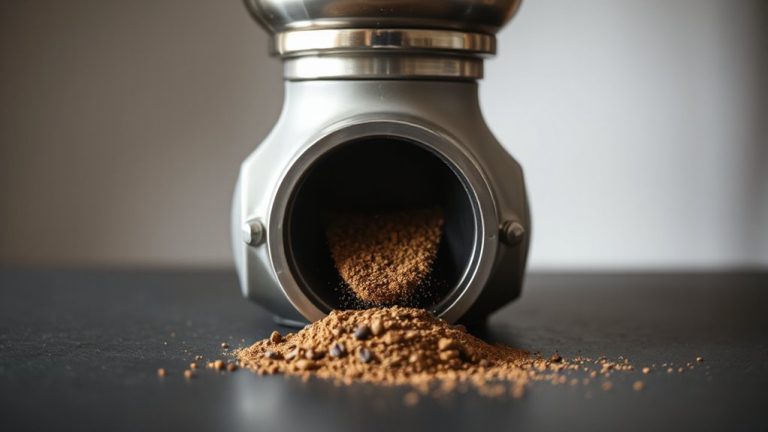
The Impact of Grinder Design on Static and Dose Accuracy in Dry Climates
In dry climates, low humidity increases static, especially in plastic grinders like the Baratza Encore, causing dose loss and clumping. Metal grinders-such as the EG-1 or Aura NS-reduce static with better conductivity and often include ionization to neutralize charge. Sealed pathways, PTFE coatings, and airflow systems also help maintain consistency. For reliable dosing in arid conditions, prioritize grinders with metal construction and built-in anti-static tech. You’ll see how specific designs make a measurable difference.
Notable Insights
- Low humidity increases static buildup in coffee grounds, reducing conductivity and promoting charge retention in insulating particles.
- Static causes grounds to cling to grinder surfaces, leading to dose inaccuracies and inconsistent shot outcomes.
- Metal grinder components reduce static better than plastic by dissipating electrostatic charges and improving thermal stability.
- Anti-static technologies like ionization and magnetic shielding neutralize charges and enhance dose consistency in dry conditions.
- Sealed grounds paths, PTFE coatings, and airflow systems minimize static cling and particle loss in low-humidity environments.
How Humidity Causes Static in Coffee Grinders
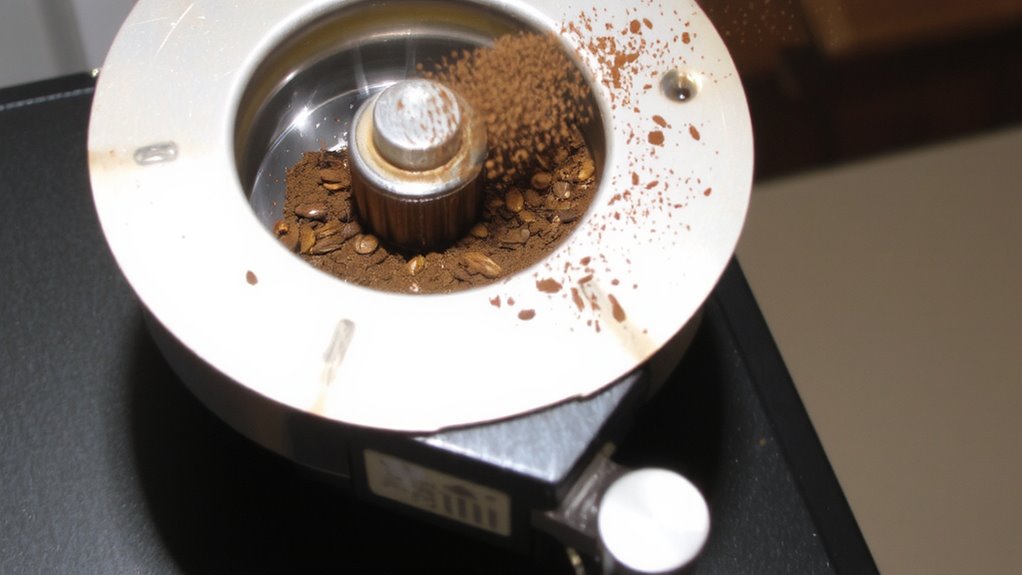
Why does your grinder suddenly act up in dry weather? Low humidity reduces electrical conductivity in coffee grounds, making static buildup more likely. When the air’s dry, ground particles lose moisture and become better insulators, trapping charges that repel each other. This increases particle adhesion-fine grounds stick to grinder burrs, chutes, and exit paths. You’ll see clumping or erratic discharge, especially in grinders with plastic components, which hold more static than metal. Steel burr housings, like those in the Lelit PL49 or Mazzer Mini, help dissipate charge better. If you’re in a dry climate, consider a grinder with metal ducts and short exit paths to reduce clinging grounds. Ground consistency suffers when static interferes, so minimizing adhesion improves flow. You can’t control the weather, but you can choose gear that manages conductivity better. Humidity matters-acknowledge it in your setup. For cold brew preparation, consistent grind size is crucial, and top picks for grinders often feature designs that reduce static interference.
Why Static Destroys Dose Accuracy in Dry Climates
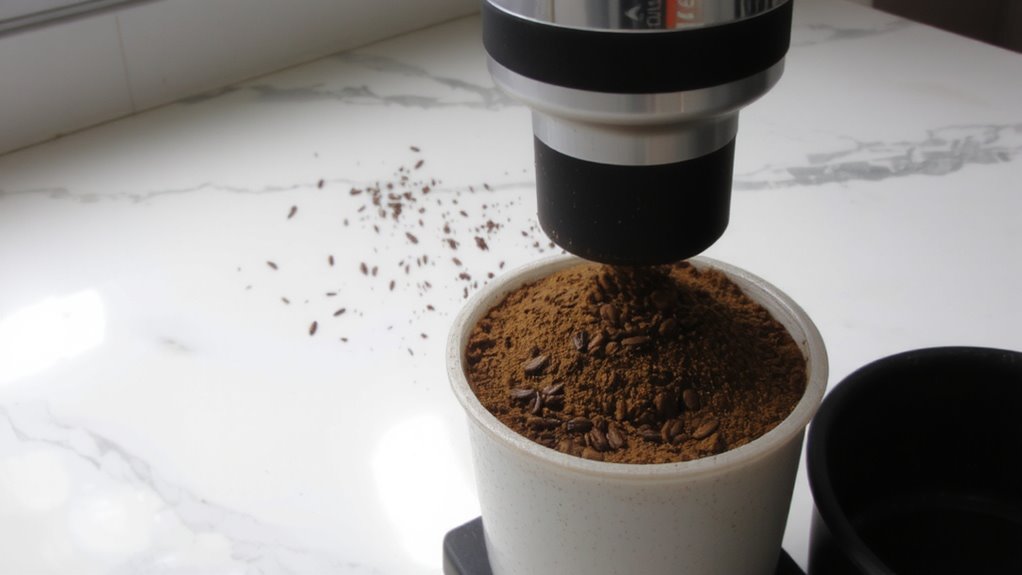
Even if your grinder is calibrated perfectly, static buildup in dry climates can still throw off your dose. When humidity drops, an electrostatic charge builds up inside the grinder, causing grounds to cling to burrs and walls instead of falling into your portafilter. This leads to inconsistent particle dispersion and lost mass-sometimes several grams. You might think you’re pulling a double shot, but static has stolen part of your dose before it even leaves the grinder. One effective way to minimize this issue is by using a manual espresso grinder with anti-static design features, which can significantly improve dosing precision in low-humidity environments. Here’s how static impacts key dosing factors:
| Factor | Without Static | With Static |
|---|---|---|
| Dose Consistency | High | Low |
| Particle Dispersion | Even | Clumped |
| Electrostatic Charge | Minimal | High |
You’ll waste beans and pull uneven shots unless you manage static. It sabotages accuracy at the most basic level-how much actually makes it into your brew.
Metal vs Plastic: Which Grinder Materials Reduce Static
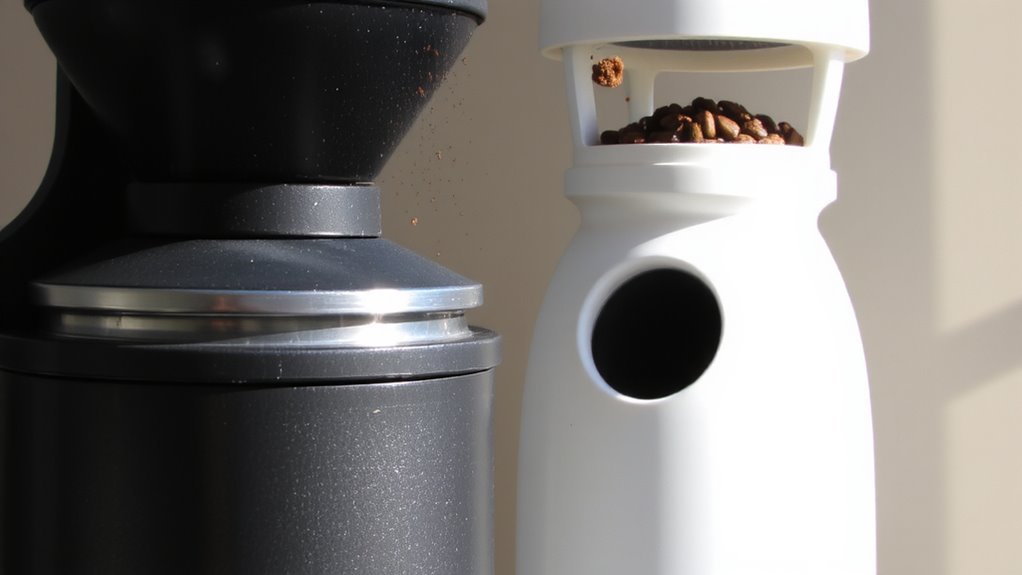
You’ve seen how static in dry climates can ruin dose accuracy by making grounds stick where they shouldn’t-now it’s worth looking at what your grinder is made of, because material matters. Metal grinders, especially those with stainless steel or aluminum bodies, tend to generate less static than plastic ones. Their higher grinder weight helps stabilize the unit, reducing vibration and improving consistency. Metal also dissipates heat better, which indirectly helps, since heat can worsen static. Plastic housings are lighter and cheaper, but often build up more static charge, especially in dry air. While grinder weight and motor type influence performance-brushless motors produce less electrical interference-material plays a direct role in charge accumulation. If you’re in a dry climate, a metal-bodied grinder like the Forté or Synesso MP65 gives you a static-reducing advantage. Plastic models like the Baratza Encore are solid but may require more frequent wrist-flicking or anti-static tricks. For more insights, check out our top picks and buying guide.
Effective Anti-Static Technologies for Dry Climates
Although static buildup can’t be eliminated in dry climates, modern grinders now include features that substantially reduce its impact on dose accuracy. You’ll notice less cling and finer particles escaping when grinders use ionization systems, which neutralize static charge in the grounds as they exit the burrs-models like the EG-1 and Aura NS feature this tech. Magnetic shielding is another tool, containing electromagnetic interference that can worsen static, especially in high-precision digital grinders. This shielding doesn’t stop all static, but it helps maintain consistent grinding behavior over time. Together, ionization systems and magnetic shielding tackle both electrical and environmental causes of static. While not all grinders include both, higher-end models increasingly combine them for reliable results in arid conditions. If you live in a dry climate, choosing a grinder with these technologies means fewer messy grounds, cleaner dosing, and shots that pull more consistently.
Do Sealed Grounds Paths Improve Dose Consistency?
How often have you tapped your grinder’s chute or chased stray grounds off the counter? In dry climates, loose particles clinging to surfaces aren’t just messy-they hurt dose consistency. A sealed grounds path helps by containing everything from grind exit to portafilter. You’ll notice fewer static-related losses, especially with lighter roasts prone to cling. Sealed chamber benefits include more predictable dosing and reduced waste over time. Internal coating types also matter-some grinders use non-stick or textured coatings that reduce static buildup and improve flow. For example, PTFE-lined chutes work better than bare metal in arid conditions. While no design eliminates static entirely, sealed paths with smart internal coating types give you tighter shot repeatability. If you’re battling inconsistency in low humidity, check whether your grinder fully directs grounds without exposed drops or open gaps. It’s a small feature that makes a measurable difference in dose accuracy.
How Burr and Airflow Design Reduce Static Cling
When grinding coffee in dry environments, static cling can cause grounds to scatter or stick to burr carriers and chute walls, leading to dose loss and inconsistency. Your grinder’s burr design plays a key role-sharp, precise burrs reduce fines and lower particle adhesion by producing more uniform grounds. Some grinders, like the Niche Zero or Mythos One, use airflow systems that help dissipate electrostatic discharge, directing air to neutralize charges as grounds exit. Passive designs rely on grounded metal components to naturally reduce static, while others actively manage airflow to minimize cling. Optimized chute angles and smooth surfaces also cut down on retention. You’ll notice less mess and better dose accuracy when these elements work together. Though no grinder eliminates static completely, smart burr and airflow engineering markedly reduces its impact-especially in low-humidity settings where electrostatic discharge is more pronounced.
Best Grinder Features for Dry Climates
If you’re grinding coffee in a dry climate, you’ll want a grinder that tackles static and dose inconsistency head-on. Look for models with climate adaptive calibration, which automatically adjusts grind settings based on environmental feedback to maintain consistency. Grinders like the Decent DE1 or the Niche Zero use this tech to respond to low humidity, reducing clumping and flyaway grounds. Adjustable humidity settings let you manually fine-tune performance when conditions shift, giving you more control than fixed systems. A built-in timer or weight-based dosing also improves accuracy, minimizing guesswork. Steel burrs with airflow optimization help, but pairing them with smart features makes a real difference. Avoid grinders without environmental compensation-those often struggle with dose scatter in arid regions. For reliable results, prioritize machines that blend robust engineering with responsive tech tailored to dry environments.
On a final note
You’ll get more consistent shots in dry climates by choosing grinders with metal burr carriers and sealed grounds paths, like the Niche Zero or DF64. Plastic components increase static, causing uneven doses. Look for anti-static tech such as ionized coatings or active grounding. Adjustable airflow and tight burr housings also reduce cling. While no grinder eliminates static completely, these features markedly improve accuracy when humidity drops.