Exploring the Sweet, Syrupy Body of Maragogype in Nicaraguan Natural Process Coffees
You’ll find Maragogype’s large, porous beans thrive in Nicaragua’s volcanic soil and high altitudes, where natural processing boosts sweetness through extended fruit contact. Sun-drying on raised beds concentrates flavors like honey, apricot, and molasses while ensuring even fermentation. The result is a syrupy body with balanced, low-to-medium acidity. For best results, use a light to medium roast and brew with a V60 or Aeropress. You’ll uncover how origin and technique shape every sip.
Notable Insights
- Maragogype beans’ large size and low density contribute to a syrupy body when slowly roasted to prevent underdevelopment.
- Natural processing enhances sweetness by allowing sugars from the fruit to penetrate the porous Maragogype beans during drying.
- Nicaraguan volcanic soil and high-altitude farms concentrate sugars in the coffee cherry, boosting sweetness and complexity.
- Precise drying on raised beds in Nicaragua’s stable climate preserves sweetness while minimizing over-fermentation and mold risks.
- The flavor profile features syrupy texture, stone fruit notes, and balanced fermented sweetness, especially in light to medium roasts.
What Makes Maragogype Beans Unique in Nicaragua?
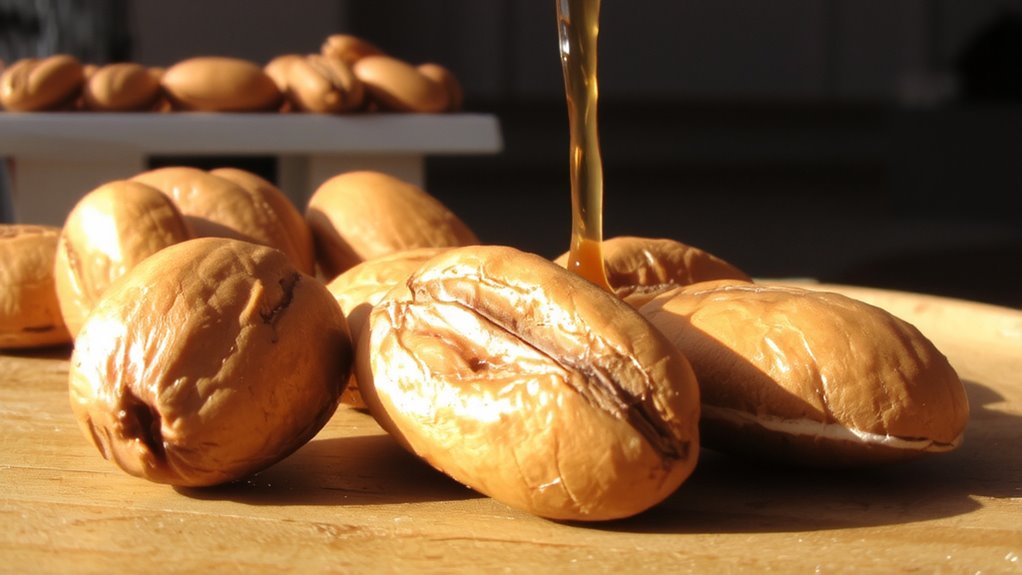
One thing stands out about Maragogype beans: they’re among the largest coffee seeds in the world, often called “elephant beans” for their size. That bean size means less density, so you’ll need to adjust roasting and grinding-use a slower roast profile to avoid underdevelopment, and grind coarser than usual for even extraction. In Nicaragua, these beans grow at high altitudes, contributing to their surprising flavor complexity despite their size. You’ll often taste notes of stone fruit, molasses, and mild floral hints, especially in washed or honey processes. The large seeds can be inconsistent, so sort by size before roasting. While they don’t always outperform smaller beans, their uniqueness makes them worth testing in a batch roaster or pour-over setup. Equipment like a precision scale and gooseneck kettle helps maximize clarity. Don’t expect bold intensity-these offer subtle, layered qualities best highlighted with careful brewing.
How Does Natural Processing Boost Maragogype’s Sweetness?
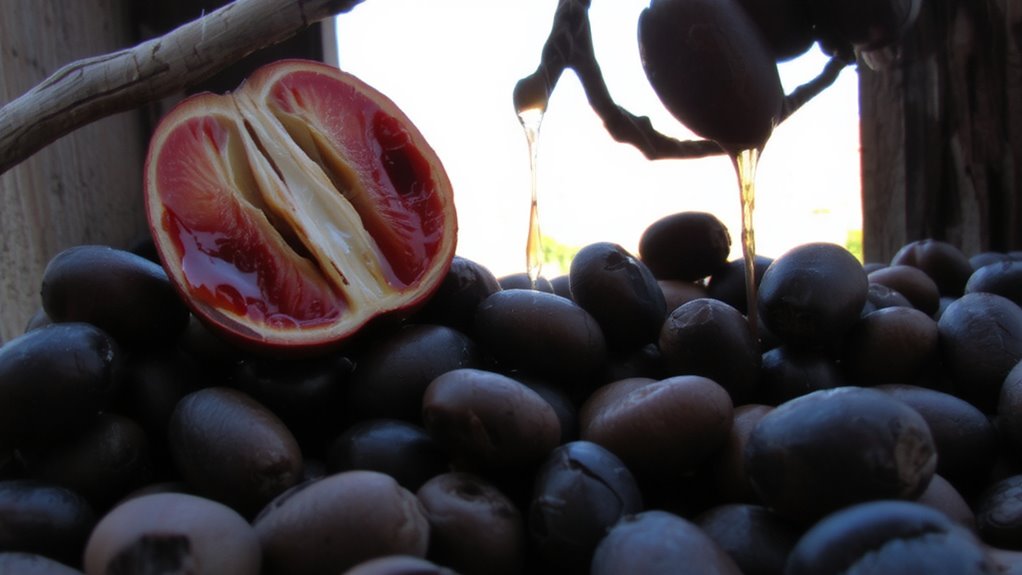
You’ve seen how Maragogype’s size affects roast and grind settings, but processing plays an even bigger role in shaping its flavor-especially when it comes to sweetness. Natural processing leaves the fruit intact during drying, letting sugars soak into the bean over time. With Maragogype’s large bean and porous structure, this effect is amplified. Fermentation control is critical-too long, and you risk off-flavors; too little, and you miss peak sweetness. Nicaraguan producers often use raised beds and frequent turning to manage this stage precisely. Drying techniques also matter: slow, consistent drying in sunlight strengthens sweetness while reducing fermentation risks. Moisture meters and lab tests help monitor progress. While washed processing gives clarity, naturals deliver the syrupy body and intense fruit notes Maragogype is known for-provided fermentation control and drying techniques are handled with care and consistency.
Why Nicaragua’s Terroir Creates Perfect Natural-Process Maragogype?
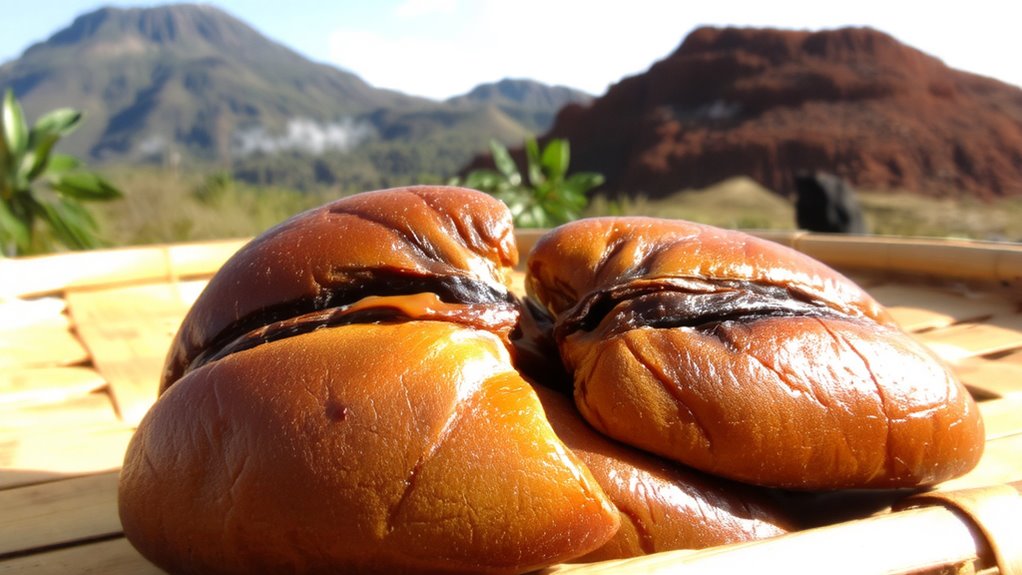
While not all regions can consistently produce high-quality natural-process Maragogype, Nicaragua’s terroir gives it a clear edge. You’ll find that the country’s volcanic soil composition provides essential minerals and guarantees proper drainage, both critical for healthy Maragogype trees. These beans need time to mature, and Nicaragua’s stable microclimate influence-marked by consistent rainfall, elevation shifts, and dry harvest seasons-supports slow cherry development and reduces mold risk during natural processing. The blend of altitude and equatorial sun helps sugars concentrate without overexposing beans. Unlike humid regions that complicate drying, Nicaragua’s microclimates offer predictable airflow and lower moisture, which means fewer defects and more batch consistency. If you’re sourcing or roasting natural-processed Maragogype, knowing this helps you anticipate cleaner ferment and higher stability. Terroir here doesn’t guarantee success, but it stacks the odds in your favor when growing and processing this delicate, large-beaned variety. For those seeking top-quality examples, consider exploring some of the best Nicaraguan coffee picks available, which often highlight this unique natural process method.
What Does Natural-Process Maragogype Coffee Taste Like?
Natural-processed Maragogype from Nicaragua delivers a distinct flavor profile shaped by both its genetic traits and how it’s processed. You’ll notice a syrupy body right away, with pronounced sweetness and complex layers. Expect vibrant stone fruit like apricot and ripe peach, backed by subtle floral notes that linger in the finish. The natural method enhances these characteristics, intensifying the cup’s richness. Here’s what you’re likely to taste:
| Flavor Aspect | Common Intensity |
|---|---|
| Stone fruit | High |
| Floral notes | Medium |
| Syrupy body | High |
| Acidity | Low to medium |
| Fermented sweetness | Medium |
This coffee works well with filter methods like V60 or flat-bottom brewers that highlight clarity. Avoid dark roasts-they mute the delicate notes. Light to medium roasts preserve the profile. Pre-infusion in pour-overs helps extract evenly without over-expressing fermentation.
How Do Nicaraguan Farmers Grow High-Quality Maragogype?
How do Nicaraguan farmers manage to produce such exceptional Maragogype, given its size and reputation? You rely on careful shade management to protect these large, delicate plants from intense sun, which can stress the trees and reduce bean quality. Growing Maragogype under partial shade slows development, improving density and sweetness. You also prioritize soil nutrition-regular composting and organic matter boost nutrient availability, essential since Maragogype’s big beans demand more from the soil. Farmers often test soil pH and adjust with lime or natural fertilizers to maintain balance. While full sun increases yield, it risks lower cup quality, so selective shade remains standard. Proper pruning and spacing help airflow, reducing disease risk without sacrificing coverage. These practices aren’t easy, but they’re proven. When done right, shade management and strong soil nutrition lead to healthier crops and a cleaner, more flavorful bean-essential for natural-process Maragogype that stands out.
Where Can You Buy the Best Nicaraguan Maragogype Natural Coffee?
The best Nicaraguan Maragogype natural coffee often comes directly from specialty roasters who source transparently from small farms or cooperatives in regions like Jinotega or Matagalpa. You’ll want to look for roasters who list harvest dates, elevation, and varietal-this guarantees freshness and traceability. Roast profiles matter: lighter roasts preserve the coffee’s bright stone fruit and honeyed notes, while medium roasts enhance body and sweetness. Match your brewing methods to the roast-try a gooseneck kettle for pour-over or a well-calibrated espresso machine. A top choice among experts is Counter Culture Coffee, known for its sustainable sourcing and exceptional quality. Here’s a quick guide:
| Roaster | Region | Suggested Brewing Method |
|---|---|---|
| Onyx Coffee Lab | Jinotega | Pour-over, V60 |
| Counter Culture | Matagalpa | Aeropress, Espresso |
| Stumptown | Nueva Segovia | French Press |
Always use filtered water and grind fresh for best results.
On a final note
You’ll get the best from Nicaraguan Maragogype natural coffees with a medium grind and a stable brew method like V60 or Kalita Wave. These methods highlight its syrupy body and fruit-forward sweetness. Use filtered water and brew just off boil-around 200°F. Compared to washed coffees, naturals offer heavier body but need more careful extraction. Store beans airtight away from light to preserve flavors. Try roasters like Onyx or Counter Culture for reliable, fresh-picked Maragogype lots.