Why Musanze Coffee From the Volcanic North Delivers Vibrant Acidity
You get vibrant acidity from Musanze coffee because it’s grown at high altitudes on volcanic soil, where cooler temps and rich minerals slow bean development and boost sugar and acid formation. The dense, nutrient-rich earth supports clean flavor development, while consistent rainfall and elevation preserve brightness. For the best results, brew it light to medium with a pour-over to highlight its citrusy, crisp finish-there’s more to how these factors shape every cup.
Notable Insights
- Volcanic soil rich in minerals enhances nutrient uptake, contributing to dense beans and bright, clean acidity.
- High altitude above 1,600 meters slows bean development, increasing sugar and acid concentration for vibrant flavor.
- Cooler temperatures and strong UV exposure at elevation boost complex acid development without harshness.
- Consistent rainfall at high elevations ensures even ripening while preserving the bean’s natural acidity.
- Slow maturation in cool climates allows refined sugar formation, enhancing juicy sweetness and crisp acidity.
Volcanic Soil: The Foundation of Musanze Coffee
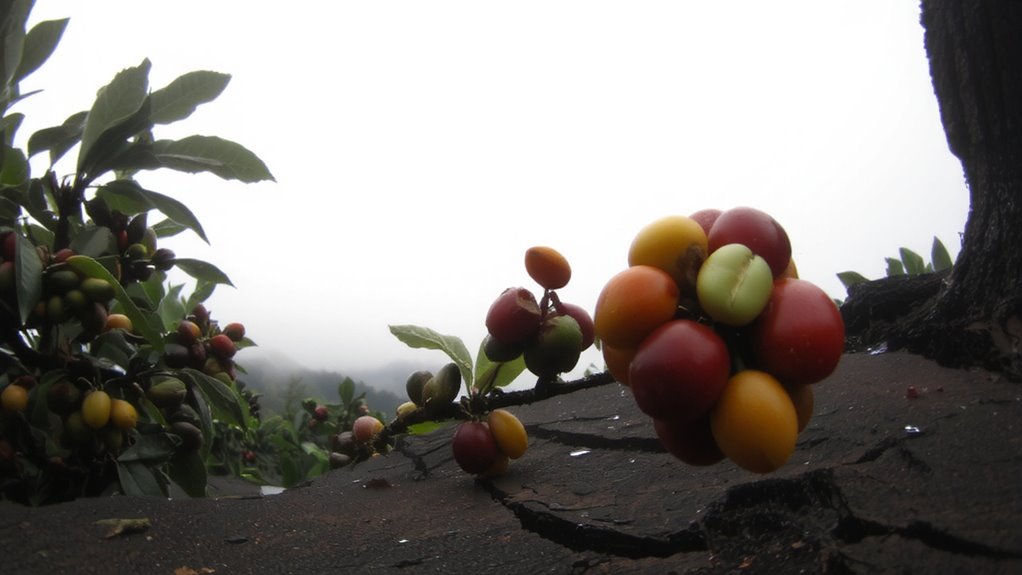
While the high altitudes of Rwanda’s northern region play a role, it’s the rich volcanic soil that really sets Musanze coffee apart. You’re tasting the effects of lava minerals every time you brew a cup-these elements seep into the roots, boosting nutrient uptake and bean density. The organic richness of the soil, built over centuries from decomposed vegetation and volcanic matter, guarantees steady feeding without heavy synthetic inputs. This natural foundation supports more consistent crop yields and deeper flavor complexity. Growers here benefit from fertile ground that retains moisture yet drains well, reducing root rot risk. Compared to less mineral-rich regions, Musanze farms often need fewer soil amendments, lowering production costs. When roasting, expect cleaner profiles due to balanced nutrient absorption. For brewing, use filtered water to avoid masking the mineral-driven clarity. The soil isn’t just a starting point-it’s an active ingredient you can taste.
How Altitude Elevates Musanze Coffee’s Brightness
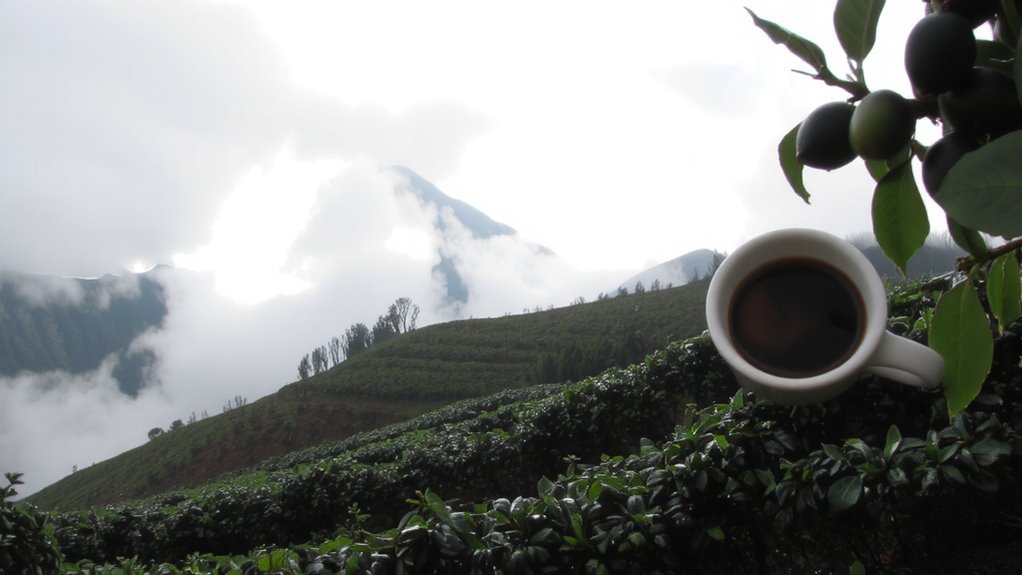
You’ll notice Musanze coffee’s bright, lively acidity more than in lowland beans, and that’s no accident-high altitude is doing the heavy lifting. Grown above 1,600 meters, these beans develop slower under cooler temps and higher sunlight intensity, which boosts sugar and acid development. The stronger UV exposure at elevation stresses the plant just enough to produce more complex flavors without tipping into harshness. You’ll also get denser beans-higher bean density means they’re harder and more compact, which matters during roasting. Dense beans roast more evenly, letting you pull bright, clean notes without scorching. If you’re using a home roaster, aim for a medium roast to preserve that citrusy pop. Lighter roasts work too, but avoid dark profiles-they mute the brightness altitude gives you. This isn’t just terroir hype; it’s measurable, physical response to elevation.
Cool Climate, Slow Beans: Musanze’s Flavor Advantage
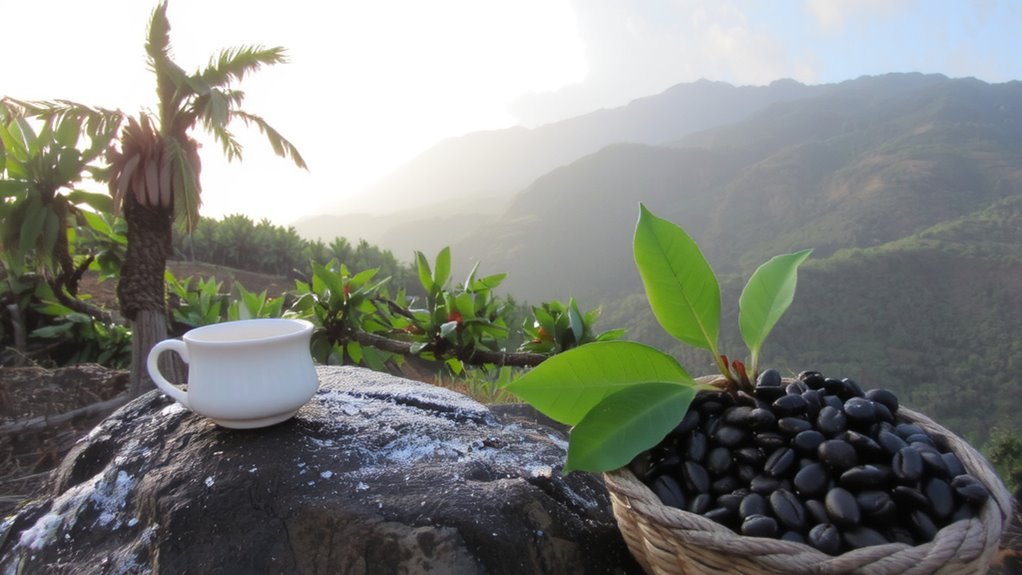
High altitude doesn’t just shape acidity-it also means cooler temperatures, and that slow, steady growing season is where Musanze coffee builds its complex flavor. You get more refined sugars and layered notes because the beans mature over extra weeks. That’s why many farms rely on shade farming: it further moderates temperature, protects plants, and supports biodiversity without sacrificing bean quality. The region’s heirloom varietals respond well to these conditions, developing nuanced profiles-think citrus, red berry, and tea-like brightness. These traditional plants aren’t bred for yield but for flavor depth and resilience, which matters when growing at 1,600–2,000 meters. Shade farming also reduces water stress, helping maintain consistent development. While slower growth means less coffee per harvest, you’re trading volume for quality. For roasters and brewers, this means beans that respond well to medium roasts and pour-over methods, highlighting clarity and sweetness you won’t find in faster-maturing, low-altitude crops.
Why Rain and Elevation Preserve Acidity
When rain falls steadily across Musanze’s high slopes, it doesn’t just nourish the soil-it helps lock in the bright, crisp acidity that defines the region’s best beans. You’ll notice how the elevation, often above 1,600 meters, slows bean development while consistent rainfall supports even ripening. This combo creates ideal microclimate effects, shielding plants from drastic shifts that can dull acidity. The seasonal consistency here means fewer weather surprises, which translates to more reliable crop quality year after year. Unlike regions with erratic rains or extreme dry spells, Musanze’s steady moisture patterns help maintain green bean density and chemical balance. That matters when you’re roasting-dense beans respond more predictably to heat, preserving those lively notes. If you’re sourcing single-origin beans, look for farms that track rainfall and elevation data. It gives you a clearer picture of what to expect in the cup, especially when acidity is your priority.
Tasting Musanze Coffee: Citrus, Berries, and Clarity
Because acidity shapes so much of what makes Musanze coffee stand out, it’s no surprise that tasting it reveals bright notes of lemon, red grapefruit, and sometimes even lime-clean and sharp without tipping into harshness. You’ll likely catch delicate floral notes, like hibiscus or jasmine, especially when brewed with a gooseneck kettle using the pour-over method. These characteristics shine best when you use fresh beans ground just before brewing and water just off the boil-around 200°F. The clarity of flavor makes Musanze ideal for V60 or Chemex, where the clean filter enhances its crisp profile. You’ll notice a juicy sweetness mid-palate that rounds into a smooth, sweet finish-no sugar needed if you enjoy it black. Compared to lower-elevation coffees, which often taste flat or muddy, Musanze delivers layered complexity with every cup.
On a final note
You get bright, lively flavors in Musanze coffee because volcanic soil, high altitude, and cool temps slow bean development, boosting acidity. For the best results, grind fresh and use a pour-over or AeroPress to highlight its citrus and berry notes. Light roasts preserve clarity, while dark roasts mute it. If you prefer smooth over sharp, this might not be your pick-but for vibrant, clean cups, Musanze delivers.