The Importance of Burr Spacing Accuracy in Stepless Grinder Calibration
You rely on your stepless grinder for precise control, but even 0.05mm burr spacing errors cause uneven grinds and flawed espresso. Misaligned or worn burrs create inconsistent particles, leading to under- or over-extraction, no matter your dose or tamp. Tools like feeler gauges help measure spacing accurately, and regular calibration prevents drift from humidity or use. Skipping checks risks flavor imbalance. Brands like Niche Zero deliver precision only if maintained. You’ll see how small adjustments make or break your shot quality.
Notable Insights
- Precise burr spacing ensures uniform grind size, critical for balanced espresso extraction.
- Misaligned or improperly spaced burrs cause inconsistent particles, leading to flavor imbalances.
- Stepless grinders require accurate calibration to fully utilize their fine adjustment capabilities.
- Even small spacing variations over 0.05mm indicate misalignment, affecting grind consistency.
- Regular calibration prevents drift from wear, climate changes, and mechanical stress.
What Is Burr Spacing and Why It Matters
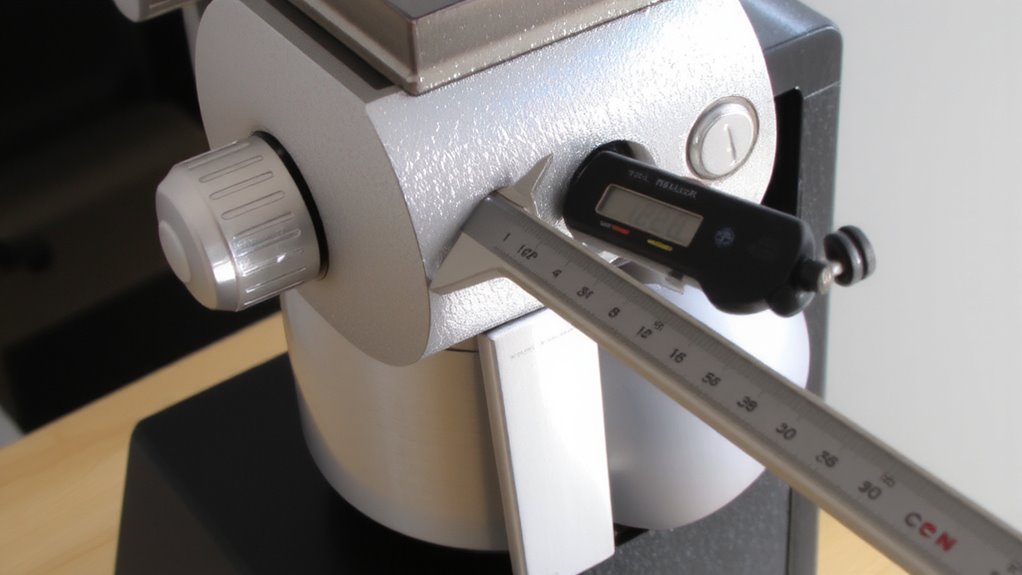
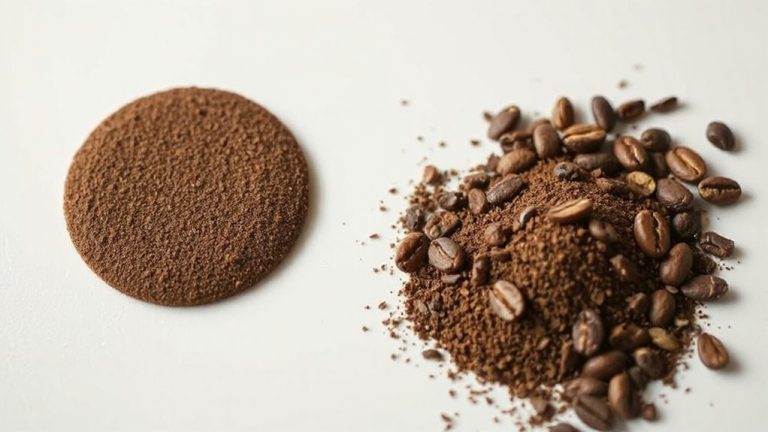
Grinder performance starts with burr spacing-the distance between the two abrasive surfaces that crush your coffee beans. When you adjust this gap, you control how coarse or fine your grind ends up. But spacing isn’t everything-burr alignment matters just as much. If the burrs aren’t parallel, you’ll get uneven particle sizes, no matter how precise the setting. That’s where grind uniformity breaks down, especially noticeable in espresso. Properly spaced and aligned burrs produce consistent particles, leading to balanced extraction. Stepless grinders offer finer control than stepped models, letting you dial in more accurately. Brands like Lelit and Niche Zero prioritize this adjustability. You’ll get better results if you check both spacing and burr alignment during calibration. Skipping either step means uneven grounds, channeling, and wasted beans. It’s not just about turning a knob-it’s about creating the right conditions for ideal extraction every time. Upgrading to a high-quality coffee and espresso grinder can significantly improve grind consistency and overall brew quality.
How Wrong Burr Spacing Ruins Espresso
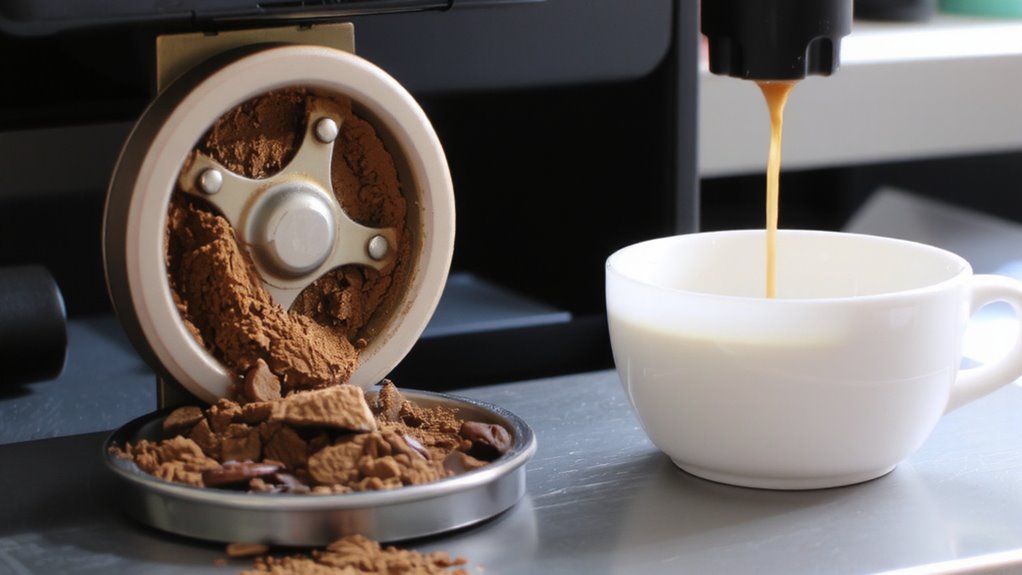
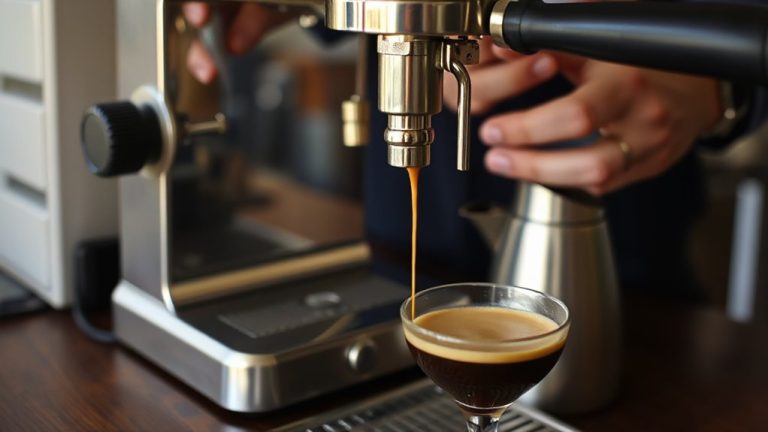
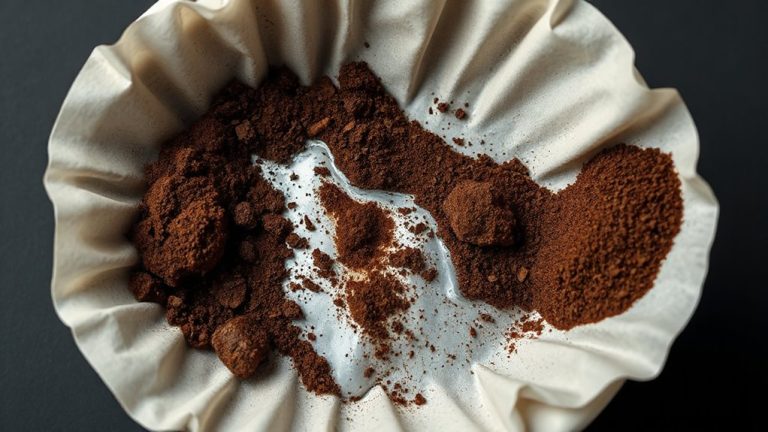
Your espresso shots start going sideways the moment burr spacing drifts off target. Too wide, and your grind’s too coarse-water zips through, leaving you with weak, under-extracted coffee. Too tight, and flow stalls, causing over-extraction with bitter, astringent notes. Even slight burr misalignment creates uneven particle sizes, skewing extraction balance. That means some grounds over-extract while others under-extract, deepening flavor inconsistency. You’ll notice it in the cup: one shot bright and sour, the next flat and harsh, even if you didn’t change the dose or settings. This isn’t just about preference-it’s physics. Machines like the Niche Zero or Monolith II can still falter if spacing’s off, no matter how precise their stepless dials. Without accurate spacing, your grinder can’t deliver repeatable results. You’re guessing, not dialing in. Consistent shots need consistent gaps. Anything less sabotages control, taste, and quality-one flawed pull at a time. Investing in a high-quality espresso grinder under $200 can make a significant difference in achieving that precision without breaking the bank.
How To Measure Burr Spacing Accurately
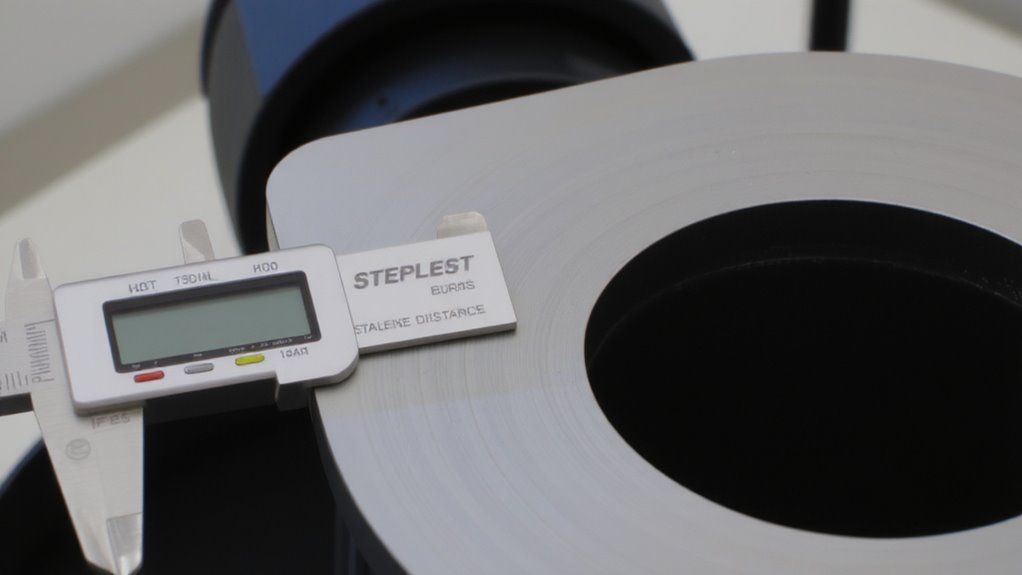
While some swear by touch or trial and error, measuring burr spacing accurately requires tools and technique you can trust. You’ll need a reliable measurement tool, like a feeler gauge or digital caliper, to get consistent results. Always check your tool’s calibration first-uncalibrated tools lead to false readings and poor grind settings. Start by powering off and disassembling your grinder, then carefully insert the feeler gauge between the burrs at multiple points to check for even gaps. Look for consistent spacing and any visible burr wear patterns, as uneven wear affects accuracy and espresso quality. If spacing varies by more than 0.05mm, your burrs may be misaligned or worn out. Regular measurement tool calibration and monitoring burr wear patterns help maintain precision. This simple step keeps your grinder performing at its best, ensuring repeatable shots without guesswork. Upgrading to a high-quality best coffee grinders model can further enhance consistency and ease of calibration.
Step-by-Step: Calibrate Your Stepless Grinder
Once you’ve confirmed your burr spacing is accurate and your tools are calibrated, it’s time to adjust your stepless grinder for ideal performance. Focus on burr alignment and grinder stability to guarantee consistent particle size. Misaligned burrs cause uneven grinding, while a shaky base affects dosing precision. Start by securing the grinder on a flat, stable surface. Then, slowly adjust the outer burr while monitoring spacing. Test grind and observe for uniformity.
| Step | Action | Purpose |
|---|---|---|
| 1 | Secure grinder firmly | Guarantees stability during use |
| 2 | Check burr alignment visually | Prevents uneven wear and grind |
| 3 | Perform test grind | Verifies consistency post-calibration |
Make sure all parts are clean and tightened. This routine keeps your machine dialed in for repeatable results, especially with fine espresso settings.
Why Micro-Adjustments Need Extreme Precision
Getting the grind just right on a stepless grinder means paying attention to changes you can’t always see. Even tiny gaps between burrs-smaller than a grain of salt-can alter extraction. You’re aiming for consistency, and that demands extreme precision. Over time, burr wear shifts the gap silently, making your shots pull faster or taste off. Motor drift adds another variable; as the motor heats up during use, it can expand slightly, changing alignment. These micro-changes aren’t obvious, but they impact your coffee every time. That’s why micro-adjustments matter: they compensate for real-world wear and thermal shifts. Without precision, you’re guessing. With it, you’re adjusting for actual performance, not just settings on a dial. It’s not fussy-it’s necessary for dialing in shot after shot.
Common Calibration Mistakes (And How To Avoid Them)
Ever wonder why your grinder refuses to dial in the same way twice, even when you haven’t touched the settings? It’s likely due to common calibration mistakes. Ignoring grinder wear over time leads to inconsistent particle size. Many users also skip re-zeroing after changing beans or environments, allowing calibration drift to sneak in. Over-tightening adjustment rings can warp spacing, while cleaning too aggressively damages burr alignment.
| Mistake | Consequence | Fix |
|---|---|---|
| Skipping burr inspection | Uneven grind from grinder wear | Check monthly |
| Not re-calibrating seasonally | Climate-driven calibration drift | Adjust every 3 months |
| Using tools improperly | Damaged threads or spacing | Hand-tighten only |
| Neglecting static buildup | Clumpy grounds, poor dose control | Grounds anti-static tools |
| Assuming factory settings stay true | Hidden calibration drift | Re-zero before fine-tuning |
Maintaining Consistent Burr Spacing Over Time
A small change in burr spacing can make a big difference in your espresso shots or pour-over brews, especially as grinders age and parts wear. Over time, burr wear reduces precision, shifting your grind size even if the setting stays the same. That’s why regular calibration checks matter-especially for high-use machines like the EK43 or Lido E. You’ll notice inconsistencies in extraction, channeling, or flow time, clues that spacing has drifted. Maintaining grinder stability means not only cleaning grounds buildup but also securing the burr assembly tightly to prevent micro-movements. Stepless grinders, while offering fine control, are more prone to subtle shifts without proper locking mechanisms. Check for play in the adjustment system and recalibrate every few months, or after 500+ shots. Replacing worn burrs restores accuracy and preserves your grind’s repeatability. Don’t wait for flavor to degrade-stay ahead with proactive maintenance.
On a final note
You need precise burr spacing to pull consistent espresso shots. Even slight miscalibration leads to under or over-extraction, affecting flavor. Measure carefully using feeler gauges or your grinder’s calibration tools. Adjust in tiny increments-many stepless grinders allow micrometer-level changes. Avoid rushing; recheck after each change. Regular cleaning and recalibration prevent drift from wear. Good spacing means repeatable, balanced shots. Skip the guesswork-accuracy saves beans, time, and effort.