How to Descale a Super-Automatic Espresso Machine Using Manufacturer-Recommended Solution
You should descale your super-automatic espresso machine every 2–3 months, or more often if you have hard water. Use only the manufacturer-recommended solution-like Saeco, Jura, or Breville’s branded descaler-to protect seals and avoid voiding the warranty. Prepare the machine by emptying the drip tray, removing coffee residue, and rinsing the water tank before mixing the solution. Start the built-in descaling cycle, let it run fully, then flush with 2–3 reservoirs of fresh water to remove any residue. If errors appear, check the inlet filter or restart the rinse process. Using filtered water daily and wiping the brew group regularly can help extend the time between descalings.
Notable Insights
- Determine descaling frequency based on water hardness, typically every 2–3 months, or less often for soft water.
- Use only the manufacturer-recommended descaling solution to ensure compatibility and avoid voiding the warranty.
- Prepare the machine by emptying the drip tray, removing coffee pucks, and rinsing the water tank before adding solution.
- Run the built-in descaling cycle by following on-screen prompts after mixing solution with water as directed.
- Rinse thoroughly with 2–3 full reservoirs of fresh water to eliminate residue and prevent flavor or operational issues.
How Often to Descale Based on Water Hardness
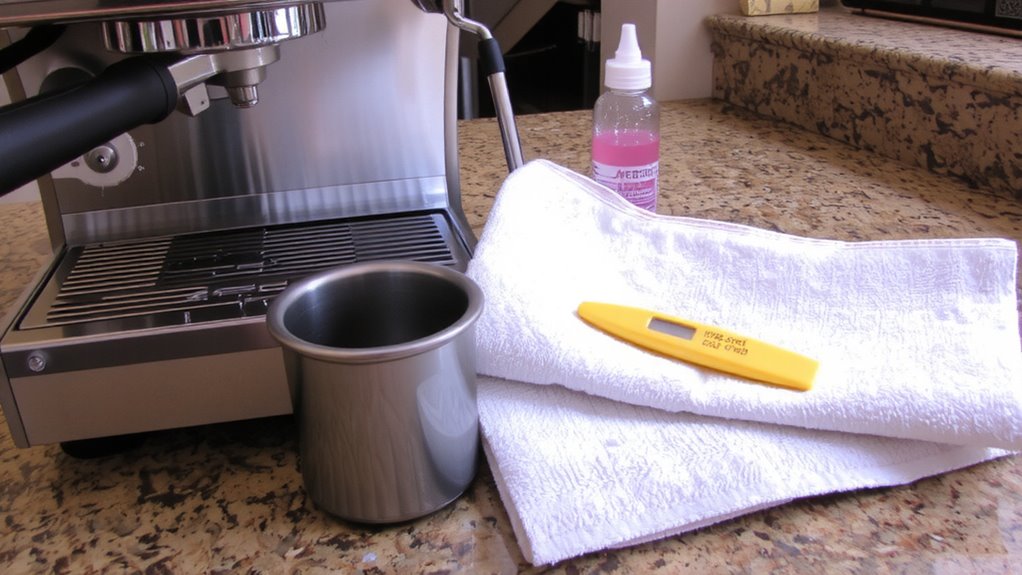
A good rule of thumb is to descale your super-automatic espresso machine every 2–3 months, but the right interval really comes down to your water hardness. If you’re using hard water, mineral buildup forms faster, clogging internal components and reducing efficiency. Softer water slows this process, possibly letting you stretch to 4 months. The best way to know? Conduct water testing-either with a home test strip or a report from your local utility. Machines in areas with high calcium and magnesium levels will need more frequent maintenance. Ignoring water quality leads to costly repairs or shortened lifespan. Regular water testing takes the guesswork out, helping you tailor your descaling schedule. Some brands even build in reminders based on usage, but those don’t account for water differences. Adjust your routine using actual data, not estimates. It’s a small step that protects performance, flavor, and machine longevity over time. Using a Breville-recommended descaler ensures compatibility and optimal results for your machine.
Use the Right Descaling Solution for Your Machine
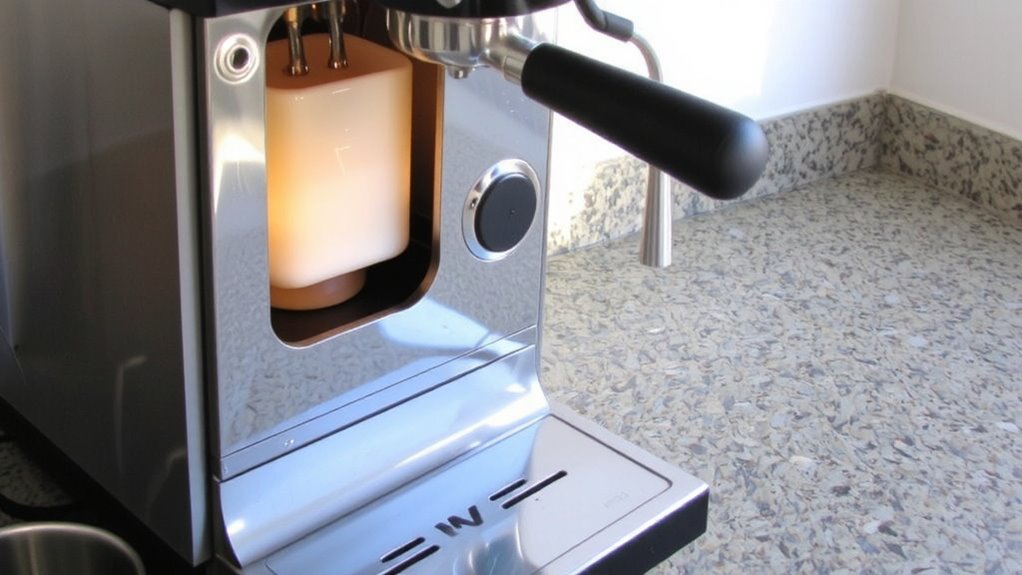
Using the correct descaling solution matters because not all formulas work the same on super-automatic espresso machines. You need one engineered for your machine’s materials to guarantee chemical compatibility-using the wrong kind can damage seals or heating elements. Most manufacturers design their solutions to match their machines’ internal components, so sticking with brands like Saeco, De’Longhi, or Jura’s recommended formulas is smart. These maintain the right solution concentration to dissolve limescale without being overly aggressive. Generic or vinegar-based options might seem cheaper, but they often lack precise concentration control and can void warranties. Always check your manual-it specifies what’s safe. Using a compatible, properly concentrated solution means effective descaling with less risk. It’s not just about cleaning; it’s about protecting your machine’s lifespan and performance. Stick with what’s recommended-it’s tested and proven. For Nespresso machines, using the Best Nespresso Descalers ensures optimal results and maintains warranty compliance.
Prepare Your Espresso Machine for Descaling
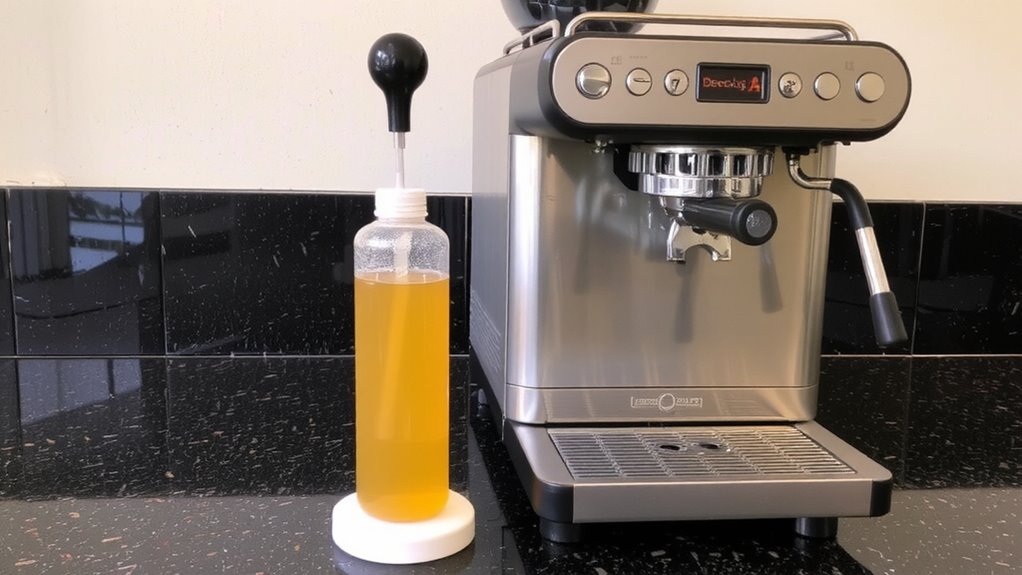
Before you start the descaling process, make sure your espresso machine is ready-this means clearing out any coffee residue and guaranteeing the system is as clean as possible. Empty the drip tray and remove any used pucks from the brew unit. Rinse the brewing components if your model allows easy access. Wipe down the clean exterior with a damp cloth to remove coffee oils and dust, which can affect performance over time. Remove and inspect the water tank, then check water filter status-some machines, like those from Jura or Saeco, require you to bypass or remove filters during descaling to prevent damage. If your machine uses a water hardness test strip system, confirm current settings match your region’s water. Make sure the water tank is thoroughly rinsed before adding the descaling solution. Proper prep guarantees the solution circulates effectively without interference from debris or old filter parts.
Run the Built-In Descaling Cycle Step by Step
Once you’ve prepped the machine and filled the water tank with the proper mix of descaling solution and fresh water-usually a 1:1 ratio unless the manufacturer specifies otherwise-you’re ready to start the built-in descaling cycle. Access the maintenance menu, select “descaling,” and confirm. The machine will begin pumping the solution through the boiler and grouphead. Don’t skip checking solution compatibility-using the wrong type can damage internal parts or void your warranty. Most brands, like Jura or Saeco, require their own formulas. During the cycle, you’ll see indicator lights or messages guiding each step. Allow it to run uninterrupted; it typically takes 15–30 minutes. Follow your model’s manual for exact prompts. Descaling frequency depends on water hardness and usage, but every 2–3 months is typical. Stick to the schedule to prevent scale buildup that affects extraction and machine longevity.
Rinse Thoroughly to Remove Residue
After the descaling cycle finishes, it’s essential to flush out any leftover solution to avoid affecting your espresso’s taste or damaging internal components. Run several rinse cycles using fresh water until no trace of descaling agent remains. Most manufacturers recommend at least two to three full water reservoirs for this step. Using filtered water during rinsing supports water purity, which helps prevent new mineral buildup and protects sensitive parts. Incomplete rinsing can leave acidic residues that harm pumps and heating elements over time, shortening machine longevity. Don’t skip or rush this step-even if the machine signals completion. Taste matters too; leftover solution taints your espresso with off-flavors. Stick to the manual’s rinse instructions precisely. For models like the Gaggia Titanium or Jura E8, this process is uniform but non-negotiable. Proper rinsing guarantees your machine runs cleanly and efficiently.
Fix Common Descaling Problems Fast
Why is your machine still showing a descaling alert even after you finished the cycle? It might be due to incomplete rinsing or mineral residue blocking key components. Poor water flow or low pump pressure can trick sensors into thinking descaling failed. First, restart the rinse cycle with fresh water. Then, check the inlet filter for clogs affecting water flow. If the issue persists, manually clear the system by running water through the steam wand and brew group.
| Issue | Solution |
|---|---|
| Descaling alert remains | Re-run rinse cycle |
| Low water flow | Clean inlet filter |
| Weak pump pressure | Check water tank level |
| Error after descaling | Power cycle machine |
Always verify pump pressure stability during operation-consistent pressure guarantees sensors reset properly.
Extend Time Between Descalings With Daily Habits
You’ve cleared the scale and reset the system, but that doesn’t mean the next descaling cycle has to come too soon. You can extend time between descalings with smart daily habits. First, pay attention to water quality-using filtered or softened water drastically slows mineral buildup, especially in hard water areas. Many users see better results with brands like Brita or under-sink filtration systems designed for espresso machines. Second, stick to a consistent cleaning routine: run a rinse cycle after each use, and wipe the portafilter and steam wand immediately. Clean the brew group weekly, as grime there can mask early scale signs. Avoid waiting until performance drops. These steps won’t stop scaling forever, but they delay it, reduce wear, and keep your machine running efficiently longer between chemical descaling.
On a final note
You should descale your super-automatic machine every 2–3 months, depending on water hardness. Always use the manufacturer’s recommended solution-like Urnex or Gaggia’s own brand-to protect internal parts. Run the machine’s built-in cycle, then flush with fresh water to remove residue. Skipping rinsing leaves taste and buildup. Clean daily with water and a quick backflush to extend time between descalings. Proper care keeps your machine pulling strong shots and steaming smoothly.