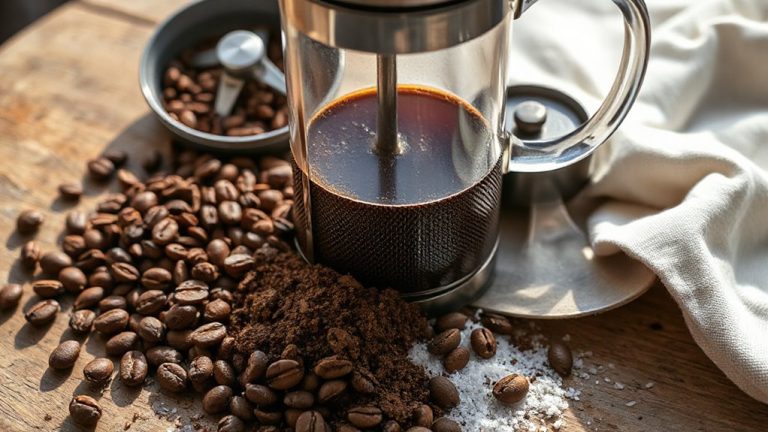
Converting Italian Roast Beans Into Rich Shots via Micro-Adjusted Fine Grind
Use a fine grind, like powdered sugar, to pull rich shots from dense Italian roast beans. Start with a 1:2 ratio in 25–30 seconds and tweak microscopically-finer if weak, coarser if bitter. Oily beans can clog grinders, so clean your burrs often and consider models like the Compak E1Z. Freshness matters: wait 7–10 days post-roast. You’ll get better results when you know how each variable shapes your shot.
Notable Insights
- Use a fine grind, similar to powdered sugar, to ensure proper extraction from dense Italian roast beans.
- Adjust grind size microscopically to achieve a 1:2 shot ratio pulled in 25–30 seconds for balance.
- Clean oily residue frequently with a grinder featuring anti-static tech or removable burrs to maintain consistency.
- Wait until beans are 7–21 days post-roast for optimal freshness and stable, sweet extraction.
- Diagnose bitterness or sourness by adjusting grind: coarsen for over-extraction, refine for under-extraction.
Why Italian Roast Needs a Finer Espresso Grind
While you might be tempted to use a medium grind for your Italian roast beans, going finer-closer to espresso consistency-brings out the full depth and richness those beans were built for. These beans are dense, often from slow, high-heat roasting, giving them high bean density that resists water during extraction. A finer grind counters that, increasing surface area so hot water extracts more evenly in the short pull time of espresso. Older beans, past their peak roast age, lose some internal moisture and become more brittle. That means they grind differently-often producing more fines-so you may need to adjust the setting slightly even if the roast stays the same. Freshness matters: beans 7–21 days post-roast usually yield the most balanced shot. Adjust incrementally; too fine risks over-extraction and bitterness, especially with darker profiles. Trust your taste over timing. For optimal results, choose a high-quality burr grinder, as consistent particle size is key, and the best grinders offer the precision needed for espresso consistency.
How Oil in Italian Roast Affects Grind Settings
Shiny beans mean more than just looks-they’re a clue that your Italian roast is releasing oils, and that changes how you should set your grinder. Those surface oils affect grind consistency, often causing clumping or clogging in the burrs, especially with fine settings. You’ll need to adjust more frequently because oil buildup alters the effective grind size over time. This is tied to bean oxidation and roast instability-darker roasts degrade faster, releasing more oil and becoming less stable in storage. As oxidation progresses, your grind settings may need continual tweaking to maintain shot quality. Pre-ground beans worsen this issue, so always grind fresh. Choose a grinder with regular cleaning features-like removable burrs or anti-static tech-to manage oil residue. Models like the Compak E1Z or Mazzer Mini offer better control here. Adjust in small increments, and clean weekly to avoid stale buildup that skews results. For baristas, selecting the right tool is critical, and the best coffee grinders for baristas balance precision with durability to handle oily beans effectively.
The Ideal Grind Size for Italian Roast Espresso
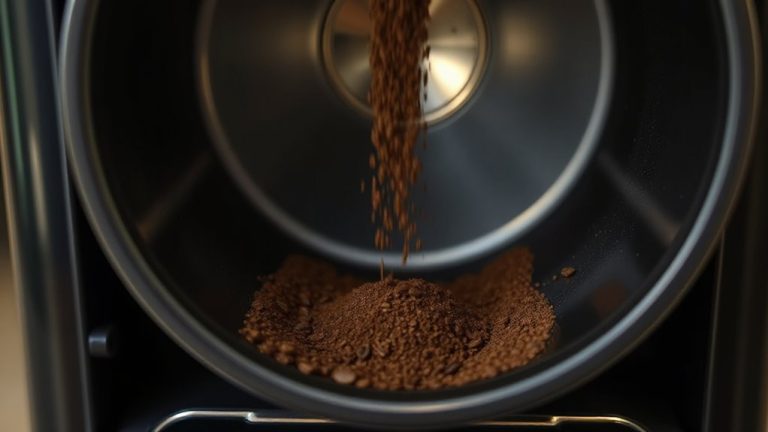
You’ve already seen how surface oils from Italian roast beans impact your grinder’s performance, so now it’s time to zero in on finding the right grind size for pulling consistent, rich espresso shots. Italian roasts are dark, oily, and low in bean density, which means they grind unevenly and can compact too much if the setting’s too fine. Aim for a texture like powdered sugar, but adjust slightly based on roast age-older beans lose moisture and may need a finer grind to maintain extraction. Freshly roasted Italian beans (within two weeks) typically require a slightly coarser setting to avoid over-extraction from retained gases. Grind size directly affects flow rate and flavor, so consistency matters more than perfection. Use a high-quality burr grinder-like a Baratza Sette or Lelit Bianca-for precision. Avoid blade grinders; they can’t deliver the uniformity you need. For those seeking top performance without breaking the bank, consider one of the best espresso grinders for great value.
How to Dial In Your Grind for Italian Roast
Dialing in your grind for Italian roast starts with a test shot to assess flow rate and flavor. Pull a 1:2 shot in 25–30 seconds-if it’s too fast, adjust finer; too slow, go coarser. Italian roasts often use beans from diverse origins, so knowing the bean origin helps predict density. Ethiopian beans may need a slightly coarser setting than Brazilian due to lower density. Roast age matters, too. Freshly roasted beans (under 7 days) still release gas, causing uneven extraction-wait until day 7–10 for stable results. As beans age past three weeks, they lose sweetness and require a finer grind to compensate. Use a precision grinder like the Niche Zero or Compak E16 for micro-adjustments. Check each change with a new shot, noting time, yield, and taste. Small tweaks make big differences. Track your settings so you can repeat success.
Fixing Bitter or Weak Italian Roast Espresso
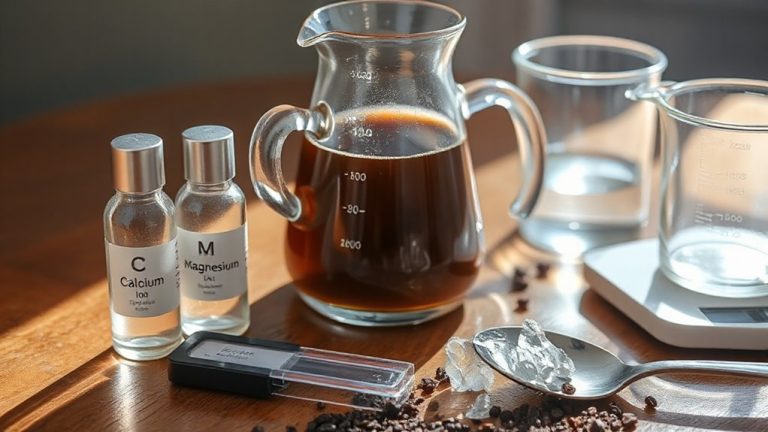
If your Italian roast espresso tastes bitter or weak, the issue usually comes down to extraction-either over- or under-extracting the grounds. Bitterness often means over-extraction, so try coarsening your grind or shortening shot timing to around 25–30 seconds. Weak or sour shots usually mean under-extraction-adjust finer or extend shot timing slightly, but stay within 22–30 seconds for best results. Water quality matters just as much; hard water can lead to uneven extraction and scaling in your machine, while overly soft water may dull flavor. Use filtered water with balanced mineral content, like that from a Brita or Third Wave Water, to guarantee consistency. Always weigh your dose and yield to track changes. These small tweaks, combined with stable water quality and precise shot timing, make a noticeable difference. You don’t need a high-end machine-just attention to detail.
Pro Tips for Grinding Italian Roast on Any Grinder
While grind consistency plays a critical role in pulling balanced shots from Italian roast beans, not every grinder delivers the same performance-especially under pressure. You’ll need to adjust your approach based on your equipment. Start with fresh beans-ideally used within two to three weeks of roasting-since bean freshness directly impacts flavor clarity and shot stability. For any grinder, dial in with small changes: adjust one click at a time and track shot time and output. High-end grinders offer more uniform particles, but even budget models can work with careful grinder calibration. If you’re using a blade grinder, shake it gently for a slightly more even result, though a burr grinder is far superior. Pre-dose quickly to minimize exposure to air. Tamp evenly, and clean your grinder weekly to avoid old residue skewing flavor. Consistency starts with you-not just the machine.
On a final note
You’ve seen why Italian roast needs a finer grind-its oils and dark profile demand precision. A good burr grinder, like a Baratza Encore or 1ZPresso Q2, helps hit that sweet spot. Too fine, and it’s bitter; too coarse, and it’s weak. Adjust in small steps, check shot time, and clean often. With the right grind, even budget gear can pull rich, balanced espresso. It’s all in the adjustment.