Sustainable Practices in Coffee Growing: Learning About Ethical Harvesting Methods Across Different Regions
You’re probably buying coffee from farms that clear forests and rely on harsh chemicals, but switching to shade-grown beans from Latin America supports bird habitats and healthier soil. In East Africa, cooperatives guarantee fair pay and better working conditions through collective bargaining and certifications like Fair Trade. Central American growers use regenerative techniques-compost, cover crops, and intercropping-to restore land. These methods cut chemical use and protect water, giving you a cleaner cup while supporting people and ecosystems. There’s more to how these systems reshape quality and sustainability from farm to brew.
Notable Insights
- Shade-grown coffee in Latin America preserves forest canopies, supporting biodiversity and migratory birds.
- East African coffee cooperatives ensure fair wages, ethical labor practices, and community investment through collective action.
- Regenerative farming in Central America uses agroforestry and composting to restore soil and sequester carbon.
- Fair Trade and Rainforest Alliance certifications enforce environmental standards and safe working conditions for coffee farmers.
- Reducing synthetic chemicals in coffee farming protects ecosystems, water quality, and beneficial organisms.
What Makes Coffee Farming Unsustainable Today?
While coffee is one of the most widely consumed beverages in the world, the way it’s currently grown often takes a heavy toll on the environment. You’re likely contributing to deforestation expansion when you buy beans from farms that clear large swaths of forest to make room for sun-loving coffee plants. This loss of tree cover degrades soil and disrupts water cycles. You also support chemical overuse when farms rely heavily on synthetic fertilizers and pesticides to boost yields. These chemicals leach into water supplies and harm beneficial insects and microbes. Sun-grown coffee systems, while productive in the short term, degrade land faster and require more inputs. The result? Lower long-term sustainability and increased costs for farmers. Choosing coffee labeled as shade-grown or organic helps reduce these impacts. If you want to support better practices, look for verified certifications like Rainforest Alliance or Fair Trade.
How Shade-Grown Coffee Protects Biodiversity in Latin America
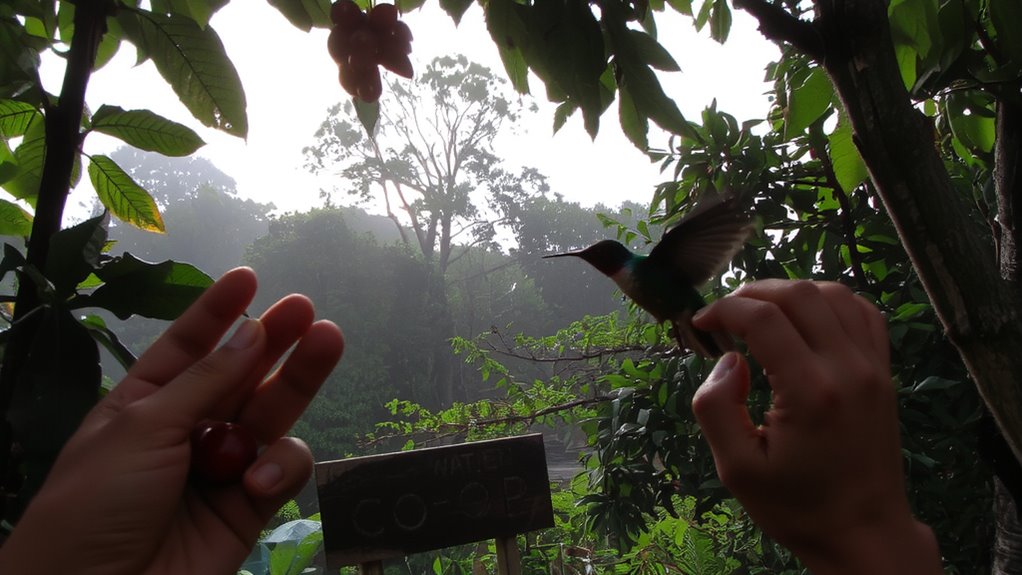
When you choose shade-grown coffee from Latin America, you’re supporting a farming method that mimics natural forest ecosystems by growing coffee under a canopy of trees. This approach promotes canopy preservation, which maintains tree cover and reduces the need to clear land. That tree cover provides critical migratory bird habitats-species like warblers and tanagers rely on these shaded farms during long seasonal flights. Unlike full-sun plantations, shade-grown systems support more insect life, bird diversity, and native plants. You also get slower bean maturation, which can improve flavor complexity. However, yields are typically lower, and managing tree cover takes more labor. Still, certifications like Bird Friendly or Rainforest Alliance help identify genuine shade-grown options. These farms often use fewer chemicals, thanks to natural pest control from birds. While not a perfect system, shade-growing offers a practical balance between agriculture and ecological function, especially in biodiverse regions like Colombia, Guatemala, and southern Mexico. Your daily brew can support lasting habitats.
How East African Cooperatives Enable Ethical Harvesting
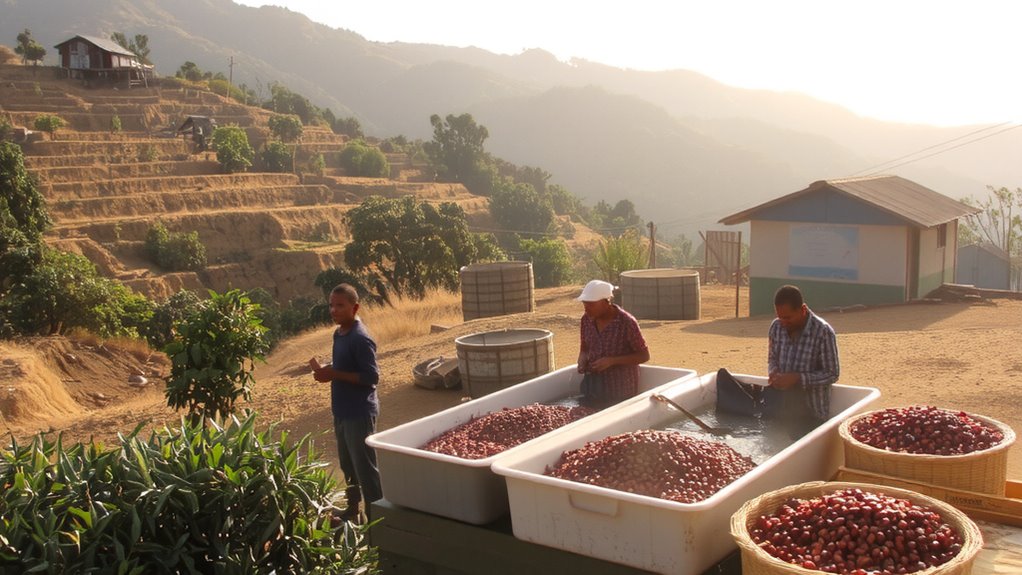
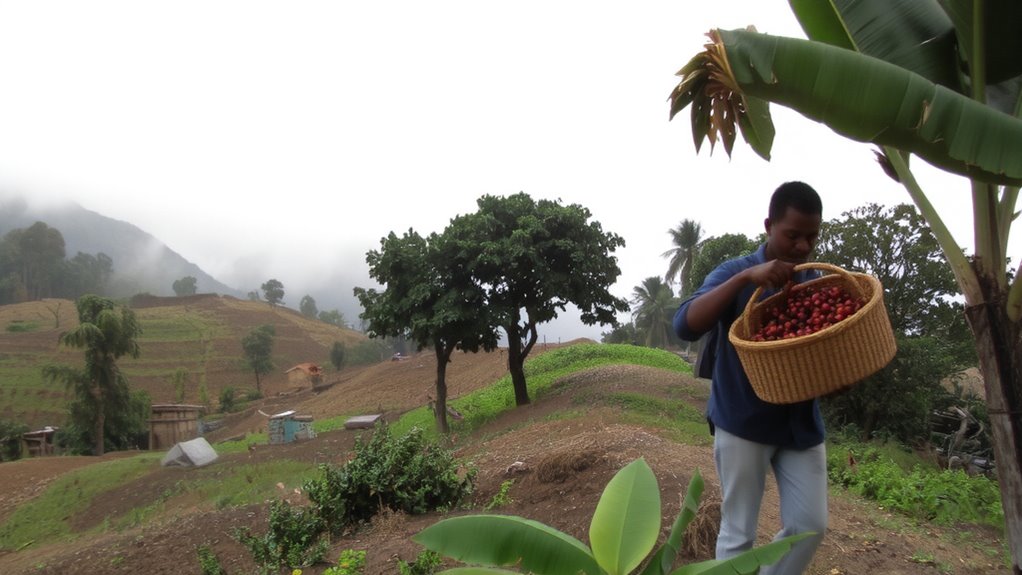
Because smallholder farmers in East Africa often lack direct access to global markets, cooperatives play a key role in pooling resources, standardizing harvest practices, and securing fair prices. You’ll find that these groups help you trace your coffee back to specific farms, ensuring transparency. By organizing harvests collectively, they enforce quality control and ethical labor standards, often meeting Fair trade certifications that guarantee better pay and working conditions. This isn’t just about better beans-it’s about Community empowerment. Cooperatives reinvest profits into local infrastructure, training, and school programs, creating long-term stability. In countries like Ethiopia and Kenya, cooperatives like Oromia or Kabaa Farmers Cooperative unite thousands of growers, giving you consistent, high-grade beans while supporting sustainable livelihoods. When you buy from these sources, you’re not just getting cleaner, more flavorful coffee-you’re backing systems that prioritize people, equity, and accountability in every harvest.
Regenerative Coffee Farming in Central America
If you’re looking to understand how coffee farming can restore rather than deplete the land, regenerative agriculture in Central America offers a clear example. Farmers there use shade-grown methods, cover cropping, and composting to boost soil regeneration and promote carbon sequestration. These techniques rebuild organic matter, improve water retention, and reduce erosion. Unlike conventional monocultures, regenerative farms mimic natural ecosystems, helping coffee thrive with fewer synthetic inputs.
| Practice | Benefit | Example Region |
|---|---|---|
| Agroforestry | Enhances carbon sequestration | Honduras |
| Compost application | Improves soil regeneration | Nicaragua |
| Intercropping | Increases biodiversity | Guatemala |
Over time, these farms often see stronger yields and lower costs. You don’t need special gear to support this shift-just choose beans labeled as regeneratively grown. It’s practical farming that works with nature, not against it.
How Ethical Coffee Methods Support Workers and Ecosystems
While growing methods matter, ethical coffee goes further by guaranteeing fair wages, safe working conditions, and environmental stewardship throughout the supply chain. You support real change when you choose certifications like Fair Trade or Rainforest Alliance-these verify farm labor standards and sustainable practices. Fair wages let workers afford healthcare and education, reducing poverty cycles. Safe working conditions mean proper equipment, clean water, and no child labor. These standards also limit agrochemical use, protecting soil and water. In Ethiopia, shade-grown coffee preserves forests and biodiversity. In Colombia, cooperatives reinvest in community infrastructure. Unlike conventional farms that cut costs through exploitation, ethical farms balance people and planet. You’ll pay slightly more, but it guarantees long-term supply stability and better bean quality. Look for transparent roasters who name their farms. Your daily brew becomes a practical choice-not just for taste, but for fairness and ecosystem health.
On a final note
You can make more sustainable coffee choices by supporting shade-grown beans from Latin America, like those in Bird Friendly–certified farms, which protect ecosystems. In East Africa, buying from cooperatives such as Kenya’s Othaya Farmers’ Cooperative guarantees fair wages. Central American regenerative farms, like those in Costa Rica’s Tarrazú region, rebuild soil health. These methods benefit both workers and land-offering long-term gains over industrial farming. Choose verified ethical labels for real impact.