How Origin Influences Cup Characteristics: Diving Into the Unique Aromas, Flavors, and Mouthfeel Profiles From Around the Globe
Your coffee’s flavor depends heavily on where it’s grown. Ethiopian beans bring floral, fruity notes thanks to high altitudes and volcanic soil, while Colombian ones offer balanced sweetness with nutty,caramel tones. Indonesian coffees, like Sumatran, are earthy and full-bodied, shaped by wet-hulling and clay soils. Altitude, processing, and terroir all shift the taste-knowing this helps you pick beans that match your brew style. Explore these differences to find what suits your cup best.
Notable Insights
- Ethiopian coffees offer bright, floral, and fruity notes due to high altitudes, volcanic soils, and natural processing methods.
- Colombian beans display balanced, sweet profiles with caramel and red apple tones, shaped by Andean elevations and washed processing.
- Brazilian coffees are nutty and sweet with lower acidity, benefiting from medium roasts that preserve their large, dense beans.
- Indonesian coffees, like Sumatran, exhibit earthy, full-bodied flavors with cedar and dark cocoa notes from wet-hulling and clay-rich soils.
- Altitude, terroir, and processing methods-such as dry, washed, or wet-hulled-define regional cup characteristics across coffee-growing origins.
How Coffee Origin Affects Flavor

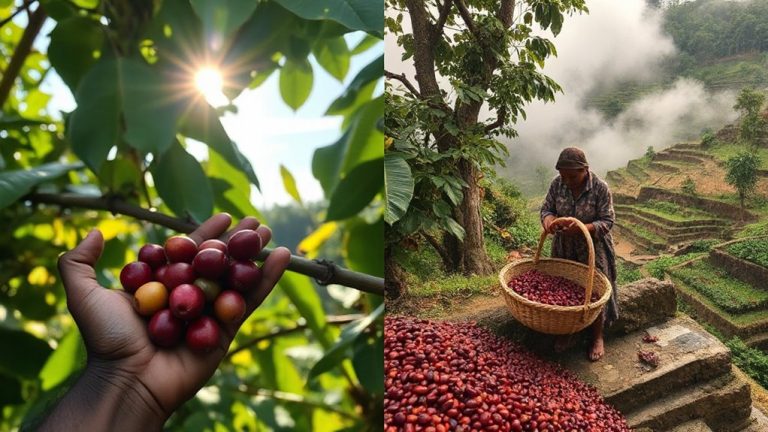
While the roast level and brewing method play key roles in your cup’s taste, the origin of the coffee beans has a strong influence on flavor from the start. Beans from Ethiopia often bring bright, floral notes, while those from Colombia tend to be balanced and nutty. Bean size varies by region-larger beans, like those from Brazil, usually handle medium roasts well, preserving sweetness without burning. Smaller beans, such as some from Indonesia, can roast more evenly at lower temperatures, making them ideal for dark roast level settings that highlight body over acidity. You’ll notice high-altitude origins produce denser beans, which respond better to slower roasting. When choosing, match bean size and origin traits to your preferred roast level to get the most from your roaster and brewing gear. Adjusting based on origin helps you avoid underdeveloped or bitter flavors. For those looking to explore these nuanced profiles, trying best Ethiopian coffee beans can offer a prime example of origin-driven flavor complexity.
What Is Terroir: and Why It Matters?
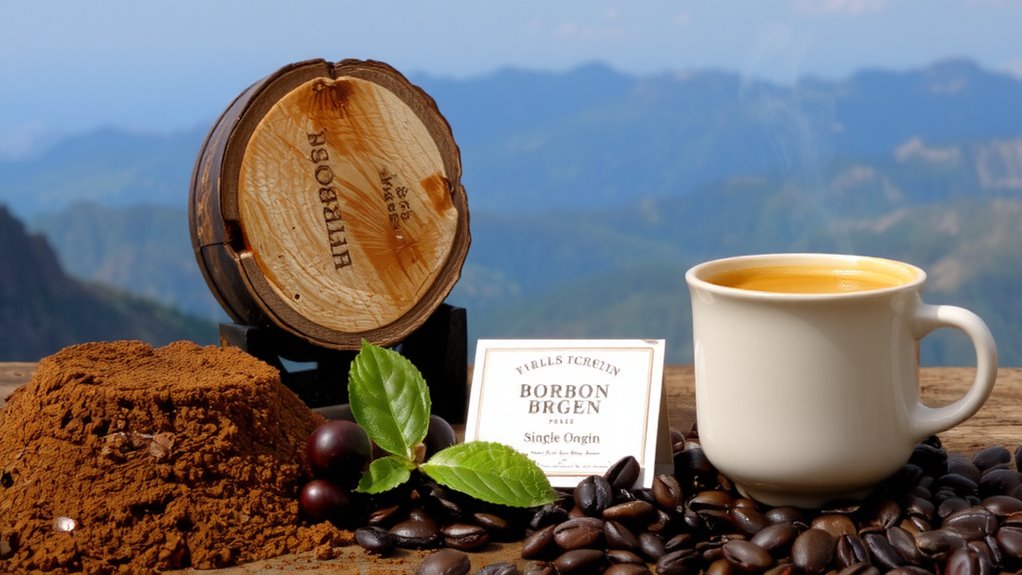
What makes Ethiopian beans so bright and fruity compared to the earthy depth of Sumatran ones? It’s terroir-the combination of environment and geography that shapes flavor. You’ll notice climate impact directly affects bean development: cooler temperatures slow growth, boosting acidity, while consistent rain supports even ripening. Soil composition matters just as much; volcanic soils, like in Ethiopia, add brightness, while Sumatra’s clay-rich earth contributes to heavier body and earthy tones. These natural factors work together, giving each region its signature profile. You don’t need fancy gear to taste the difference-just brew side by side using the same method. Terroir isn’t abstract; it’s practical. When you choose beans, you’re choosing a place. Understanding this helps you predict flavor and match coffee to your preferred brew style. For those exploring rich and diverse profiles, trying Best African Coffee Picks can highlight the vibrant range of flavors shaped by these very environmental factors.
How Altitude Changes Coffee Flavor
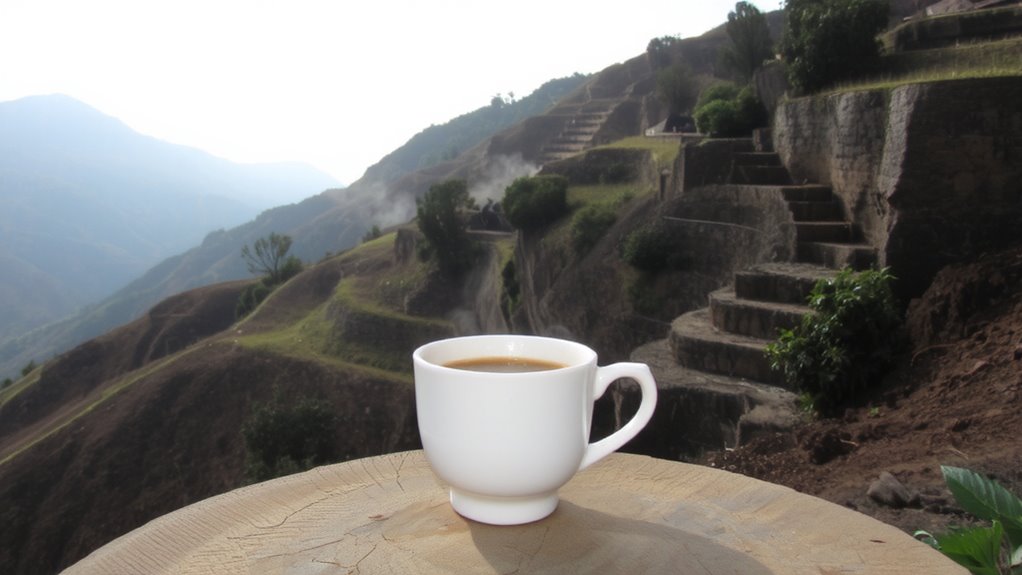
Because higher altitudes create cooler temperatures, coffee plants grow more slowly, which helps develop denser beans with more complex sugars-this is why beans from elevations above 4,500 feet, like those from Colombia’s Andes or Ethiopia’s highlands, often taste brighter and more floral. You’ll notice higher bean density in these regions, which affects how the coffee roasts and extracts. Denser beans typically handle heat better, leading to more even roast profiles and clearer flavors in your cup. The growing conditions at high elevations-consistent cool temps, mist, and nutrient-rich soil-promote slow maturation, enhancing acidity and complexity. In contrast, low-grown coffees usually have lower bean density and milder, earthier notes. When brewing high-altitude coffees, use slightly hotter water and finer grinds to fully extract their vibrant characteristics. These beans work especially well with pour-over or precision drip brewers, letting you taste the altitude-driven clarity they’re known for.
From Farm to Bean: Processing by Region
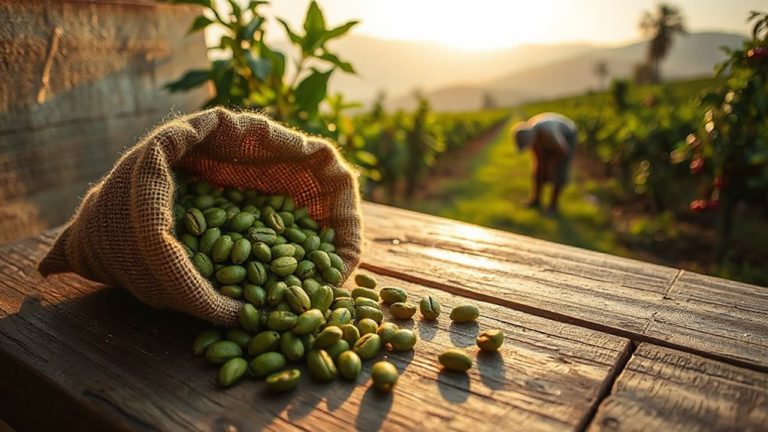
Ever wonder why a natural-processed Ethiopian tastes so wildly different from a washed Colombian? It’s largely due to how farmers handle the beans after harvest. In many regions, the dry method-drying cherries whole in the sun-is common. It’s low-cost and water-efficient, often yielding fruit-forward, complex cups, but risks uneven fermentation if not monitored. In contrast, the wet method, popular in Central and South America, removes the pulp before drying, using fermentation tanks and washing. This delivers cleaner, brighter profiles with more acidity. Countries like Colombia and Costa Rica rely on the wet method for consistency, especially where water access allows. You’ll see fewer defects and more clarity in the cup, though it demands more infrastructure. Choosing between dry and wet hinges on climate, resources, and flavor goals-each method shapes your coffee’s final character in real, measurable ways.
Ethiopia and East Africa: Floral and Fruity Notes
While growing conditions vary across East Africa, Ethiopia stands out for its heirloom varietals and high-altitude farms that naturally produce coffees bursting with floral and fruity notes. You’ll often taste jasmine, bergamot, or ripe berries, especially when beans are grown above 1,800 meters. These heirloom varietals-genetically diverse and locally adapted-are typically processed using natural (dry) methods, where cherries dry whole before de-pulping. Natural processing enhances sweetness and complexity, giving you a fuller body and intense fruit-forward profile. However, it demands perfect weather-consistent sun and low humidity-otherwise, fermentation risks ruining the batch. Washed (wet) processed Ethiopians offer cleaner cups but less fruit intensity. For brewing, use a pour-over like a V60 to highlight clarity and bright acidity. Grind fresh, use water just off boil, and keep ratios consistent-usually 1:16 bean-to-water. This approach best expresses the delicate, aromatic qualities these beans are known for. For those exploring the best options, consider checking out Best Ethiopian Coffee Picks as a starting point for discovering high-quality, regionally distinct beans.
Colombia to Guatemala: Sweet, Balanced Coffees
You’ve seen how Ethiopia’s highlands deliver vibrant, fruit-forward coffees shaped by heirloom plants and natural processing-now shift focus to Central America, where countries like Colombia, Honduras, and Guatemala grow beans with a different kind of appeal. These regions offer sweet, balanced profiles thanks to high altitudes, volcanic soil, and consistent rainfall. The Andean influence across these areas provides ideal temperatures and gradient slopes, enhancing slow bean development for even flavor. Most farms use washed processing, highlighting clarity and brightness without heavy body or funk. You’ll notice notes of caramel, red apple, and chocolate-approachable and consistent, great for pour-over or medium roasts in automatic drip machines. This coffee style reflects deep cultural heritage, with generations refining meticulous farming. Their structured acidity and rounded sweetness make them reliable daily choices, especially if you prefer clean, versatile cups over bold or earthy extremes.
Indonesia and Asia: Earthy, Full-Bodied Brews
Because the terrain and climate across Indonesia and parts of Asia differ sharply from Central America, the coffees produced there carry heavier bodies and more earthy, rustic flavors. You’ll notice notes of dark cocoa, cedar, and damp forest floor, especially in Sumatran or Sulawesi beans. This profile comes from unique processing methods like wet hulling and extended island fermentation, which deepen complexity but can mute acidity. Tropical aging, sometimes intentional, exposes beans to warm, humid conditions that further mellow brightness while boosting body. These conditions demand careful storage-vacuum-sealed containers with one-way valves help preserve freshness. If you prefer bold, syrupy cups without intense fruitiness, these coffees work well with immersion brewers like French presses or pressurized espresso machines. Just avoid over-extraction; use coarser grinds and shorter brew times to prevent bitterness.
On a final note
You now know how origin shapes your coffee’s taste. Altitude, terroir, and processing all play a role-Ethiopian beans often bring floral, fruity notes, while Indonesian coffees tend to be earthy and full-bodied. Latin American coffees usually offer sweetness and balance. If you prefer clarity, try washed-process beans; for complexity, explore naturals. Your brew method matters too-use a pour-over for brightness, French press for body. Choose based on flavor goals, not hype. Taste matters most, so keep experimenting.