Why High-TDS Water Masks Subtle Flavor Nuances in Specialty Coffee
High-TDS water masks subtle coffee flavors because minerals like calcium and magnesium bind to delicate solubles, muting bright, floral, and fruity notes. This causes uneven extraction, making your coffee taste flat or harsh, even with a good grind and brew time. A TDS meter (around $20) can show if your water’s over 250 ppm. Use reverse osmosis or Third Wave Water to fix it-your brew will taste clearer and more balanced. There’s more to optimizing your setup this way.
Notable Insights
- High TDS water contains excess minerals that bind to delicate coffee solubles, reducing flavor clarity.
- Calcium and magnesium in hard water interfere with extraction, muting bright, nuanced notes like citrus and florals.
- Elevated mineral content causes uneven extraction, leading to lost sweetness and distorted taste balance.
- High alkalinity buffers acidity, flattening vibrant, tea-like, or fruity characteristics essential in specialty coffee.
- Optimal TDS (75–150 ppm) preserves subtlety; exceeding this range masks nuanced flavors through chemical interference.
Why Hard Water Ruins Your Coffee Flavor
Ever wonder why your coffee tastes flat or bitter even when you’re using high-quality beans? The culprit might be hard water. High levels of calcium and magnesium in tap water cause mineral interference, which disrupts how coffee compounds dissolve during brewing. This leads to uneven extraction and flavor distortion, muting delicate notes and amplifying harshness. You’re not imagining it-your espresso might lack sweetness, or your pour-over tastes dull. Standard water filters often don’t reduce minerals enough, while fully softened water can make coffee taste salty. The best fix? Use a targeted water system like Third Wave Water or a reverse osmosis unit with re-mineralization. These let you control mineral content, avoiding the downsides of hard water while preserving balanced extraction. Your machine will thank you, too-less scale build-up means longer life and fewer repairs. Don’t let poor water ruin your brew.
How High TDS Blocks Proper Coffee Extraction
Because high TDS (total dissolved solids) means more minerals like calcium and magnesium are present in your water, it directly interferes with how coffee dissolves during brewing. These minerals cause mineral interference, binding to coffee compounds and blocking even extraction. You end up with uneven flavor-some parts under-extracted, others pushed toward overextraction risks. Hard water doesn’t just add minerality; it makes your brew time and grind size less effective, no matter how precise you are. Even with a good grinder like a Baratza Encore or a Brewed evenly pulse pour, high TDS water limits your control. You’re fighting the water instead of optimizing your coffee. For consistent extraction, aim for filtered water with balanced TDS-around 75–150 ppm. Using a simple carbon filter or third-wave water kit helps avoid these issues and keeps your extraction where it should be: clean, balanced, and predictable.
Which Coffee Flavors Disappear in Hard Water
What happens to your coffee’s bright, lively notes when the water’s too hard? Mineral interference from high TDS water causes flavor masking, muting the delicate characteristics you paid for. Delicate floral, citrus, and tea-like notes fade first, leaving your cup tasting flat or one-dimensional. Hard water binds to key solubles, preventing them from reaching your palate. Below are common flavors affected:
| Flavor Type | Effect in Hard Water |
|---|---|
| Citrus | Greatly muted |
| Floral | Often lost entirely |
| Berry | Reduced clarity and sweetness |
| Tea-like (e.g., Darjeeling) | Faint or undetectable |
You’re not imagining it-your light roast tastes dull not because of the beans, but because of flavor masking. Water quality directly impacts what you taste. Choosing water with balanced minerals preserves the nuances roasters and farmers worked hard to develop. Don’t let mineral interference silence your coffee’s true profile.
How to Test and Fix Your Water’s TDS at Home
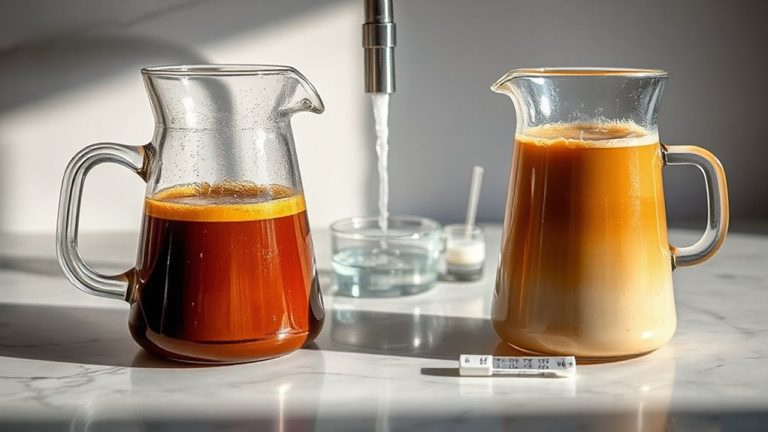
How does your tap water affect your coffee’s taste? High TDS can distort flavors, especially if water hardness is too high. Start by testing your water with a $20 TDS meter-just dip it in and read the ppm. If it’s over 250, your water likely has excess minerals affecting extraction. Water hardness impacts mineral balance, which in turn alters how coffee solubles are pulled. To fix it, use a reverse osmosis (RO) system, which strips impurities and lets you rebuild mineral balance with additives like Third Wave Water. Alternatively, try specialty bottled waters with balanced profiles. Avoid distilled water alone-it lacks minerals needed for proper extraction. Regular testing guarantees consistency. Small adjustments make a real difference in clarity and flavor.
Best Water for Coffee’s Brightness and Sweetness
You’ve tested your water and adjusted the TDS to avoid off-flavors, but getting the right mineral balance is where brightness and sweetness really come into play. For ideal flavor clarity, aim for water with moderate magnesium and low sodium-magnesium enhances extraction of bright, fruity notes, while too much sodium flattens sweetness. Ideal water chemistry includes 50–75 ppm total hardness and 30–50 ppm alkalinity, as recommended by the Specialty Coffee Association. Brands like Third Wave Water and Everbuild offer mineral packs tailored to this range, making it easy to standardize your brew water. Avoid distilled or softened water-they strip body and dull flavor. You’ll notice clearer acidity and rounder sweetness when water supports, rather than masks, the coffee’s natural profile. Consistent water chemistry isn’t just about avoiding flaws-it’s the foundation of a balanced, vibrant cup.
On a final note
You need balanced water to taste your coffee fully. High TDS, like in hard tap water, over-extracts bitter compounds and masks bright, fruity, or floral notes. It also clogs machines over time. For best results, use filtered water or add mineral packets like Third Wave Water. Test with a $20 TDS meter. Target 75–150 ppm. That small step improves clarity, sweetness, and overall flavor-every time you brew.