The Effect of Water Temperature on Coffee Bed Expansion in Pressurized Brewing
Hot water between 198–203°F makes your coffee bed expand by releasing trapped CO₂ and swelling particles, especially with fresh beans. Too cool, and you’ll get sour, uneven shots; too hot, and you risk scalding or channeling. Machines like the Linea Mini or Breville Dual Boiler give you stable temps for consistent results. Pair that with a precise dose and a grinder like the Niche Zero, and you’ll keep expansion under control-there’s more to fine-tuning than just heat.
Notable Insights
- Water temperature directly influences coffee bed expansion by affecting thermal swelling and gas release during pressurized brewing.
- Optimal expansion occurs between 198–203°F, promoting even moisture absorption and stable puck structure.
- Temperatures below 195°F limit thermal expansion and CO₂ release, increasing risk of under-extraction and sour flavors.
- Above 205°F, excessive heat may over-expand the coffee bed, scald oils, and promote channeling.
- Rapid CO₂ degassing at higher temperatures briefly increases puck resistance before flow stabilizes.
What Happens When Coffee Grounds Get Wet
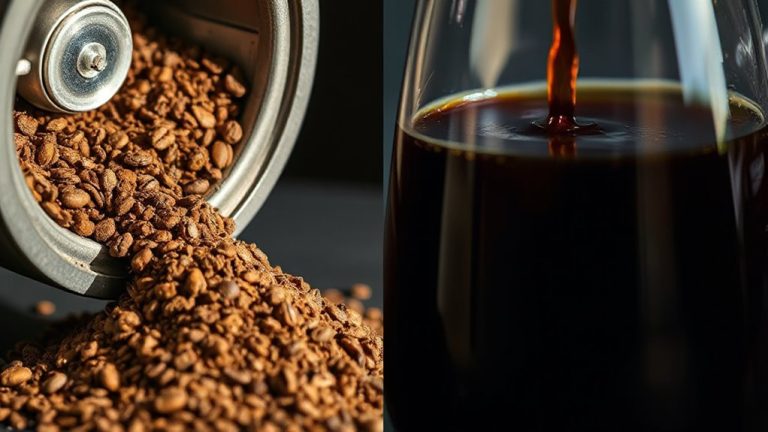
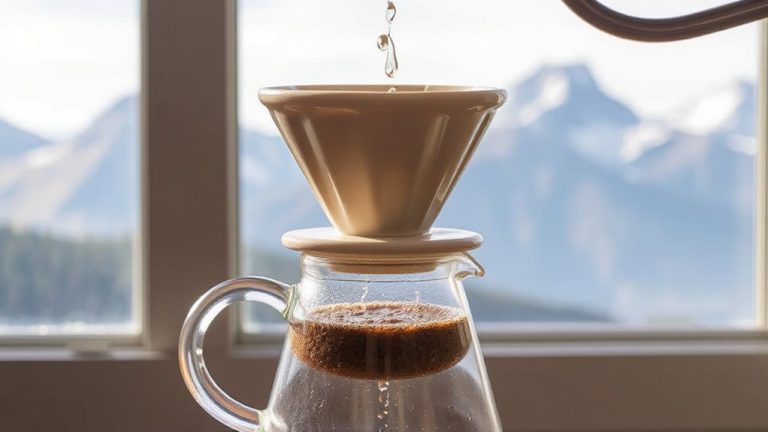
Why do your coffee grounds suddenly puff up when water hits them? That quick rise isn’t expansion from heat-it’s gas escaping. When hot water meets grounds, trapped carbon dioxide is released, creating bubbles that lift the bed. You’ll see the wet particles rise and bubble, especially with fresh beans. This off-gassing is essential; without it, your coffee aroma weakens. A bloom phase in pour-over or pre-infusion in espresso captures this release, leading to more even extraction. If you skip it, channels can form, yielding uneven, bitter results. Use a gooseneck kettle for control, or a machine with adjustable pre-infusion. Freshness matters-beans roasted within the last three weeks release more gas. Stale beans? Less puff, flatter taste. Watch the wet particles closely-when the bubbling slows, the bloom’s done. Then proceed. It’s a small step with real impact on flavor.
How Heat Makes the Coffee Bed Expand
While gas release drives the initial rise of the coffee bed, heat deepens the expansion by pushing water into the grounds and softening their structure. You see this when brewing espresso-hotter water increases thermal dynamics, making the coffee particles absorb moisture faster and swell more. That moisture absorption causes the bed to lift and spread, creating a more even layer for water to pass through. If your brew water’s too cool, say below 195°F, you’ll get less expansion and possibly uneven extraction. But go too hot-above 205°F-and you risk scalding the oils or over-expanding the puck, which might lead to channeling. Machines with stable temperature control, like the Linea Mini or Rocket R58, help manage this balance. Consistent heat means predictable expansion, giving you a tighter window for pulling quality shots. You don’t need lab-grade gear, but a PID-controlled boiler makes a real difference in repeatability. Among high-performance machines, best PID espresso machines deliver the precision needed for optimal temperature stability during pressurized brewing.
Why Temperature Changes Puck Resistance
Since heat directly affects how water moves through the coffee bed, you’ll notice that temperature shifts change how much resistance the puck offers during extraction. Higher water temps reduce viscosity, letting water flow faster and decreasing resistance. But there’s more: a strong thermal gradient-when your brew water is much hotter than the puck-can cause rapid expansion, briefly increasing resistance before the bed stabilizes. Cooler water, on the other hand, maintains higher viscosity and slower flow, increasing resistance throughout. Temperature also affects gas solubility; hotter water releases trapped CO₂ from the coffee faster, which can disrupt flow and create channeling. This sudden outgassing lowers resistance unevenly, especially in fresh beans. You’ll see this most with light roasts or high-moisture beans. Managing temperature helps control these forces, keeping resistance predictable and extraction even.
Set Your Grind and Dose for Temperature Stability
How do you keep your espresso shots consistent when water temperature fluctuates? You anchor your variables by setting your grind and dose for temperature stability. Changes in water heat affect extraction and coffee bed expansion, so relying solely on temperature tweaks can backfire without stable baseline settings. Focus on grind consistency-your grinder must produce uniform particles to prevent channeling and uneven flow. A quality burr grinder, like a Niche Zero or Eureka Olympus, helps maintain that. Pair it with precise dose calibration; even 0.1 grams off can shift shot behavior, especially under heat changes. Lock in a dose that works across small temp swings, then adjust grind to compensate, not dose. This method reduces variables, giving you clearer feedback when fine-tuning. Stay consistent by controlling what you can-grind size and coffee mass-so temperature adjustments remain predictable and effective. For optimal results, consider investing in one of the best espresso grinders recommended by experts.
Choose the Best Brew Temp for Even Extraction
What temperature actually gets you even extraction? For most pressurized brewing setups, 198–203°F (92–95°C) is the sweet spot. You’ll improve brew consistency and promote flavor balance, especially when paired with a stable grind and dose. At this range, water expands the coffee bed evenly without over- or under-extracting fine particles. Too hot-above 205°F-and you risk scalding the surface, creating uneven flow. Too cool-below 195°F-and you’ll see dull, sour notes from underdevelopment. Machines like the Breville Dual Boiler or Lelit Anna let you set exact temps, giving better control. PID-equipped brewers are worth it if you want repeatability. Don’t chase maximum temperature for strength; focus instead on even saturation. Your goal is steady extraction across the puck, not speed. Stick within that 198–203°F window for reliable results.
Fix Channeling Caused by Temperature Swings
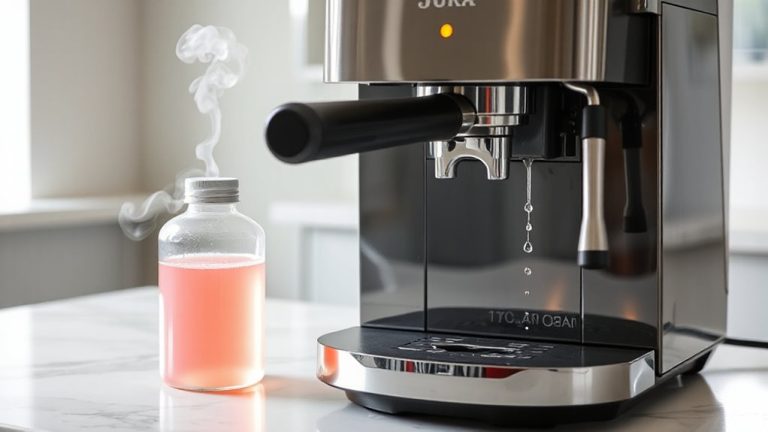
Keeping your brew temperature steady isn’t just about hitting the right number-it’s about preventing issues like channeling, where water carves paths through the coffee puck instead of flowing evenly. Sudden temperature swings cause thermal shock, making the coffee bed expand or contract unevenly, which disrupts flow. That instability breaks moisture equilibrium, leaving some areas over-extracted and others under. To fix this, preheat your brew group and portafilter-letting them soak guarantees a stable start. Use a machine with PID control, like the Breville Dual Boiler or Rocket R58, to minimize fluctuations. Even small swings of 5–10°F matter during pressurized brewing. Stabilized water temps help the coffee bed expand uniformly, promoting even saturation. If you’re pulling shots that taste sour or hollow, check your temperature consistency first. Avoid thermal shock by matching your water temp to your equipment’s thermal mass. It’s not just precision-it’s protection against channeling. A reliable automatic espresso machine ensures consistent thermal performance and simplifies temperature management.
On a final note
You need stable water temperature to control coffee bed expansion and avoid channeling. Too hot, and the puck swells unevenly, reducing resistance; too cool, and extraction drops. Aim for 92–96°C with most gear, like the Breville Dual Boiler or PID-equipped machines, for consistent results. Pair temp stability with a steady grind size and dose. Small temp swings matter, so dial in your machine and stick with it for even shots.