The Importance of Proper Water Temperature in Brewing Methods: How This Element Can Elevate or Diminish Your Cup Experience
Your water temperature shapes every sip-too hot, and you’ll pull out bitter notes; too cool, and the coffee tastes sour and flat. For pour-over or espresso, stick to 195–205°F for balanced extraction. French press works best around 200°F with a coarse grind. Use a gooseneck kettle like the Fellow Stagg EKG for precision. Dark roasts? Try 190–200°F to avoid over-extraction. Getting the temp right means better flavor, every time-knowing more helps you refine it further.
Notable Insights
- Water temperature directly impacts extraction, balancing flavors or causing bitterness and sourness if mismanaged.
- Different brewing methods require specific temperatures, like 195–205°F for pour-over and 200°F for French press.
- Light roasts need higher temperatures (195–205°F) due to denser beans, while dark roasts brew best at 190–200°F.
- Water above 212°F risks scorching grounds, leading to overextraction and harsh, bitter coffee.
- Using a temperature-controlled kettle improves consistency and helps achieve optimal extraction across all brew methods.
Why Temperature Matters in Coffee
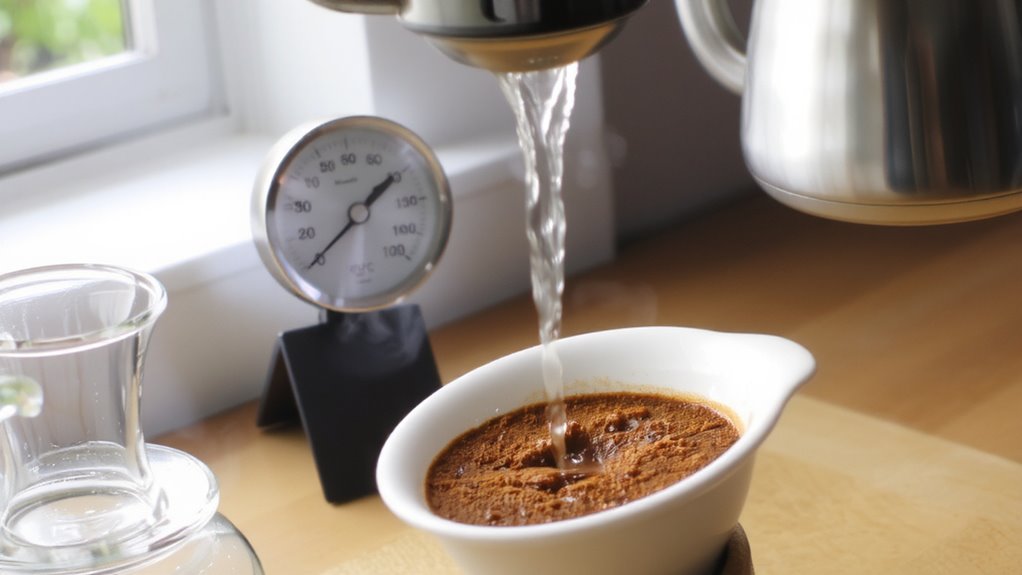
Every degree counts when it comes to brewing coffee, and getting the temperature right can make the difference between a balanced cup and one that’s bitter or weak. You need heat high enough to extract flavor, but not so high that it pulls out harsh compounds. Water chemistry plays a role-hard water may require slightly lower temps to avoid over-extraction, while soft water can work across a broader range. Bean origin matters too: dense beans from high altitudes, like Ethiopian Yirgacheffe, often need 200–205°F for full extraction, while lower-grown beans, such as Brazilian Santos, extract well at slightly lower temps. If your brew tastes flat, it’s likely too cool; if it’s sharp or astringent, it’s probably too hot. A gooseneck kettle with temperature control gives you precision, letting you adjust based on bean and water type. For optimal results, aim for the Perfect Coffee Brewing Temperature as recommended by brewing experts.
Best Brew Temperatures by Method
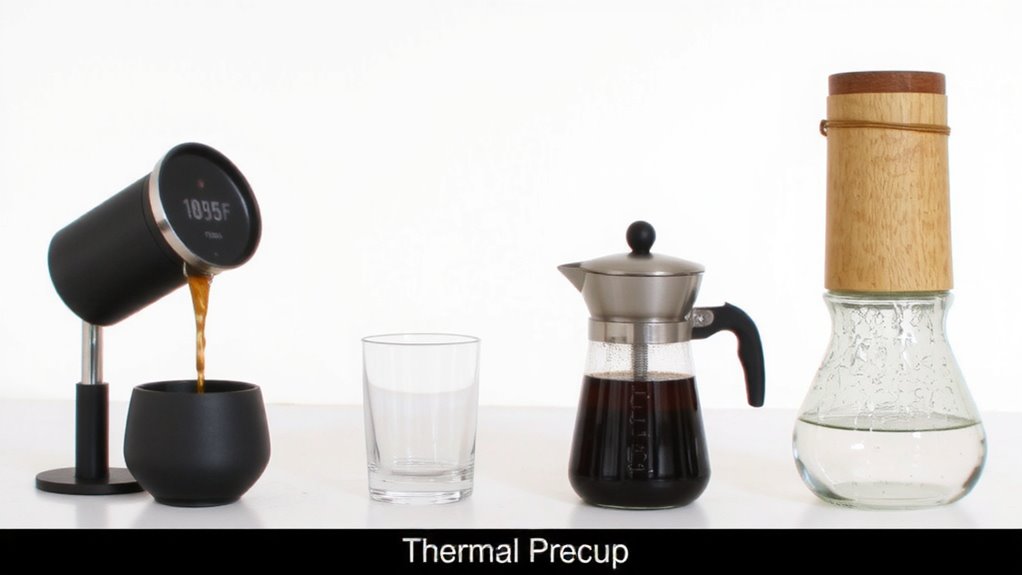
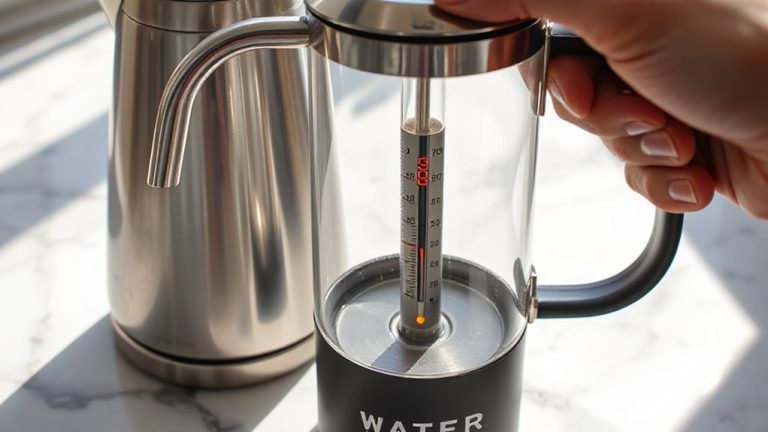
Now that you know how temperature affects extraction and flavor, it’s time to match those ideals to specific brewing methods. For pour-over, aim for 195–205°F; this range pairs well with medium-fine grind size synergy and precise brew time control, delivering clarity and balance in every cup. French press works best around 200°F with a coarse grind-this combo prevents over-extraction and sludge while supporting longer steeping. Espresso requires 195–205°F too, but depends heavily on fine grind size synergy and short brew time control (25–30 seconds) for ideal pressure and crema. Cold brew skips heat entirely, relying on room temp or cold water and long steep times. AeroPress gives you flexibility: 175°F for shorter brews, up to 205°F for fuller body. Match your gear and grind to these temps-you’ll get better, more consistent results with every method. Using a reliable coffee thermometer ensures your water hits the optimal range for any brewing method.
What Too Hot or Too Cold Water Does
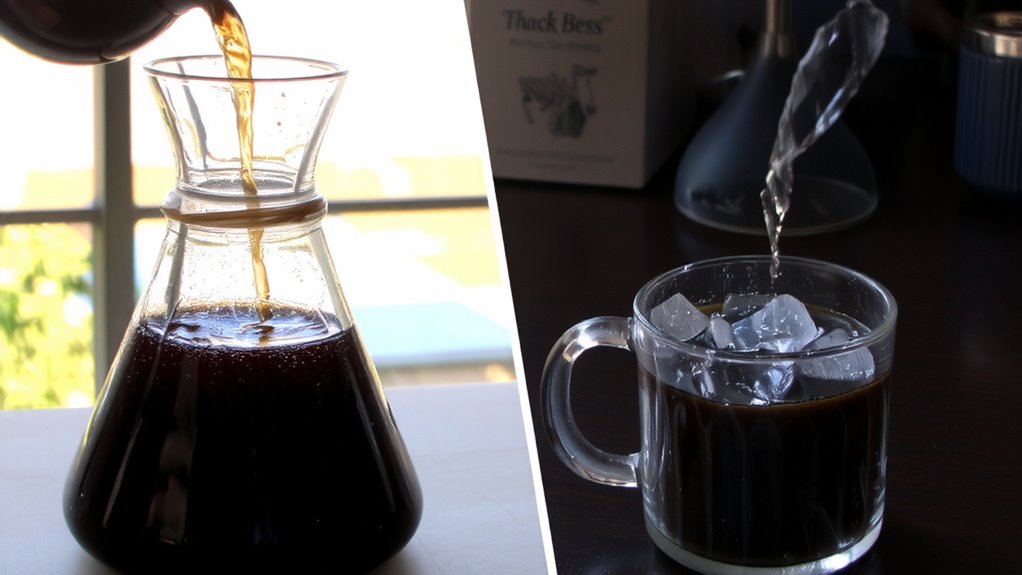
Brewing with water that’s too hot risks scalding your coffee grounds, leading to bitter, over-extracted flavors-especially in methods like pour-over or AeroPress where control matters. That’s the real overextraction risk: harsh notes and imbalance. On the flip side, water that’s too cold won’t extract enough, leaving you with weak, sour coffee-the classic underextraction pitfall. It’s not just about taste; it’s about chemistry. The quality of your water also plays a crucial role, as even optimal temperatures can’t compensate for poor brewing water quality. Here’s what happens at the extremes:
| Water Temp | Effect on Brew |
|---|---|
| >212°F (100°C) | Burns grounds, increases overextraction risk |
| 205–212°F (96–100°C) | Ideal for espresso, risky for light roasts |
| 195–205°F (90–96°C) | Balanced extraction, recommended range |
| 185–195°F (85–90°C) | Slower extraction, good for some greens |
| <185°F (85°C) | High underextraction pitfall, flat flavor |
Tools to Hit the Right Temperature
If you’re aiming for consistent coffee, getting the water temperature just right means relying on more than guesswork. A gooseneck kettle with temperature control gives you both accuracy and pouring precision, especially for pour-over methods like V60 or Chemex. Models like the Fellow Stagg EKG or Bonavita BV3825 let you set exact temps, so you can maintain brewing precision batch after batch. For French press or batch brew, even a simple kettle with a built-in thermometer helps. While microwaved water is convenient, it often heats unevenly, reducing control. Electric kettles with preset ranges (160°F to 212°F) offer reliable results without extra gear. If you’re using a drip machine, check if it meets the Specialty Coffee Association’s recommended range-many don’t. Upgrading to a device with real temperature control isn’t flashy, but it’s one of the most practical moves for better brewing precision.
Match Your Water Temp to Roast Level
Why does your medium roast sometimes taste flat while your dark roast feels harsh? It’s likely your water temperature isn’t matched to the roast level. Lighter roasts are denser and need hotter water to extract fully, while dark roasts are less dense and break down quickly with boiling water. Bean density and roast age both affect how quickly flavors release. Freshly roasted beans may need slightly higher temps, but older beans lose moisture and extract faster. Here’s a quick guide:
| Roast Level | Recommended Temp (°F) |
|---|---|
| Light | 195–205 |
| Medium | 200–205 |
| Dark | 190–200 |
| Old/Dry | 195–200 |
Adjusting for roast level improves clarity and balance.
Avoid These Common Temperature Mistakes
That perfect pour starts with temperature control, yet even seasoned coffee lovers often slip up in ways that dull flavor. Overheating flavors is a common issue-using water above 205°F can scald grounds, turning bright notes bitter, especially in light roasts. Conversely, underheating extraction below 195°F leads to sour, weak coffee, as compounds won’t dissolve fully. Both mistakes rob you of balance. You don’t need a lab-grade thermometer; just aim for 195–205°F. Electric kettles with temperature control, like the Fellow Stag or Bonavita, make this easy. If you’re using a standard drip machine, test it-many don’t reach ideal heat. Pour-over, French press, and AeroPress each respond differently, so match your method. Avoid boiling water straight off the flame unless you’re preheating vessels. Small adjustments prevent overheating flavors and fix underheating extraction, ensuring every cup hits its mark.
On a final note
You need the right water temperature to get the most from your coffee. Too hot, and you risk bitterness; too cold, and your brew tastes sour. Most methods work best between 195°F and 205°F. Use a gooseneck kettle with temperature control for pour-over, or check your auto-dripper’s specs-many don’t reach ideal heat. Light roasts often need hotter water, around 205°F; dark roasts do well at 195°F–200°F. Preheat your gear, avoid boiling water off the stove, and always match temp to grind and brew method for balanced, consistent coffee.