How to Measure and Adjust Water Temperature for French Press Brewing
Use water between 195°F and 205°F for balanced French press extraction. If you have a variable-temp kettle like the Fellow Stagg EKG, set it within that range. Without one, boil water and let it sit 30 seconds. Check with an instant-read thermometer like the ThermoPro for accuracy. Preheat your carafe to stabilize temperature. Mixing nine parts boiling water with one part room-temperature water also works. Getting this right avoids sour or bitter coffee-there’s more to get right once you’ve nailed the heat.
Notable Insights
- Aim for water between 195°F and 205°F to ensure balanced extraction and optimal flavor in French press coffee.
- Use an instant-read digital thermometer to accurately measure water temperature right after boiling.
- Preheat the French press carafe to maintain stable brewing temperature and prevent rapid heat loss.
- Adjust temperature by letting boiling water sit for 30 seconds or mixing in a small amount of room-temperature water.
- Invest in a variable temperature kettle for precise, repeatable control without needing a separate thermometer.
Why Water Temperature Matters for French Press
Brewing coffee with a French press hinges on a few key factors, and water temperature sits near the top. You can’t ignore how it affects extraction-too cool, and your coffee tastes weak; too hot, it turns bitter. Among brewing variables, temperature is one you can control with simple tools like a gooseneck kettle or instant-read thermometer. The French press itself has decent heat retention, thanks to its insulated carafe, but preheating the vessel helps stabilize the brewing environment. Without proper heat retention, temps drop fast, leading to uneven extraction. You’re aiming for balance: hot enough to pull flavor efficiently, but not so hot it damages delicate compounds. Glass presses lose heat quicker than double-walled stainless steel ones, so your gear choice matters. Adjusting temperature isn’t just about precision-it’s about consistency across each brew. Using a best gooseneck kettles model can further improve temperature control and pouring accuracy.
The Ideal French Press Water Temperature Range
Most experts agree the ideal water temperature for French press coffee falls between 195°F and 205°F. This range extracts flavor efficiently without scorching the grounds, especially important for nuanced coffee origin profiles. If your water’s too hot-above 205°F-you risk bitter, over-extracted coffee, even with proper brewing time. Too cool-below 195°F-and you might under-extract, leaving flavors flat or sour. Lighter roasts, often from African origins like Ethiopia, need the higher end of the range to pull out delicate notes. Darker roasts, common in Sumatran beans, do better just below 200°F to avoid harshness. You don’t need lab-grade tools; a gooseneck kettle with a built-in thermometer gives solid control. Just keep your brewing time at four minutes, then depress slowly. For even more precision, consider using one of the best coffee thermometers to monitor water temperature throughout the brewing process.
How to Measure French Press Water Temperature Accurately
A reliable thermometer makes all the difference when nailing the right water temperature for French press. For temperature accuracy, use an instant-read digital thermometer-brands like ThermoPro or Habor respond in seconds and read to the degree. Glass thermometers work but are slower and more fragile. To guarantee measurement precision, dip the probe into the water just after boiling, not touching the kettle’s sides. Aim for 195°F to 205°F, the ideal range for full extraction without bitterness. Inconsistent reads can come from poor placement or delayed testing, so act quickly. Don’t rely on electric kettles alone-even preset models can vary by ±5°F. A standalone thermometer confirms the actual water temp at pour. This small step improves results more than most realize. It’s not fussy; it’s focused. For consistent brews, verification beats guesswork every time.
Tools for Consistent French Press Water Temperature
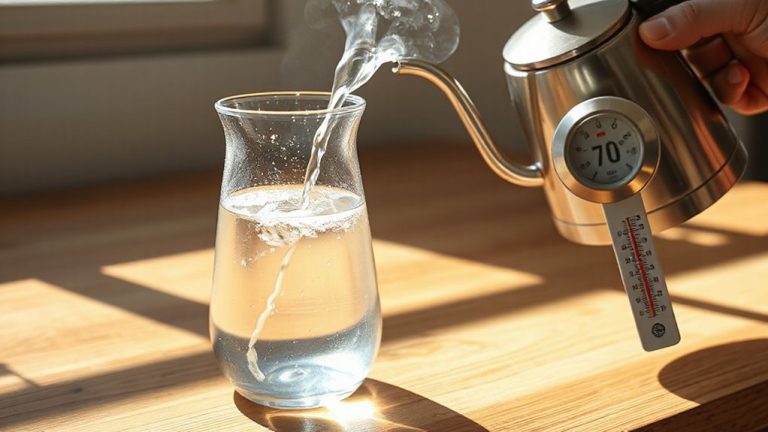
You’ll want tools that deliver steady, accurate water temps every time, and a gooseneck electric kettle with variable temperature control is one of the best investments. Models like the Fellow Stagg EKG or Bonavita BV3825 allow you to set exact temps, ensuring consistency. Paired with a digital thermometer, you’ll maintain precision across brews. Grind size and brew time rely on stable temps-too hot and coffee over-extracts, too cool and it under-extracts. A consistent temp helps balance these variables.
| Tool | Precision | Best For |
|---|---|---|
| Variable Temp Kettle | High | Control, repeatability |
| Digital Thermometer | High | Accuracy, calibration |
| Standard Kettle | Low | Simplicity, budget brews |
Choose based on your need for control.
How to Adjust Water Temperature Without a Kettle or Thermometer
Don’t have a temperature-controlled kettle or thermometer? You can still hit the right range with basic tools. Start by using boiling timing: water just off the boil (about 30 seconds cooling) works well for French press, landing near the ideal 195–205°F range. If your kitchen is warm and the water sits too long, it may cool too much, so time it closely. For more control, use simple cooling methods like pouring hot water into a pre-warmed carafe or letting it sit briefly before adding coffee. You can also mix boiling water with a small amount of room-temperature water-roughly 9 parts hot to 1 part cool-to lower the temperature quickly. These methods aren’t perfect, but they’re effective with practice and consistent pouring habits. For even better results, consider starting with a high-quality French press that retains heat efficiently.
Mistakes Caused by Wrong French Press Water Temperature
If you’re using water that’s too hot-especially above 205°F-you risk over-extracting the coffee, which brings out excessive bitterness and a burnt, ashy taste, particularly with longer brew times. This is known as bitter overextraction and commonly occurs when boiling water (212°F) is used straight off the boil without cooling. On the flip side, if your water is too cool-below 195°F-you’ll get sour underextraction, where acids dominate and the brew tastes flat or weak. Ideal French press temperature sits between 195°F and 205°F. At this range, you extract balanced flavors without emphasizing extremes. Using an adjustable kettle helps, but if you don’t have one, let boiled water sit 30 seconds before pouring. This small step prevents common mistakes and consistently improves results.
On a final note
You now know water temperature affects French press flavor. Aim for 195–205°F-it’s hot enough to extract richness without burning coffee. Use a kettle with temp control or a digital thermometer for accuracy. No tools? Boil water, then wait 30 seconds to cool slightly. Avoid guesswork, as too-hot water brings bitterness, while too-cool water tastes weak. Consistency gives better results, cup after cup.