Best Coffee Thermometers: KT THERMO vs CDN ProAccurate
You need a fast, accurate thermometer to nail the ideal milk temperature between 140°F and 155°F. Models like the KT THERMO and CDN ProAccurate IRT220-F deliver readings in under a second with durable stainless steel probes and color-coded dials for quick reference. They’re battery-free, NSF certified, and built for real-world use. While some thermometers limit range or need calibration, these strike the best balance of speed, durability, and precision-key for consistent results. There’s more to weigh if you want the full picture.
We are supported by our audience. When you purchase through links on our site, we may earn an affiliate commission, at no extra cost for you. Learn more. Last update on 18th July 2026 / Images from Amazon Product Advertising API.
Notable Insights
- Choose a thermometer with a 5-inch stainless steel probe to ensure accurate milk temperature readings without touching the pitcher bottom.
- Opt for models with a response time under 1 second to prevent scalding and achieve ideal microfoam during milk steaming.
- Select thermometers with color-coded dials highlighting the 140°F–155°F range for consistent, sweet, and silky milk texture.
- Prefer analog, battery-free designs with NSF certification for durability, quick readings, and reliability in high-use café environments.
- Ensure the thermometer has a clip-on feature and fog-resistant dial for real-time monitoring and ease of use during busy service.
KT THERMO Instant Read Dial Thermometer
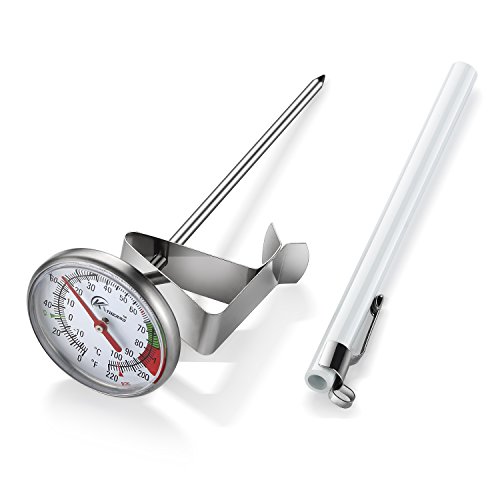
If you’re someone who makes coffee daily and needs a reliable, no-fuss thermometer for checking milk steam temperature or brew water, the KT THERMO Instant Read Dial Thermometer is one solid option. I use it for milk frothing and water checks, and it reads accurately from 0°F to 220°F in under a second. The analog dial is big, clear, and color-coded, making it easy to read at a glance. Its stainless steel probe and body resist corrosion and last through constant use. The clip adjusts for convenient storage or mounting. It’s NSF and CE certified, reusable, and needs no batteries. Wipe it clean-no washing. Comes with a manual and has a one-year warranty. While it’s not digital, that means fewer malfunctions. If you want durability and simplicity over high-tech features, this dial thermometer fits the bill. Works best indoors, in steady kitchen use. For under $15, it’s a practical tool that does one job well-measuring heat-without clutter or complexity.
Best For: Home baristas and coffee enthusiasts who need a durable, simple, and accurate analog thermometer for daily milk steaming and brew water temperature checks.
Pros:
- Delivers fast, accurate readings in under a second with a clear, color-coded analog dial
- Durable stainless steel construction resists corrosion and is NSF/CE certified for safety
- No batteries required, fully reusable, and easy to clean with a wipe
Cons:
- Limited to 2-inch immersion depth, restricting use for deeper liquids or large pots
- Analog design lacks digital precision and may be less accurate for fine temperature control
- Not suitable for outdoor or high-heat applications beyond 220°F
CDN ProAccurate Instant Read Frothing Thermometer (IRT220-F)

The CDN ProAccurate Instant Read Frothing Thermometer (IRT220-F) is a solid choice for home baristas and coffee professionals who need fast, reliable temperature readings when steaming milk. I use it daily, and it gives accurate results in just half a second. The 5-inch stainless steel stem fits perfectly in small pitchers, and the magnified dial makes it easy to read. It’s NSF certified and comes with a recalibration tool-just dip it in ice or boiling water to adjust. The included clip keeps it handy, and since it’s analog, there’s no battery to replace. I’ve found it durable, precise, and easy to clean-just wipe it down after use.
Best For: Home baristas and coffee professionals who need fast, accurate temperature readings for steaming milk and beverage preparation.
Pros:
- Delivers highly accurate readings in just 500 milliseconds with NSF certification
- Durable 5-inch stainless steel stem and magnified dial for easy reading and pitcher compatibility
- Includes recalibration tool and is reusable for various cooking tasks when clip is removed
Cons:
- Analog design lacks digital precision and may require frequent manual recalibration
- Small dial, while magnified, can still be difficult to read in low-light environments
- Stainless steel clip may loosen over time with frequent use
Milk Frothing Thermometer for Espresso Pitchers
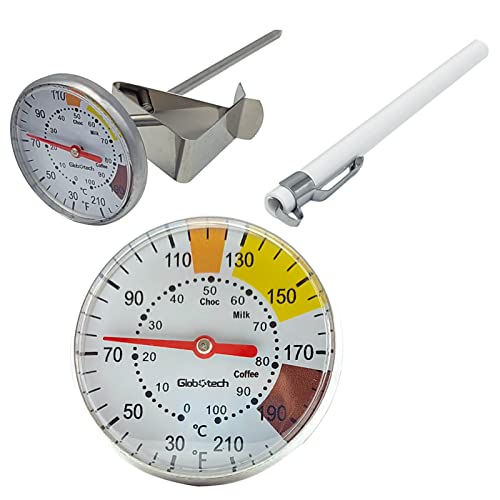
I rely on the GLOBOTECH C-20 when I need precise milk temperatures for espresso drinks, and it’s the best choice for home baristas who want professional control without guesswork. Its stainless steel build and fog-resistant dial hold up across 12 oz to 32 oz pitchers. The 5-inch stem stays out of the pitcher bottom, giving accurate readings between 30°F and 210°F. A color-coded dial helps me hit ideal zones-140°F–155°F for silky microfoam, no guesswork. The bi-metallic sensor responds in under half a second, clipping securely to the rim. I just wipe it clean after use-simple, reliable, and built for daily routine.
Best For: Home baristas seeking precise, reliable milk temperature control for crafting espresso drinks like cappuccinos and lattes.
Pros:
- Durable stainless steel construction with a fog-resistant dial for clear, consistent readings
- Color-coded temperature zones and fast 500-millisecond response for accurate milk frothing
- Adjustable clip and 5-inch stem ensure proper immersion depth across various pitcher sizes
Cons:
- Limited temperature range maxes out at 210°F, unsuitable for higher-heat applications
- Dial design may be less precise than digital alternatives over time
- Not dishwasher safe, requiring hand cleaning after each use
KT THERMO Instant Read Dial Thermometer (2-Pack)
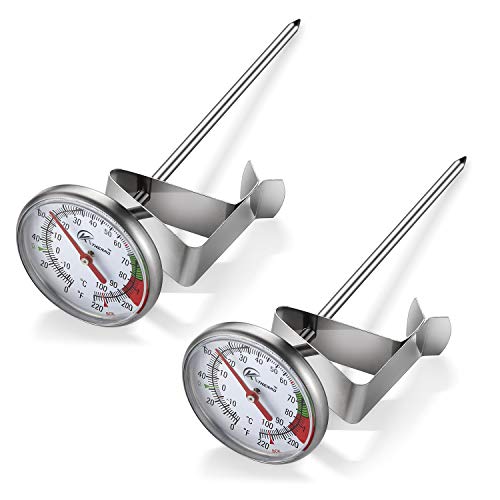
One standout option for coffee enthusiasts who value speed and reliability is the KT THERMO Instant Read Dial Thermometer (2-Pack), especially useful for those fine-tuning milk steaming or brewing at precise temperatures. I rely on its 0.5-second response time and accurate readings from 0°F to 220°F. The 6-inch stainless steel probe withstands heat and resists corrosion, while the color-coded dial makes it easy to monitor ideal ranges. Its 1.77-inch immersion depth works well for pitchers and carafes. I appreciate the adjustable clip for better visibility. With no batteries needed and an NSF-certified design, it’s a durable, no-fuss tool I keep handy for consistent results.
Best For: Home baristas and coffee enthusiasts who need quick, accurate temperature readings for milk steaming and precise brewing.
Pros:
- Delivers instant 0.5-second readings with a wide range of 0°F to 220°F for precise temperature control
- Durable stainless steel construction with a color-coded dial and adjustable clip for easy monitoring
- No batteries required and NSF-certified, making it a reliable, low-maintenance tool for kitchen use
Cons:
- Analog design may lack the precision of digital thermometers for very fine temperature adjustments
- Immersion depth of 1.77 inches may limit accuracy in shallow liquids
- Not dishwasher safe-requires manual wiping, which may be less convenient for frequent use
Norpro 5981 Espresso Thermometer
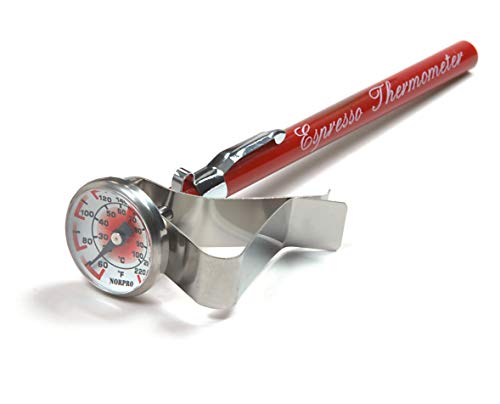
Precision matters most when pulling espresso shots or steaming milk, and the Norpro 5981 Espresso Thermometer delivers exactly that for home baristas who want consistency without complexity. I use it daily to monitor milk temp quickly, and the red zone on the dial makes hitting 155°F effortless. Its 6.4-inch probe fits most pitchers, and the slideable clip attaches securely to pots or frothing jugs. It runs on a AAA battery, so it’s ready when I am. The plastic sleeve protects the probe during storage, and cleanup’s a breeze-just hand wash. While it’s not digital, its analog design is reliable and straightforward. I appreciate its no-frills precision, especially when I’m focused on nailing that silky microfoam. At just one ounce, it’s light but sturdy, and Norpro’s build quality holds up over time. This thermometer won’t overwhelm your workflow-it just works, quietly helping you improve your espresso routine with every use.
Best For: Home baristas seeking a reliable, no-frills thermometer to consistently monitor milk temperature for espresso drinks.
Pros:
- Clear red zone on dial highlights ideal steaming temperature (155°F) for perfect microfoam
- Slideable, removable clip securely attaches to pitchers and pots for hands-free use
- Durable plastic construction with storage sleeve and long 6.4-inch probe for easy handling and protection
Cons:
- Analog design lacks digital precision and may require closer inspection for exact readings
- Requires a AAA battery despite being analog, which may be unnecessary for some users
- Limited temperature range with an upper rating of 155°F, restricting use beyond milk steaming
TempPro TP02S Digital Food Thermometer
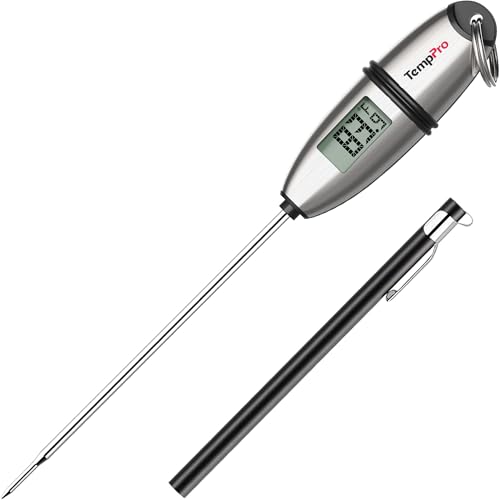
Though it’s not built exclusively for coffee, the TempPro TP02S Digital Food Thermometer works especially well for anyone who values accuracy and speed when heating milk or brewing manually. I get readings in just 5 seconds, from -58°F to 572°F, so I can monitor espresso shots or milk steaming with precision. The 5.3-inch stainless steel probe reaches deep into liquids, and I appreciate the Fahrenheit/Celsius toggle for flexibility. It runs on a single battery, auto-shuts off after 10 minutes, and has a handy hanging hole for storage. While it’s certified for food safety (CE, FCC, NSF), I’ve found it just as reliable for coffee tasks as for grilling or deep frying.
Best For: Home baristas and cooking enthusiasts who need a fast, accurate, and versatile thermometer for precise temperature monitoring in coffee preparation and a variety of culinary applications.
Pros:
- Delivers quick, high-precision readings in just 5 seconds across a wide temperature range (-58°F to 572°F)
- Features a long 5.3-inch stainless steel probe ideal for deep immersion in liquids like milk or oils
- Offers dual Celsius/Fahrenheit toggle, auto power-off, and a hanging hole for convenient, efficient use and storage
Cons:
- Not specifically designed for coffee equipment, so lacks specialized features like magnetic mounts or steam wand clips
- Battery life may diminish with frequent use, and replacement is required over time
- Digital display may be susceptible to damage if exposed to excessive moisture or heat beyond recommended limits
Winco 1-Inch Dial Frothing Thermometer with 5-Inch Probe (TMT-FT1)
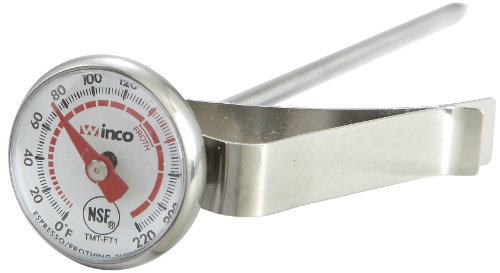
If you’re a home barista or café worker who values quick, reliable temperature readings while steaming milk, the Winco 1-Inch Dial Frothing Thermometer with 5-Inch Probe (TMT-FT1) delivers where it counts. I rely on its 5-inch stainless steel probe and dial face to hit the ideal milk temps fast-0 to 220°F covers everything I need. It clips securely to pitchers, and the 500-millisecond response keeps things efficient. It’s NSF certified, so I know it’s food-safe and built to last. While it’s analog-so you won’t get digital precision-it’s accurate, reusable, and easy to wipe clean. At just over 5 inches long and under an ounce, it’s light and practical. I’ve used mine daily for years, and it still works flawlessly. If you want a no-frills, dependable frothing thermometer, this one’s a solid pick.
Best For: Home baristas and café workers who need a fast, reliable, and food-safe analog thermometer for steaming milk.
Pros:
- Durable stainless steel construction with NSF certification for food safety
- Fast 500-millisecond response time and wide 0 to 220°F temperature range
- Built-in pot clip and lightweight design for secure, convenient use
Cons:
- Analog display lacks the precision of digital thermometers
- Limited to surface or shallow liquid measurements due to probe design
- Not suitable for high-heat applications beyond 220°F
KT THERMO Instant Read Dial Thermometer
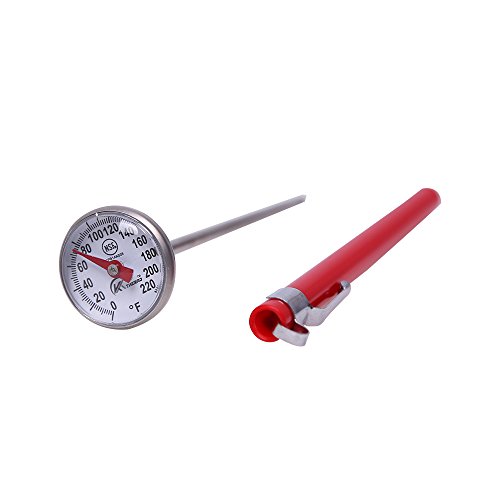
I reach for the KT THERMO Instant Read Dial Thermometer when I need a reliable, no-fuss tool that delivers fast readings without draining battery life-perfect for coffee enthusiasts who value simplicity and durability in their brewing routine. Its 1-inch stainless steel probe gives accurate readings in just one second, ideal for monitoring milk steaming or pour-over water temps. The analog dial, with clear color zones, is easy to read and requires no batteries. It’s NSF and CE certified, built with precision bimetal movement, and comes with a protective plastic sleeve that doubles as a clamp. Unlike digital models, it won’t quit mid-brew due to dead batteries. I’ve used mine daily for years, and it still performs like new. While it lacks a digital display or Bluetooth features, it’s a no-nonsense, long-lasting workhorse. If you want dependable, straightforward temperature control without gimmicks, this is a solid pick for home or small café use.
Best For: Coffee enthusiasts and home brewers seeking a durable, battery-free thermometer for fast, accurate temperature readings during milk steaming or pour-over brewing.
Pros:
- Delivers instant 1-second readings with a durable stainless steel probe and no reliance on batteries
- Analog dial features color-coded zones for easy, at-a-glance temperature monitoring
- NSF and CE certified with a protective plastic sleeve that doubles as a safety clamp
Cons:
- Lacks digital display and advanced features like Bluetooth connectivity or precise numerical readouts
- Limited to a 1-inch immersion depth, which may restrict use with thicker food items
- Manual winding required for operation, which may feel outdated compared to digital alternatives
Milk Thermometer for Coffee Steaming
When steaming milk for lattes or cappuccinos, hitting the right temperature consistently matters most, and that’s where the Milk Thermometer for Steaming Milk from Thermometer World stands out. I rely on its 175 mm stainless steel probe to get an accurate reading fast-just 500 milliseconds. It clips securely to your pitcher, making it easy to monitor temps up to 110°C without guesswork. Since it’s analog, no batteries are needed, and it’s reusable, durable, and simple to clean. I’ve used it for espresso drinks and even yogurt making. You can calibrate it at home with ice or boiling water, which keeps readings reliable. It’s a no-frills, practical tool that works indoors and fits snugly in hand. While it’s not digital, its precision and build make it a solid pick over cheaper models. I’ve had mine since 2018, and it still performs like new. If you want consistent steamed milk without spending extra on digital features, this one’s a trustworthy choice.
Best For: Baristas and home coffee enthusiasts who want a reliable, durable, and easy-to-use analog thermometer for precise milk steaming and dairy applications.
Pros:
- Fast 500-millisecond response time with accurate, calibratable readings up to 110°C
- Durable stainless steel construction with a secure clip and reusable, battery-free design
- Ideal for multiple uses including espresso-based drinks, yogurt making, and cheese production
Cons:
- Analog display may be less precise for users preferring digital readouts
- Limited temperature range, not suitable for high-heat cooking applications
- Minimalist design lacks advanced features like backlight or audio alerts
2 Pack Instant Read Milk Frothing Thermometer

This 2 Pack Instant Read Milk Frothing Thermometer from Efengcook is a solid choice if you regularly steam or froth milk and need consistent, reliable readings without waiting. I use both thermometers-one for milk, one for chocolate-and appreciate the instant mechanical readout; no batteries needed. The 5-inch stainless steel probe and FDA-compliant materials feel durable, and the 0° to 220°F range covers most brewing and cooking tasks. It’s not for ovens or fryers, but that’s fine for my countertop setup. The clip holds it in place, and the color dial makes temps easy to read. I hand wash them and store in the included case. No frills, just function.
Best For: Home baristas and kitchen enthusiasts who need fast, accurate, and durable temperature readings for milk frothing, chocolate, and a variety of cooking applications.
Pros:
- Instant mechanical readout with no batteries required for the sensing mechanism
- Durable stainless steel probe and FDA-compliant materials suitable for multiple food and beverage uses
- Comes in a 2-pack with protective case, color-coded dials, and clips for convenient storage and use
Cons:
- Not suitable for use in ovens or deep fryers, limiting high-heat applications
- Analog design may be less precise than digital thermometers for some users
- Hand wash only-cannot be cleaned in a dishwasher
Factors to Consider When Choosing a Coffee Thermometer
You’ll want a thermometer that reads between 90°F and 150°F, since that’s the sweet spot for milk steaming and pour-over brewing. Look for one with a fast response time-under 3 seconds-so you’re not left guessing while your milk overheats. A probe at least 3 inches long lets you measure safely from the surface, while a clear dial and durable stainless steel build keep readings accurate and the tool lasting.
Temperature Range
A solid coffee thermometer typically covers 0°F to 220°F (-18°C to 104°C), giving you the full range needed for both steaming milk and preparing hot coffee beverages. You’ll want this spread to handle cold milk at the low end and hot espresso pulls or steamed milk at the top. Some models start as low as 30°F (-1°C), which helps you check refrigerated milk temps before frothing for more consistent results. Most hit peak accuracy between 100°F and 200°F (38°C to 93°C)-right where milk texture and sweetness develop best. A few go beyond 220°F, useful if you also heat syrups or temper chocolate, but that’s overkill for basic coffee work. Stick to a model with a clear, precise readout in the 0–220°F range, and you’ll cover all standard café tasks reliably.
Response Time
Getting a readout in under a second makes all the difference when you’re steaming milk and need to hit precise temperatures without overshooting. A response time of 500 milliseconds gives you near-instant feedback, so you can adjust quickly and avoid scalding delicate liquids. Fast thermometers, especially those that read in 0.5 to 1 second, are ideal for real-time monitoring during rapid changes. Models with bimetallic coil sensors often hit this speed, offering reliable performance in fast-paced settings. Slower sensors risk inaccurate readings, which leads to inconsistent texture or flavor in your final drink. When steaming milk or brewing espresso, timing is tight-every fraction of a second counts. You’ll want an instant-read thermometer that keeps up with the action without lag. Look for specs that list response time clearly; don’t assume speed based on design. A quick, stable readout means better control, every time.
Probe Length
Speed matters, but accuracy depends on proper placement-and that starts with the right probe length. You need at least 2 inches of probe to reach the liquid’s core, ensuring the sensor isn’t just reading the surface. If you’re steaming milk in a deep pitcher, a 1-inch probe won’t cut it-it’ll give false readings by staying too high or touching air. For most milk pitchers, go with a 5-inch probe; it gives you full immersion and avoids bottom contact that skews results. If the sensing area isn’t fully submerged, your temperature data’s off, and that ruins consistency. Match the probe to your container depth-standard thermometers like the CDN or ThermoPro models offer 4- to 5-inch probes, which work for most barista tasks. Short probes might save space, but they sacrifice accuracy where it counts.
Dial Visibility
Keeping your eyes on the milk as it steams means you can’t afford to squint at a cramped or blurry dial. Choose a thermometer with a dial at least 1.75 inches wide so you can read it easily from a few inches away. Look for high-contrast, large numerals-many models use white or yellow markings on dark backgrounds, often with magnified lenses to boost clarity, especially under dim lights. Color-coded zones are a smart touch: red might mark scalding temps, while blue or green shows ideal ranges for steaming milk (140–160°F). That way, you glance and know at a glance. Fog-resistant or sealed glass fronts keep condensation from smearing the view. Adjustable clips let you tilt the dial toward your line of sight, so you’re not twisting your wrist or guessing. These details add up when speed and precision matter.
Material Quality
A reliable coffee thermometer starts with solid construction, and that means choosing one built from food-grade stainless steel. You’ll want this material because it resists corrosion, won’t leach chemicals, and holds up to constant cleaning. Look for models with seamless glass or fog-resistant dials-these keep moisture out when you’re working near steam wands or boiling water. The best options handle extreme shifts, like 0°F to 220°F, without cracking or losing accuracy. Any part that touches your brew should be non-toxic, BPA-free, and FDA-compliant. Welded joints and sealed components boost durability, stop bacteria buildup, and make wiping down or washing easier. Skip plastic-bodied thermometers-they warp over time. Trusted models like the CDN Pro Advantage or Taylor Precision Products Classic use these rugged materials so you get consistent readings and longer life. It’s a small investment that pays off in safety and reliability.
Clip Design
When you’re steaming milk or brewing espresso, a well-designed clip keeps your thermometer in place without slipping or blocking your view. Look for an adjustable or multi-stage clip-it lets you secure the thermometer at different angles and on containers with varying thicknesses, so you can read the dial easily. A slideable clip also helps you position the probe at the right depth, preventing it from hitting the bottom of the pitcher, which improves accuracy. Stainless steel clips resist rust and wear, especially in wet, busy environments. Some clips double as storage tools, holding the probe safely when not in use and protecting the dial. Others include a pocket clip or secondary attachment, so you can carry it on your apron or shirt for quick access during service. These practical features save time and extend the tool’s life.
Calibration Option
You’ve secured your thermometer with a solid clip, but now it’s time to think about how well it holds its accuracy over time. A model with a calibration option lets you check and adjust readings using simple references-like ice water (32°F) or boiling water (212°F at sea level). This feature keeps your thermometer reliable, especially after repeated use or exposure to extreme temps. Some thermometers, like the ThermoWorks Thermapen Mk4, include a built-in hex nut for quick recalibration without extra tools. Others might need a calibration check but don’t allow manual adjustment. If you’re serious about consistent brewing, pick a model that supports recalibration. It reduces reading drift and guarantees long-term stability. Regular checks mean every brew hits the right temp-no guesswork. That’s precision worth having.
Ease Of Cleaning
Smooth, simple surfaces make cleaning your thermometer fast and effective. Choose models with seamless glass faces or smooth stainless steel since they resist grime and wipe clean easily. You’ll want to avoid thermometers with tricky crevices, exposed dials, or parts that can’t get wet-those traps collect residue and bacteria over time. If your thermometer has electronic components or a battery compartment, it’s more likely to get damaged during cleaning, so stick to simple, solid designs. Look for welded seams between the probe and dial; fewer joints mean less chance of contamination. While some thermometers claim to be dishwasher-safe, always check the manufacturer’s label first-most are best cleaned with just a damp cloth. When in doubt, hand-wiping is safer and preserves the tool longer. Prioritizing easy maintenance means your thermometer stays accurate and hygienic brew after brew.
Frequently Asked Questions
Can I Use a Coffee Thermometer for Cooking Meat?
you can use a coffee thermometer for cooking meat, but it’s not ideal. most coffee thermometers only read up to 220°f, while cooking meat often requires 140°f to 200°f for rare to well-done. that range overlaps, but meat near the surface can exceed 220°f, risking damage. instant-read thermometers like the thermopro tp16 or leave-in models handle higher temps and are faster, making them safer and more accurate for meat. stick with a dedicated meat thermometer.
Do Coffee Thermometers Work in Boiling Water?
Yes, most coffee thermometers handle boiling water just fine. They typically measure up to 212°F (100°C) or higher, so you won’t damage them. Digital models like the ThermoPro TP03 or CDN DTQ450X respond quickly and stay accurate. Just don’t leave them in too long near the pot’s hot walls. While built for brewing, they work in boiling water if used briefly and correctly-ideal for checking water temp before pouring over coffee or even testing milk or small cooking tasks.
Are Digital Coffee Thermometers Waterproof?
Yes, most digital coffee thermometers are waterproof, especially models like the ThermoPro TP03 and Habor D1, which feature IP65 or higher ratings for splash and steam resistance. But they’re not meant for full submersion. You can safely use them in steam wands or near boiling water, just don’t drop them in. Always check the IP rating and manufacturer guidelines to confirm water resistance levels and avoid damage during cleaning or use.
How Do I Calibrate My Coffee Thermometer?
You calibrate your coffee thermometer using the ice water or boiling water method. For ice water, stir a glass full of ice and water for 30 seconds, then insert the probe-your thermometer should read 32°F (0°C). For boiling water, check it reads the correct boiling point for your altitude-usually 212°F (100°C) at sea level. If it’s off, adjust using the calibration nut or button, if available. Not all digital models support calibration.
Can I Leave a Coffee Thermometer in the Milk While Steaming?
You shouldn’t leave a coffee thermometer in the milk while steaming-steam wands generate intense heat and pressure that can damage most thermometers. Digital models like ThermoPro or CDN are especially vulnerable. Even stainless steel ones risk warping or breaking. Instead, monitor the temperature by inserting the thermometer briefly every few seconds. This gives you control without risking damage. Always clean it immediately after to prevent milk buildup and guarantee accurate future readings.