A Guide to Coffee Growing Regions: Discovering the Distinctive Tastes From Ethiopia to Colombia
You taste the terroir with every sip-Ethiopian beans bring floral, citrusy brightness thanks to heirloom varieties and sun-drying, while Kenyan coffees offer wine-like acidity and bold complexity, best brewed mid-roast in a V60. Colombian and Central American beans give balanced, caramel-sweet cups ideal for drip or French press. Light roasts preserve origin character; dark roasts mask it. Compare side by side to train your palate-each region tells a different story.
Notable Insights
- Ethiopia produces bright, fruity coffees with floral notes, best highlighted by light roasts and pour-over brewing methods.
- Kenyan coffee offers wine-like acidity and bold complexity, with citrus and floral flavors ideal for Hario V60 brewing.
- Colombian and Central American coffees are balanced and sweet, featuring caramel, nut, and mild fruit notes.
- Highland climates and volcanic soils enhance coffee complexity and sweetness, directly shaping regional flavor profiles.
- Light roasts and pour-over methods preserve terroir nuances, helping distinguish origin-specific taste characteristics.
Why Coffee Origin Shapes Your Cup’s Flavor
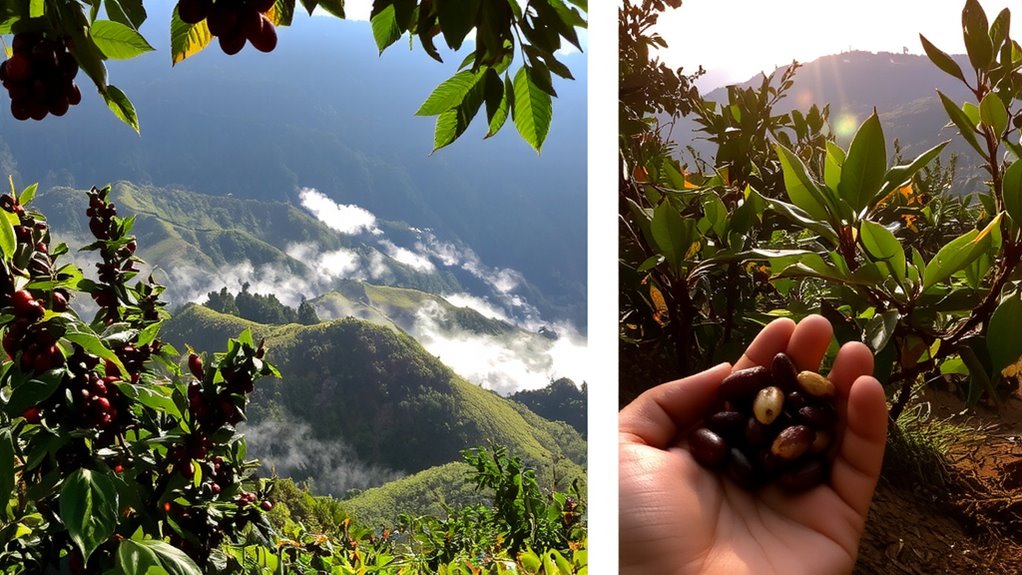
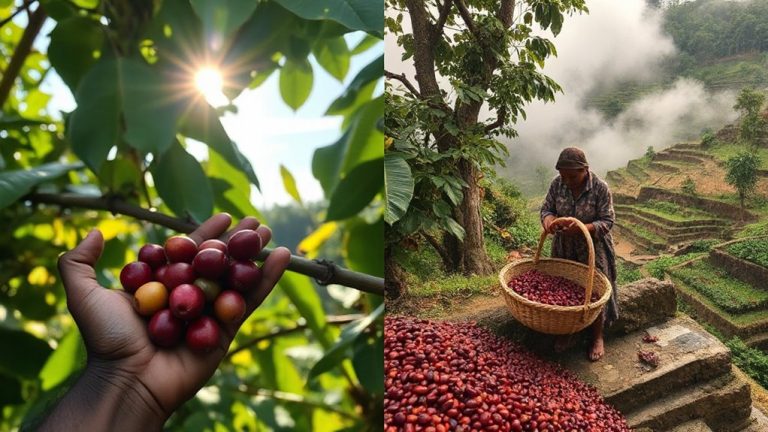
While you might think the roast level or brewing method plays the biggest role in how your coffee tastes, the truth is that the origin of the beans has a deeper impact than most people realize. Climate influence and soil composition directly affect bean development, altering acidity, body, and flavor notes. Cooler highland areas slow bean maturation, boosting complexity, while tropical lowlands often yield smoother, milder cups. Volcanic soils, rich in minerals, enhance brightness and sweetness, whereas clay-dominant soils retain moisture, supporting steady growth. You’ll taste these differences-say, a bright, tea-like Kenyan versus a nutty Guatemalan. Even with the same roast and brew setup, origin sets the baseline. If you’re chasing bold clarity or subtle sweetness, start by checking the region’s environment. That label with “high-altitude Ethiopian” or “volcanic Colombian” isn’t marketing fluff-it’s a flavor roadmap. Pick beans based on where they’re grown, and you’ll make smarter, tastier choices. One standout example is Best Ethiopian Coffee Picks, which highlights how terroir and processing methods shape distinctive floral and fruity profiles.
Ethiopia: The Birthplace of Bright, Fruity Coffee
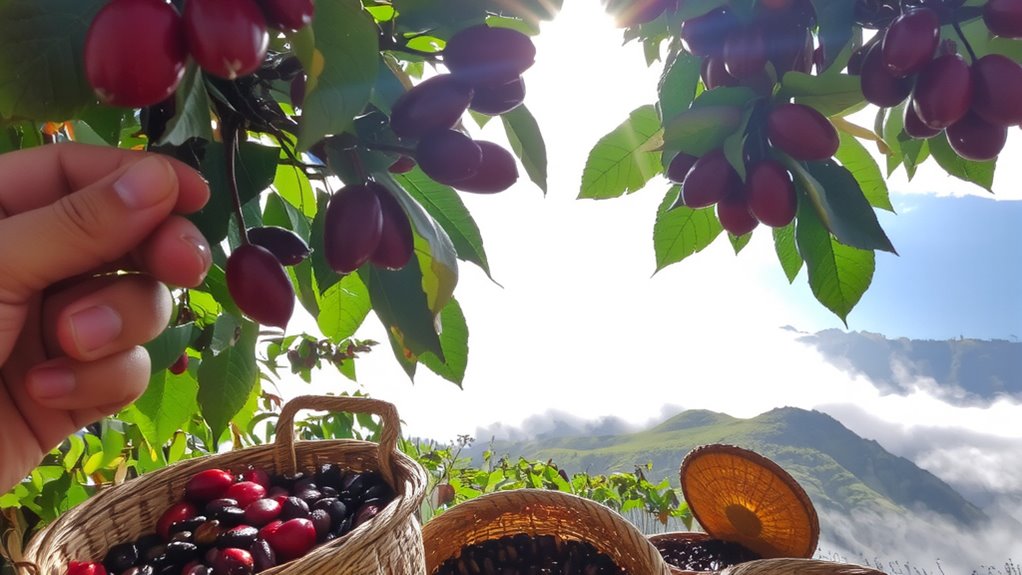
Since coffee originated in Ethiopia, it’s no surprise that the在玩家中 beans set the standard for bright, complex cups. You’ll find most Ethiopian coffee comes from heirloom varieties, countless uncataloged plants grown wild or in small plots, contributing to distinct, vibrant flavors like citrus, berry, and stone fruit. These beans are often processed using traditional sun drying methods, where cherries dry whole in the sun, intensifying sweetness and body. This natural process demands care-uneven drying can cause inconsistency, so watch for batch quality. For best results, roast light to highlight acidity and floral notes. Use a pour-over or Chemex to capture their delicate profile. Avoid dark roasts; they mask the clarity these beans offer. Whether from Yirgacheffe or Sidamo, Ethiopian coffees reward careful brewing. Their uniqueness starts with genetics and terroir, then hinges on how farmers handle harvesting and drying. Best Ethiopian Coffee Beans can elevate your experience by showcasing the full range of these distinctive flavors.
Kenya & East Africa: Wine-Like Acidity and Bold Complexity
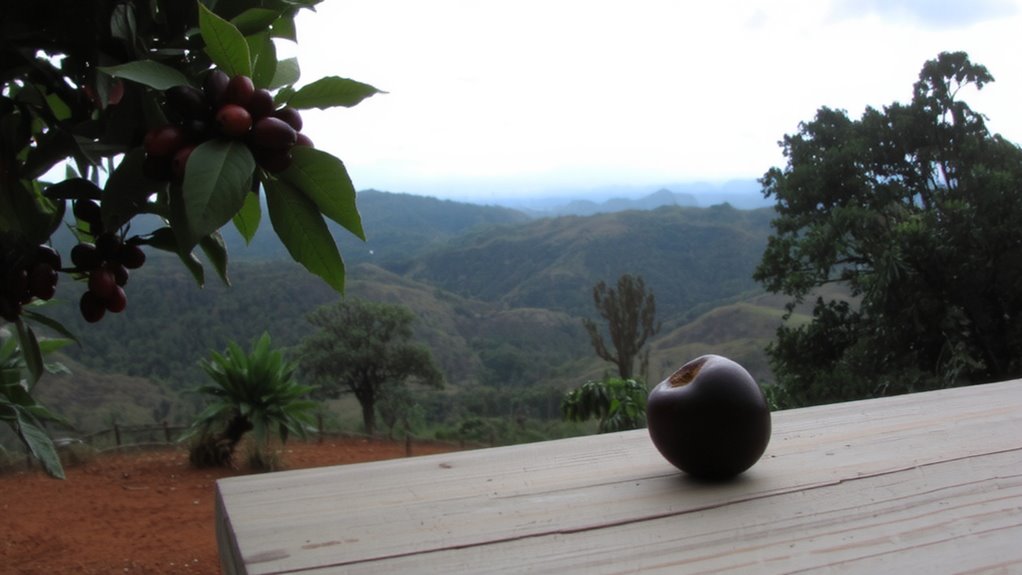
What makes Kenyan coffee stand out? It’s the wine-like acidity and bold complexity that define its profile. When you brew Kenyan beans, especially from regions like Nyeri or Kiambu, you’ll notice intense citrus brightness-think grapefruit or lemon-balanced by rich, black tea-like body. The flavor structure is layered, often revealing floral notes like jasmine or bergamot, especially when brewed light. For best results, use a pour-over like the Hario V60 to highlight clarity and acidity. Keep water temperature around 200°F to extract fully without bitterness. Kenyan coffees, typically graded AA or AB, respond well to medium roasts that preserve their vibrant character. Avoid over-extraction, as their high acidity can turn sharp. Compared to other regions, East African beans offer more tang and complexity, making them ideal if you prefer dynamic, structured cups with a clean finish.
Colombia & Central America: Balanced, Caramel-Sweet Profiles
Colombian and Central American coffees deliver a reliably balanced cup with a sweet, approachable profile that’s perfect for everyday brewing. You’ll often taste notes of caramel, nuts, and mild fruit, thanks to the region’s high altitude and volcanic soil, which boost sugar development in the beans. These growing conditions slow maturation, leading to denser beans that roast evenly-ideal for drip brewers or French presses. Coffees from Colombia’s Andes or Costa Rica’s Tarrazú region are especially consistent, offering clarity and medium body without sharp acidity. While not as bold as African beans, they’re more nuanced than many mass-market blends. If you prefer a smooth, dependable cup without elaborate tasting notes, these are a solid choice. Use a medium grind and water just off the boil for best results. They’re forgiving with gear, working well even with basic drip machines.
How to Taste the Terro Ann in Your Morning Brew
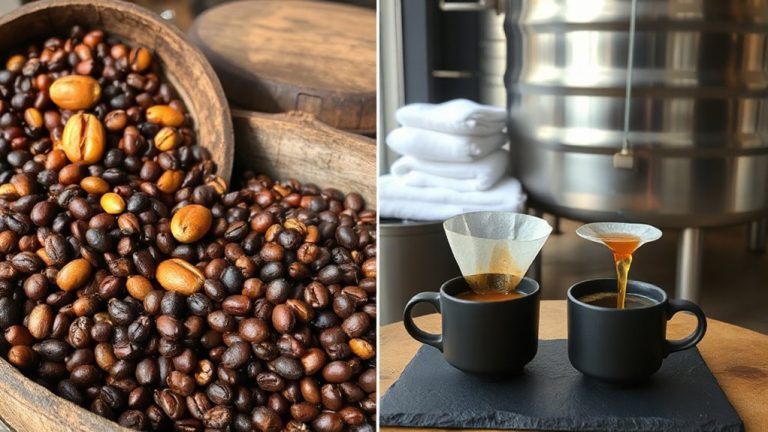
You can pick up on the subtle differences in your daily cup once you start paying attention to where the beans come from and how they’re roasted. Begin by smelling the ground coffee-aroma profiles vary widely: Ethiopian beans often have floral or citrusy hints, while Colombian ones lean toward nutty or chocolatey tones. Brew using a method that highlights clarity, like a pour-over or AeroPress. When sipping, note the flavor notes on your tongue: is it bright and fruity, or smooth and earthy? Light roasts preserve more origin characteristics, making terroir easier to detect. Dark roasts add smoky or bitter tones, masking some nuances. Use freshly ground beans and filtered water to avoid off-flavors. Compare beans from different regions side by side to train your palate. Over time, you’ll start linking taste directly to geography, processing, and roast level-making each cup more informative. Colombia produces some of the world’s most balanced and aromatic coffees, with the finest Colombian coffee beans showcasing remarkable regional diversity.
On a final note
You now know how origin affects flavor, from Ethiopia’s bright berries to Colombia’s sweet caramel. Use this to pick beans that match your taste. Light roasts preserve origin character; dark roasts mask it. Try single-origin coffees first. A pour-over or French press lets nuances shine. Grind fresh, use filtered water, and keep gear clean. These steps make a real difference-no fancy gear required.