Exploring Ethiopian Coffee Ceremonies: Rituals, Tools, and Spiritual Significance
You’ll watch green beans roast in a menkeshkesh over flame, then grind them by hand with a mukecha and zeneze. The aroma fills the space as coffee brews in a jebena, poured into finjans in three rounds. This isn’t just about taste-it’s a deliberate act rooted in community and presence. Each step, from roasting to serving, connects you to tradition, offering a moment of slowness that shapes the full experience. There’s more to uncover about how it all comes together.
Notable Insights
- The Ethiopian coffee ceremony is a hours-long ritual embodying hospitality, community, and spiritual mindfulness through slow, deliberate coffee preparation.
- Green coffee beans are roasted in a menkeshkesh, ground with a mukecha and zeneze, and brewed in a jebena clay pot over low heat.
- Essential tools include the jebena for brewing, finjans for serving, and the mesob tray that holds the ceremonial items.
- The roasting and grinding process releases aromatic smoke and demands focused attention, symbolizing spiritual presence and connection to tradition.
- Three rounds of coffee-Abol, Tona, and Baraka-represent unity, progression, and blessing, reinforcing social bonds and cultural continuity.
What Is the Ethiopian Coffee Ceremony?
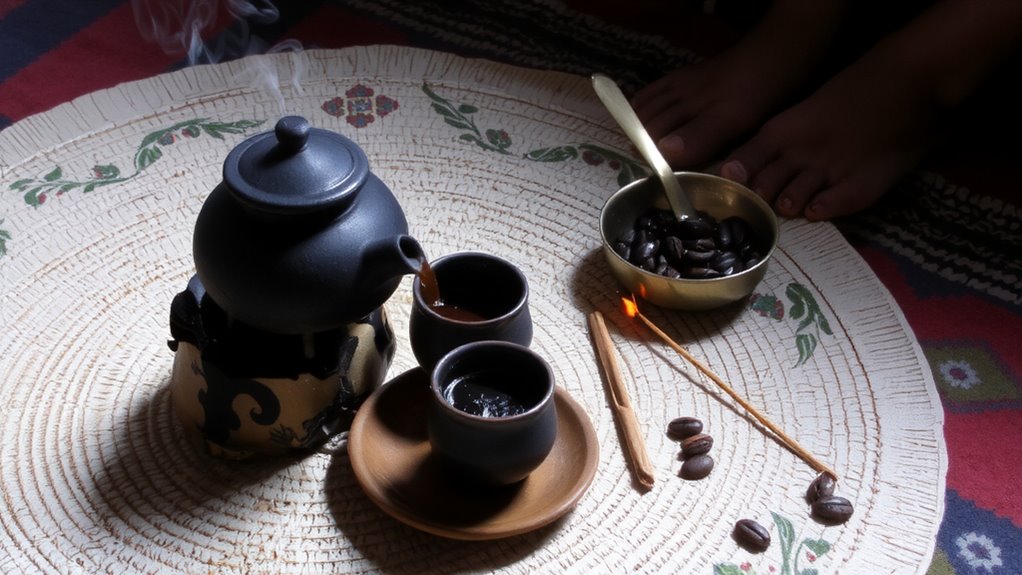
A ritual, not just a brew, the Ethiopian coffee ceremony is a traditional method of preparing and serving coffee that’s deeply woven into daily life and culture. You’ll find it in homes, markets, and gatherings, often led by women in traditional dress. Its historical origins trace back to Ethiopia, where coffee was first discovered, and it’s evolved over centuries into a formalized practice. The ceremony reflects cultural evolution, balancing spirituality, hospitality, and community. It typically lasts 1–2 hours and involves multiple rounds of serving, each with symbolic meaning. Tools like the jebena (clay pot), roasting pan, and coffee cups are essential and widely available across regions. While modern appliances exist, traditionalists prefer hand tools for authenticity. You don’t need special training to host one, but attention to timing, heat, and pouring technique matters. It’s a living tradition-practical, social, and deeply rooted in Ethiopian identity.
How the Coffee Is Roasted and Brewed
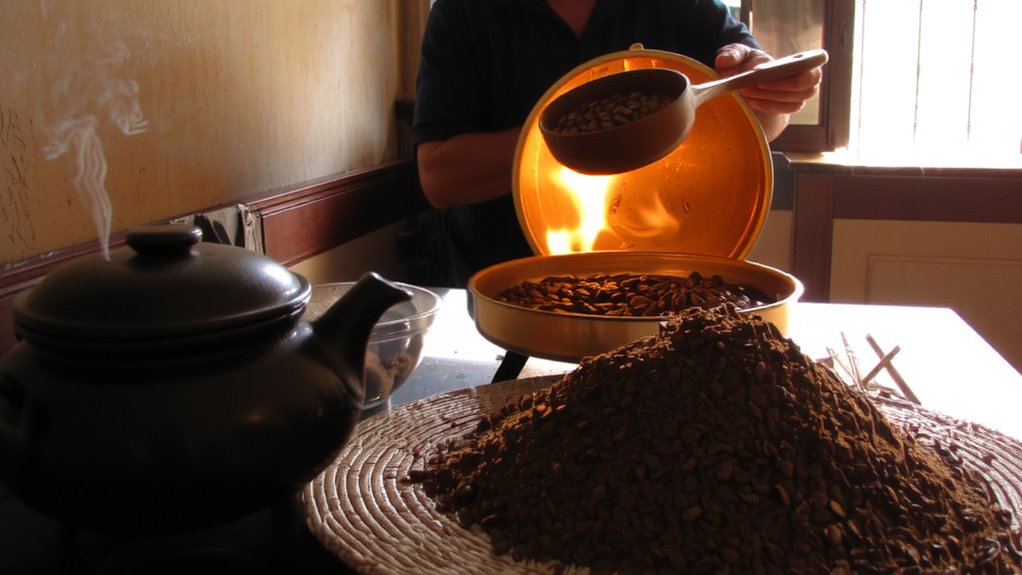
While you can roast coffee beans in a modern oven or electric roaster, the traditional Ethiopian method starts with a flat pan called a menkeshkesh, where green beans are toasted over an open flame or stove. You’ll need steady fire control to guarantee even roasting without burning-too high and the beans char, too low and they don’t develop fully. Bean selection matters; heirloom varieties like Sidamo or Yirgacheffe offer distinct flavor profiles. After roasting, the beans are ground and brewed in a jebena, a clay pot that gently heats the coffee without scorching. Home enthusiasts exploring traditional techniques may find that manual coffee roasters offer a modern alternative for achieving precise, small-batch roasts.
| Stage | Tool Used | Key Consideration |
|---|---|---|
| Roasting | Menkeshkesh | Maintain consistent fire control |
| Grinding | Mukecha & Zeneze | Coarse grind prevents bitterness |
| Brewing | Jebena | Monitor heat to avoid overflow |
| Serving | Small cups | Best served fresh after brewing |
Tools of the Ceremony: From Bean to Cup
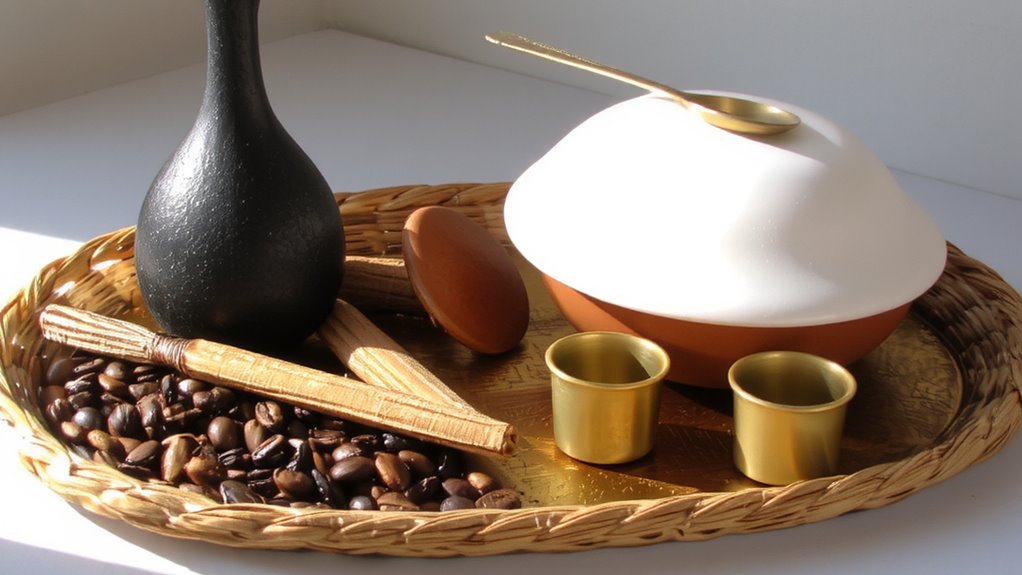
The heart of the Ethiopian coffee ceremony beats in its tools-each one shaped by tradition and fine-tuned for function. You’ll start with the jebena, a black clay pot with a bulbous base and narrow spout, ideal for even heat distribution and preventing grounds from spilling. It’s where Coffee origins meet craft, as green beans are roasted in a mukecha (a flat pan) over flame, then ground with a mukicha and zenezena (mortar and pestle). The aroma fills the room, linking you to centuries of practice. Serving happens in tiny, handleless finjans, often on a mesob or decorative tray. These tools aren’t just practical-they support cultural preservation, passed down through generations. While modern electric grinders exist, hand tools offer control and authenticity. Each piece, from roasting to pouring, guarantees the ritual remains intact, connecting you directly to Ethiopia’s deep coffee heritage.
What Each Step Means Spiritually
Presence matters in the Ethiopian coffee ceremony, where each action carries meaning beyond the physical task. When you roast the beans, the rising smoke isn’t just aroma-it’s a call to spiritual presence, inviting focus and mindfulness. Grinding by hand isn’t simply preparation; it’s an act of ritual intention, connecting you to generations of tradition. Pouring water into the jebena isn’t mechanical-it’s deliberate, symbolic of life flowing into community. Each step, from washing the beans to serving the brew, demands attention, turning the ordinary into the sacred. You aren’t just making coffee-you’re engaging in a spiritual practice that values slowness, awareness, and purpose. The process resists haste, requiring you to be fully present. This isn’t about efficiency; it’s about meaning. Through ritual intention, every motion becomes a quiet affirmation of respect-for the coffee, the people, and the moment itself.
Why the Ceremony Builds Community
Because you’re not just brewing coffee but gathering people, the ceremony naturally becomes a social anchor in Ethiopian homes. You invite neighbors, family, or guests to sit together, often on low stools around the jebena (traditional clay pot). The slow roasting and brewing process gives everyone time to engage, not just observe. As the aroma fills the room, shared stories flow-news, laughter, even advice-all strengthening bonds. There’s no rush; the ritual prioritizes presence over speed. This consistent practice fosters meaningful connections, turning routine into relationship-building. Unlike quick coffee grabs, this method discourages isolation. It’s not about the beans or the jebena alone, but how the process creates space for dialogue. No special gear is needed beyond basic tools, making it accessible. In urban and rural homes alike, it remains a practical way to connect without distraction.
How to Attend or Host a Ceremony Today
Ever wonder what it takes to join or lead an Ethiopian coffee ceremony today? It’s more accessible than you think. To attend, accept an invitation graciously-many families welcome guests, especially during holidays or weekends. If you’re hosting, start with green coffee beans, a jebena (traditional clay pot), and a flat pan for roasting. While traditional setups are ideal, modern adaptations like electric roasters or ceramic jebenas work if authenticity isn’t the main goal. You’ll also need hand-grinding tools, unless you opt for pre-ground (less traditional, but convenient). Focus on slow roasting and even brewing. Modern adaptations make participation easier, but the ritual’s core remains. Include time for conversation and personal reflections-this isn’t just about caffeine. Whether traditional or simplified, the ceremony fosters connection through deliberate, mindful practice.
On a final note
You now have the basics to experience or host an Ethiopian coffee ceremony. Use a jebena for traditional brewing, green beans for fresh roasting, and a pan or mitad to roast over heat. Incense sets the right atmosphere. This method takes time-about 1–2 hours-but builds connection. Electric options save effort but reduce authenticity. Choose based on your goal: cultural practice or practical coffee prep. Each step, from roasting to serving, has purpose-respect it for a meaningful experience.