A Guide to Selecting and Using the Right Filter Paper for Optimal Pour Over Performance
Choose filter paper that fits your brewer-Hario, Chemex, or Melitta-and matches your roast and grind. Use bleached filters if you want clean flavor and no prep; rinse unbleached to avoid paper taste. Thicker papers like Chemex slow flow and boost clarity; thinner ones speed up brewing for lighter roasts. Always rinse to remove impurities and preheat your setup. Match grind size to paper thickness for balanced extraction. Your next brew could be even better with a few small tweaks.
Notable Insights
- Choose filter thickness based on desired brew time and extraction: thicker papers slow flow, enhancing clarity and control.
- Match filter size and shape precisely to your brewer to prevent leaks and ensure even water distribution.
- Rinse all filter papers before brewing to remove paper taste, preheat the setup, and stabilize temperature.
- Opt for bleached filters to save time and avoid off-flavors, or unbleached for eco-friendliness with proper rinsing.
- Select brands like Chemex, Hario, or Able based on desired body, clarity, and compatibility with your pour over system.
How Filter Paper Shapes Your Pour Over Coffee
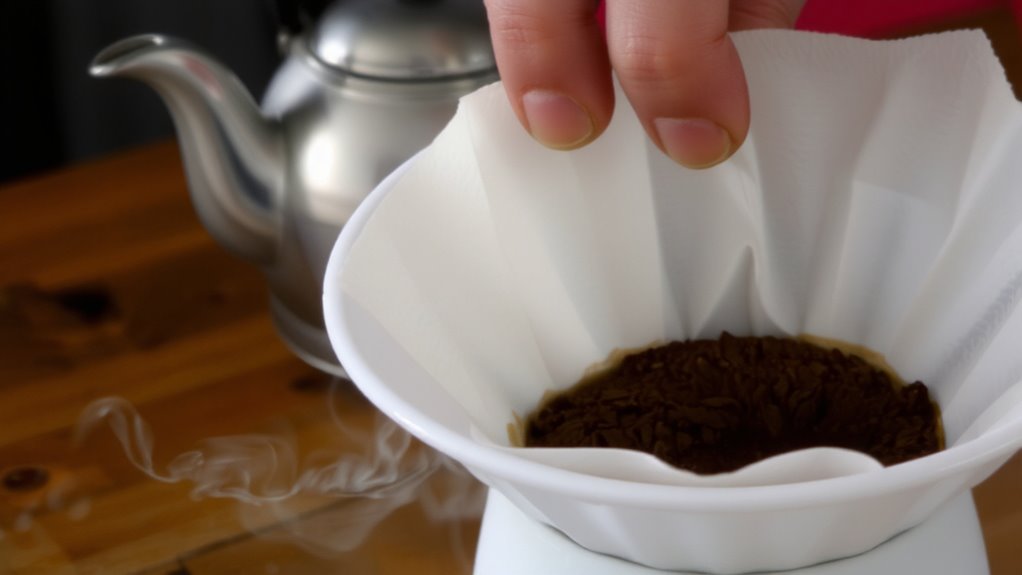
While the beans and brew method often steal the spotlight, your choice of filter paper quietly plays a key role in shaping the final cup of pour over coffee. The filter affects flow rate, which influences extraction alongside grind consistency and water temperature. A slower flow, like that with thicker papers such as Hario’s #4, extends contact time, demanding precise grind size to avoid over-extraction. Thinner filters, like those from Able Nomad, allow faster drainage, which works well with slightly finer grinds and tighter temperature control. Poorly designed filters can cause uneven wetting or clogging, undermining even the most accurate water temperature. Reusable metal or cloth filters alter clarity and body but require more cleanup. For consistent results with paper, stick to reputable brands that guarantee uniform pore size. Your grind and heat settings must match the filter’s flow to get balance in the cup. Top picks in the pour-over market include models designed specifically for optimal filter paper fit.
Bleached vs Unbleached: What’s Best for Pour Over?
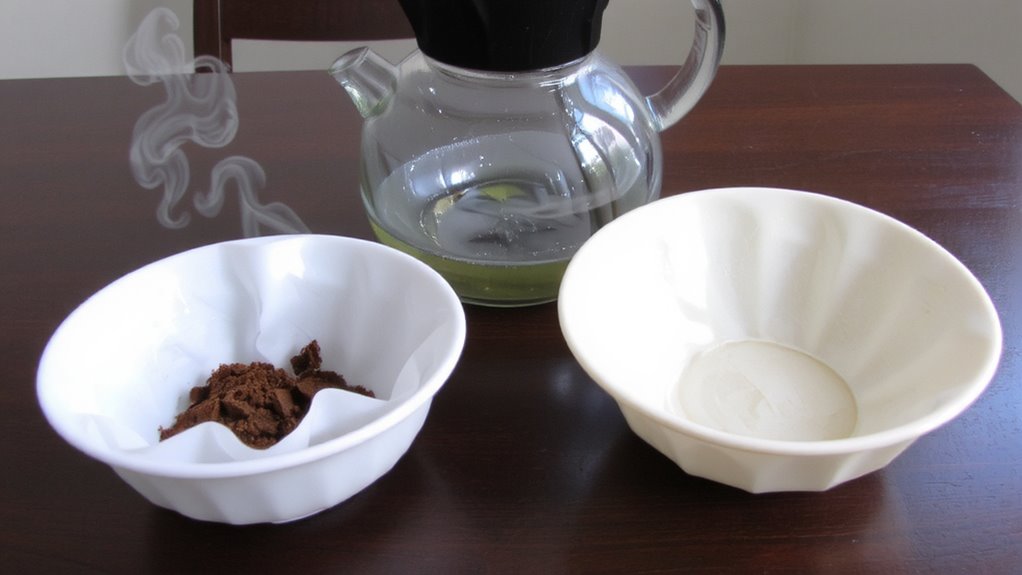
If you’re deciding between bleached and unbleached filter papers for pour over, the choice comes down to flavor neutrality, prep time, and environmental concerns. Bleached filters, like those from brands such as Chemex or Melitta, are processed to be white and typically require no pre-rinsing. They offer a clean taste with minimal taste impact, making them ideal if you want your coffee’s natural notes to shine. Unbleached filters, such as those from Cafés Richard or some Hario variants, retain a natural brown color and often need a quick rinse to remove paper taste, which can otherwise affect flavor. That said, they’re generally seen as more eco-friendly, addressing common environmental concerns due to fewer chemical treatments. While both work well, bleached papers save time and reduce taste impact; unbleached options suit those prioritizing sustainability, even with a slight prep step.
Thick vs Thin: How Paper Affects Brew Time and Clarity
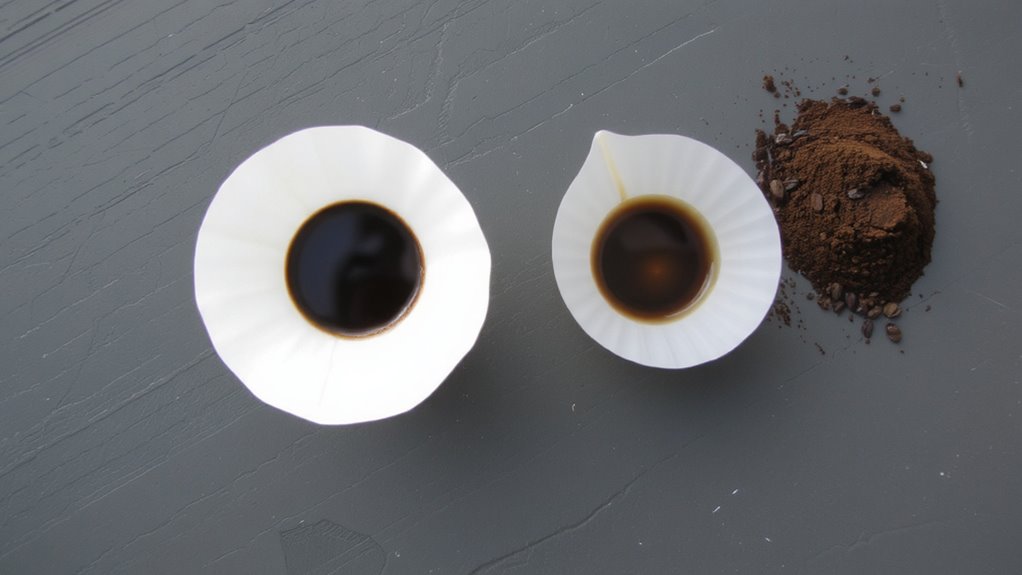
Since the thickness of your paper filter shapes both flow rate and extraction, it’s worth picking one that matches your pour over style. Thick filters, like those from Chemex, slow the flow rate considerably, which can enhance clarity by trapping more oils and fines. This works well with medium to dark roasts and a brew weight over 300g, where control is key. But the slow drip may over-extract if your grind is too fine. Thin filters, like Hario’s standard papers, allow faster flow, reducing brew time and working better for lighter roasts or when you want a brighter cup. They suit shorter brews under 250g. While clarity might dip slightly, you gain speed and vibrancy. Choosing between thick and thin lets you balance clarity against time-adjust your grind and pour to match the paper’s natural flow rate. For a curated list of top-performing options, check out the best paper coffee filters based on expert testing and user feedback.
Choose the Right Shape: Hario, Chemex, and Melitta Filters
You’ve already seen how thickness affects your brew, but the shape of your filter matters just as much-especially when it comes to fit, flow, and consistency. Using the right shape guarantees proper filter compatibility and maintains brewing precision. Hario V60 filters are cone-shaped with a flat bottom, requiring a precise 01 or 02 size to fit correctly-using the wrong size causes leaks or slow drips. Chemex filters are thicker and uniquely designed with a deep cone and triple-layered seams; they’re made specifically for Chemex brewers, so don’t substitute them. Melitta offers both cone and basket styles, with pre-pleated options that promote even extraction. Each shape guides water flow differently-cone filters like Hario’s create a spiral pour, while Chemex’s wide cone slows flow for a clean cup. Always match the filter to your brewer’s design-getting this right improves contact time and reduces channeling. Proper fit isn’t optional; it’s essential for consistent results. For those seeking a sustainable option, consider reusable Chemex filters as an eco-friendly alternative that maintains brew quality.
How to Rinse Your Filter and Remove Paper Taste
Why does your pour-over sometimes taste like cardboard? It’s likely because you’re skipping the pre wetting technique. Rinsing your filter isn’t just routine-it removes paper taste and preheats your brewer. Use hot water, ideally between 195°F and 205°F, and always consider your water quality. Poor water can放大 off-flavors, while clean, balanced water enhances clarity.
| Step | Action |
|---|---|
| 1 | Place filter in dripper |
| 2 | Pour hot water evenly over paper |
| 3 | Discard rinse water |
| 4 | Add coffee and begin brewing |
This process eliminates residual lignins in the paper and stabilizes brewing temperature. Unrinsed filters add bitterness and dull your coffee’s brightness. With a proper pre wetting technique, you protect subtle aromas and improve extraction. Always rinse, even if the package says “bleached” or “taste-free.” Your coffee deserves it.
Top Pour Over Filter Brands Compared: Fit, Price, Performance
Now that your filter is rinsed and ready, the next decision-what brand to use-can shape your brew just as much. Chemex filters are thick, delivering clean, bright coffee, but they’re pricier and require careful folding to fit. Their material durability is excellent, reducing tea-bag-like breakage. Hario’s standard #2 papers fit most plastic or glass brewers and offer solid brand consistency, though some find them thin. Able Kone metal filters trade paper for reusability, boosting body but risking fines in your cup. Cafec’s filters strike a balance-strong material durability, clean taste, and reliable brand consistency at a mid-range price. Many users prefer their slightly faster flow over Chemex. If you value clarity and ease, stick with Hario or Chemex. For eco-conscious brewing, consider Able or Cafec’s compostable options. Each brand varies in fit, so check your brewer’s specs. Price and performance depend on your priorities-consistency and durability matter most for daily use.
Pro Tips for Perfect Pour Overs With Any Filter
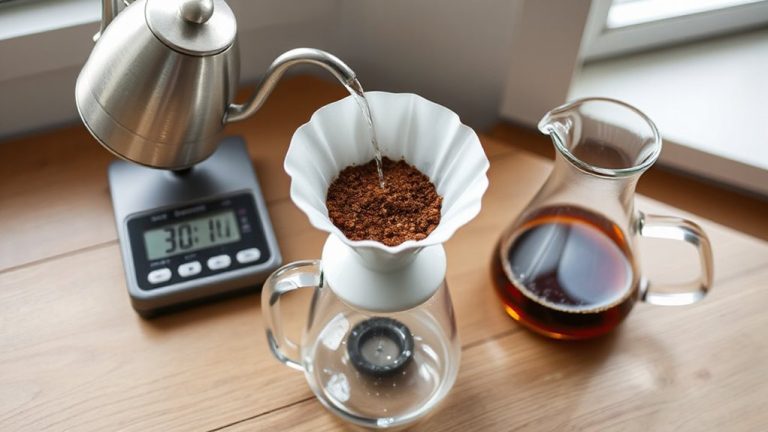
How you pour matters just as much as the filter you choose-after all, even the best paper can’t fix a rushed or uneven pour. For consistent extraction, focus on bloom control and even water dispersion. Start with a slow, circular pour to saturate all grounds, letting them bloom for 30–45 seconds. This releases trapped CO2 and preps the bed for even flow. Then, maintain a steady, controlled pour to sustain water dispersion without channeling.
| What You Do | How It Feels |
|---|---|
| Nailing bloom control | Confident, in control |
| Uneven pouring | Frustrated, inconsistent |
| Slow water dispersion | Patient, precise |
| Rushing the brew | Disappointed, flat taste |
Use gooseneck kettles for accuracy. Paper thickness affects flow-thicker filters may slow drainage but improve clarity. Always rinse your filter to remove paper taste and preheat your brewer.
On a final note
Your pour over tastes better when you pick the right filter. Use bleached filters to avoid paper taste, or unbleached if you prefer a more natural option. Thicker filters, like Chemex, slow brewing and reduce oils; thinner ones let more flavor through. Always rinse the paper first. Match the shape to your brewer-Hario, Chemex, or Melitta. Rinsing helps, and fit matters.