Exploring the Role of Cooperative Union Support in Ethiopian Coffee Quality
You’re part of a system where cooperative unions boost Ethiopian coffee quality by pooling resources for shared processing stations, pest monitoring, and soil testing. They train farmers in selective picking and sustainable practices, standardize fermentation and drying, and cut out middlemen. With direct market access and certifications, members like those in YCFCU earn more and achieve higher cup scores-proving organized support lifts both quality and income. There’s a clear pattern behind the best lots reaching specialty markets.
Notable Insights
- Cooperative unions provide shared access to modern processing equipment, improving coffee quality and consistency.
- Centralized processing and standardized grading reduce defects and support specialty market requirements.
- Training in sustainable practices enhances soil health, pest control, and climate resilience on member farms.
- Cooperatives enable selective harvesting and rapid post-harvest processing to preserve bean quality.
- Direct market access and certifications increase farmer incomes and ensure transparent, quality-based pricing.
How Cooperatives Solve Ethiopia’s Smallholder Coffee Challenges
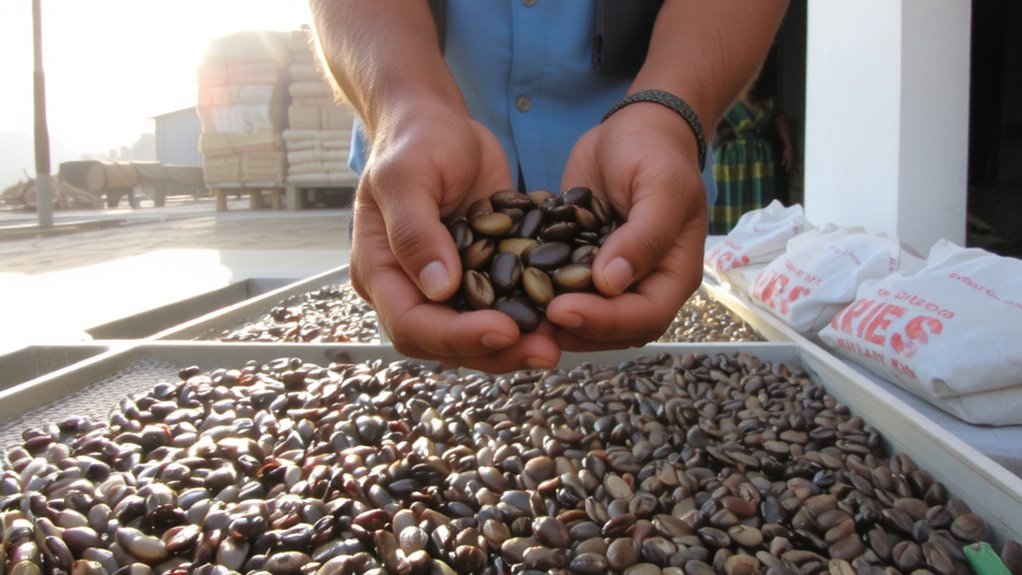
While owning a small coffee farm in Ethiopia comes with deep tradition, it also brings real obstacles like inconsistent pricing, limited access to markets, and poor processing equipment-all of which hurt bean quality. You rely on cooperatives to level the playing field. They pool resources, letting you invest in better processing stations and share maintenance costs. More importantly, they strengthen climate resilience by introducing drought-tolerant seedlings and training in soil conservation. Cooperatives also improve supply chain transparency by tracking your beans from farm to export, ensuring you get fair prices through direct buyer relationships. Unlike selling alone through local traders, this group model reduces middlemen and verifies quality at each step. While not a fix-all-you still face weather risks and infrastructure gaps-joining a cooperative gives you clearer market access, better inputs, and a stronger voice. That means more stability, better prices, and long-term sustainability for your farm. For coffee lovers seeking the finest expressions of these community-grown beans, exploring Best Ethiopian Coffee Picks can guide ethical and flavorful choices.
Strengthening Quality Control at the Farm Level
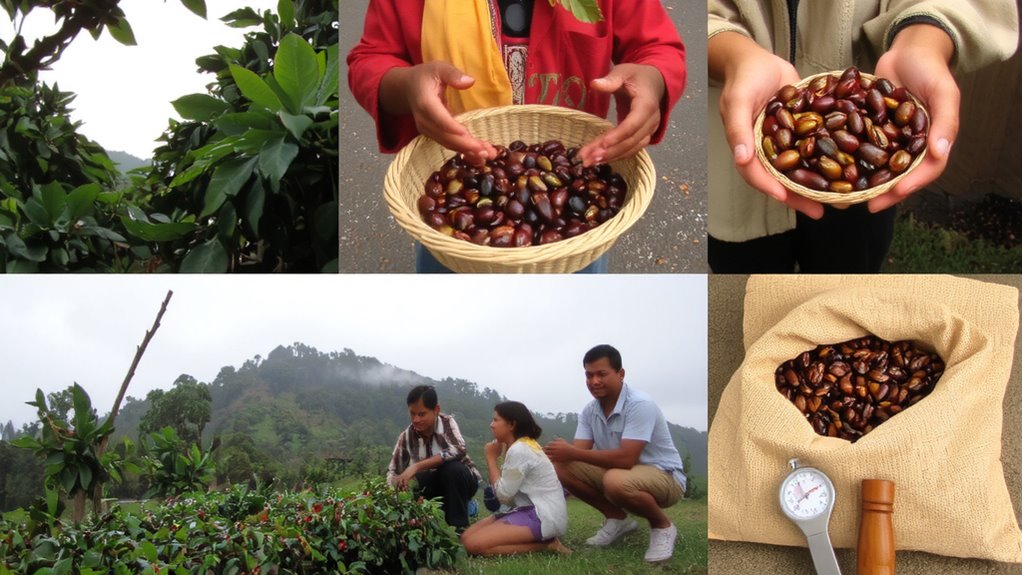
Since quality starts the moment coffee is harvested, you need to pay close attention to how you pick, sort, and process your beans right on the farm. You should only harvest ripe, red cherries-picking selectively reduces defects and improves cup consistency. After harvest, sorting quickly prevents over-fermentation and mold. To support this, cooperative unions help you conduct regular soil testing, so you can adjust nutrients and boost plant health. This leads to more uniform bean development. You also benefit from structured pest monitoring, which lets you catch infestations early, reducing crop damage without overusing chemicals. By tracking pests like the coffee berry borer, you can apply targeted treatments only when necessary. These practices, backed by union training and tools, make your farming more precise and predictable. When you control quality from the start, your coffee has a better chance of meeting market standards and fetching higher prices. Every detail counts-from the tree to the drying bed.
Shared Processing Facilities That Lift Coffee Quality
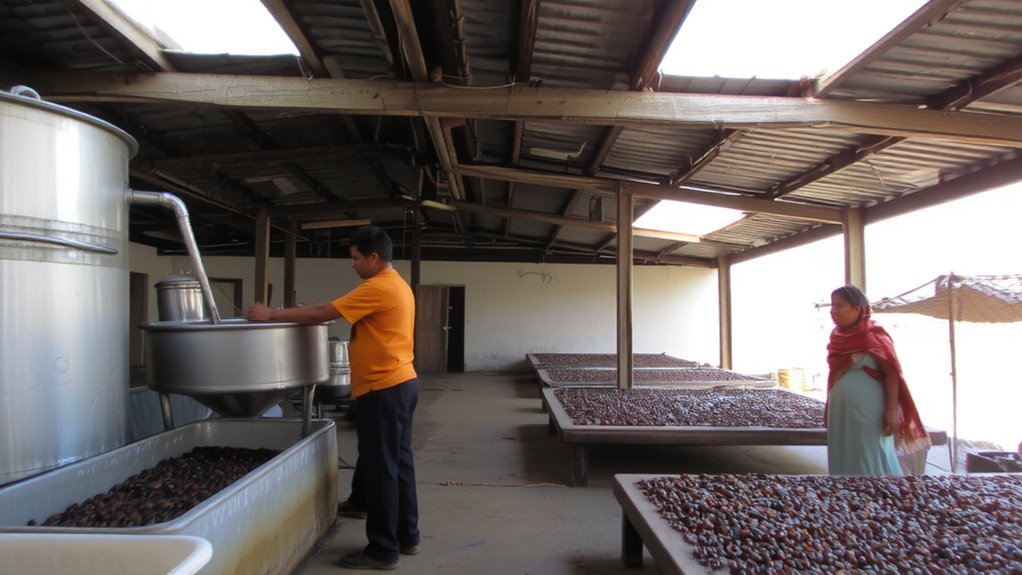
How do you guarantee your coffee reaches its full flavor potential after harvest? With shared processing facilities, you gain access to consistent, high-quality handling without bearing the full cost alone. Equipment sharing lets smallholder farmers use modern pulpers, fermenters, and dryers that would be unaffordable individually-this boosts efficiency and uniformity. These centralized sites also improve waste management, channeling pulp and wastewater into compost or biogas instead of letting them pollute local water sources. Better infrastructure means fewer defects and cleaner beans. You’re not just improving quality-you’re reducing environmental harm. While coordination takes effort, the payoff in cup consistency and market value is clear. When unions back these shared spaces, they make certain farmers get reliable, well-maintained tools and processes aligned with export standards. It’s a practical step toward better coffee, one batch at a time.
Farmer Training Programs That Reduce Quality Gaps
Good processing helps, but even the best equipment won’t fix poor farming practices. You need strong, healthy trees from the start, and training programs supported by co-ops help you get there. These programs teach you how to monitor soil health using compost and crop rotation, which directly affects bean density and flavor consistency. They also train you in sustainable pest management, replacing broad chemical sprays with targeted, eco-friendly methods that protect both yield and quality. With clear demonstrations and follow-up visits, you learn to spot early signs of infestation and nutrient deficiency. That means faster responses and fewer losses. While some methods take time to show results, consistent application improves farm resilience. Over time, better farming closes quality gaps between regions and households. And since training is delivered locally through cooperatives, knowledge spreads faster. You’re not just growing more-you’re growing better.
How Cooperatives Open Doors to Specialty Coffee Markets
Access to specialty coffee markets often depends on more than just bean quality-it hinges on connections, consistency, and certification. When you work through cooperatives, you gain collective strength that opens doors otherwise hard to reach. They help you meet international standards like organic or fair trade, which buyers expect. With unified processing and grading, your coffee meets the consistency roasters demand. Cooperatives also enable direct export, cutting out middlemen so you retain more value. That access means you can negotiate premium pricing, especially when your beans score high on flavor profiles. While direct export requires more paperwork and logistics know-how, the payoff often justifies the effort. Individual farmers acting alone rarely get these chances. Through cooperatives, you’re not just selling coffee-you’re positioning it where quality is recognized and rewarded.
Proven Results: Higher Cup Scores and Farmer Incomes
Solid evidence shows cooperative membership boosts both cup quality and farmer earnings. You see real gains when cooperatives access direct financing, letting them invest in better processing stations, sorting techniques, and timely cherry collection. These upgrades directly improve bean consistency and cup scores, often pushing them into specialty ranges above 80 points. Market transparency plays a key role-when farmers know global price benchmarks, they negotiate better and avoid lowball offers. Take the Yirgacheffe Coffee Farmers Cooperative Union (YCFCU): members earned 20–30% more than non-members in recent years, thanks to premium international contracts. Direct financing also means faster payouts after harvest, easing cash flow stress. You’re not just buying better coffee-you’re supporting systems that lift farmers. While cooperatives require strong management to maintain records and equity, the model outperforms informal groups. With traceability and fair pricing, you get quality assurance and ethical sourcing in one package.
On a final note
You see how cooperatives tackle Ethiopia’s coffee challenges head-on. They improve quality with better farms, shared processing, and training. This lifts cup scores and opens specialty markets. You get clearer results when farmers work together-higher incomes, consistent quality. If you’re buying Ethiopian coffee, look for coop-sourced beans. They offer proven quality and direct impact. It’s a practical choice for better brews and fairer outcomes.