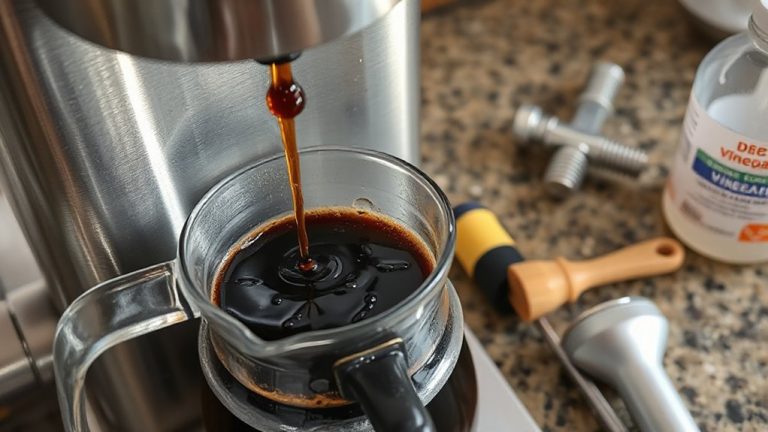
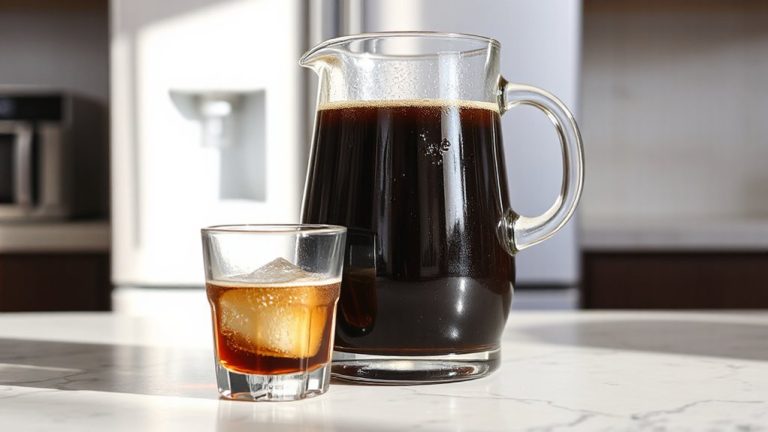
Improving Crema-Like Mouthfeel in Batch Brewers With Refined Medium Grind
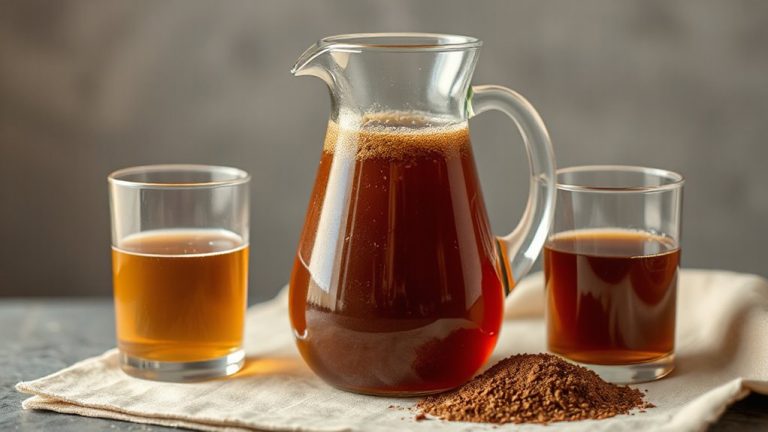
Use a refined medium grind-like table salt-for a richer, crema-like body in batch brew. An uneven grind causes unbalanced extraction, so go with a burr grinder like the Baratza Encore. Pair it with fresh, medium-roast beans from Central America or Africa for clean sweetness and body. Keep water between 195°F and 205°F, and aim for a 3–4 minute brew time. Metal filters let more oils and fines through, boosting mouthfeel. You’ll see how small tweaks make a noticeable difference.
Notable Insights
- Use a refined medium grind, similar to table salt, for optimal extraction and crema-like body in batch brewers.
- Employ a burr grinder like the Baratza Encore to ensure uniform particles and consistent turbulence during brewing.
- Select high-quality medium roast beans, especially from Central America or Africa, to enhance sweetness and body.
- Maintain water temperature between 195°F and 205°F to avoid under- or over-extraction and support rich mouthfeel.
- Pair the refined medium grind with a 3 to 4 minute brew time and appropriate filter type to control fines and oil retention.
Use a Refined Medium Grind for Crema-Like Body
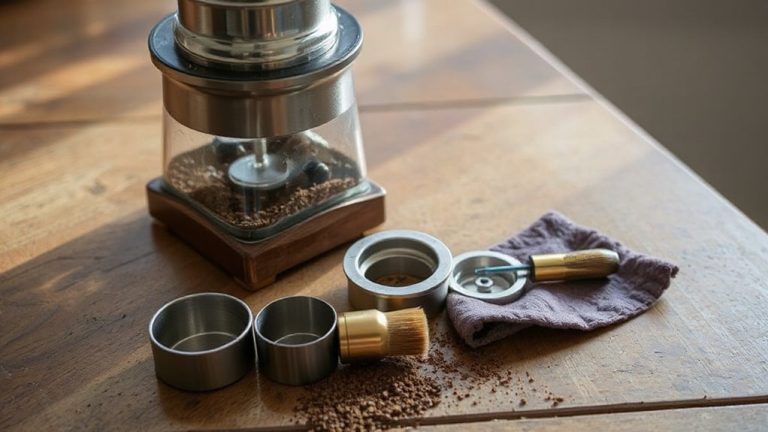
A medium grind, when properly refined, gives you the best shot at achieving a crema-like mouthfeel in batch brewers. You’ll want consistency-uneven particles lead to unbalanced extraction. Aim for a texture close to table salt. Too fine, and you’ll over-extract or clog the filter; too coarse, and the brew runs weak. Since batch brewers don’t apply high tamping pressure like espresso machines, even distribution matters more. Use a high-quality burr grinder-models like the Baratza Encore guarantee uniformity. Pair it with a pre infusion technique if your machine allows, letting grounds bloom briefly before full brewing. That step enhances extraction clarity and body. Not all batch systems support pre infusion, so check your brewer’s specs. With the right grind and setup, you’ll get fullness and richness, even without true crema. It’s practical, repeatable, and makes a real difference in the cup. The Baratza Encore is a top pick among grinders recommended for both espresso and pour-over applications.
How Grind Size Builds Creamy Mouthfeel
Think of grind size as the foundation of mouthfeel-get it wrong, and no amount of tweaking will save your brew. A refined medium grind creates balanced particle distribution, letting water extract evenly without slipping too quickly through coarse bits or clogging on fines. This uniformity supports consistent turbulence intensity in the slurry, helping suspend fine particles that contribute to a crema-like texture. Too coarse, and turbulence drops, leading to weak, thin coffee. Too fine, and uneven particle distribution increases resistance, causing over-extraction and sludge. With the right grind, you boost contact time and agitation just enough to enhance bodily sensation without bitterness. It’s not about replicating espresso-it’s about mimicking that rich, lingering feel in batch brew. Adjusting grind size is the fastest way to control this balance, more effectively than changing water or brew time alone. For optimal results, consider using one of the top-rated coffee grinders for pour-over that ensure precise and consistent grind size.
Choose Beans That Enhance Rich Extraction
You’ve tuned your grind to stabilize turbulence and extract evenly, but the beans you start with can just as easily make or break that creamy mouthfeel. The right bean origin and roast level are key to rich, balanced extraction. Central American beans often bring clean sweetness, while African ones add fruitiness that can lift lighter brews. For batch brewers, a medium roast typically hits the sweet spot-developed enough for body, not so dark that it turns ashy. Avoid oily beans; they clog grinds and hurt consistency. Choosing best espresso beans can significantly enhance crema-like texture and overall flavor stability in batch brewing.
Control Water Temp for Silky Batch Brews
While brewing temperature might seem like a minor detail, it plays a critical role in shaping the body and texture of your batch brew. You’ll want to keep water between 195°F and 205°F-too hot, and you risk harshness; too cool, and your cup feels thin. This range optimizes extraction, especially when paired with a medium grind and balanced water chemistry. Soft water may under-extract, while hard water can over-extract or scale machines. Adjusting for your local supply improves consistency. Also, consider flow rate-slower saturation at ideal temps enhances mouthfeel by promoting even extraction. Machines like the Ratio Six or Technivorm Moccamaster hold steady temps, helping you avoid spikes that disrupt texture. You’re not chasing bitterness but a silky, crema-like body that lingers. Small temp tweaks, combined with proper flow and water quality, make a noticeable difference-no espresso machine required.
Adjust Brew Time for Balanced, Full Body
If you’re aiming for a fuller, more balanced body in your batch brew, dialing in the brew time is one of the most effective tweaks you can make. Too short, and your coffee might taste thin or sour; too long, and it risks over-extraction. Aim for a brew time between 3 and 4 minutes, depending on your machine and grind. Your flow rate plays a big role here-slower flow increases extraction and body, while faster flow can leave things watery. Most batch brewers don’t let you adjust brew pressure directly, but you can influence it indirectly with grind size and distribution. A refined medium grind slows flow just enough to boost mouthfeel without clogging the filter. Just don’t go too fine-otherwise, you’ll spike brew pressure and risk channeling or stuck pours. Test different times, keep notes, and tweak from there.
Fix Flat or Bitter Coffee Easily
A brew time in the 3 to 4 minute range often delivers the body you’re after, but even well-timed batches can fall flat or turn bitter if other variables aren’t aligned. Low water pressure can under-extract, leaving coffee tasting sour or hollow, especially at higher brewing altitudes where water boils at lower temperatures. At elevations above 3,000 feet, you might need to adjust grind size finer or increase pump pressure to maintain extraction balance. Conversely, too much pressure or overheated water leads to over-extraction, bringing out harsh, bitter compounds. If your batch brewer lacks adjustable water pressure, consider brewing at lower altitudes or using a machine with precision saturation controls. Monitor both taste and brew time: a flat cup likely means weak pressure or low heat; bitterness suggests excessive extraction from high pressure or prolonged contact. Small tweaks here make a clear difference in final flavor.
How Fines and Oils Improve Mouthfeel
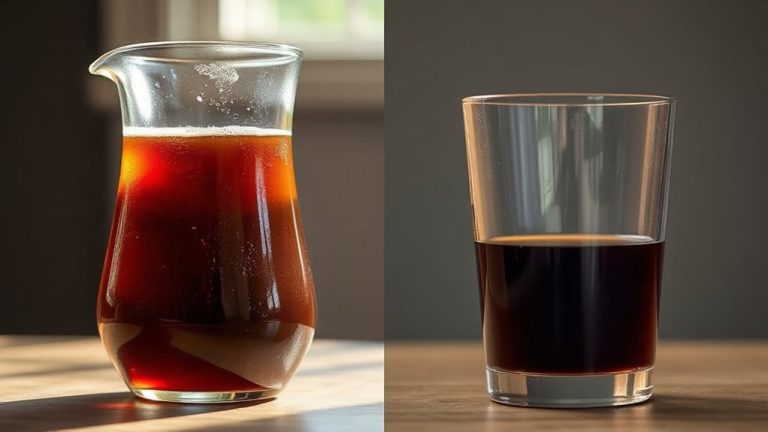
Since finer particles and natural coffee oils play a key role in building texture, you’ll want to understand how they influence mouthfeel in batch brewing. Fines retention boosts body by increasing surface area for extraction, while oil emulsification disperses lipids into the brew, enhancing smoothness. Without enough fines, coffee tastes thin; too many, and you risk clogging or over-extraction. Proper grind size and filter choice balance this.
| Factor | Effect on Mouthfeel | Example Consideration |
|---|---|---|
| Fines | Increases body and richness | Use medium-fine grind with metal filter |
| Oil content | Adds creamy, lingering feel | Darker roasts boost oil release |
| Filter type | Affects fines and oil flow | Paper traps oils, metal allows more through |
| Brew time | Influences emulsification | Longer contact improves oil dispersion |
Manage both fines retention and oil emulsification to get that crema-like texture, even without an espresso machine.
On a final note
You’ll get a crema-like body in batch brews by using a refined medium grind-think Baratza Encore with the burrs adjusted slightly finer than default. This boosts extraction without overdoing bitterness. Pair it with fresh, oily beans like a light-medium roasted Colombian, hold water temp at 195–200°F, and aim for a 4.5 to 5.5 minute brew. Too flat? Grind finer or extend contact time. Bitter? Coarsen grind or shorten brew.