How to Calibrate Grind Size for a Balanced Chemex With Medium-Coarse Settings
Use a medium-coarse grind, like sea salt, for balanced Chemex brewing. Aim for even particles-burr grinders like the Baratza Encore or Timemore C2 help avoid fines or boulders. If coffee tastes weak or sour, your grind’s too coarse; if bitter, it’s too fine. Adjust in small steps. Brew time should be 3.5–4.5 minutes with water at 195°–205°F. Flow rate and taste guide your ideal setting. You’ll get clearer results by considering how roast and altitude shape your final adjustments.
Notable Insights
- Aim for a medium-coarse grind texture resembling sea salt to ensure balanced extraction in a Chemex.
- Use a burr grinder to achieve consistent particle size and avoid fines or boulders.
- Target a brew time of 3.5 to 4.5 minutes; adjust grind finer or coarser to stay within this range.
- If coffee tastes sour, refine the grind slightly; if bitter, use a coarser setting.
- Maintain water temperature between 195°F and 205°F for optimal extraction with medium-coarse grounds.
What Grind Size Works Best for Chemex
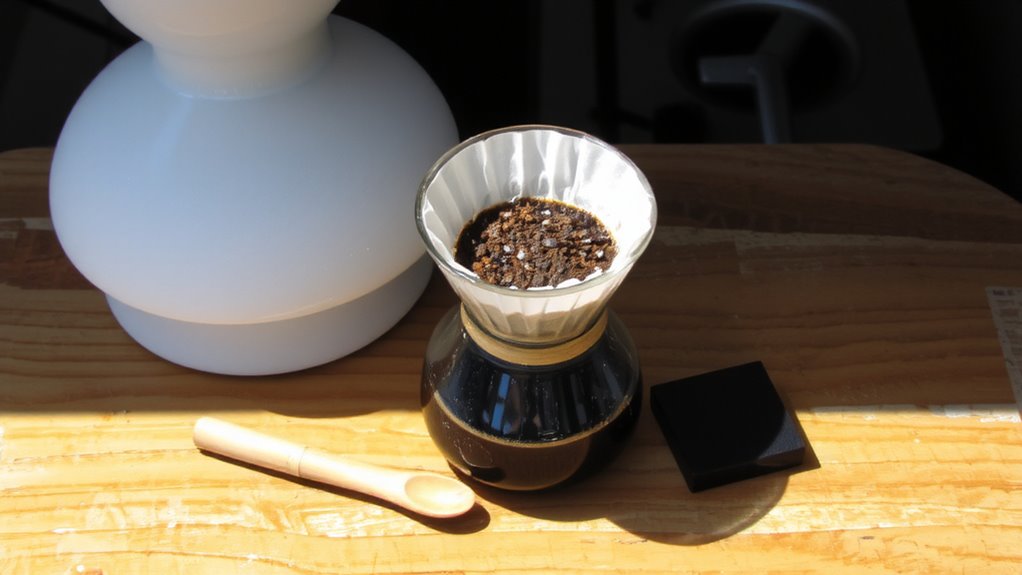
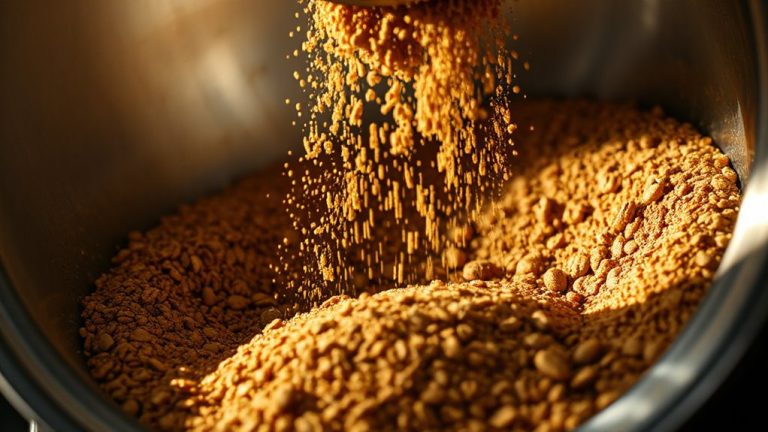
For ideal Chemex brewing, a medium-coarse grind-about as fine as sea salt-is your best starting point. This grind size slows water flow just enough to extract clean, balanced flavors without overdoing bitterness or acidity. What really matters, though, is grind uniformity. Blades or low-end grinders create uneven particle distribution, leading to some grounds over-extracting while others under-extract. That means sour or muddy notes in your cup. A burr grinder-even an entry-level one like the Baratza Encore-delivers consistent particle distribution, which improves flavor clarity. If your grind’s too fine, water drags; too coarse, it rushes through, tasting weak. You’ll adjust based on your beans and water, but always begin here. Consistency beats guesswork. With even grinding, your Chemex brews brighter, sweeter, and more balanced every time.
How to Recognize the Perfect Medium-Coarse Grind
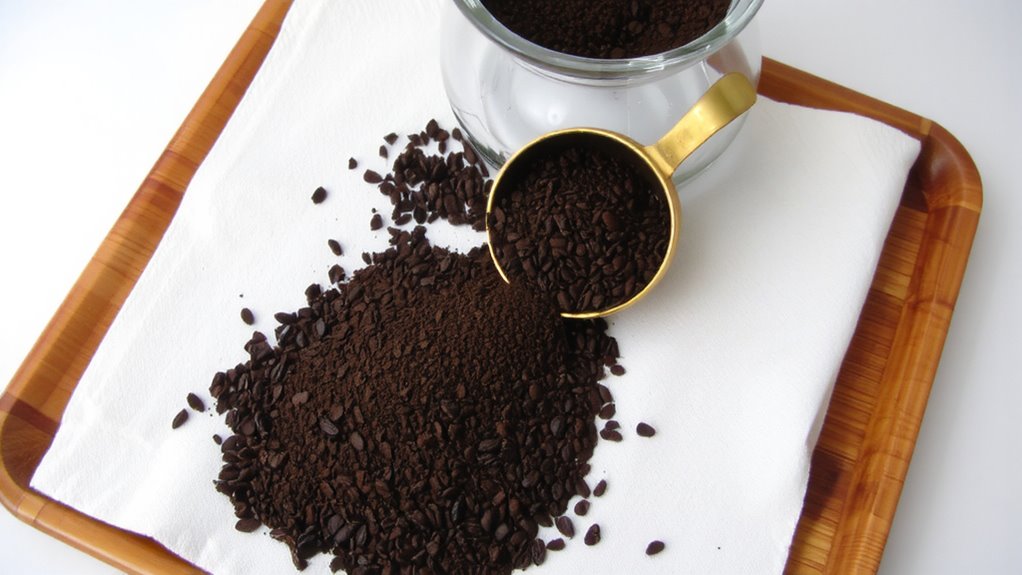
Think of sea salt between your fingers-that’s the texture you’re after. The perfect medium-coarse grind for your Chemex feels slightly gritty but not dense. You’ll notice even particle consistency, meaning most grounds are close in size, with few fines or boulders. This helps guarantee a smooth, balanced extraction. When you pour, you’ll see steady flow resistance-water drips through in about 3.5 to 4.5 minutes. Too fast, and your grind’s too coarse; too slow, and it’s too fine. A good burr grinder like the Baratza Encore or Fellow Ode keeps this consistency reliable. If you’re using a blade grinder, you’ll struggle with uneven particles, harming both flow resistance and taste. Recognizing this sweet spot means trusting your touch and timing, not just sight. Get it right, and your coffee avoids bitterness and sourness-no guesswork needed. For French press brewing, a medium-coarse grind is also ideal to prevent over-extraction and sediment in your cup.
Adjust Your Grinder for Balanced Chemex Flavor
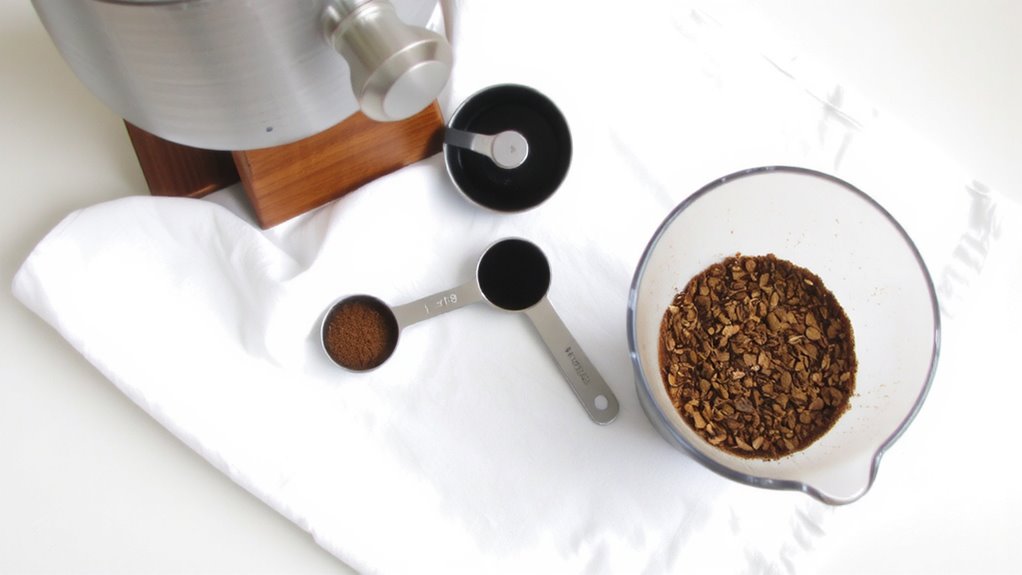
While grind size直接影响 extraction, dialing it in right for your Chemex means matching the setting to your coffee and setup. Your grinder’s calibration affects both flavor and flow-too fine risks over-extraction, too coarse leads to weak brew. For balanced results, maintain grind consistency across batches; blade grinders often fail here, while quality burr models like the Baratza Encore or Timemore C2 deliver repeatable medium-coarse grounds. Water chemistry also plays a role-balanced minerals improve extraction efficiency even with ideal grind. Choosing a best coffee grinder can significantly enhance clarity and sweetness in your pour-over.
Fix Weak or Bitter Chemex Coffee by Tweaking Grind
You’ve dialed in your grinder for a consistent medium-coarse setting, but if your Chemex still tastes weak or bitter, the issue likely comes down to small grind adjustments. A weak, sour brew usually means the grind is too coarse, letting water rush through too fast and under-extract. Try slightly finer settings in small increments to improve flavor. Conversely, if your coffee tastes harsh or overly bitter, the grind is likely too fine, causing over-extraction. Open it up just a notch. Keep your water quality in mind-hard or heavily chlorinated water skews taste, masking grind effects. Also, consider brewing altitude; higher elevations lower boiling temperature, which impacts extraction. At 5,000 feet, for example, water boils at about 203°F, slowing extraction. That might require a finer grind than at sea level. Adjust gradually, brew consistently, and track changes to find your sweet spot. For more precision, using a high-quality mill grinder can make a significant difference in grind consistency.
How Brew Time and Temperature Change Grind Needs
Since extraction hinges on how long water interacts with coffee grounds and at what temperature, your grind size has to adapt when either of those variables shifts. If your brew time is too short-say, under 3 minutes-even a medium-coarse grind might under-extract, making coffee weak. Slower drip rates or longer brew time dynamics call for slightly coarser grinds to prevent over-extraction and bitterness. On the flip side, if water temperature effects are reduced, like brewing with water below 195°F, extraction drops, so you’ll need a finer grind to compensate. Most baristas use 195°–205°F, where medium-coarse works best. But if you’re using a gooseneck kettle with precise flow control or an unheated porch during winter, adjust your grind accordingly. Always match grind to your actual brew conditions, not just the recipe. That keeps flavors balanced and consistent, no matter the setup.
Match Chemex Grind Size to Bean and Roast Type
A coffee bean’s origin and roast level directly influence how it should be ground for a Chemex. Lighter roasts, often from African or Central American bean origins, are denser and need a slightly finer grind to extract fully. If you’re using beans from Ethiopia or Guatemala with a light to medium roast level, try adjusting your grinder one notch finer than standard medium-coarse. These beans tend to have brighter acids and complex sugars that respond well to more surface area exposure. Darker roasts, like Sumatran or French-roast beans, are softer and extract more easily. Go a bit coarser to avoid over-extraction and bitterness. The roast level also affects solubility-darker beans dissolve faster. Matching your grind to both bean origin and roast level helps balance flavor, ensuring clarity and body without off-notes. Your grinder’s calibration matters just as much as the beans you choose.
Taste-Test Your Grind for Optimal Extraction
Fine-tuning your grind isn’t just about matching bean type and roast-it’s about how the coffee actually tastes in the cup. Start by brewing as usual, then evaluate: if it’s too bitter or harsh, your grind is likely too fine, causing over-extraction. If it’s weak or sour, it’s probably under-extracted-try a finer setting next time. Always use fresh water with balanced mineral content, since poor water quality skews flavor, no matter the bean origin. Different regions produce beans with unique solubility-Ethiopian beans may extract faster than Brazilian ones-so adjust accordingly. Brew, taste, adjust in small increments. Use a consistent brew time (3:30–4:00 for Chemex) as a reference. Remember, even the best grinder won’t fix stale beans or bad water. Keep notes on settings, time, and taste. That way, you dial in repeatable, balanced results every time.
On a final note
You’ll get the best Chemex results with a consistent medium-coarse grind, like sea salt. If your coffee tastes weak, go slightly finer; if it’s bitter or slow, adjust coarser. Match the grind to your beans-lighter roasts often need a finer setting. Use a good burr grinder like the Baratza Encore for even particles. Brew time should be 3.5–4.5 minutes. Always tweak based on taste, water temperature, and bean freshness for balanced extraction.