Pour Over by Roast: Water Temp & Grind Guide (Light/Medium/Dark)
Use hotter water (200°F–205°F) and a medium-fine grind for light roasts to extract bright, complex flavors from dense beans. For medium roasts, try 195°F–200°F with a similar grind for balanced results. With dark roasts, go coarser and cooler-around 195°F-to avoid bitterness from over-extraction. Adjust one variable at a time, and your brew will improve fast-there’s more to fine-tune for even better cups.
Notable Insights
- Use hotter water (200–205°F) for light roasts to extract their dense structure and preserve bright, acidic notes.
- Employ a medium-fine grind for light roasts to balance extraction without restricting water flow.
- Bloom light roasts for 45 seconds to release CO₂ and ensure even saturation for optimal flavor development.
- Brew medium roasts at 195–200°F with a medium-fine grind for balanced extraction and a smooth, rounded cup.
- Use a coarser grind and lower water temperature (185–195°F) for dark roasts to prevent over-extraction and reduce bitterness.
Why Roast Level Changes Your Pour Over Approach
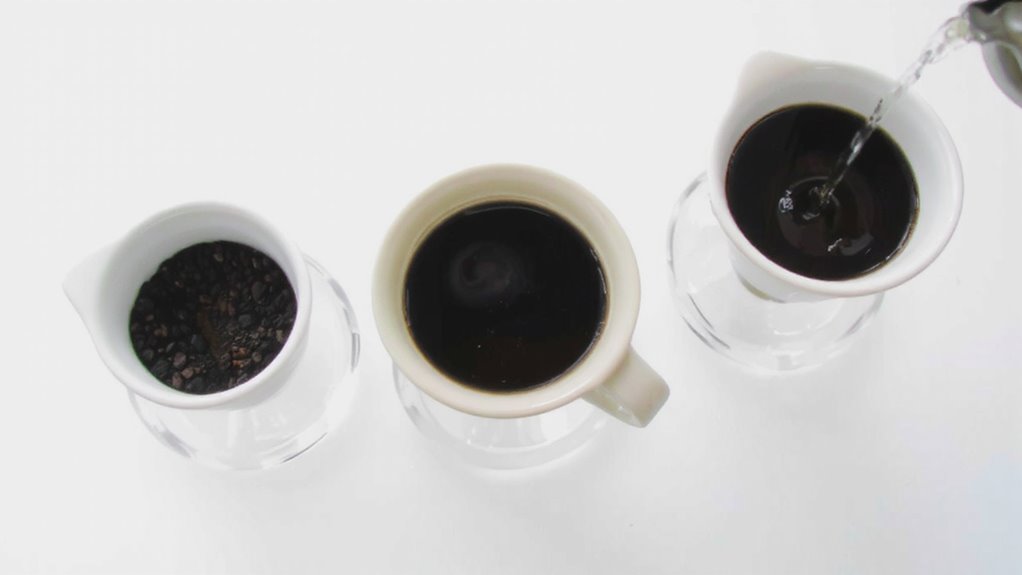
While darker roasts tend to bring out bold, smoky flavors, they also lose some of the delicate acids and sugars found in lighter beans, which means you’ll need to tweak your pour over method to get the best cup. Dark roasts have lower bean density, so water passes through more easily-this can lead to under-extraction if your grind’s too coarse. You’ll want a finer grind to slow flow and pull out more flavor. Roast age matters too; older beans, especially dark ones, lose gases and solubles over time, so they extract faster. Stale coffee might need a coarser grind or cooler water. Lighter roasts keep more density and need hotter water and longer bloom times to open up. Ultimately, adjusting for roast level isn’t optional-it’s essential. Your V60 or Kalita won’t compensate on its own. Match your technique to the roast, and you’ll pull better, more balanced cups every time. For optimal results, consider the best coffee grinds for pour-over based on roast-specific extraction needs.
How to Brew Light Roast Coffee in a Pour Over?
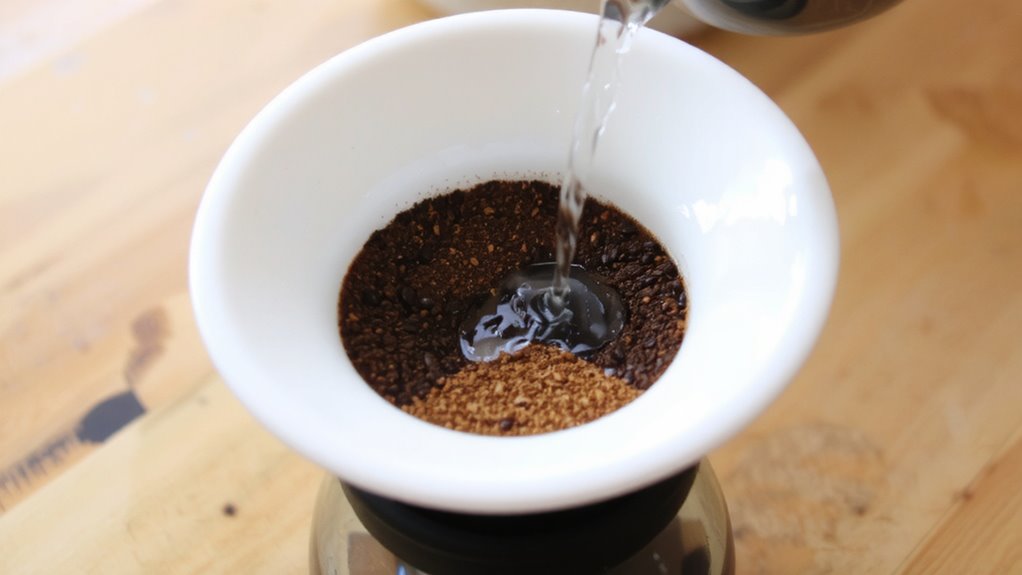
A light roast needs a hotter water temperature-ideally between 200°F and 205°F-to extract the full range of acids, sugars, and aromatic compounds trapped in its dense bean structure. Use a medium-fine grind coarseness, similar to table salt, to balance extraction without clogging the filter. Too fine, and you’ll over-extract and increase bitterness; too coarse, and the brew will taste sour. Start with a 45-second bloom time to release trapped CO₂, which helps water penetrate evenly. Pour slowly in steady spirals, keeping the water just off the filter’s edge. A gooseneck kettle gives you better control. Stick to a 1:16 coffee-to-water ratio. Light roasts need precision-measured time, temp, and grind-to highlight their bright, complex notes without under-extracting. For optimal results, consider using one of the best V60 drippers to enhance your pour over experience.
Brew Medium Roast for Balanced Flavor
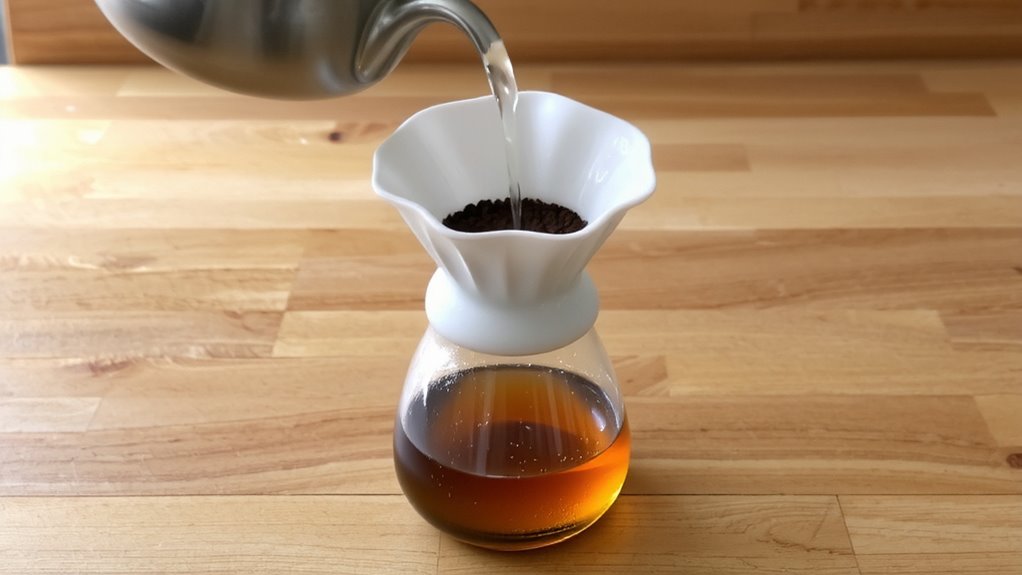
Since medium roast coffee strikes a balance between acidity and body, you’ll want to use water just off the boil-around 195°F to 200°F-to fully extract its rounded flavors without tipping into bitterness or sourness. Your water temperature is key: too hot, and you risk harsh notes; too cool, and the cup falls flat. Aim for a medium-fine grind consistency-similar to table salt-for even flow and extraction. This helps maintain a steady brew time of 2:30 to 3:30 minutes. If your coffee tastes dull, try a slightly finer grind; if it’s sharp or sour, go coarser. Use a burr grinder for uniformity, like the Baratza Encore or Porlex Mini, since inconsistent grounds lead to uneven extraction. A gooseneck kettle offers better pour control, supporting consistent saturation. With the right water temperature and grind consistency, medium roasts deliver balanced sweetness, mild acidity, and clean finish. For optimal results, consider using one of the best gooseneck kettles designed specifically for precision pouring.
Fix Bitter Dark Roast Pour Overs
Dark roasts often bring intense, smoky flavors, and if your pour over tastes bitter, it’s usually a sign of over-extraction. You’re pulling too many compounds from the beans, and two key factors are likely at play: grind size and water temperature. For dark roasts, use a slightly coarser grind-think medium-coarse, like sea salt-to slow extraction and reduce bitterness. Fine grinds increase surface area, making bitterness worse. Also, lower your water temperature to around 195°F (90°C). Darker beans are more soluble, so boiling water (205°F/96°C) can scorch them, amplifying harsh notes. Try a gooseneck kettle with temperature control, like the Brewista Artisan, for precision. Adjust one variable at a time-first grind size, then temperature-and taste. These small tweaks typically bring balance, letting the roast’s natural sweetness come through without drying astringency.
Which Brew Settings Change by Roast?
When dialing in your pour over, you’ll need to tweak key variables depending on roast level-because lighter and darker beans respond differently to heat, grind size, and brew time. For light roasts, use a higher water temperature-around 195–205°F-to extract more flavor from dense beans, and a finer grind coarseness to slow flow and boost extraction. Medium roasts work well with a middle-range temp of 190–200°F and a medium grind. Dark roasts, being more soluble, require cooler water-about 185–195°F-to avoid over-extraction and bitterness, paired with a coarser grind to shorten brew time and prevent clogging. Adjusting these settings prevents sourness in light roasts and harshness in dark. Your brewer’s design-like a V60 or Kalita-will also influence grind choice, but roast level always guides your starting point.
On a final note
Your roast level affects how water extracts flavor, so adjust grind size, water temp, and pour time accordingly. Light roasts need finer grinds and hotter water (205°F) for clarity. Medium roasts work well with balanced settings-medium grind, 200°F. Dark roasts require coarser grinds and slightly cooler water (195–200°F) to avoid bitterness. These tweaks help you get the best from each roast.