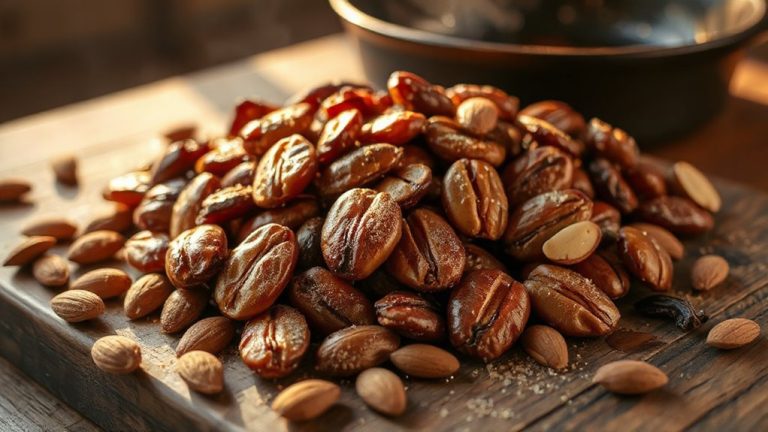
The Effect of Grind Shape on Flow Rate in Espresso Machines
Your espresso’s flow rate depends heavily on grind shape. Uniform particles from flat or conical burr grinders like the Niche Zero or Eureka Preciso let water move evenly, boosting extraction. Inconsistent grinds cause channeling-water races through weak spots, leaving sour, under-extracted coffee. Blade grinders make this worse with random particle sizes. Even high-end machines can’t fix poor grind consistency. Track flow and taste: erratic shots mean your grinder’s holding you back. Better uniformity means better control-and better shots. You’re only a few adjustments away from noticeable improvement.
Notable Insights
- Grind shape affects flow rate by influencing how water moves through tightly packed coffee particles.
- Uniform grind shapes from burr grinders create consistent resistance, enabling even extraction and stable flow.
- Irregular grind shapes cause channeling, where water follows paths of least resistance, disrupting flow rate.
- Flat burrs produce more uniform grind shapes than conical burrs, leading to more predictable flow dynamics.
- Poor grind shape consistency increases flow variability, even if average grind size appears correct.
How Inconsistent Grinds Ruin Espresso Extraction
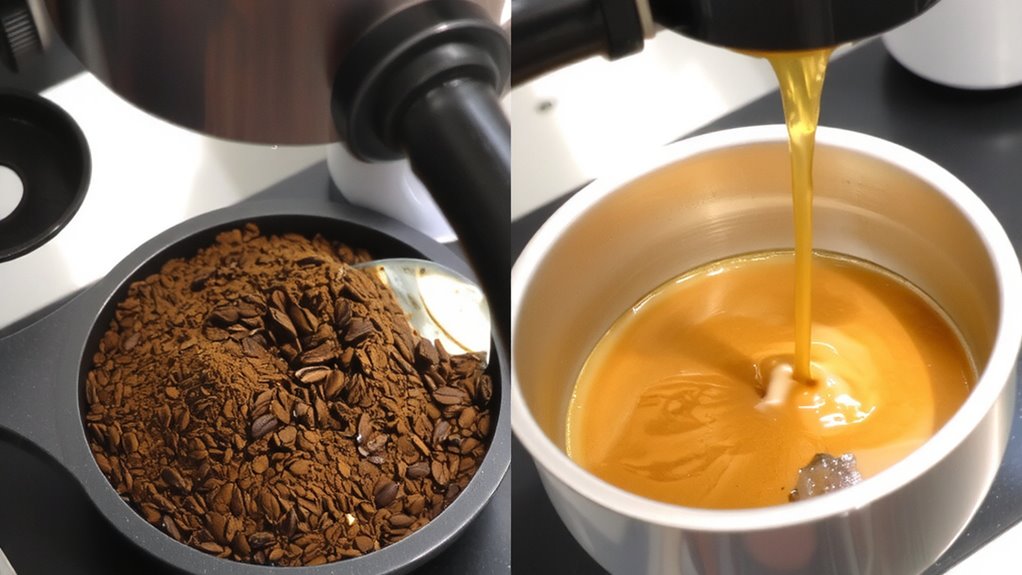
Even if you’re using a high-end grinder, inconsistent grind size can wreck your espresso shot by causing uneven extraction. When some particles are too fine and others too coarse, water takes the path of least resistance, over-extracting the fines and under-extracting the boulders. This imbalance ruins taste balance, leading to sour or bitter notes instead of a clean, rounded profile. You’ll also lose aroma intensity-crucial for a vibrant shot-because volatile compounds don’t release evenly. Machines like the Lelit Bella or Rocket Appartamento can’t compensate for poor grind consistency. A good burr grinder, such as the Baratza Sette 270 or Lagom Penta, helps maintain uniformity. Adjusting grind size precisely improves results, but only if your grinder produces consistent particles. For best results, calibrate regularly and avoid low-quality grinders with wobbling burrs. Consistency directly impacts flavor clarity and overall shot quality-don’t overlook it. Choosing from the best coffee and espresso grinders can make a significant difference in achieving optimal grind uniformity.
Water Flow: Uniform vs. Irregular Grinds
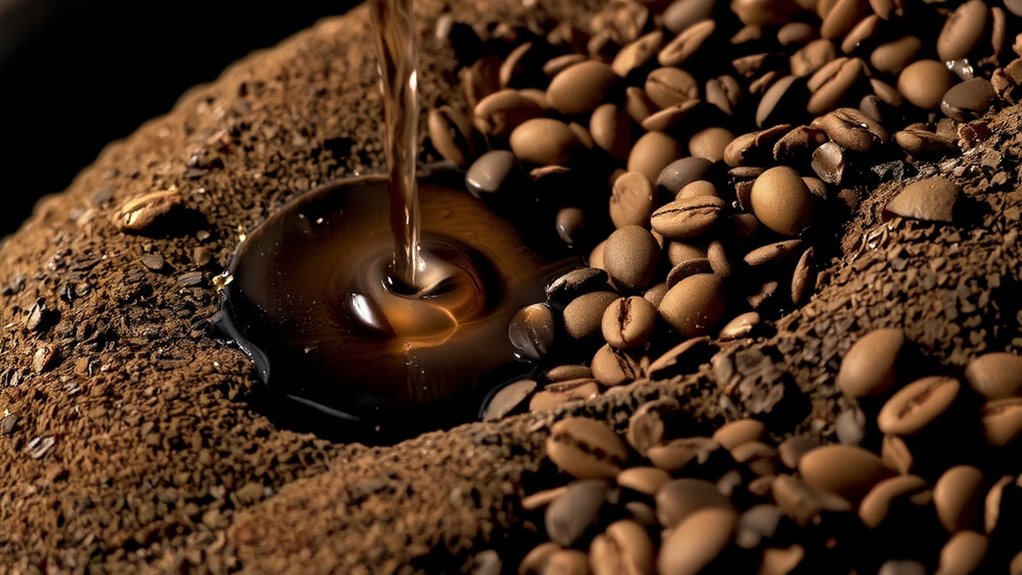
When water moves through your espresso puck, its path depends heavily on how uniform the coffee particles are. If your grind size is consistent, water flows evenly, extracting flavor in a balanced way. Uniform grinds let you control water pressure more effectively, leading to predictable shots. But if your grind is irregular, denser clusters and fines create resistance issues, disrupting flow. You’ll notice this in the shot time-either too fast or too slow-even if the average grind size seems right. Burr grinders, especially conical or flat types, help maintain uniformity, while blade grinders often don’t. High water pressure can’t fix poor distribution caused by inconsistent particles. For best results, aim for even particle shape and size. That consistency means water follows a smoother path, improving contact and extraction without relying on guesswork or excessive pressure adjustments. Choosing one of the best espresso grinders can significantly improve grind uniformity and shot consistency.
How Non-Uniform Grinds Cause Channeling
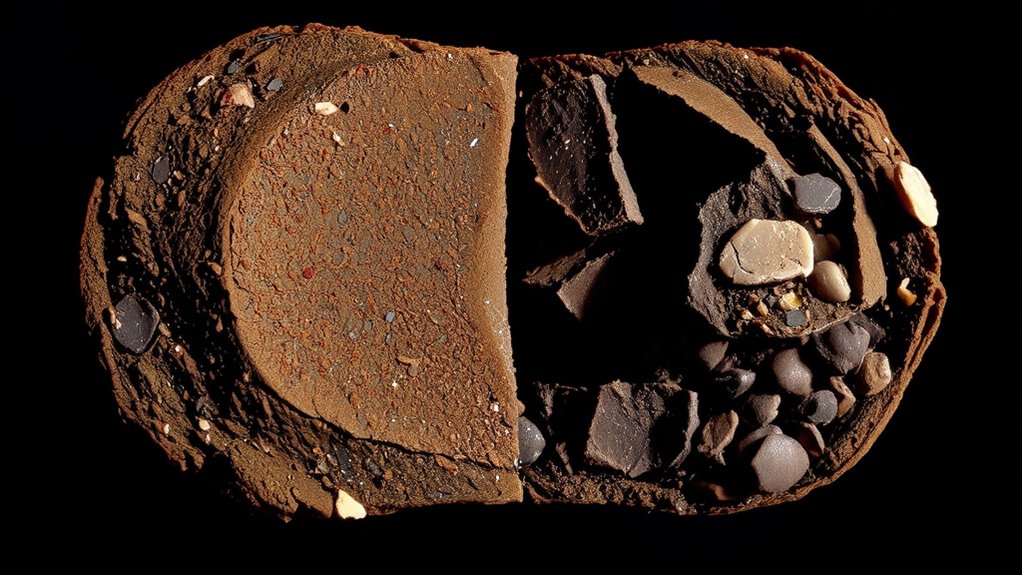
You know that uneven flow you sometimes see during a shot-where water spurts through one side of the puck while the other stays dry? That’s channeling, and it’s often caused by non-uniform grinds. When particle segregation happens, fine particles clump in certain areas while larger ones dominate others, disrupting even extraction. This uneven bed affects pressure distribution, forcing water toward weaker paths. The result? Under-extracted, sour shots. Investing in one of the best value espresso grinders can significantly improve grind uniformity and reduce channeling.
| Factor | Impact on Espresso |
|---|---|
| Fine particles | Trap water, slow flow |
| Coarse particles | Allow fast, uncontrolled flow |
| Particle segregation | Creates weak zones |
| Uneven pressure distribution | Promotes channeling |
| Inconsistent grind shape | Reduces puck stability |
Choose a Grinder for Consistent Grind Shape
A grinder’s design directly shapes your espresso’s performance, and consistent grind shape starts with the right burr type. You’ll want flat or conical burrs that produce uniform particles-flat burrs often offer better consistency at the cost of more heat, while conical burrs balance efficiency and grind preservation. Look for grinders with precise burr alignment, as even slight misalignment increases fines and uneven extraction. Models like the Niche Zero or Eureka Preciso deliver strong alignment out of the box. Entry-level grinders may cut corners here, leading to erratic flow and channeling. A high-quality burr set stays sharper longer, reducing heat and preserving the coffee’s natural flavors. Consistent grind shape isn’t just about particle size-it’s about shape and texture too. Good burr alignment and grind preservation work together to maintain shot stability, especially under heavy daily use.
Dialing in for Even Water Flow
How do you get water to flow evenly through the puck instead of carving channels? Start by ensuring your burr alignment is spot-on-misaligned burrs create uneven particles that disrupt flow. Heat from prolonged grinding raises the grind temperature, altering particle shape and consistency, so allow cooldowns between shots. Adjust your grind size incrementally, testing flow rate after each tweak. A stable grinder like the Niche Zero or Lelit Bella has tighter burr alignment and better heat management, helping maintain consistency. Distributing grounds evenly before tamping also supports uniform water paths.
| Factor | Impact on Flow |
|---|---|
| Burr alignment | Prevents fines and boulders |
| Grind temperature | Affects particle consistency |
| Grind size | Controls resistance |
| Distribution | Promotes even saturation |
Track Grind Quality by Taste and Flow
What if the key to better espresso isn’t just in your grinder settings but in how you interpret each shot? You need to track grind quality by both taste and flow to catch issues early. If your shot pulls too fast and tastes weak, your grind might be too coarse or uneven-even slight changes in grind temperature can shift extraction. A slow, bitter shot often means the grind is too fine or clumping. Watch brew pressure: it should stay steady, ideally between 8–9 bars; spikes or drops suggest inconsistent particle size. Machines like the Slayer or Decent EP5 show real-time pressure, helping link flow behavior to taste. Overheated grinders alter particle shape and extract unevenly, so let them cool between shots. Adjust slowly, record results, and trust both your palate and the machine’s feedback. Tasting tells you what to fix-flow and pressure help you pinpoint why.
On a final note
You need consistent grind shape to control flow rate and avoid channeling in espresso. Uneven particles let water rush through weak spots, causing under-extraction. A high-quality grinder like the Compak K11 or Eureka Mignano improves uniformity. This means better puck structure and even extraction. Dial in grind size and distribution carefully. Taste matters-sour or bitter shots often trace back to poor grind consistency. Track flow time and flavor to tweak effectively.