Mastering Espresso Brewing: A Comprehensive Guide for Baristas
You master espresso by controlling grind, dose, time, and temperature with precision. Use fresh beans, a quality burr grinder like the E6, and a reliable machine such as the Breville BES870 or Rocket Appartamento. Aim for 18g in, 36g out in 25–30 seconds. Tamp evenly with 30 pounds of pressure to prevent channeling. Adjust grind, dose, or temperature in small steps to fix sour or bitter shots. Clean your machine regularly and use filtered water. More smart tweaks await.
Notable Insights
- Use fresh, high-quality beans within 2–4 weeks of roast and dose consistently, typically starting at 18g in, 36g out.
- Grind size must match shot time: adjust finer for sour shots, coarser for bitter, aiming for 25–30 seconds.
- Tamp evenly with ~30 pounds of pressure using a level tamper to prevent channeling and ensure uniform extraction.
- Maintain machine performance with daily backflushing, monthly descaling, and attention to water quality and filtration.
- Optimize temperature and pressure: use 9 bars pressure, and adjust brew temperature by roast level for ideal extraction.
Break Down Espresso Brewing Basics
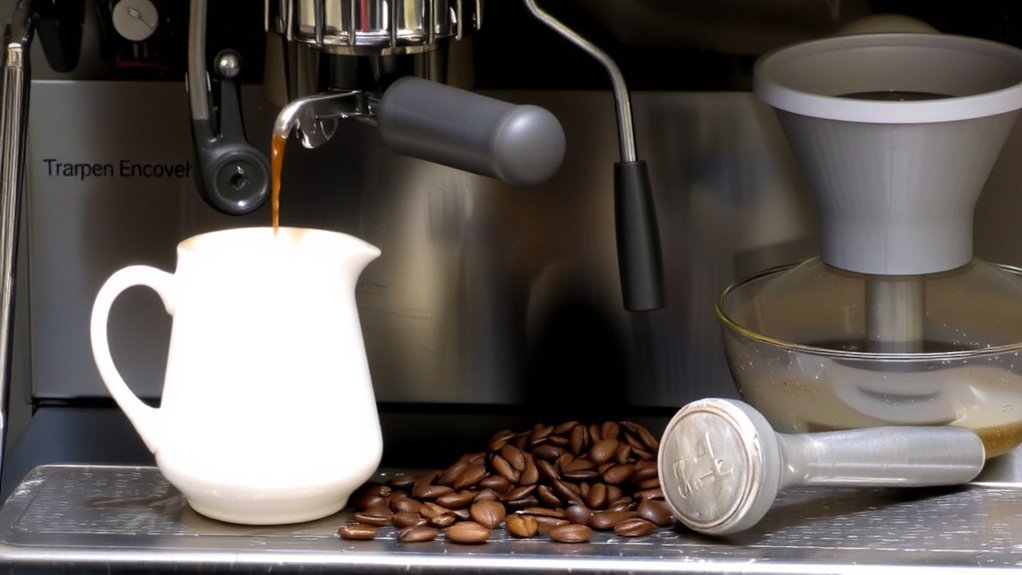
While it might seem intimidating at first, espresso brewing is really just about forcing hot water through finely-ground coffee under high pressure-typically around 9 bars-to extract a concentrated shot in about 25 to 30 seconds. You’ll need a capable machine, like a Breville BES870 or a Rocket Appartamento, and a consistent grinder such as the Baratza Vario. Espresso origins trace back to early 20th-century Italy, where speed and strength drove innovation. Understanding brewing history helps you appreciate the balance between pressure, time, and grind. Machines evolved from hand-lever piston models to today’s temperature-stable E61 group heads. You’re not just making coffee-you’re working within a defined method shaped by decades of refinement. A good shot depends on fresh beans, proper tamping, and consistent technique. No magic here-just physics and practice. Know your gear, control the variables, and you’ll pull solid shots consistently. For professionals on the go, having reliable Top Travel Coffee Makers can ensure quality espresso even outside the traditional café setting.
Dial In Espresso Grind and Dose
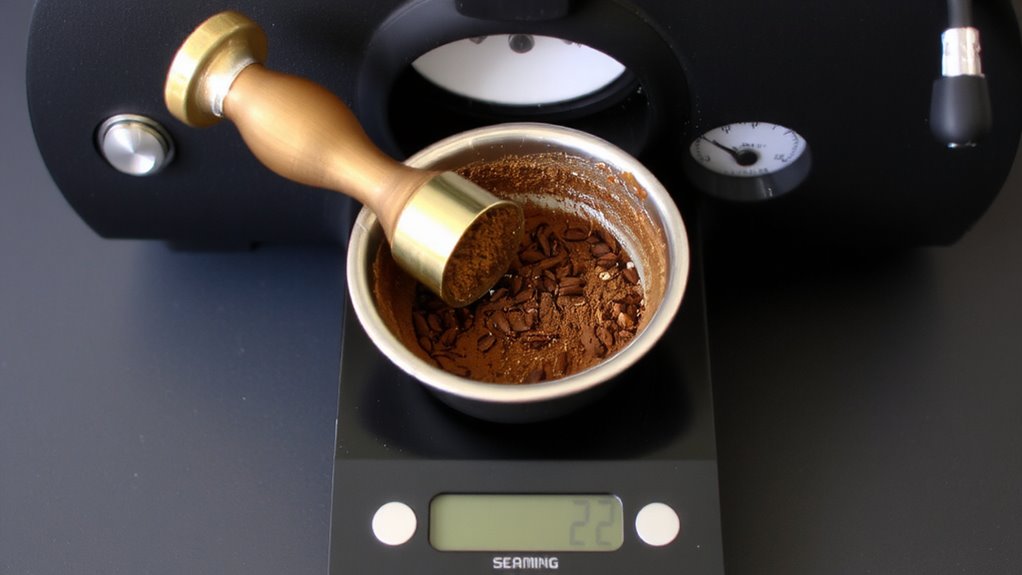
You’ve got the basics of how espresso works-now it’s time to get into the details that make a real difference in your cup. Dialing in your grind and dose starts with fresh beans-espresso freshness matters because flavor degrades fast after roasting. Use beans within 2–4 weeks of roast date for best results. The bean origin also affects your settings: dense, high-grown beans like those from Ethiopia may need a coarser grind than Brazilian beans. Start with a standard dose-say, 18g in for 36g out-and adjust. If shots run too slow, your grind’s too fine; too fast, go finer. Small tweaks matter. A good burr grinder like the E6 or MK Conical delivers consistency. Weigh outputs with a scale. Track changes. This isn’t guesswork-it’s methodical, repeatable. Your machine, grinder, and environment all interact, so redial when something shifts. For those using manual brewing methods, investing in a high-quality manual coffee grinder can make a significant difference in grind consistency and overall flavor control.
Master Tamping for Even Extraction
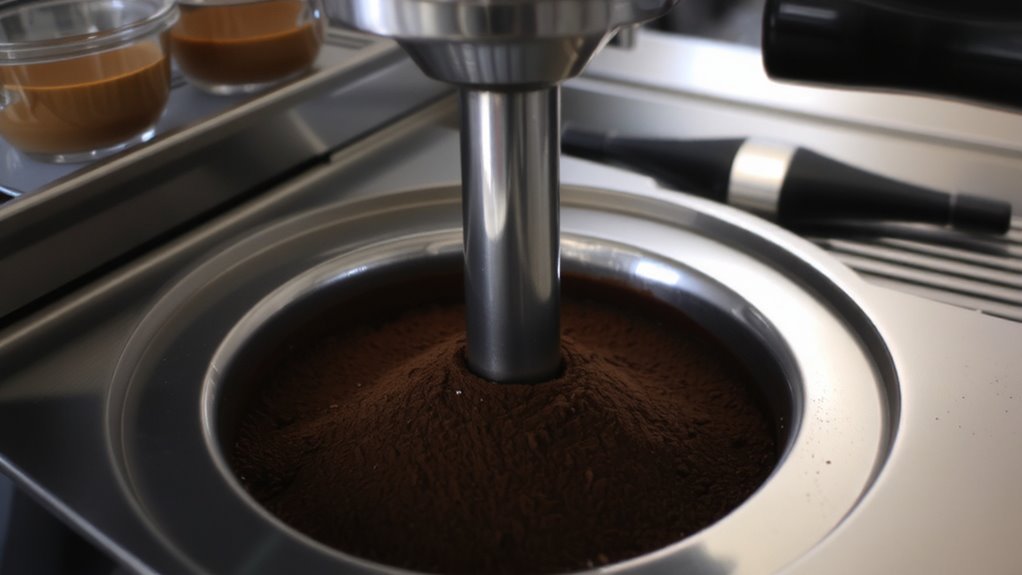
Consistency starts with the tamp. If your espresso shots pull unevenly, your tamp angle might be off. Tilting even slightly creates channels, letting water blast through weak spots and ruining extraction. Keep your wrist straight and use a level tamper-preferably one with a built-in bubble level or alignment guide. Apply firm, even pressure (around 30 pounds) straight down. This guarantees a flat, compact surface that supports a solid base seal between puck and portafilter. A proper base seal prevents water from bypassing the coffee, which causes weak, sour shots. Use a calibrated tamper that fits your basket snugly-most popular brands like Pullman or Essenza offer precise sizing. Tamp on a flat surface, not over the counter, to avoid torque. Rotate your body, not your wrist, to stay aligned. Master this, and you’ll eliminate one of the most common causes of extraction flaws. For those with limited space or on the go, a compact coffee tamper can deliver consistent results without sacrificing performance.
Fix Under- and Over-Extracted Shots
Your tamp sets the stage, but extraction tells the story. Shot timing and flavor balance are your best clues. If your shot runs too fast (under 25 seconds), it’s likely under-extracted-sour and weak. Grind finer or dose more to fix it. If it’s over 30 seconds, it may be over-extracted-bitter and harsh. Go coarser or reduce dose. Dialing in means adjusting grind size first, then tweaking dose or yield as needed.
| Issue | Solution |
|---|---|
| Sour, thin shot | Grind finer |
| Bitter, dry shot | Grind coarser |
| Low yield in 25s | Increase dose |
| Overflow by 30s | Reduce dose |
| Poor flavor balance | Adjust grind & timing |
Track shot timing consistently. Small changes make big differences in flavor balance.
Adjust Temperature and Pressure Like a Pro
Why do two shots pull from the same beans taste drastically different? Small changes in temperature and pressure can make or break extraction. You’ve got to master espresso calibration to find the sweet spot. If your machine allows it, tweak the brew temperature by 2–3°C-lighter roasts often need higher temps, while darker ones do better cooler. Pressure matters too; most machines run at 9 bars, but some let you adjust during the shot. That’s where shot profiling comes in. You can lower pressure at the start to prevent channeling, then ramp up. Machines like the Decent EP5 or Slayer let you do this easily, but they’re pricey. Most of us rely on consistent temp control and solid technique. Don’t guess-test, adjust, and document. Your taste buds are the final judge.
Keep Your Espresso Machine Pulling Perfect Shots
A well-maintained machine is the backbone of every great espresso. You need consistent machine maintenance to keep shots tasting clean and balanced. That means backflushing daily if you have a grouphead, descaling monthly, and checking gaskets for wear. A dirty portafilter or clogged shower screen ruins extraction. Also, pay attention to water quality-it affects both flavor and machine life. Hard water creates scale buildup, hurting heating elements and flow rates; too-soft water corrodes parts. Use a filter system like a Brita or a reverse osmosis setup if your tap water’s high in minerals. Machines like the Lelit or Rocket perform better long-term with treated water. Check your machine’s manual for recommended service intervals. Keep logs of descaling and part replacements so nothing slips through the cracks. Good habits now prevent costly repairs later.
On a final note
You’ve now got the core skills to pull solid espresso shots consistently. Dial in your grind and dose, tamp evenly, and adjust temp or pressure when needed. Machines like the Lelit Bianca let you tweak variables, while simpler ones like the Breville Bambino are more hands-off. Watch shot time and taste-under-extracted is sour, over is bitter. Clean your gear daily. Small changes make big differences. Keep it practical, stay consistent, and you’ll make quality espresso every time.