Customizing AeroPress Recipes to Suit Different Bean Profiles and Preferred Extraction Styles
Match your grind to the roast: use finer for dense light roasts and coarser for porous dark roasts. Brew light roasts with hotter water (205°F) and longer times (2:30–3:00) for full extraction; try cooler water (195°F) and shorter brews (1:30–2:00) for dark roasts to cut bitterness. Press gently for body or firmly for clarity. The inversion method gives you more control. Adjust these variables to fit your taste-and see how small changes reveal new flavors.
Notable Insights
- Match grind size to roast density: finer for dense light roasts, coarser for porous dark roasts to optimize extraction.
- Use hotter water (195–205°F) for light roasts to enhance acidity; cooler (185–195°F) for dark roasts to reduce bitterness.
- Adjust brew time: extend to 2:30–3:00 for light roasts; shorten to 1:30–2:00 for dark to avoid over-extraction.
- Modulate press pressure: gentle for richness, firm for clarity, avoiding over-pressing to prevent harshness.
- Choose brewing method: inversion allows precise control, ideal for tailoring steep time and extraction by roast profile.
Match Grind to Your Roast in AeroPress Brewing
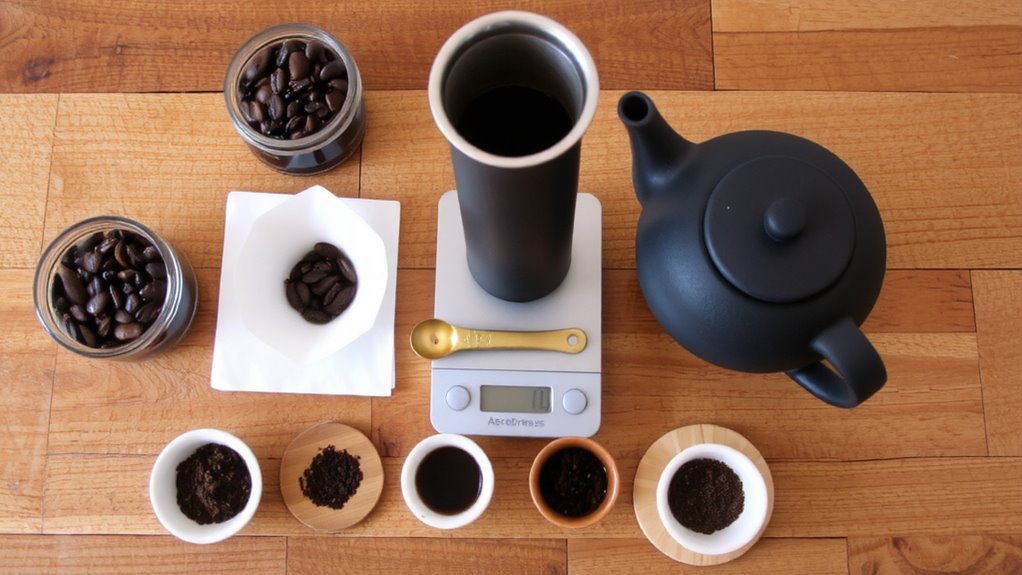
While your roast level might seem like a minor detail, it actually plays a key role in deciding the right grind size for your AeroPress brew. Lighter roasts are denser-higher roast density means they need a finer grind to extract evenly, while darker roasts are more porous and do better with a slightly coarser setting. If you go too coarse on a light roast, your coffee will taste weak and underdeveloped; too fine on a dark roast, and it might turn harsh or bitter. Use a burr grinder for better grind consistency, since uneven particles lead to unbalanced extraction. Aim for a texture like table salt with medium roasts, adjust finer or coarser as needed. Match your grind not just to roast level, but to how the beans actually behave-some mediums act like lights, some darks like mediums. Test, tweak, and keep notes. For consistent results, consider investing in one of the best burr grinders recommended for coffee enthusiasts.
Control Water Temperature for Brightness or Body
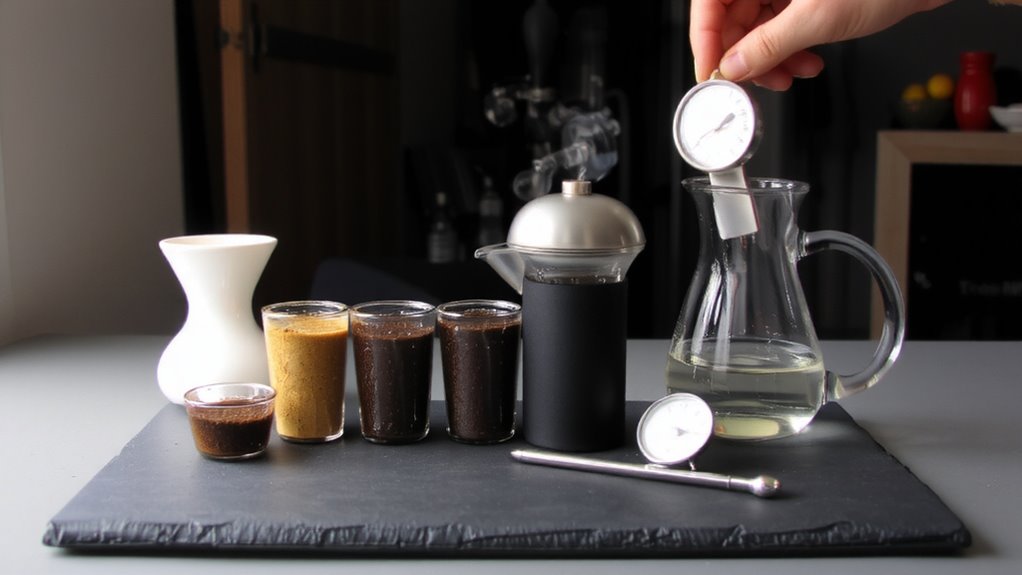
How hot should your water be for AeroPress? It depends on your bean and what you want from the cup. Lighter roasts shine with hotter water (195–205°F), releasing brightness and acidity, especially with hard water chemistry. Darker or older roasts, where roast age has muted delicate notes, do better at 185–195°F to emphasize body and avoid bitterness.
| Temperature | Effect on Brew |
|---|---|
| 205°F | Bright, crisp, high extraction – best for fresh light roasts |
| 195°F | Balanced, clear – ideal for medium roasts |
| 185°F | Smoother, heavier body – suits dark or aged roasts |
| 175°F | Delicate, tea-like – use sparingly with soft water chemistry |
Adjusting heat gives you direct control-hotter isn’t always better. Match temp to roast age and your water chemistry for a cleaner, more intentional cup.
Fine-Tune Brew Time for Cleaner or Richer Coffee
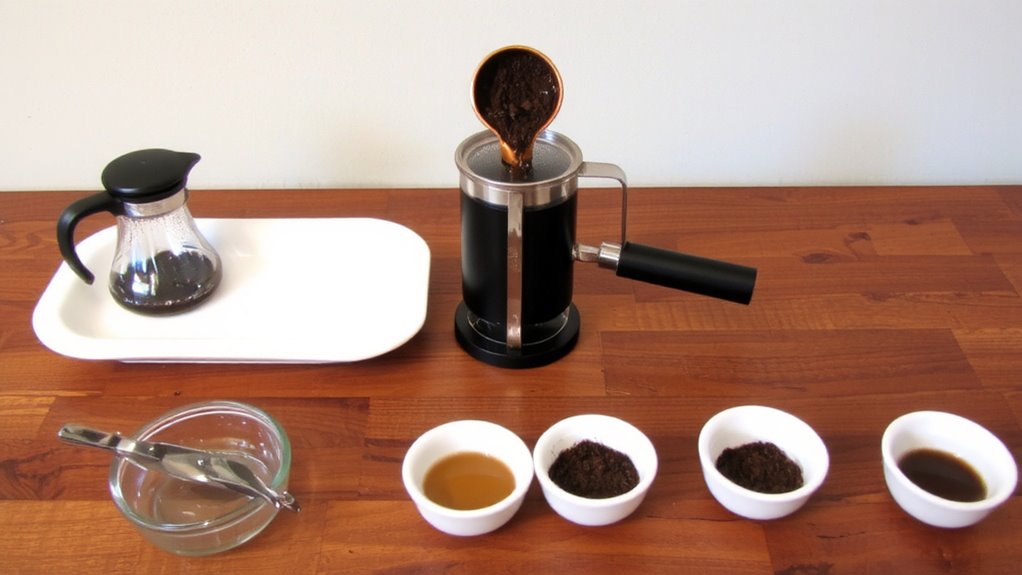
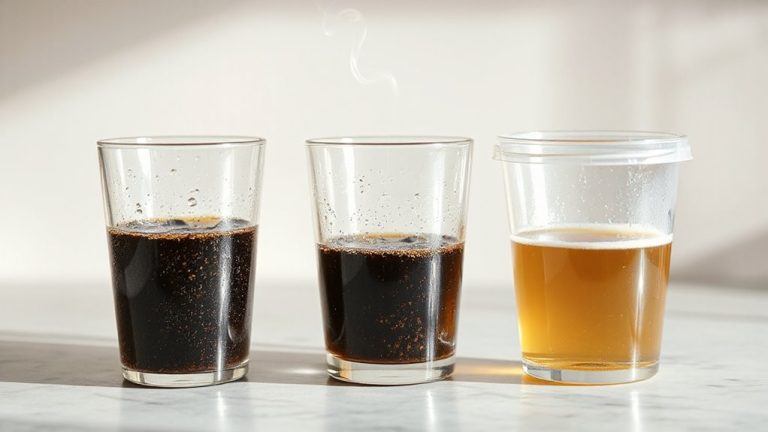
Water temperature sets the foundation, but your brew time decides how much of the coffee’s character makes it into the cup. A shorter brew duration, around 1 to 2 minutes, limits extraction and emphasizes flavor clarity-ideal for light roasts with delicate floral or citrus notes. You’ll get a cleaner, more tea-like cup with less bitterness. If you prefer a richer, heavier body, extend the brew duration to 2.5–3 minutes. This pulls out more oils and soluble compounds, especially from medium to dark roasts, boosting mouthfeel and depth. But go too long and you risk over-extracting harsh flavors. Adjusting brew time is one of the easiest ways to match your AeroPress to the bean. Try 1:45 for clarity, 2:30 for balance-small changes make noticeable differences.
Press Gently or Firmly for Strength and Clarity
If you want more control over the strength and clarity of your AeroPress coffee, how hard you press matters more than most realize. Pressing gently slows the flow, increasing contact time and often leading to a fuller, richer cup-but too little pressure can under-extract, leaving it weak. Firm pressure speeds up the descent, which may reduce fines getting through and improve clarity, yet over-pressing can force out harsh notes or disturb the filter. Good pressure control helps you fine-tune the extraction balance, especially with medium to fine grinds. If your coffee tastes muddled, try easing off the pressure. If it’s thin or sour, a slightly firmer press might help. Your ideal force depends on grind size, bean freshness, and desired profile. Practice steady, even pressure to find what works.
Brew Light and Dark Roasts Differently on AeroPress
Light and dark roasts respond differently in the AeroPress because of how roast level affects bean density, solubility, and flavor development. Light roasts are denser, so they need hotter water and longer brew times to extract fully. Use a fine to medium grind and aim for 2:30–3:00 minutes to bring out their bright, complex notes. Their lower solubility means you can’t rush extraction. Dark roasts are less dense and more soluble, so they extract faster and can turn bitter if overdone. Use slightly cooler water (around 195°F) and a shorter time-about 1:30–2:00. Grind a bit coarser to avoid harshness. Fresh roast age matters: light roasts taste best after 1–2 weeks post-roast, while dark roasts peak earlier and degrade faster. Adjust based on bean density and roast age to get balanced flavor every time.
Fine-Tune With the Inversion Method
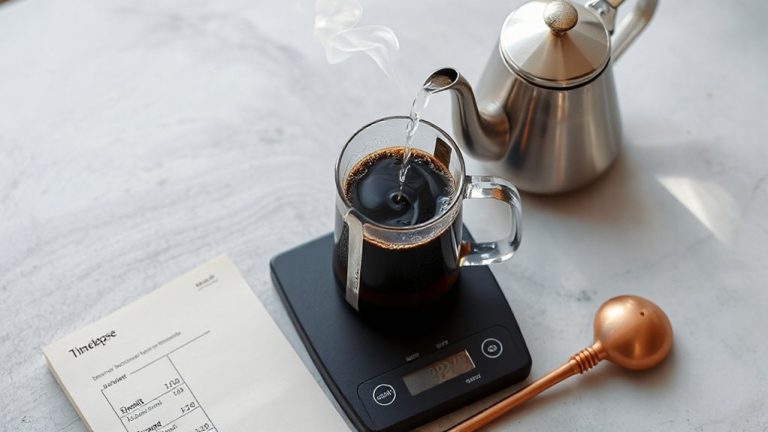
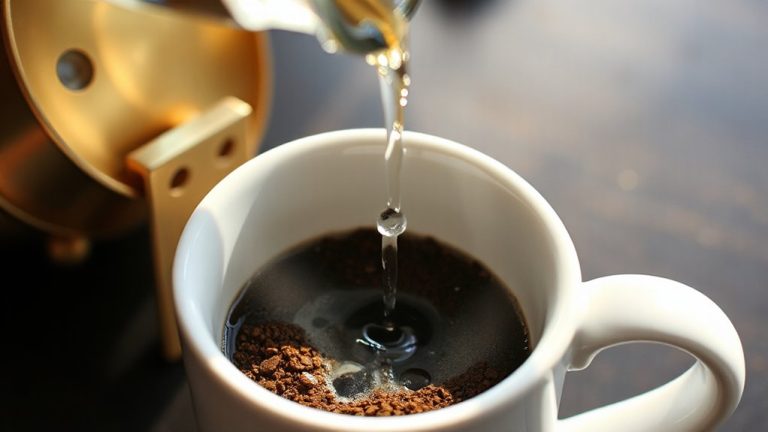
You’ll get more control over extraction by flipping the process-literally-with the AeroPress inversion method. Instead of plugging the chamber with a cap, you start with the plunger down, letting you delay the press. This setup gives you precise inversion timing, so you can extend brew time without worrying about drips. Once water hits the grounds, you can stir properly and let it steep evenly. When ready, slowly push down to fine-tune pressure control-push too fast and the brew turns bitter, too slow and it might under-extract. This method works especially well with dense beans or light roasts that need longer, even extraction. Just be careful when flipping; use a sturdy mug or stand. Compared to the standard method, inversion reduces pre-drip and gives more consistent results when you’re refining your recipe. It’s not required, but if you’re tweaking variables, it helps. A great way to explore similar control and flavor precision is by trying one of the best Aeropress alternatives for different brewing experiences.
On a final note
You can adjust your AeroPress brewing to match any coffee bean and taste preference. Use a finer grind and shorter brew time for bright, clean cups, or go coarse with a longer steep for bold, rich flavors. Light roasts often need hotter water and more time, while dark roasts shine cooler and faster. The inversion method helps control timing and prevents leaks, but it takes practice. Always experiment in small steps-changes in grind, temp, or pressure make a real difference. Your ideal cup is about consistent tweaks, not guesswork.