The Role of Different Container Materials in Maximizing Aroma During Cold Brew Processes
Your container’s material matters for keeping cold brew aromatic. Glass won’t absorb oils and, when tinted or paired with an airtight lid, slows oxidation and blocks light. Stainless steel, especially in vacuum models like Yeti or Thermos, seals in scent and blocks both light and oxygen completely. Plastic can trap odors and leach chemicals over time, especially if scratched. For best results, pick non-porous, light-blocking options-what works now might not keep things fresh later.
Notable Insights
- Stainless steel containers prevent oxygen and light exposure, preserving volatile aroma compounds during extended cold brew storage.
- Glass, especially amber or tinted, blocks light and resists odor absorption, maintaining brew clarity and scent integrity beyond 48 hours.
- Plastic containers risk odor retention and increased oxidation due to porosity and permeability, degrading cold brew aroma over time.
- Ceramic is acceptable only if fully glazed; otherwise, porosity can absorb oils and compromise fragrance stability during cold brewing.
- Temperature stability, best achieved with thick-walled or insulated containers, slows aroma degradation caused by thermal fluctuations during steeping.
How Container Material Shapes Cold Brew Aroma
The right container isn’t just storage-it’s a silent player in how your cold brew smells and tastes. You’re dealing with two key factors: surface porosity and material reactivity. Plastic containers often have high surface porosity, meaning they absorb oils and odors over time, which can taint your next batch. Even thorough washing might not remove those residues. Stainless steel is non-reactive and durable, but it blocks light, so you can’t monitor brewing progress. It also doesn’t absorb odors, making it a solid, low-maintenance option. Ceramic can work if it’s glued, but unglazed versions risk odor retention. Glass avoids both surface porosity and material reactivity entirely-though that’ll be covered in detail later. For now, know this: if you’re reusing containers, avoid anything porous or reactive. Your brew’s aroma stays cleaner when the material won’t interact or hold onto old flavors. A critical part of maintaining aroma quality is choosing the right best coffee machines for every budget, as they often come with compatible brewing containers that preserve flavor integrity.
Why Glass Keeps Cold Brew Fragrance Clear
You’ve probably noticed how some containers make your cold brew smell a little “off” after a few uses-glass won’t do that. That’s because glass is non-porous and doesn’t absorb lingering oils or residues, which helps preserve the original fragrance. Unlike plastic or metal, it doesn’t impart flavors or react with the brew over time. Glass transparency also lets you monitor clarity and sediment buildup, so you know when it’s time to clean or decant. Importantly, glass-especially when paired with an airtight lid-slows fragrance oxidation, keeping aromatic compounds more stable. Light exposure can still degrade quality, so use amber or tinted glass if storing for more than a day or two. Clear glass works fine for short-term use, especially in low-light environments. It’s not the most durable or insulated option, but for scent preservation and cleanliness, few materials match glass when you want your cold brew’s fragrance to stay sharp and true.
Why Stainless Steel Preserves Cold Brew Better
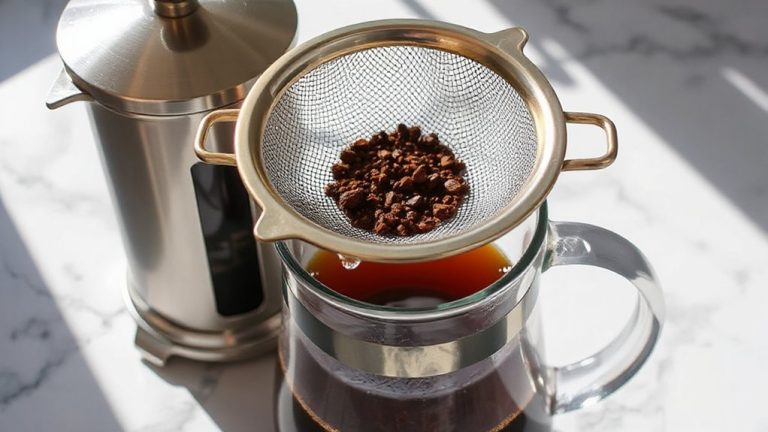
While glass locks in aroma well, stainless steel actually beats it in overall preservation when you’re storing cold brew longer than a few days. That’s because stainless steel offers superior oxidation prevention and chemical inertness, keeping your brew stable and aromatic. Light and oxygen are enemies of freshness, and unlike glass, steel blocks both completely. Plus, it won’t react with acids in your coffee, thanks to its chemical inertness. For those looking to optimize both freshness and convenience, a cold brew French press with a stainless steel carafe combines ease of brewing and long-term aroma retention.
| Feature | Stainless Steel |
|---|---|
| Oxidation Prevention | Excellent (airtight seal) |
| Light Protection | Full (opaque walls) |
You’ll notice less flavor drift over time compared to glass, especially beyond 72 hours. If you batch brew weekly, a vacuum-sealed stainless steel carafe like the Yeti Rambler or Thermos Stainless King is a practical, durable choice. It won’t alter taste, and cleanup is simple. For long-term cold brew storage, steel just works better.
How Plastic Changes Cold Brew Aroma Over Time
Even though plastic containers seem convenient for cold brew storage, they can gradually alter its aroma over time due to permeability and odor retention. You might not notice it at first, but plastics allow more oxygen transfer, increasing oxidation rates and dulling nuanced scents within days. Over weeks, the brew can develop a flat or stale profile. Cheap or scratched plastics are worse-they’re prone to chemical leaching, especially if exposed to UV light or heat, which introduces off-notes. Unlike glass or stainless steel, plastic absorbs coffee oils and lingering smells, making it harder to clean thoroughly and risking cross-contamination. If you use plastic, opt for food-grade HDPE or PET bottles, and replace them regularly. Still, for best results, switch to more inert materials. Plastic’s cost and lightweight appeal come at the cost of long-term aroma quality. Your cold brew deserves better. A better option for preserving freshness and preventing flavor contamination is using best containers for cold brew coffee storage.
How Temperature Stability Affects Cold Brew Scent
Keeping your cold brew at a steady temperature isn’t just about avoiding dilution-it directly shapes how the aroma develops and holds up over time. Fluctuations cause volatile scent compounds to fade faster, dulling the bright, nuanced notes you want. Ice immersion helps maintain a low, consistent chill, preserving aroma during long steeps. But if your container lets temps swing-like thin metal or poor-insulated glass-you risk frost cycling, where condensation freezes and thaws, stressing the brew and disrupting scent stability. Thick-walled insulated containers minimize this, keeping conditions steady. You’re better off avoiding frequent fridge access or warm rooms, both of which trigger shifts. For best results, choose a vessel that resists temperature change and stick to one storage spot. Simple, stable, and effective-that’s how you protect your cold brew’s scent from fading.
Best Container for Cold Brew Flavor and Scent
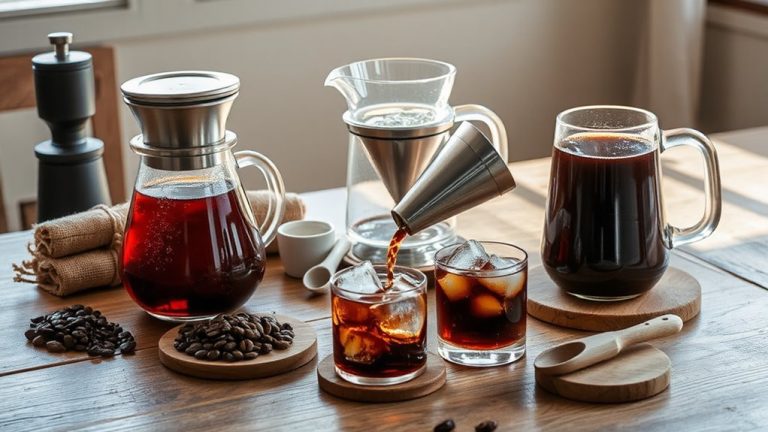
A great cold brew starts with the right container-it’s not just about holding liquid, but protecting flavor and scent from the first steep to the last pour. Glass jars with airtight lids are ideal because they don’t absorb odors and keep your brew tasting clean. Make sure the container size matches your batch-too big, and air exposure dulls the aroma; too small, and there’s no room for expansion. A tight lid seal is essential to prevent oxidation and scent loss during the 12–24 hour steep. Stainless steel is durable and temperature-stable, but may subtly alter taste if low-quality. Plastic can work short-term, but often retains smells and degrades over time. For best results, go with a wide-mouth glass mason jar (like a 1-gallon Bormioli Rocco) or a dedicated cold brew pitcher with measurement markers. Your nose-and taste buds-will notice the difference.
On a final note
You’ll get the best cold brew aroma by choosing the right container. Glass keeps scents pure but offers poor insulation. Stainless steel preserves aroma longer and maintains temperature, ideal for longer brews. Plastic may absorb odors and degrade scent over time. For most uses, stainless steel balances durability and aroma retention. If you prioritize clarity of fragrance and drink quickly, glass works. Match your choice to your brewing routine and storage time for best results.