Cold Brew With a French Press: Straining Tips for Minimal Sediment
Use a paper filter when straining your cold brew to catch fine grit that the French press filter misses-try a #4 cone or Chemex for clean results. For even clearer coffee, double-strain: press first, then pour through a paper filter in a V60 or Kalita Wave. This adds a few minutes but cuts sludge greatly. Just don’t skip a consistent coarse grind and fresh beans-they’re key to avoiding sediment from the start. Better technique means smoother sipping, and there’s more to fine-tuning your method.
Notable Insights
- Use a paper filter after French press straining to remove fine sediment and reduce grit in your cold brew.
- Double-strain by first using the French press lid, then a paper filter in a dripper for clearer results.
- Grind coffee coarsely and evenly to minimize fines that contribute to sediment at the bottom of the cup.
- Steep for 12–16 hours only to prevent over-extraction and excess silt from breaking down into the brew.
- Decant cold brew into a clean container after pressing to avoid disturbing settled grounds and reintroducing sediment.
Fix Grit With a Paper Filter
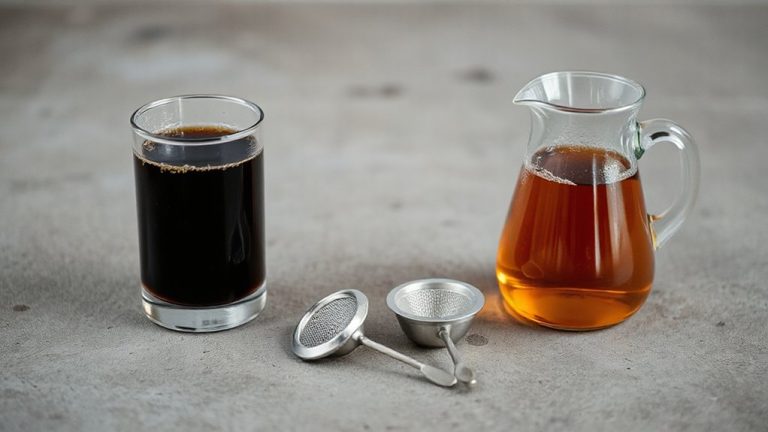
A paper filter can help you cut down on grit in your cold brew when using a French press. After steeping, place a paper filter-like a #4 cone or a Chemex-over your serving vessel, then slowly pour the brew through it. This filter type traps fine sediment that metal filters miss, giving you a cleaner cup. Just note that paper filters absorb some oils, slightly changing flavor versus a standard metal screen. Brewing time stays the same-usually 12 to 16 hours-so no need to adjust your steep. Paper filters work best if you prefer smoothness over full body. They’re affordable and widely available, but cost adds up over time. Reusable cloth filters are an alternative, though they require more cleanup. For most, paper offers a simple, effective fix to reduce grit without changing your routine. Consider pairing this method with one of the best French press picks for 2024 to enhance your overall brewing experience.
Double-Strain for Crystal-Clear Cold Brew
You’ve already tried using a paper filter to reduce grit, and it likely gave you a cleaner cup-though maybe a bit less oily than you’d like. For better coffee clarity without losing all body, try double-straining. First, press and pour your cold brew through the French press lid to catch the coarsest grounds. Then, slowly pour it through a paper filter lined in a separate dripper-like a Hario V60 or Kalita Wave. This second step dramatically improves sediment separation, trapping fine particles the metal filter misses. While it takes a few extra minutes, the result is noticeably smoother, with minimal residue at the bottom of your glass. Some oils get removed, but far less than if you’d used only paper from the start. Double-straining strikes a practical balance: clarity without compromising mouthfeel too much. It’s a simple upgrade that doesn’t need special gear-just patience and the tools you likely already own. For even better results, consider starting with one of the top-rated cold brew French presses designed specifically for smooth extraction and easy cleanup.
Stop Sediment Before It Starts: Grind Right
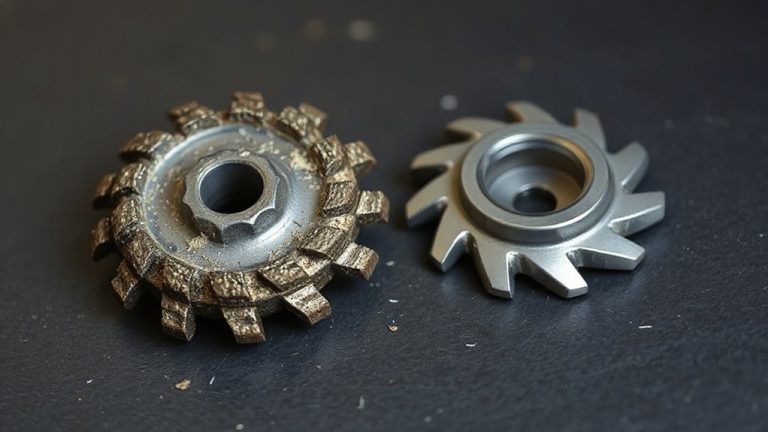
Most of the sediment in your cold brew comes down to one thing: grind size. You need a coarse, even grind-think sea salt-to minimize fines that slip through filters and create muck. A blade grinder won’t cut it; it crushes beans unevenly, producing both dust and chunks. Invest in a burr grinder like the Baratza Encore or Bodum Bistro for consistency. Your grind size directly affects clarity, so don’t wing it. Freshness matters too. Stale beans crumble more, releasing more fines. Use beans roasted within the past two weeks and grind them just before steeping. Older beans, even with the right grind size, lose structural integrity and increase sediment. By pairing proper grind size with peak bean freshness, you stop sediment at the source. This isn’t just prep-it’s prevention. Get it right, and your cold brew stays smooth, not sandy. For cold brew specifically, choosing one of the best coffee grinders for cold brew ensures optimal performance and flavor extraction.
Why Cold Brew Gets Gritty (And How to Prevent It)
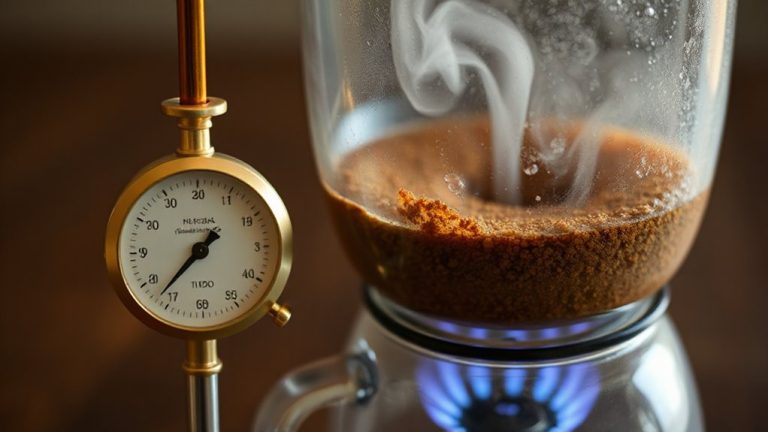
Grinding too fine or using stale beans isn’t the only reason your cold brew ends up gritty-steeping time and agitation play a big role too. If you stir too hard or too often during brewing, you’re pushing fine particles into solution, making sludge more likely. You don’t need hot water here-cold brew relies on time, not water temperature, to extract flavor. But if your brewing time runs too long-beyond 18 hours-you risk over-extracting silt and bitter compounds. Stick to 12–16 hours for cleaner results. Keep the French press plunger up during steeping to avoid compacting grounds. Use room-temperature or cold filtered water; it guarantees a slow, even draw without forcing fines through. Avoid shaking the container-gentle pouring only. This method won’t eliminate all sediment, but it reduces grit dramatically. You’re aiming for smooth concentration, not a murky mess.
Store and Serve Without Stirring Up Sludge
Once you’ve finished steeping and pressed down the plunger, the last thing you want is to undo all that careful work by muddying your cold brew with leftover sediment. Transfer the brew to a separate container, ideally a clean carafe or bottle, pouring slowly and stopping before the last murky inch. This preserves glass clarity and prevents sludge from mixing back in. Avoid shaking or stirring the storage vessel-just pour gently each time you serve. Using a spouted container helps maintain serving elegance and control. If you plan to keep it beyond 24 hours, store it in the fridge with a tight seal to preserve freshness without agitation. Never pour directly from the French press after pressing, as even slight movement can disturb settled grounds. For best results, decant immediately post-press and keep cold brew cold.
On a final note
You’ll get cleaner cold brew by using a medium-coarse grind and double-straining-first through the French press lid, then a paper filter. Paper filters catch fine particles that metal filters miss, reducing grit. Let the brew settle before pouring to avoid stirring up sediment. Store in a sealed container in the fridge for up to a week. Pour slowly, leaving the last bit behind.