How to Brew Heirloom Ethiopian Coffee to Highlight Its Blueberry and Lemon Notes
Use a light roast Ethiopian bean from regions like Yirgacheffe or Sidama to preserve its natural blueberry and lemon notes. Grind fresh with a burr grinder to a medium-fine consistency. Brew with water between 195–205°F-avoid boiling-using a Hario V60 for clarity. Bloom the grounds with twice their weight in water and let degas 30–45 seconds. Pour in slow, steady spirals to extract bright, juicy flavors evenly. The full process reveals more about refining taste over time.
Notable Insights
- Choose a light roast to preserve the delicate blueberry and lemon notes inherent in Heirloom Ethiopian beans.
- Grind coffee fresh using a burr grinder for a consistent medium-fine texture that enhances flavor clarity.
- Use water between 195–205°F to properly extract bright acids and sugars without scalding the beans.
- Bloom the grounds with twice their weight in water and wait 30–45 seconds for full aromatic expression.
- Employ a slow, spiral pour in a Hario V60 to emphasize fruitiness and maintain clean, vibrant notes.
Choose Light Roast Ethiopian Beans for Fruit Clarity
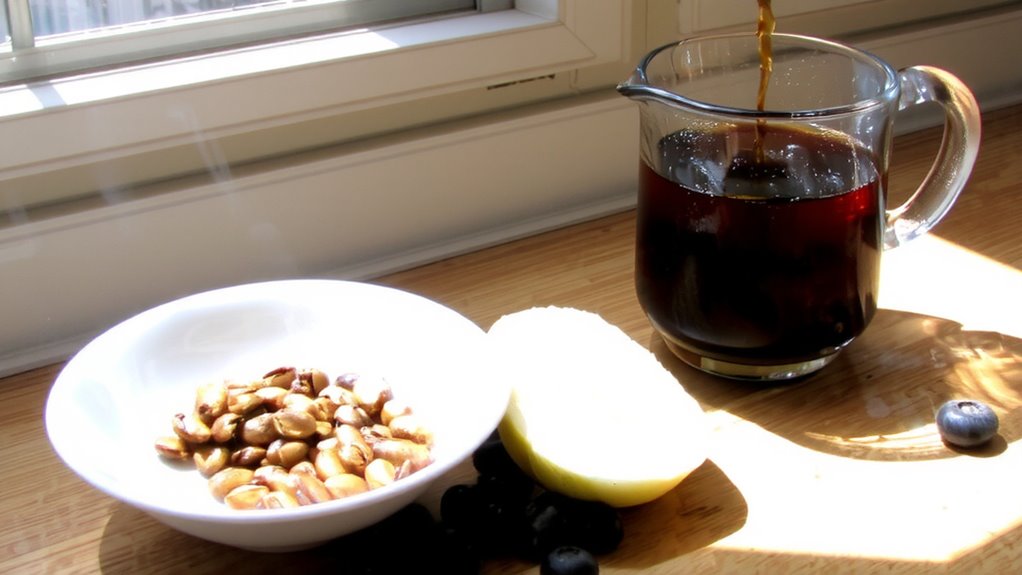
While you might be tempted to go with a darker roast, choosing a light roast Ethiopian bean helps preserve the bright, fruity notes that define its character. The delicate blueberry and lemon tones are fragile, and a lighter roast level guarantees they survive the brewing process. Dark roasting masks subtle flavors, overpowering the natural sweetness and acidity tied to the Ethiopian terroir-soil, altitude, and climate that shape the bean’s profile. Light roasts, typically roasted just past first crack (around 356–401°F), keep those distinctions intact. Beans from regions like Yirgacheffe or Sidama benefit especially, their floral and citrus traits shining when underdeveloped isn’t the goal. If you want authenticity, skip the French or Italian roast versions. Stick to a light roast to taste what the highland farms actually produce. It’s not about strength-it’s about clarity. For the best results, consider trying one of the top-rated light roast coffee options that highlight origin-specific flavors.
Grind Fresh for Maximum Brightness
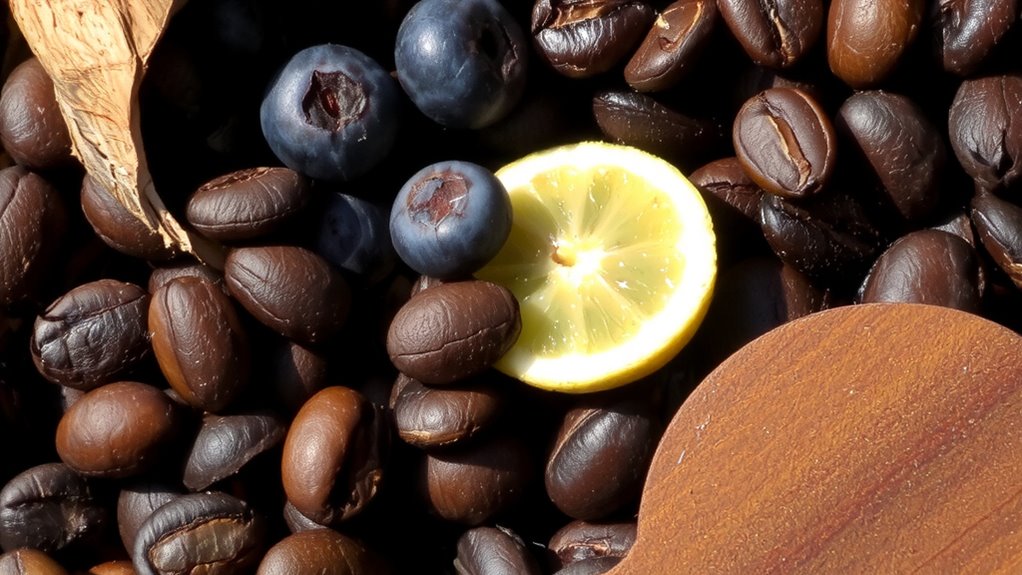
Roasting your beans lightly preserves the vibrant fruit and flower notes typical of Ethiopian coffee, but that effort means little if you’re not grinding fresh before brewing. Stale grounds lose brightness fast-within 30 minutes, flavor degrades noticeably. A burr grinder gives you far better grind consistency than a blade model, which means even extraction time and balanced cups. Inconsistent particles lead to some over-extracting (bitter) while others under-extract (sour). For methods like pour-over, aim for a medium-fine grind, similar to table salt. Here’s a quick guide:
| Grind Size | Best For |
|---|---|
| Coarse | French Press |
| Medium-Coarse | Chemex |
| Medium | Drip Machines |
| Medium-Fine | Pour-Over (e.g. V60) |
| Fine | Espresso |
Pre-ground coffee might be convenient, but you sacrifice control and clarity-especially with delicate heirloom Ethiopians. Grind right before brewing for peak brightness. For the best results, choose one of the best coffee grinders based on performance and consistency.
Use Hot, Not Boiling, Water (195–205°F)
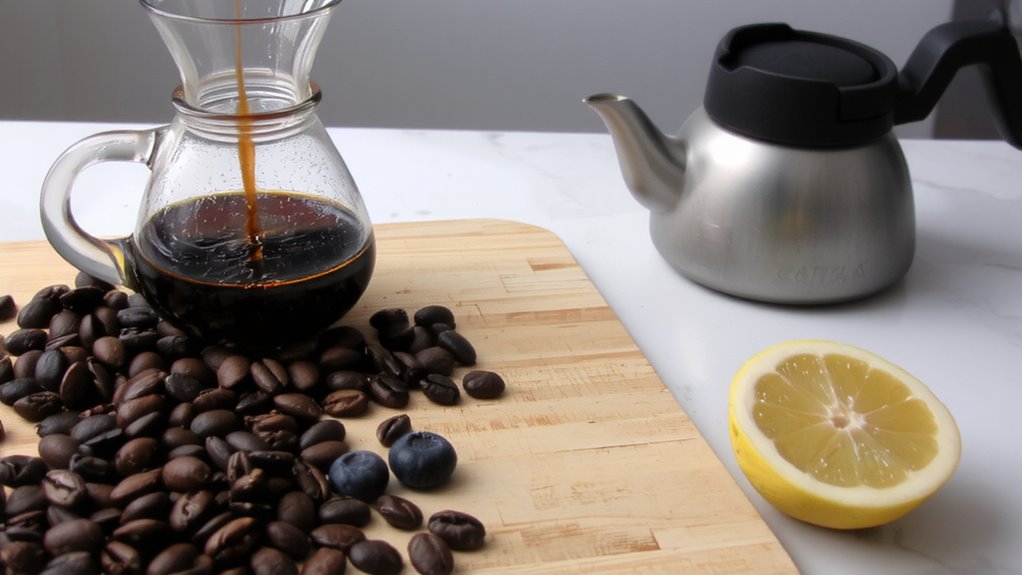
If you want to get the most out of your Ethiopian beans, you’ll need to pay close attention to water temperature-too hot and you’ll burn the delicate flavors, too cool and the brew falls flat. Aim for 195–205°F, the ideal range for proper extraction control. Boiling water (212°F) scalds light-roast beans, bringing out harshness instead of the bright blueberry and lemon notes you want. At the right water temperature, acids and sugars dissolve evenly, giving a balanced cup. An electric kettle with temperature control makes this easy-models like the Fellow Stagg EKG or Bonavita BV3825 let you dial in the exact heat. Without one, wait 30 seconds after boiling before pouring. This simple pause brings temps down safely. Consistent water temperature isn’t fussy-it’s essential for clarity and flavor. Get this right, and your coffee will taste cleaner, brighter, and more true to origin. Extraction control starts here. For precision and ease, consider using one of the best kettles for pour-over coffee.
Bloom Your Coffee for Aromatic Depth
You’ve got your water at the right temperature-195–205°F-so now it’s time to let those beans show their full character. Start by adding just enough water to saturate the grounds-about twice the weight of the coffee. This triggers gas release, as trapped CO₂ escapes from the freshly roasted beans. That burst of bubbles isn’t just visual drama; it’s essential for even extraction. Let the bloom duration last 30 to 45 seconds. Skipping this step or cutting it short risks dull flavors and missed aromatics. A gooseneck kettle helps control water placement, but any reliable kettle works if you pour slowly and evenly. If your beans are older than four weeks, gas release will be weaker-still bloom, but expect less expansion. This step isn’t optional for heirloom Ethiopians; their delicate blueberry and lemon clarity depend on it. Patience here improves the entire brew.
Pour to Highlight Blueberry and Citrus Notes
Why do certain pours make the fruit notes in Ethiopian coffee pop? It’s because of how water turbulence affects extraction. Too much agitation bursts out bitter compounds, masking delicate blueberry and citrus tones. You want control, not chaos. That’s where a steady pour spiral comes in. Start center, then move outward in concentric circles, returning to the middle-this guarantees even saturation without excessive churning. A gooseneck kettle helps, giving you precision most kettles lack. Pour slow: about 3–5 grams per second. This minimizes harsh turbulence while maintaining contact time. Too fast, and you over-extract the edges; too slow, and the coffee under-extracts. Aim for total brew time of 2:30–3:00 for a 15g dose. The pour spiral isn’t just technique-it’s how you target sweetness and lift bright lemon and berry notes cleanly from heirloom beans.
Pick a Brew Method That Enhances Acidity
While acidity in coffee can vary by bean origin and roast level, your brewing method plays a decisive role in how those bright, wine-like notes come through. If you want to highlight the citrus and blueberry tones in your Ethiopian beans, go with a manual pour. It gives you full control over water temperature and saturation, which helps extract delicate acids without overdoing bitterness. Use a paper filter-it removes oils and sediments that can mute acidity, resulting in a cleaner, crisper cup. Metal or cloth filters allow more body but may dull the sharp, juicy notes you’re after. The Hario V60 is a solid choice for pour-over, promoting even flow and bright clarity. Just make sure your grind is fine to medium-fine and your water sits just off boil, around 200°F.
Taste and Adjust for Balanced Juiciness
After brewing with a pour-over like the Hario V60, the next step is tasting with intent. Sip slowly, focusing on the brightness, sweetness, and juiciness of the blueberry and lemon notes. If the cup tastes flat or harsh, your water might be the issue. Water hardness and mineral content greatly affect extraction-soft water can under-extract, yielding sourness, while very hard water over-extracts, bringing out bitterness. Aim for balanced mineral content: 50–150 ppm total dissolved solids with a mix of calcium and magnesium. Using third-party test strips or a TDS meter helps verify this. If needed, switch to bottled spring water or adjust your tap water with drops like Aquacflo. Make small tweaks to grind size or brew time if flavor still lacks balance. Retaste after each change. Consistent water quality means repeatable, juicy results.
On a final note
Use light roast Ethiopian beans to preserve bright fruit notes. Grind just before brewing for freshness. Water at 195–205°F extracts flavor without bitterness. Bloom for 30 seconds to release gases and boost aroma. A pour-over like Hario V60 enhances acidity and clarity, highlighting blueberry and lemon. Adjust grind or brew time if the coffee tastes too sour or flat. This method gives clean, vibrant cups worth refining.