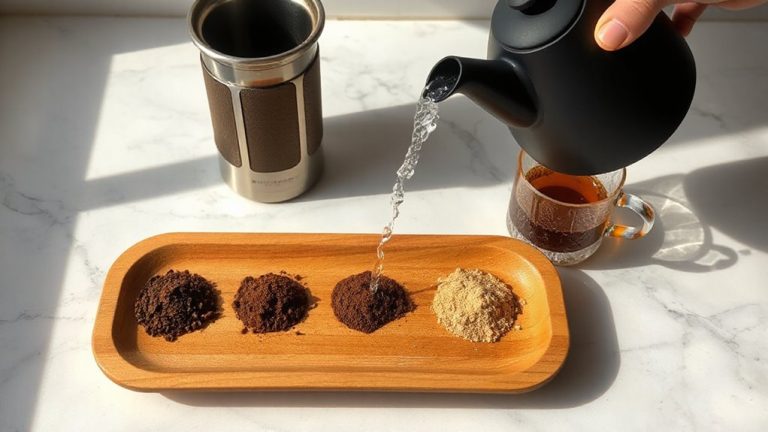
A Comprehensive Guide to Selecting Optimal Grind Sizes for Drip Coffee Brewers
Your drip coffee tastes best with a medium grind-think table salt-for balanced extraction. Too fine and it’s bitter; too coarse and it’s weak. Use a burr grinder like the Baratza Encore for consistent results, and adjust slightly based on roast: go coarser for dark roasts, a bit finer for light ones. If your brew’s off, tweak the grind first. You’ll find the full picture helps refine every cup.
Notable Insights
- Use a medium grind size, similar to table salt, for optimal extraction in drip coffee brewers.
- Choose a burr grinder for consistent particle size, avoiding uneven extraction from blade grinders.
- Adjust grind coarser for dark roasts to prevent bitterness, finer for light roasts to improve extraction.
- Correct bitter coffee by coarsening the grind; fix sour or weak coffee by grinding finer.
- Maintain water temperature between 195°F and 205°F to complement medium grind performance in drip brewing.
Why Grind Size Makes or Breaks Drip Coffee
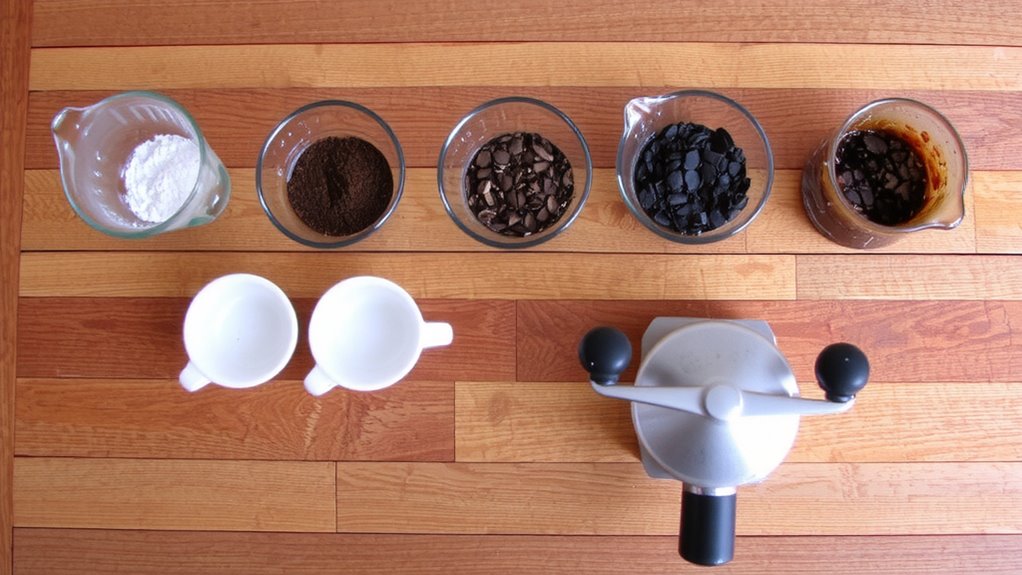
While you might think the type of coffee maker or bean matters most, it’s actually the grind size that often decides whether your drip coffee turns out balanced or ruined. Too fine, and your coffee over-extracts, turning bitter; too coarse, and it under-extracts, leaving a weak, sour taste. The key is grind consistency-uneven particles extract at different rates, muddying flavor. Your drip brewer relies on even extraction, which only happens when grounds are uniform. Water temperature also interacts with grind size; most machines operate between 195°F and 205°F, ideal for medium grinds. If your grind is off, even perfect water temperature can’t fix imbalanced brewing. A quality burr grinder guarantees consistent particle size, unlike blade grinders, which create erratic results. For drip coffee, consistency and proper grind size are non-negotiable. Get those right, and you’re already ahead-no gimmicks, just better coffee. Investing in one of the best coffee grinders can dramatically improve your daily brew by ensuring precision and durability.
What the Perfect Medium Grind Looks Like
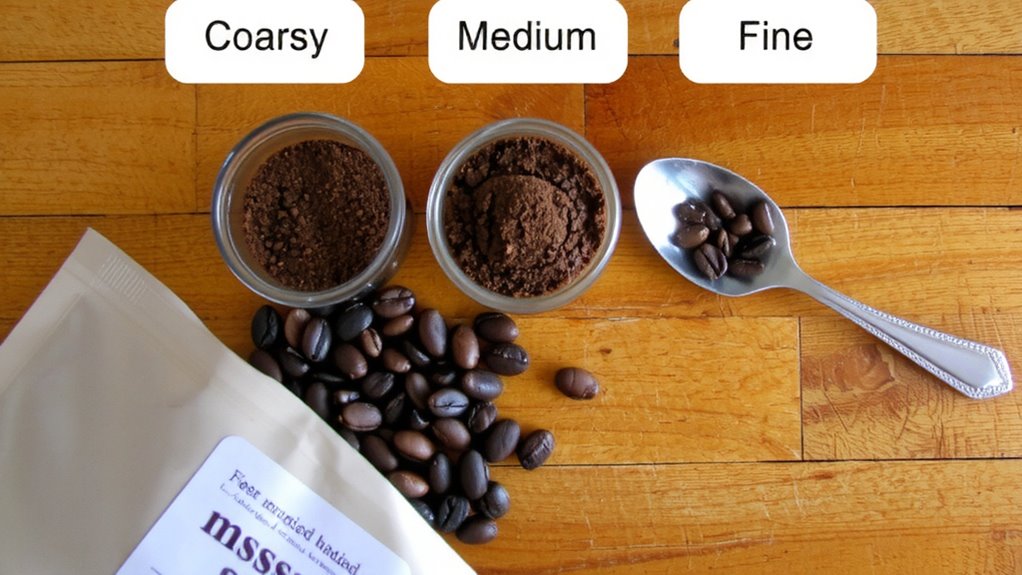
Think texture, not time-your ideal medium grind for drip coffee should resemble ordinary table salt. The right grind texture guarantees balanced extraction: too fine risks bitterness, too coarse leads to weak coffee. You want most particles falling between 0.5 and 1 millimeter-consistent, not dusty or chunky. Uniformity matters just as much as size; particle uniformity prevents over- and under-extraction, giving you a clean, even cup. A blade grinder often fails here, producing uneven results. A burr grinder-like the Baratza Encore or Capresso 560-delivers the consistency drip machines need. If you pinch a sample and feel varied grittiness, your grind lacks uniformity. Adjust the grinder’s settings incrementally and recheck. Good medium grind looks homogenous, feels even between your fingers. It’s not about brand or bean-it’s about repeatable texture and reliable particle size. That’s what makes your morning cup hit right. For drip brewing, aiming for the perfect medium grind ensures optimal flavor and extraction balance.
How Roast Level Changes Your Grind for Drip
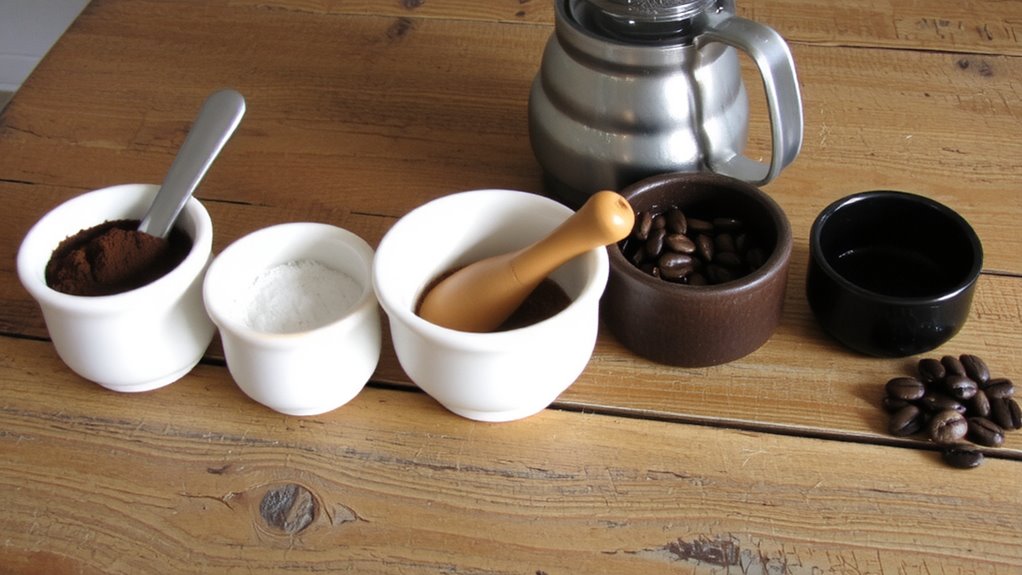
Since darker roasts lose more moisture and become more brittle during roasting, they grind finer even on the same setting-so you’ll need to adjust coarser for a light roast versus a dark one. Light roasts are denser, requiring more effort to grind, and they produce more fines if ground too fine, which can over-extract. That’s why you’ll want a slightly finer setting than medium for light roasts to guarantee enough surface area for proper extraction in drip brewers. Dark roasts, being more porous and fragile, break down too easily and risk over-extraction if ground too fine. Use a slightly coarser grind than medium for dark roasts to slow water flow and reduce bitterness. Your brewer’s ideal range stays consistent, but shifting the grind based on roast level fine-tunes results. Always adjust in small increments and stick to one roast type per brewing session for best control.
Fixing Bitter or Weak Coffee From Grind Issues
If your drip coffee tastes bitter, the grind is likely too fine, causing over-extraction as water pulls out unwanted compounds from the increased surface area. For overextraction correction, coarsen the grind slightly-just one or two notches on your grinder can make a noticeable difference. On the flip side, if your coffee tastes weak or sour, it’s probably under-extracted due to a grind that’s too coarse. Apply an underextraction adjustment by making the grind finer to increase contact between water and coffee. You want even extraction, so aim for a consistency like table salt. Small tweaks matter; change only one variable at a time. Water temperature and brew time play roles, but grind size is often the fastest fix. Test results over a few brews. With consistent adjustments, you’ll hit balanced, flavorful coffee without fuss.
Best Grinders and Settings for Drip Coffee
Getting your grind size right makes a clear difference in flavor, and once you’ve dialed in the adjustments for bitterness or weakness, the next step is making sure your grinder supports that consistency. For drip brewing, aim for a medium grind-similar to table salt. Blade grinders are cheap but lack precision and durability. A burr grinder, like the Baratza Encore or Cuisinart Supreme Grind, delivers more uniform particles and better grinder durability. Conical burr models tend to run cooler, preserving flavor. When comparing brands, look at consistency, build quality, and ease of cleaning. The Encore edges out others in long-term performance, while budget models may wear faster. Adjust settings gradually, testing after each change. Remember, even the best grinder fails if it can’t hold its calibration. Check reviews for long-term performance, not just first-use results. Consistent grind size and reliable hardware make all the difference in daily brewing. For those seeking top-tier performance, consider models highlighted in expert reviews of the best professional coffee grinders.
On a final note
You’ve seen how grind size directly affects your drip coffee’s taste. Use a medium grind as your starting point-it’s ideal for most machines. Adjust finer or coarser to fix weak or bitter results. Match the grind to your roast: lighter roasts may need a finer setting, darker ones slightly coarser. A burr grinder like the Baratza Encore or OXO Brew gives consistent results. Drip brewing rewards precision, so dial in your grind, keep variables steady, and brew confidently.