Why You Should Remove and Rinse Your Coffee Maker’s Carafe Daily
You should rinse your carafe daily because leftover coffee oils turn rancid overnight, adding bitter, sour flavors to your next brew. Residue builds up quickly, especially in glass or plastic, and hard water leaves mineral scale that dulls taste and hurts performance. A quick rinse with warm water removes oils and prevents gunk from forming. It keeps your carafe clear, your machine running smoothly, and your coffee tasting fresh-every time you brew. There’s more to how this simple step protects both flavor and equipment over time.
Notable Insights
- Leftover coffee residue introduces bitter, off-flavors that ruin the taste of fresh brews.
- Coffee oils degrade overnight, creating rancid or sour notes in the next pot.
- Lingering oils and particles cause persistent odors that transfer to new coffee.
- Mineral buildup from hard water reduces heating efficiency and affects brewing performance.
- Daily rinsing prevents residue and scale accumulation, extending the machine’s lifespan.
Why A Dirty Carafe Ruins Your Morning Coffee
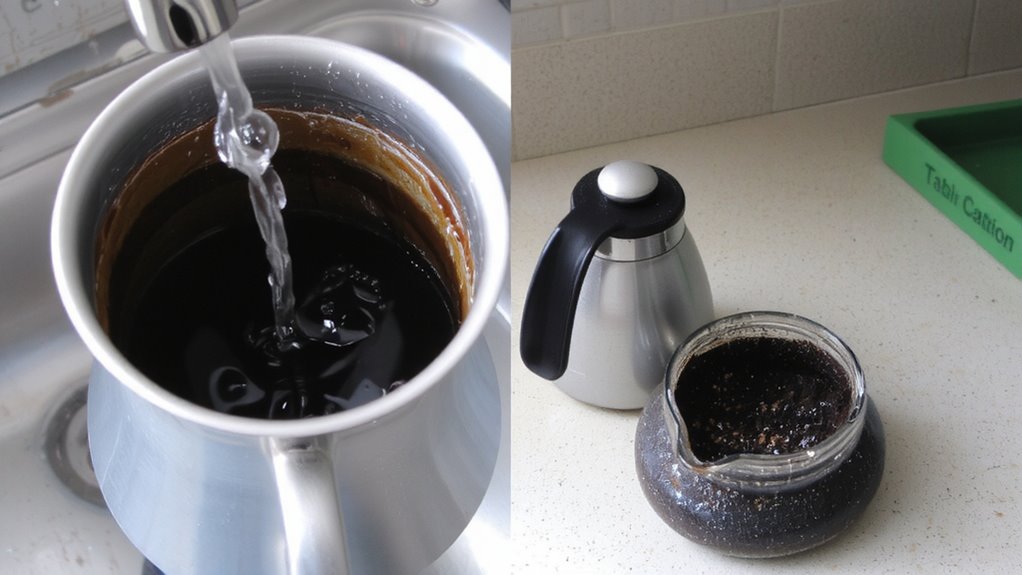
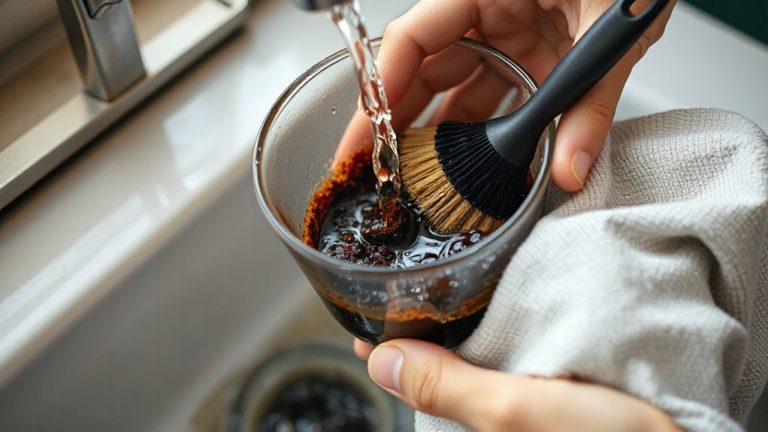
That leftover coffee residue in your carafe? It’s doing more than just looking messy-it’s compromising your next pot. Even a small amount can introduce a bitter taste, turning what should be a smooth, rich brew into something harsh and off. You might not notice it at first, but over time, that lingering odor builds up, seeping into fresh batches even after cleaning. Plastic and glass carafes both trap oils and particles, especially if they’re not rinsed promptly. Without daily rinsing, those old grounds mix with new water and heat, accelerating stale flavor transfer. It’s not just about appearance; it’s about preserving quality. A quick rinse removes visible sludge and cuts down on taste distortion. For best results, use warm water and a soft sponge every morning. Don’t wait until residue dries-that makes removal harder and increases flavor contamination. Consistent rinsing keeps coffee tasting like coffee, not yesterday’s aftermath. A clean glass-lined coffee carafe ensures optimal flavor and longevity for your brewing experience.
How Coffee Oils Turn Sour Overnight
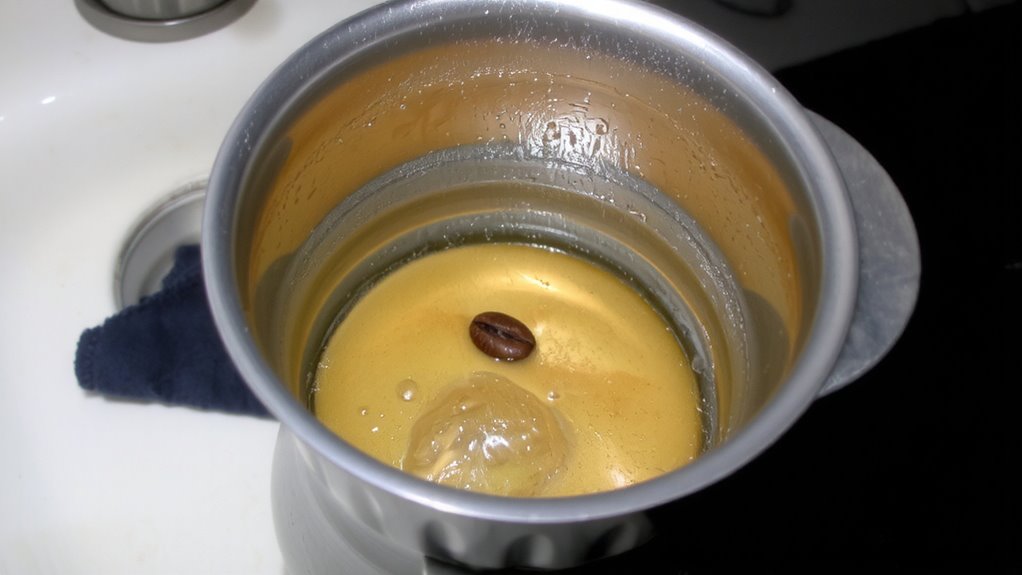
Coffee oils start breaking down as soon as they’re exposed to air, and overnight that process kicks into high gear. You’re not imagining that stale, rancid taste in your morning brew-oil degradation is the real culprit. Those leftover oils cling to your carafe walls, reacting with oxygen and heat, creating off-flavors some describe as musty or sour. In warm, moist environments, coffee fermentation can even begin, especially if traces of brewed coffee remain. While full fermentation is rare in a home kitchen, the early stages contribute to flavor loss and unpleasant aromas. These changes don’t just affect taste-they can taint your next pot, even if you brew fresh grounds. Residual oils also make future cleaning harder, requiring more scrubbing or vinegar soaks. Rinsing your carafe each night disrupts this cycle, minimizing oil degradation and eliminating the feeding ground for flavor-robbing reactions. It’s a small step with a direct payoff in coffee quality.
The Truth About Mineral Buildup In Your Carafe
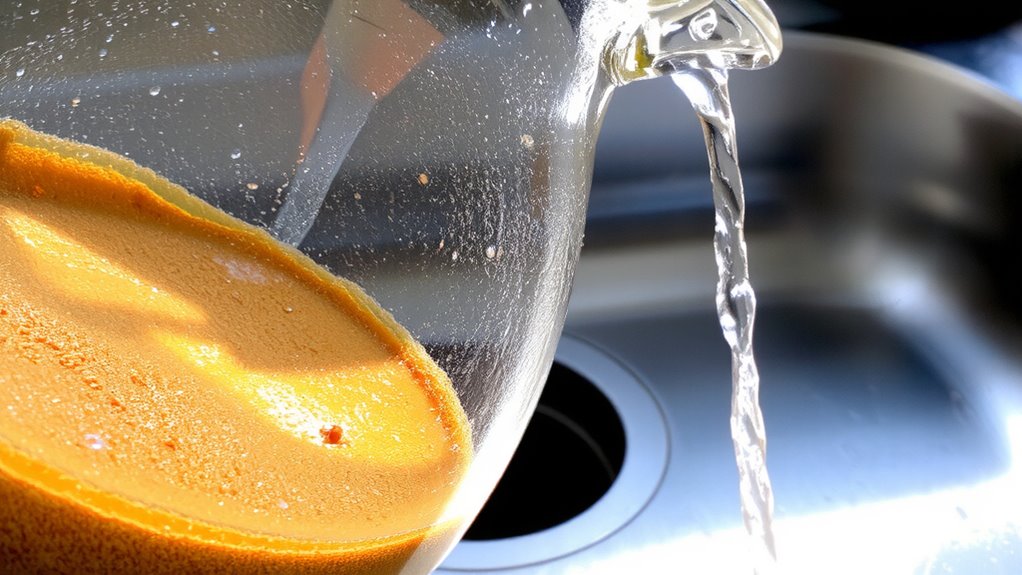
How often do you notice cloudy spots or chalky residue in your carafe, even after washing? That’s mineral buildup, and it’s more common than you think. If your area has high water hardness, minerals like calcium and magnesium are left behind each time water heats and evaporates. Over time, this leads to scale formation inside your carafe and coffee maker. Scale isn’t just unsightly-it can interfere with heat transfer and reduce machine efficiency. While stainless steel carafes resist buildup better, glass ones show it clearly. You can minimize scale by using filtered water, which reduces mineral content. Some users swear by weekly vinegar rinses to dissolve deposits, though overuse may damage seals. For hard water areas, a descaling solution every few months helps maintain performance. Regular inspection lets you catch scale early, keeping your system running as it should. Choosing a coffee maker made without plastic components can also reduce chemical leaching risks over time, especially with repeated heating cycles. A popular option is the Best Plastic-Free Coffee Makers for those prioritizing both durability and health-conscious brewing.
Rinse Your Carafe Daily For Fresher Coffee
You’ll often get better-tasting coffee simply by rinsing your carafe every day. Oils and residue from yesterday’s brew can linger, dulling the flavor of your next pot. Making this a daily habit guarantees a cleaner taste and maintains carafe shine over time. It only takes a few seconds but makes a noticeable difference, especially with lighter roasts that highlight subtle off-notes.
| Factor | With Daily Rinse | Without Daily Rinse |
|---|---|---|
| Flavor Clarity | Crisp, clean taste | Slightly stale or bitter |
| Residue Buildup | Minimal | Gradual, sticky film |
| Carafe Shine | Sustained clarity and luster | Dull, cloudy appearance |
Skip harsh scrubbing-just use warm water and a soft sponge. Do this each morning, and you’ll preserve both taste and condition. It’s a small step that pays off in every cup.
How A Clean Carafe Extends Your Machine’s Life
While it might seem like just a glass container, keeping your carafe clean actually plays a key role in protecting the full coffee maker. Mineral buildup and coffee residue can interfere with proper water flow and heating, especially if your machine has internal water filtration. Over time, this strain reduces machine longevity. A dirty carafe often means you’re pouring coffee back into a system already compromised by scale or clogs, which many self-contained filtration systems can’t fully guarantee. Regular rinsing and deep cleaning help maintain consistent performance. For models like drip coffee makers with built-in filters, a clear carafe guarantees you avoid recontaminating fresh brews. It’s a small step that supports internal mechanics and filtration efficiency. You don’t need special products-just daily rinsing and weekly washing. This simple habit protects your investment and keeps your machine running like new longer. For those considering alternatives, coffee makers without a carafe offer a convenient option that eliminates this maintenance step entirely.
On a final note
You should rinse your carafe daily to prevent old oils and mineral buildup from spoiling your coffee’s taste. Residue accumulates quickly, especially if you use tap water or brew often. A quick rinse removes most grime, while a weekly wash with mild soap keeps it fresh. Glass and stainless steel carafes hold odors differently-glass shows stains more but doesn’t retain smells. Clean it daily, and you’ll get better-tasting coffee and extend your machine’s life.