The Effect of Bean Hardness on Required Grind Size for Uniform Extraction
You’ll need to adjust your grind size based on bean hardness for even extraction. Hard, dense beans from high altitudes-like Ethiopian or Kenyan-resist grinding and need a finer setting to extract fully, or they’ll taste sour. Softer, low-altitude beans like Brazilian or Sumatran crush easily and require a coarser grind to avoid bitterness. Always use a burr grinder for consistency. Your roast level and bean age also play a role-lighter, fresher roasts are harder. Tweaking the grind helps you hit the right balance. You’ll find more nuance once you explore how elevation and roast shape density.
Notable Insights
- Harder beans, often from high altitudes, require finer grinds to increase surface area for proper extraction.
- Softer beans, typically dark-roasted or low-altitude, need coarser grinds to avoid over-extraction and bitterness.
- Bean density influenced by elevation and roast level affects how evenly particles break during grinding.
- Light roasts are denser and harder, necessitating finer grind settings than softer, dark-roasted beans.
- Consistent burr grinding is essential to manage hardness-related variability and achieve uniform extraction.
How Bean Hardness Affects Grind Size
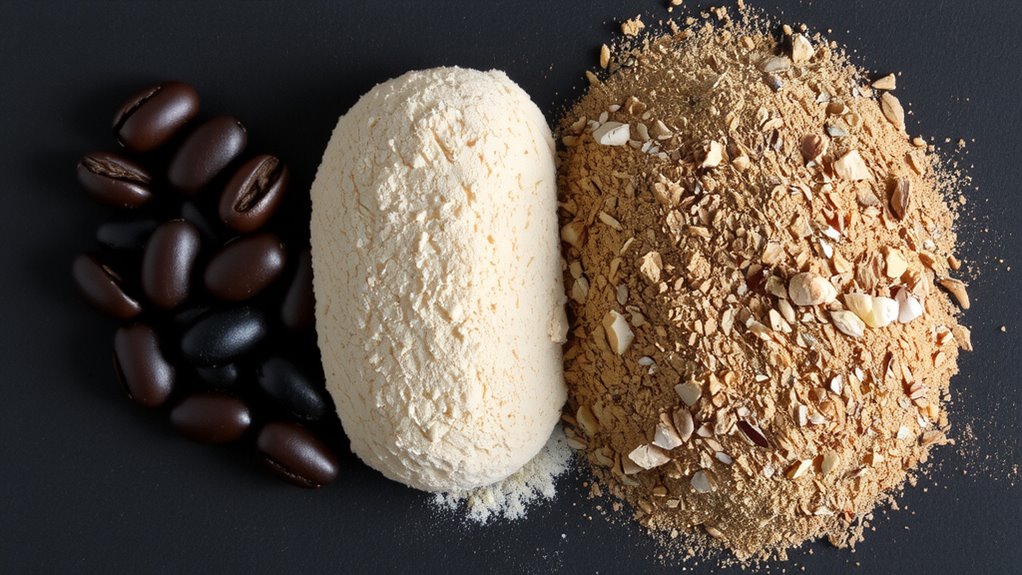
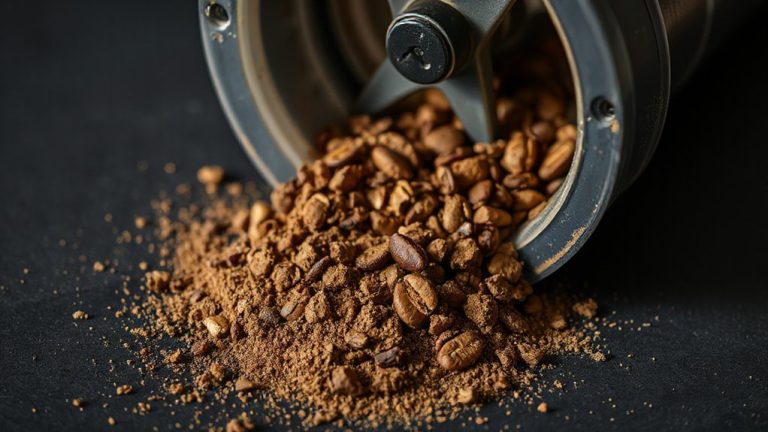
Grind size isn’t just about your coffee grinder - bean hardness plays a quiet but critical role. You’ll notice harder beans, often from high-elevation origins, resist grinding and produce more fines if your grinder isn’t up to the task. Softer beans, usually from lower-altitude regions or darker roasts, crush more easily, risking over-extraction if ground too fine. Bean origin affects density, which in turn changes how evenly your beans break down. A light roast from Ethiopia, for example, demands a sturdier burr grinder and finer setting than a dark Sumatran roast. Roast level also shifts hardness - the longer the roast, the softer the bean. That means you’ll need to adjust your grind size accordingly, even with the same origin. Ignoring hardness leads to uneven extraction and off flavors. Match grinders with appropriate settings and durability for best results. For consistent results with varying bean hardness, consider investing in one of the best coffee and espresso grinders top picks based on burr quality and grind consistency.
Why High Altitude Makes Beans Denser
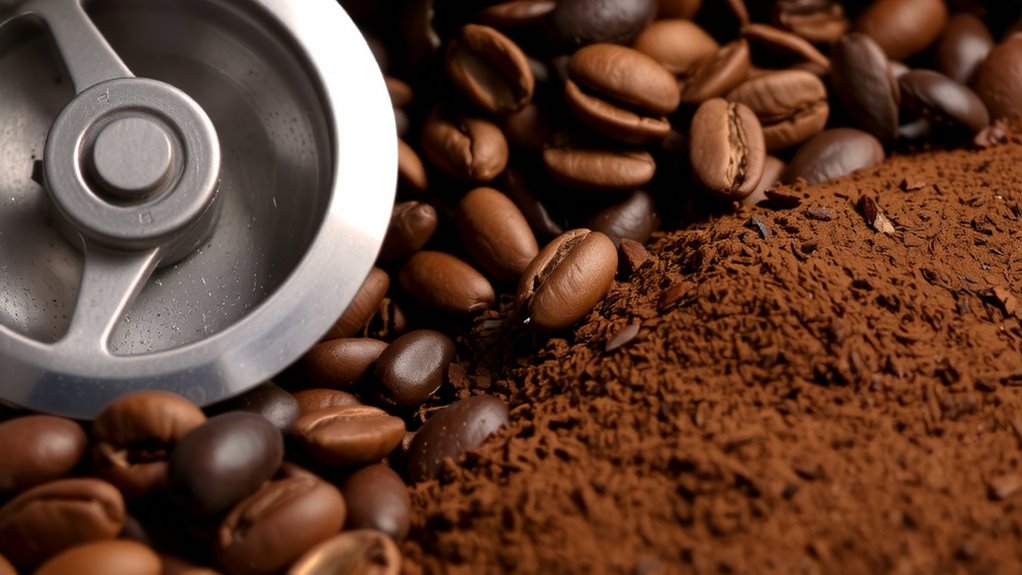
While you might not see it just by looking at them, coffee beans grown at higher altitudes tend to be denser because of how they develop. Cooler temperatures slow the maturation of the coffee cherry, allowing more time for sugars and solids to build inside the bean. This slower growth directly links to bean origin-regions like Ethiopia’s highlands or Colombia’s Andes produce denser beans due to elevation and stable climate impact. The reduced oxygen and fluctuating day-night temperatures at altitude stress the plant, further compacting the bean structure. You’ll find this density affects how beans respond during roasting and grinding, though we’ll cover that next. For now, know that high-altitude beans often deliver more complexity, but their density varies even within the same origin. When choosing beans, consider elevation as a clue-not a guarantee-of density. Always check roast dates and bean origin details to make informed decisions.
Grind Finer for Hard, Dense Beans
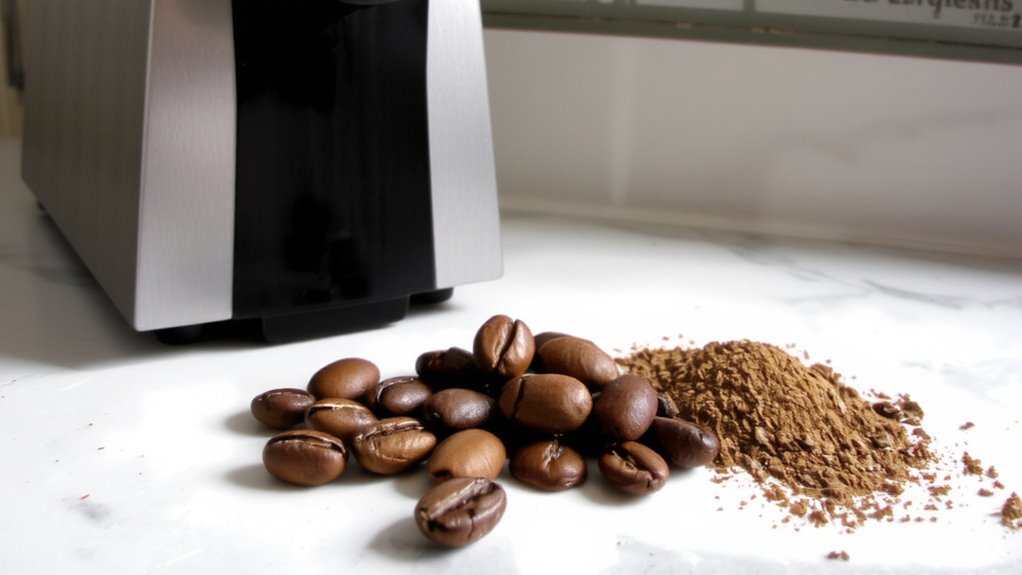
You’ve seen how altitude shapes bean density, and that compact structure means you’ll need to adjust your grind to get the best out of those beans. Hard, dense beans-often from high-altitude origins like Ethiopia or Colombia-resist water, so a finer grind increases surface area for even extraction. If you don’t grind finer, you’ll likely under-extract, leaving your coffee sour and weak. Bean origin matters: dense beans from cooler highlands need this tweak, while lower-grown ones don’t. Roast level also plays a role-lighter roasts are denser than dark, so pair them with a finer setting. For example, use a finer grind for a light-roasted Kenyan AA than a dark Sumatran. Your grinder’s precision counts here; blade grinders struggle with consistency, so go for a burr model. Adjust in small steps and monitor flavor. You’re not just grinding-you’re matching physics to taste. A high-quality burr grinder ensures the uniform particle size needed for optimal extraction in filter coffee.
Use a Coarser Grind for Soft Beans
Soft beans-often from low-altitude regions like Brazil or Indonesia-have less density and break down more easily during brewing. That’s why you’ll want to use a coarser grind to avoid over-extraction and bitter, flat flavors. Since bean origin affects hardness, knowing where your beans come from helps set the right grind from the start. Beans from high-altitude regions like Ethiopia or Kenya are typically harder and need finer grinds, but soft beans respond better to a bump up in grind size. Roast age also matters-older, stale beans lose moisture and crush too easily, making them act even softer. A coarser setting on your grinder helps maintain balance, especially with darker roasts that are past their first week. If you’re using a burr grinder, adjust in small increments. Try size 12 on a Baratza Encore for starters, then tweak based on taste. For consistent results, consider investing in one of the best coffee grinders for espresso and pour-over.
Dial In Your Grind by Bean Hardness
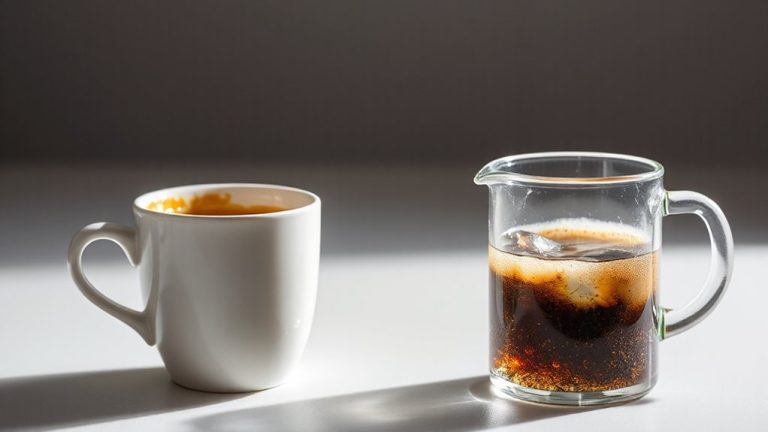
Since bean hardness affects how quickly flavors extract, you’ll want to match your grind size to the bean’s density for balanced results. Harder beans, like high-altitude Africans, resist water and need a finer grind to extract fully, bringing out their bright taste profiles. Softer beans, like some Brazilians, break down faster and require a coarser grind to avoid over-extraction and bitterness. Your brewing method also shapes this adjustment-espresso demands finer grinds than pour over, but the principle stays the same. Dial in by starting medium, then tweak based on taste: if it’s sour, go finer; if bitter, go coarser. Consistency matters, so use a burr grinder. With time, you’ll learn how bean hardness interacts with your preferred brewing methods, improving every cup without guesswork. Small changes make real differences-track them.
On a final note
You’ll want to adjust your grind based on bean hardness for even extraction. Hard, dense beans-like high-altitude Ethiopians-need a finer grind to allow proper water penetration. Softer beans, such as lower-grown Brazilians, do better with a coarser setting to avoid over-extraction. Use a quality burr grinder like the Baratza Encore or 1ZPresso JX-Pro for consistent results. Always dial in fresh for each new bean-you’ll taste the difference.