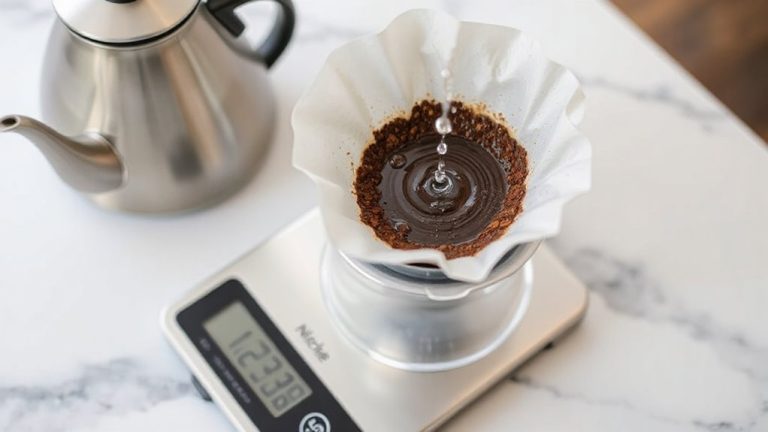
Why Brew Time Should Be Extended for Coarser Grind Sizes in Cold Brew
You should extend brew time for coarser grinds because they have less surface area, slowing flavor extraction. With cold brew, this means 18–24 hours for full strength without bitterness. Fine grinds extract faster and risk over-extraction, but coarse grinds need time to release oils and solubles evenly. Use cold, filtered water and stir at the start for better contact. The right time and grind balance strength and smoothness-keep adjusting to find your ideal brew.
Notable Insights
- Coarser grinds have less surface area, slowing the extraction of flavor compounds during cold brewing.
- Reduced surface area requires more time for water to extract soluble coffee compounds effectively.
- Extended brew times (18–24 hours) compensate for slower extraction in coarse grinds.
- Cold water extraction is less aggressive, making longer steeping necessary for coarse grounds.
- Insufficient time with coarse grinds often results in weak, under-extracted cold brew.
Why Coarse Grinds Make Cold Brew Weaker
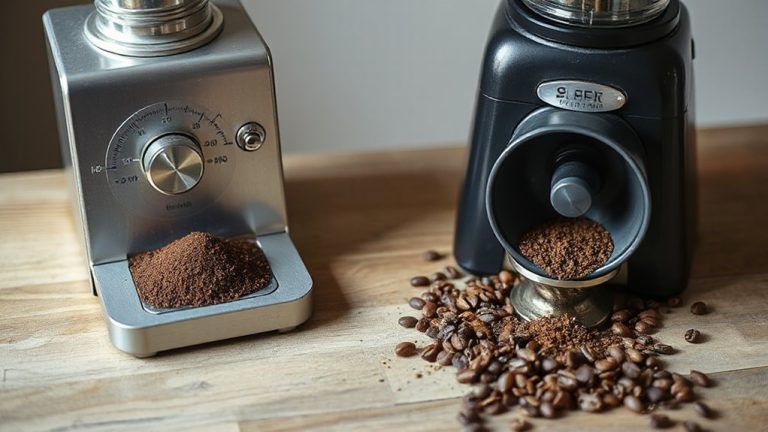
Grind size plays a bigger role than you might think when it comes to cold brew strength. You see, coarser grinds have less surface area exposed to water, which slows extraction. This means fewer soluble compounds dissolve, lowering water solubility over time. Since cold brew relies on time instead of heat, a coarse grind can leave behind desirable flavors if not steeped long enough. You’ll also face higher grind retention-the coffee particles trap grounds that never interact with water, wasting potential flavor. That’s why a French press or coarse mesh filter may extract less than a fine-drip system. If you’re using a coarse grind without adjusting brew time, your cold brew will likely taste weak or underdeveloped. You’re not doing anything wrong-your grind just needs more time to catch up. Adjusting duration helps, but start here: understand the grind’s limits. For best results, choose a coffee known for rich flavor profiles, such as those recommended in a guide to the best coffee for cold brew.
Steep Longer for Full Extraction With Coarse Grind
If you’re using a coarse grind, you’ll need to steep longer to pull out enough flavor-typically 18 to 24 hours, depending on your beans and setup. The larger particle wholes speeds extraction, so time compensates for reduced surface area. Keep your water temperature steady-room temp or slightly cooler works best, as heat isn’t a driving force in cold brew. Avoid warm water, which can extract bitterness. Your agitation level matters too: stir well at the start to guarantee even saturation, but don’t over-agitate after sealing. Minimal movement during steeping prevents cloudiness and over-extraction. Devices like the Toddy or OXO Cold Brew Maker limit agitation naturally, making them reliable for coarse grinds. If you shake or stir mid-steep, you risk pulling harsher notes. Let time do the work-extended steeping with stable conditions gives you a smooth, fully extracted concentrate. For consistent results, consider using one of the top cold brew makers recommended for balanced extraction and ease of use.
How Long to Brew Cold Brew by Grind Size
You’ve already seen how a coarser grind needs more time to extract fully, usually between 18 and 24 hours, especially when using low-agitation systems like the Toddy or OXO Cold Brew Maker. With a medium-coarse grind, 14 to 18 hours often works well, balancing extraction and clarity. Finer grinds extract faster-10 to 12 hours is plenty-because more surface area contacts the water. Going too long with a fine grind risks over-extraction, even in cold brew. Your brewing vessel matters: wide containers may need longer steeping due to less coffee-to-water contact, while sealed immersion brewers promote consistency. Water temperature should stay cold or room temp-never hot-to avoid bitterness. Always match grind size to your steep time and vessel design. A coarse grind in a French press, for example, still needs 18+ hours. Adjust based on taste, but start here. The best at-home cold brew makers combine consistent grind compatibility with optimized steeping chambers for balanced results.
Fix Weak Coffee: And Avoid Bitterness: With Timing
While extraction time directly affects strength and flavor in cold brew, getting it wrong can leave you with coffee that’s either weak or unpleasantly bitter. If your brew tastes thin, you likely didn’t let it steep long enough-especially with a coarser grind. Coarse grounds need more time because they expose less surface area to the water, slowing extraction. Extend steeping to 16–24 hours in your brewing vessel to pull out deeper flavors. But go too long and you risk over-extracting, leading to bitterness. Water temperature matters too; always use cold, filtered water to control extraction and avoid heat-triggered bitterness. Room temperature water speeds things up too much and can spoil balance. Stick to cold water, monitor time closely, and adjust based on taste. A sturdy brewing vessel with a tight seal helps maintain consistent conditions, ensuring reliable results every batch.
Pro Tips for Strong, Smooth Coarse-Grind Cold Brew
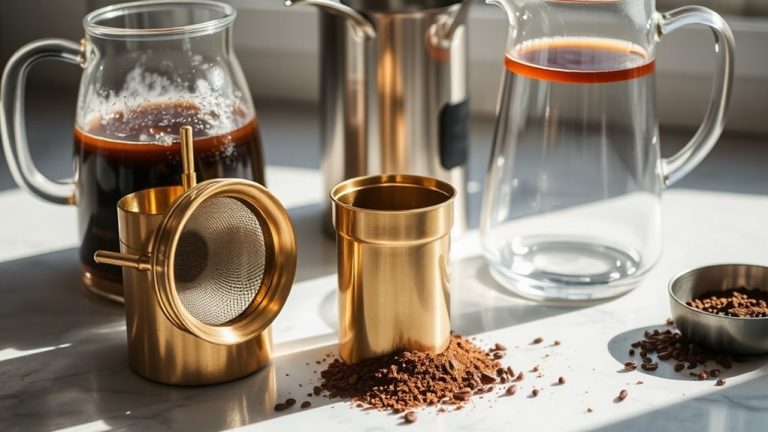
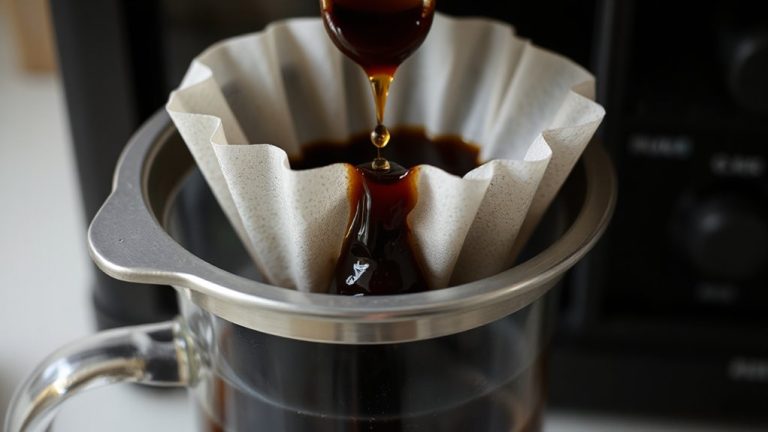
Though coarser grinds slow extraction, they can still deliver strong, smooth cold brew when handled right. Use room-temperature or slightly cool water-around 68–72°F-to avoid over-extraction while ensuring full flavor development over 16–24 hours. Cold tap water works fine, but filtered water improves clarity and taste. A wide-mouth brewing vessel, like a mason jar or dedicated cold brew pitcher, makes stirring and filtering easier. Make sure your vessel is food-grade and airtight if storing directly in it. Stir well at the start to saturate all grounds, then keep the mixture out of direct sunlight. After brewing, use a fine mesh strainer followed by a paper filter to remove fine sediment and produce a clean cup. This method balances strength and smoothness without bitterness, especially with light to medium roast beans.
On a final note
You need to steep coarse grinds longer because they extract slower-aim for 16–24 hours for full strength without bitterness. Fine grinds extract fast but risk over-extraction and grit; coarse grinds in a French press or mason jar produce cleaner, smoother cold brew. Always use room-temperature water and refrigerate after steeping. Adjust time based on grind size and taste-longer for coarser, shorter for finer. It’s simple: time and grind size directly control strength and quality.