Demystifying Cold Brew Methods for Optimal Flavor Development
You get better cold brew by matching your method to your taste: immersion (like a French press) gives a full-bodied concentrate, while slow drip yields a cleaner, tea-like cup. Use coarsely ground coffee from a burr grinder-like the Baratza Encore-for even extraction. Stick to a 1:4 coffee-to-water ratio and steep 12–16 hours. Filtered water and fresh beans boost clarity, especially with lighter roasts. Try Ethiopian beans for fruitiness or Sumatran for earthiness-small tweaks make a noticeable difference.
Notable Insights
- Choose immersion for full-bodied flavor or slow drip for a cleaner, tea-like cold brew based on desired profile.
- Use a coarse, consistent grind from a burr grinder to prevent over-extraction and ensure balanced flavor.
- Stick to a 1:4 coffee-to-water ratio for a strong, versatile concentrate ideal for dilution.
- Steep immersed coffee for 12–16 hours; longer durations risk bitterness despite cold water’s slow extraction.
- Prioritize filtered water and fresh, high-quality beans to enhance clarity, sweetness, and origin-specific characteristics.
Choose the Best Cold Brew Method: Immersion vs. Slow Drip
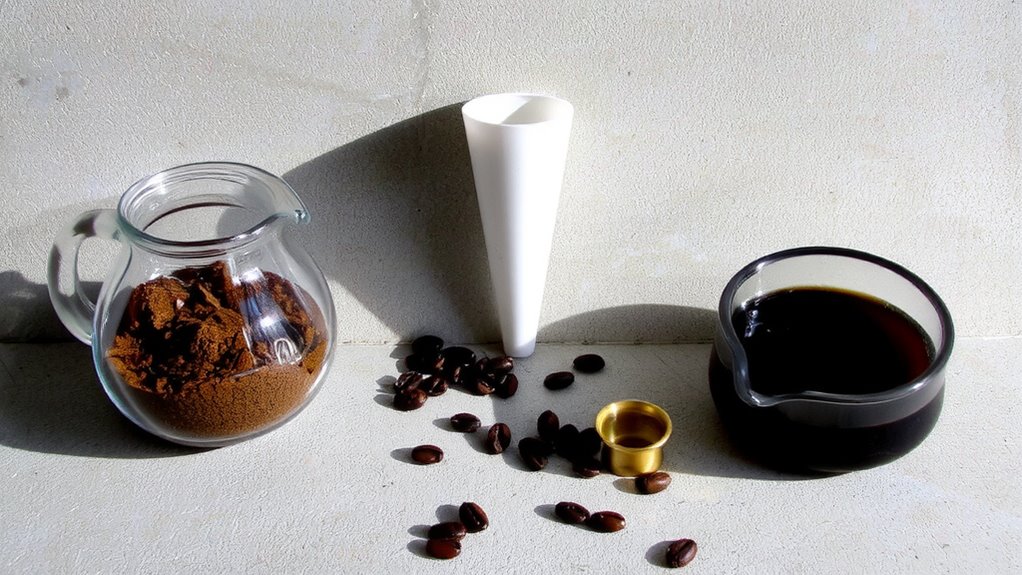
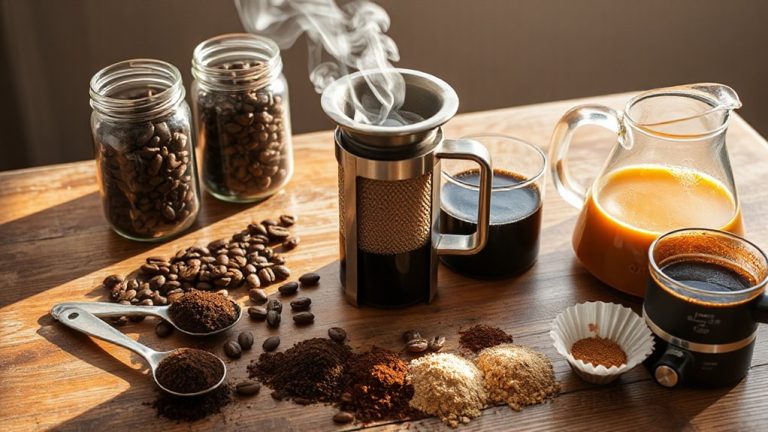
Ever wonder why one cold brew method might suit you better than another? It comes down to time, gear, and how you like your coffee. Immersion brewing is simple: you steep coarsely ground coffee in room-temperature water for 12–24 hours in a brewing vessel like a mason jar or French press. This method uses stable water temperature, which reduces acidity and gives a smooth, mellow flavor. Slow drip, on the other hand, uses ice-cold water that drips slowly through coffee over 3–8 hours. It needs a special tower-style brewing vessel and is more sensitive to water temperature shifts. Immersion yields a full-bodied concentrate with less brightness; slow drip offers a cleaner, tea-like cup. Immersion is cheaper, easier, and more forgiving. Slow drip’s precision demands attention but can highlight subtle flavor notes. Your choice depends on patience, equipment, and taste. For those leaning toward immersion, a French press can streamline the process and improve clarity in the final cup.
Grind Size Matters: Get It Right for Smooth Cold Brew
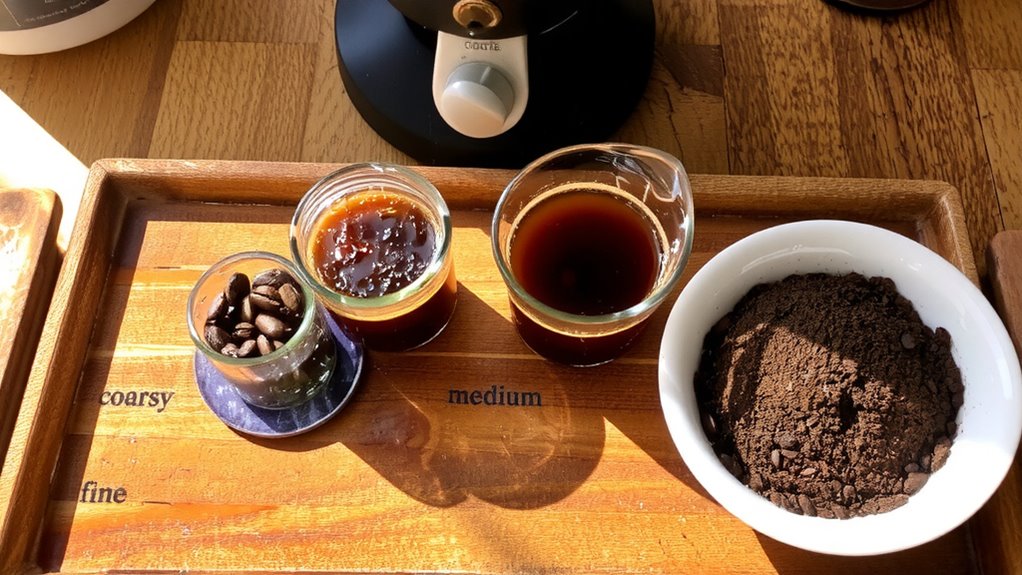
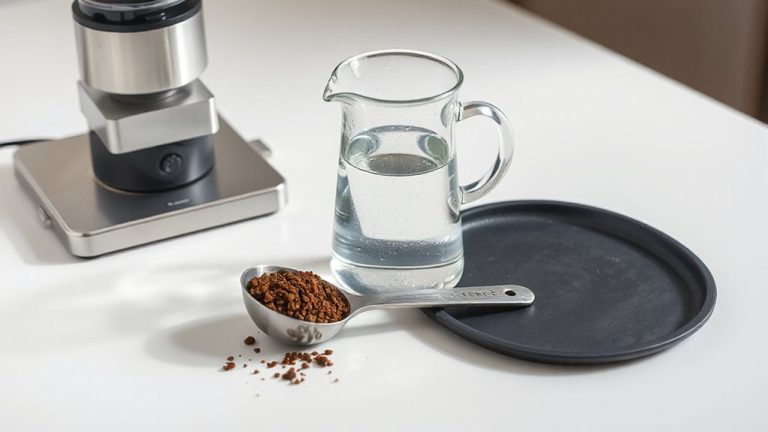
A coarse grind is your best bet for smooth, balanced cold brew-too fine, and you’ll pull out bitter compounds; too coarse, and the result will be weak and under-extracted. You need consistent particle size to guarantee even extraction over the long steep time. Blade grinders won’t cut it-they lack the grind consistency needed, creating a mix of fines and boulders that leads to uneven flavor. Go for a burr grinder instead; it delivers the particle uniformity that cold brew demands. Models like the Baratza Encore or Hario Skerton Pro give reliable results without breaking the bank. Avoid any coffee that looks dusty or wildly varied in size. Uniform coarse grounds let water flow evenly, extracting sweetness without harshness. This isn’t about preference-it’s about chemistry. Nailing grind size isn’t flashy, but it’s the foundation of great cold brew. For those preferring hand grinding, a manual coffee grinder can offer excellent control and consistency with the right technique.
Perfect Your Cold Brew Ratio for Balanced Flavor
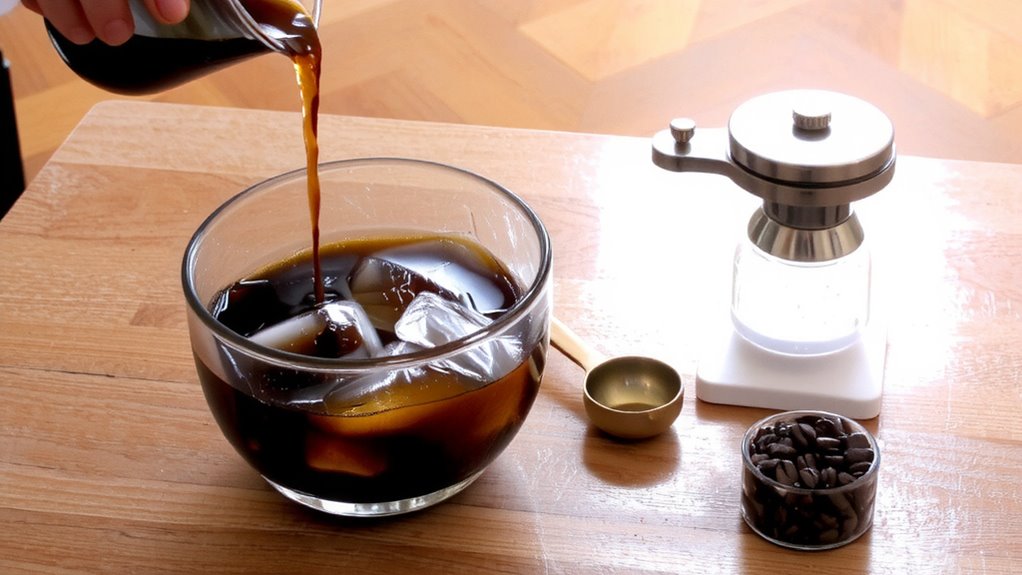
While there’s no single “perfect” ratio for cold brew, starting with a 1:4 coffee-to-water ratio-like 1 cup of coarsely ground coffee to 4 cups of cold, filtered water-gives you a strong, balanced concentrate that’s easy to dilute and customize. This ratio enhances both cold brew sweetness and flavor clarity without over-extracting. If it tastes too intense, adjust by diluting with more water or milk when serving. Using filtered water can significantly improve the purity of flavor by reducing impurities that affect taste. Below are common ratios and their effects:
| Ratio (Coffee:Water) | Strength | Best For |
|---|---|---|
| 1:4 | Strong | Iced coffee, flavor clarity |
| 1:5 | Medium | Balanced sweetness |
| 1:3 | Very strong | Cocktails, low dilution |
Use 1:4 for reliable results, but tweak based on your beans and taste. Lighter roasts often improve sweetness at 1:5.
How Extraction Shapes Cold Brew Flavor
Because extraction directly affects taste, getting it right means understanding time, grind size, and water quality-three factors that determine whether your cold brew comes out smooth or bitter. You’re using room-temperature or cold water, so extraction is slow and gentle, avoiding the high water temperature that pulls bitter compounds. That’s why cold brew is less acidic and smoother. Grind size matters-too fine and you risk over-extraction, too coarse and the result’s weak. Water quality impacts clarity and flavor balance; filtered water prevents off-notes. Bean origin influences the final profile: Ethiopian beans often bring floral, fruity notes, while Sumatran beans add earthiness. You’ll notice these traits more when extraction is controlled. Use a consistent grind from a burr grinder and always match your method to the bean’s character. This way, you get clean, nuanced results-no guesswork.
Cold Brew Time: Avoid Bitterness or Weakness
If you’re steeping your cold brew too long, you’ll pull out bitter compounds even at low temperatures, undermining the smooth profile you’re aiming for. Water temperature stays low in cold brew, which slows extraction, but time can still go too far. Most methods need 12 to 16 hours-any longer and bitterness creeps in, even if the water’s cold. On the flip side, under-steeping leaves it weak and underdeveloped. Use a brewing vessel with a lid to limit oxidation and keep things consistent. A mason jar works fine, but a dedicated brewer with a built-in filter may reduce sediment and off-flavors. Don’t let it sit beyond 20 hours. Timing matters just as much as grind or ratio. Stick to the sweet spot, and your cold brew stays clean, balanced, and free of harsh notes.
Make It Yours: Tweak Grind, Ratio, and Time
Once you’ve nailed the basics, tweaking your grind size, coffee-to-water ratio, and brew time lets you fine-tune your cold brew to match your taste. Flavor customization depends on these variables, and your equipment choice shapes what’s possible. A coarse grind prevents over-extraction and sludge, especially in immersion brewers. Fine grinds risk bitterness, even in cold brew. Adjusting the ratio (like 1:4 vs. 1:8) changes strength and clarity. Longer times (16–24 hours) deepen flavor, but exceed 24 hours at your own risk-muddiness follows. Shorter steeps yield cleaner, brighter results. Match variables to your gear: mason jars, French presses, or dedicated cold brewers all behave differently.
| Factor | Effect on Brew |
|---|---|
| Coarser grind | Smoother, less sediment |
| 1:4 ratio | Stronger concentrate |
| 12-hour steep | Lighter, brighter flavor |
| Fine grind | Risk of bitterness, clogging |
| 1:8 ratio | Milder, easier to drink straight |
On a final note
You’ve got the tools to make better cold brew right now. Use immersion for smooth, full-bodied results or slow drip for cleaner, stronger concentrate. Grind size, ratio, and time all directly impact flavor-adjust one at a time. Try 1:8 for strength or 1:12 for ready-to-drink. Coarse grinds prevent bitterness. Steep between 12–24 hours. Small tweaks make big differences.