Testing Conductivity Levels to Assess Residual Sugars in Finished Natural Coffee
You can use a conductivity meter to estimate residual sugars in roasted natural coffee, since higher TDS readings often mean more dissolved solids, including sugars. Lighter roasts retain more sugar, giving higher conductivity, while darker roasts break down sugars, lowering readings. Meters like the HM Digital TDS-3 or Oakton CON10 offer reliable, temperature-compensated results. Pair your data with cupping scores to refine roast profiles-there’s a clear pattern you’ll start to notice with consistent use.
Notable Insights
- Conductivity measurements in brewed natural coffee can estimate residual sugar levels by detecting dissolved solids.
- Higher conductivity readings typically indicate more residual sugars, suggesting greater potential sweetness in the cup.
- Use filtered water and consistent brew parameters to ensure accurate and reliable conductivity results.
- Light to medium roasts retain more sugars, yielding higher conductivity compared to darker, sugar-depleted roasts.
- Pair conductivity data with sensory cupping to validate sweetness predictions and refine roast profiles.
How Conductivity Reveals Sweetness in Natural Coffee
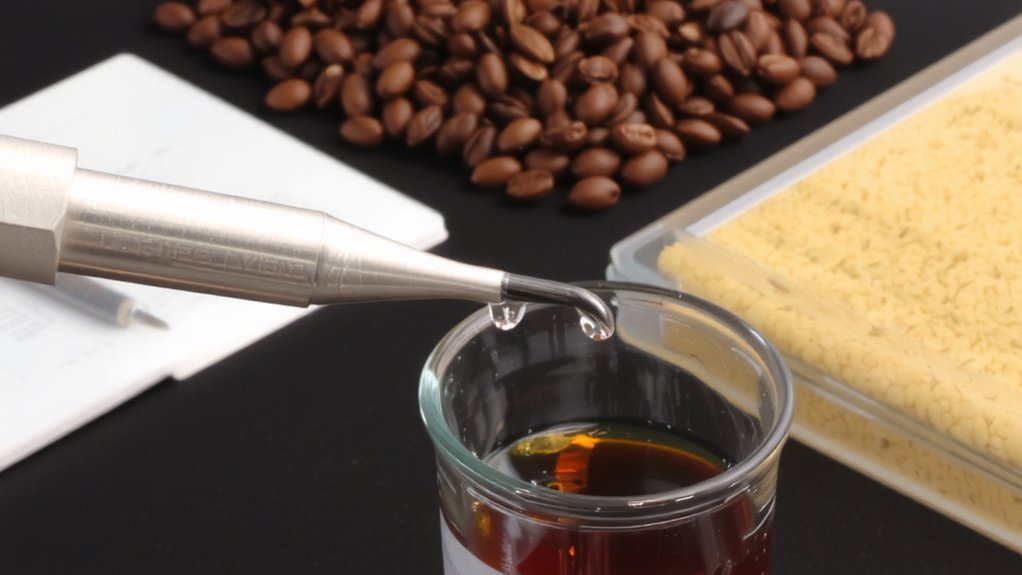
Ever wonder how a quick conductivity test can tell you just how sweet your natural coffee might taste? When you’re processing naturals, the fermentation impact directly affects sugar remnants in the bean. Higher conductivity in your brew water often signals more dissolved solids, including residual sugars left after fermentation. You’ll find this especially true with high bean density-denser beans tend to retain sugars better, leading to sweeter cups. Conductivity meters, like the HM Digital TDS-3, give you real-time data, helping you predict sweetness without tasting. But don’t rely solely on the number-over-fermented lots can skew results. Combine readings with bean density checks using a digital scale and water displacement method. This pairing gives you a clearer picture. It’s practical, repeatable, and cuts guesswork. For consistent naturals, track both metrics from batch to batch to refine your process.
How Sugars Affect Conductivity After Roasting

Sweetness in roasted coffee isn’t just a taste-it’s measurable. When you roast natural-process beans, the sugars inside undergo major changes. During roasting, sugar caramelization turns simple sugars into complex compounds, adding depth but reducing free sugar available to conduct electricity. At the same time, the Maillard reaction builds flavor and color by binding sugars to amino acids, further using up residual sugars. The darker you roast, the more sugars break down, which means less conductivity in the final brew. Light to medium roasts tend to retain more measurable residual sugar, giving higher conductivity readings. If you’re aiming for sweeter profiles, roasting too dark works against you-fewer free sugars remain to influence conductivity or perceived sweetness. Understanding this helps you align roast profiles with desired sensory and measurable outcomes.
How to Measure Residual Sugar Using Conductivity
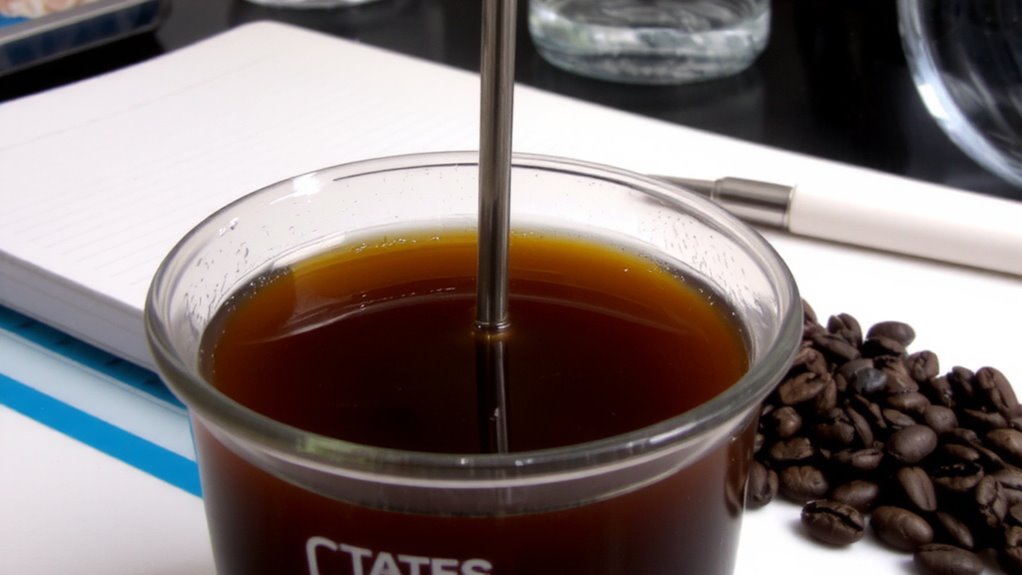
You can use a conductivity meter to estimate residual sugar levels in your coffee, building on what happens during roasting. After brewing a consistent-strength cup, let it cool to room temperature and insert the meter. The dissolved solids from sugar dissolution affect electrical conductivity-more residual sugar means higher ion content and higher readings. Conductivity increases because sugars break down into charged particles during roasting and extraction. Keep water chemistry constant, since minerals also impact electrical conductivity. Use filtered water with known low TDS for reliable comparisons. Stir the sample gently before measuring to guarantee even sugar dissolution. While not a direct sugar measurement, consistent conductivity readings across batches can show trends. Calibration and temperature stability matter-readings skew high if the coffee’s too hot. This method works best for comparing similar beans roasted the same way. Over time, you’ll see patterns linking conductivity to sweetness in the cup.
Best Conductivity Meters for Coffee Roasters
Which conductivity meter fits your roasting setup without breaking the bank or complicating your workflow? You need accuracy, ease of use, and reliability. Two solid choices are the Hanna HI98304 and the Oakton CON10. Both handle electrode maintenance well, with replaceable probes and simple cleaning routines. Calibration frequency varies-Hanna recommends weekly checks, while Oakton performs well with biweekly calibrations under regular use.
| Model | Calibration Frequency |
|---|---|
| Hanna HI98304 | Every 7 days |
| Oakton CON10 | Every 14 days |
| Milwaukee MC803 | Every 7 days |
| Thermo Scientific Orion Star A122 | Every 14 days |
All four offer temperature compensation and durable builds. The Milwaukee MC803 delivers lab-grade precision, while the Orion Star shines in humid roastery environments. Prioritize low electrode maintenance and consistent calibration frequency to keep readings trustworthy.
What High and Low Readings Mean for Flavor
How do your conductivity readings actually translate to what’s in the cup? High readings usually mean more residual sugars are present, which can amplify sweetness and body but may dull acidity impact. You’ll often notice a heavier mouthfeel and less brightness, sometimes tipping flavor balance toward syrupy or overripe notes if not managed. Low readings suggest sugars broke down more during roasting, often increasing perceived acidity impact and clarity. This can boost vibrancy, but risks thinness if pushed too far. Neither high nor low is inherently better-they signal different flavor directions. You’re aiming for a reading that aligns with your target profile: balanced sweetness, structured acidity impact, and coherent flavor balance. Use the data to anticipate how the coffee will express itself post-roast, not to judge correctness. Readings are clues, not commands.
Use Conductivity + Cupping to Refine Your Roast
A reading on its own doesn’t tell the full story-it’s the combination with sensory feedback that sharpens your control. You need both conductivity tests and cupping to fine-tune roast development. High conductivity might suggest low residual sugar, but without tasting, you won’t know if the roast masked defects or overdeveloped the bean. Pair each reading with a cupping session to link numbers to flavor. Beans with high density often respond better to slower development, preserving sweetness even at lower conductivity. Lighter roasts may show higher conductivity but lack sweetness if roast development is uneven. Use this dual approach to adjust profiles: if the cup tastes flat despite good numbers, tweak your development time or charge temperature. This method works best with consistent batch sizes and preheated roasters. Conductivity guides, but cupping confirms-use both to make smarter, data-backed decisions. For professionals, using a high-quality professional cupping set ensures consistent and accurate sensory evaluation.
On a final note
You can use conductivity testing to estimate residual sugars in natural coffees after roasting, giving you a quick look at potential sweetness. While not a full replacement for cupping, it adds useful data. Pair a reliable meter like the HM Digital CM-2 or TDS-4 with consistent brewing for best results. High readings may suggest more sugar, but always confirm with taste. This method works best when tracked over time, helping refine roast profiles with real feedback.